A Piece of My Mind: Let’s Have Fun (LATC July 2018)


I’m sitting on the balcony of our hotel room overlooking the beach. It is a beautiful day, warm enough to tempt children and teenagers into the water without wetsuits, and the beach is dotted with colorful umbrellas and sun tents and beach towels and beach toys and sand-castles in the making. Up near the steps leading down to the beach is a small playground, with a twisty slide and two sets of swings, six swings in each set, all occupied by kids and pre-teens industriously pumping back and forth.
But I notice something odd. Here we are at the beach with yards of soft sand in front of each swing, but no one is bailing into the sand at the peak of their swing, landing on their knees laughing after flying through the air for a magical few seconds. I watch and wait for the first adventurous child to go sailing through the air, but it doesn’t happen. It seems no one knows how. It seems that jumping out of a swing has never occurred to them.
Maybe these kids have never bailed from a swing into soft sand. Maybe their playgrounds have always been grounded in AstroTurf or wood chips or outdoor carpet – nothing you could trust your knees to. And maybe the flexible U-shaped seats cling to the children’s rear ends and make it hard to slip off the swing at the right moment.
I really wanted to go down and show the kids on the beach how to fly, but my knees might not have been up to it. I did start thinking, though, of other playground learning opportunities that may have been lost to safety and insurance and ecology concerns..
What about see saws? (AKA teeter-totters in some areas) The universal street sign for a playground is a see saw, yet how many of today’s children have actually played on one? There is risk of injury. You might fall off. You might crush your foot underneath the board. You might get a finger caught between the board and the support. You might get a sock in the jaw if you tried to get on one end just as another kid was pulling his end down. And yet this simple playground toy is one of the best ways to convey the ideas of balance and leverage that ever was.


What about the merry-go-round? Not the thing with horses and a calliope, but a round metal platform with handles, mounted on ball bearings. You ran as fast as you could while pushing to get it going, and then jumped on. A mysterious force tried to tear you off the platform. You clung to your handle. You held on. That force that wanted to tear you off was defeated. You had strength you hadn’t known. And you learned that if you crawled into the center of the platform, the force mysteriously lessened; at the center you could stand up no-hands! Later when you learned about centrifugal and centripetal force in physics class, you recognized them immediately.


And the jungle gym – that network of metal pipes assembled with plumbing joints which seemed to soar impossibly high when you were in the primary grades, but which could be conquered bar by bar until you reached the apex as an upper-grader. Yes, you could fall. But mostly you didn’t.


I look at the brightly colored plastic play structures around town and feel a little sorry for today’s kids. Yes, I guess you can learn about centrifugal force by going down a twisty slide, and you can learn to do a perfect dismount from parallel bars in a well-supervised gymnastics class – but you won’t get sand between your toes.

 Her cupboards were full of party equipment. Her dining table could be extended to accommodate 6, 8, 10, or 12 people. She had tablecloths and napkins to accommodate each size, plus pretty crystal place card holders to let people know where they should sit. For bridge parties and ladies’ lunches she had smaller table cloths with matching napkins.


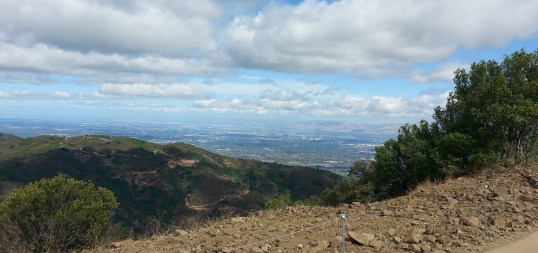
 Then a controversy prompted action. In 2009 Midpen obtained Federal funding to clean up the site, and one of its first ideas was to tear down the remains of the radar tower and restore the site to its pristine pre-Cold War state. Valley residents erupted with letters and meetings – the tower was ugly and dilapidated, but it was an icon none the less, part of the Valley’s landscape and history for 60 years, and we didn’t want it to disappear without ever having had the chance to visit it.


 On my travels in June I met a modern-day visionary. His name is Zachary Brown, he wears rumpled plaid shirts and jeans and hiking boots, and he is the co-founder, executive director, and so far the sole employee of the
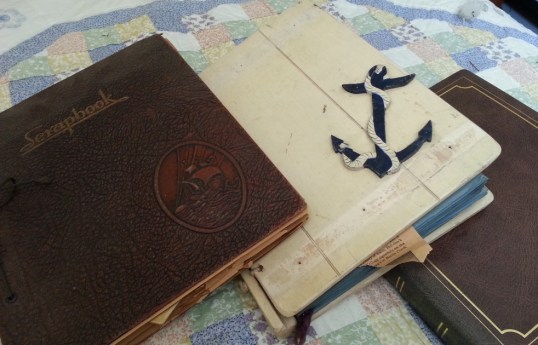 I have been doing what amounts to an archaeological dig at the home my parents occupied for 60 years. It seems as though every drawer I open, every closet shelf I clear holds traces of the life my parents led starting long before the time I began to exist. I am learning a lot about the people who raised me and how they became who they are. And I am also learning how much I can never know.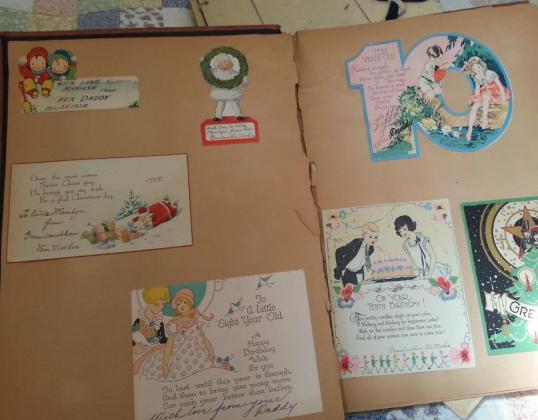
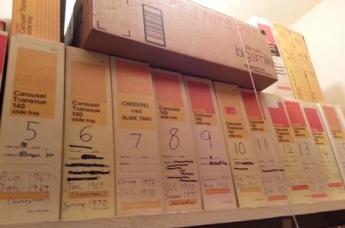 When my sister was putting together a slide show to display at our mother’s memorial, she discovered that there were almost no pictures of her or our younger brother after the ages of seven and five, respectively. She figured out the problem – at that point in the late 50’s or early 60’s, my father switched to slide film. Stored in the hall closet are at least a dozen slide carousels, each holding 100 slide transparencies. But who has the technology or the patience to sort through over a thousand slides in this digital age? Even the one shop on the Peninsula which once offered a service of switching analog slides to digital has closed its doors.


 Allyson Johnson