Freeway Free in California: A Serene Escape from COVID-19 Stress
 I live in a COVID-19 hotspot – 43 cases and one death since the beginning of March – and public and private events are being cancelled left and right to prevent transmission. So what is one to do if you are healthy, not in one of the “vulnerable” groups, and needing some relief from the stress of it all? Maybe it’s time to visit a local museum.
The Asian Art Museum in San Francisco is one of my favorites. I visited this week and found plenty of parking in the Civic Center Garage ($12.00 for 5 hours), two featured exhibits of great interest, no crowds, and decent food at the museum restaurant. And if you are looking for stress relief, Asian art is all about serenity.
 The exhibit that drew me to the museum featured Zhang Da Qian (Chiang Dai-Chien in traditional transcription) who was the Pablo Picasso of 20th Century Chinese art. His work spans styles ranging from impeccable copies of venerated Chinese master artists of the past, to modern splash-ink impressions worthy of Jackson Pollock. He lived in mainland China, Brazil, Argentina, Taiwan, and California, and in each venue did his best to promote appreciation of Chinese art. One of the featured works in this exhibit is titled “Scholars on a wilderness path”, but the giant monolith in the background must be Half Dome.
Other paintings include a marvelous white gibbon, a black horse grazing in a blue-green pasture, a Tibetan dancer, several giant lotuses, and landscapes formed from giant splashes of ink enhanced with a few brush-strokes to define space, foliage, light, and dark.


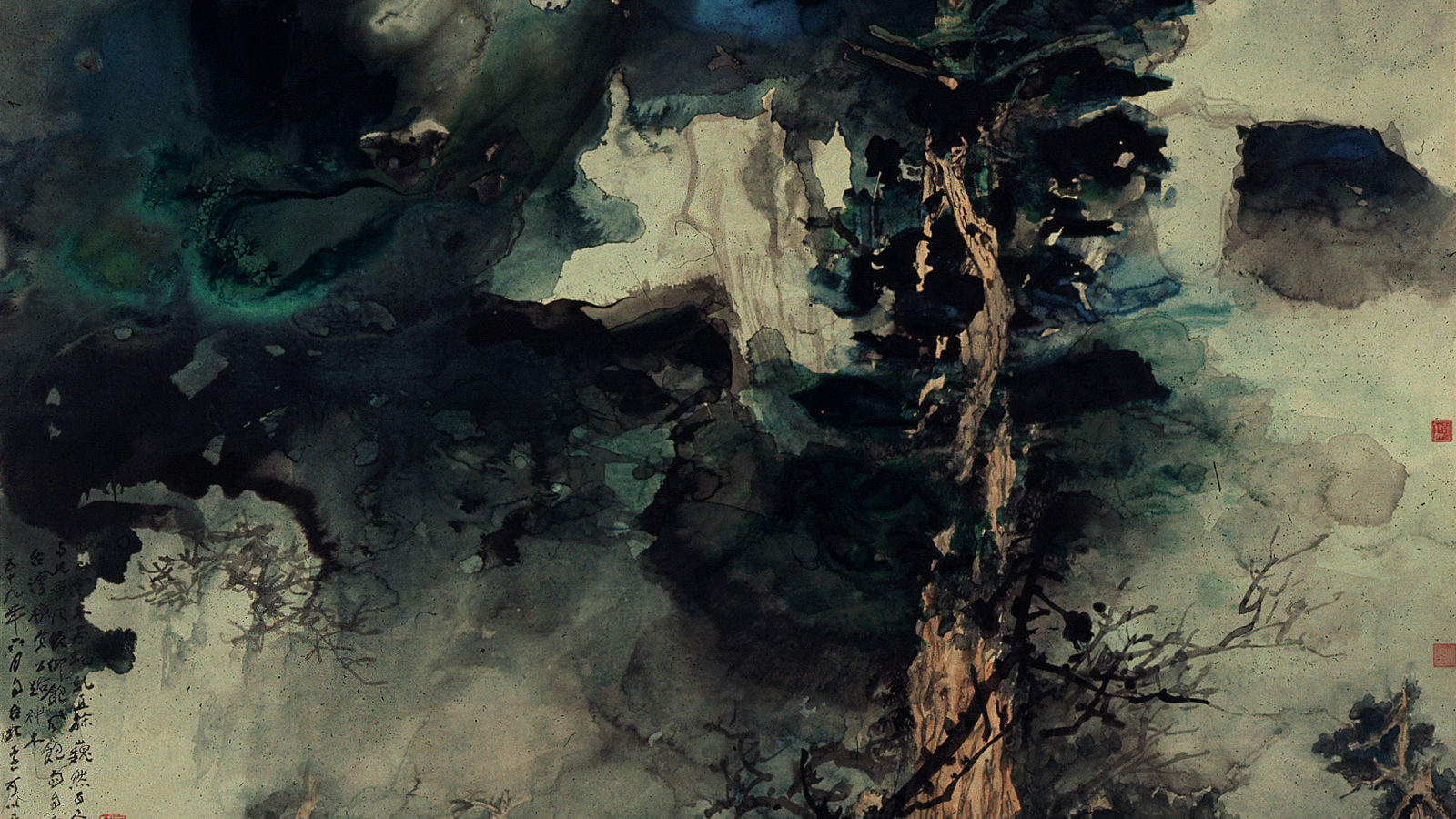
After studying Zhang’s various works, a stroll through the adjacent Korean gallery offers a different range of experiences.


You can admire a glowing white “moon jar”, pristine on its wooden shelf, and discover an Asian precursor of the classic patchwork quilt, made from silken scraps.
Or perhaps you will spend some time in another featured exhibit, called “Awakening” which walks you through several centuries of Buddhist tradition, juxtaposing ceremonial vessels made from human skulls, many-armed monsters intricately carved and painted, and dainty gilded bronze sculptures celebrating sensual tenderness.


Or maybe some of the more modern pieces will appeal to you, like this sculpture by Liu Jianhua formed of letters and Chinese characters on view just outside the Korean section. 
The museum restaurant,Sunday at the Museum, features Asian style street food such as Vietnamese Pulled pork sandwiches, Japanese ramen noodles, and Chinese dumplings. You order at a counter and the food is brought piping hot to your table. Of course you could get better Chinese food in Chinatown, better ramen in Japantown, but the setting attractive and the service is fast and friendly.
If you have children tossed out of their school/daycare, the museum usually has some activities geared toward children set up either in an activity area or in the Shriram Learning Center on the first floor.
 Back to Bro’s house after our wet, windy, but wonderful weekend at
  Our first stop – a quick visit to the local grocery to replenish our stocks of butter, cheese, and wine. By the time we exit the grocery, the morning drizzle has given way to sunshine. We make excellent progress down I-5 through Portland and Salem, and stop for our mid-day refreshment at the Albany rest stop about 15 miles south of Salem. Okay, so a highway rest-stop is not exactly a camping haven, but the big rigs kept their distance, and this particular stop does boast the world’s quaintest rest stop visitors’ center.


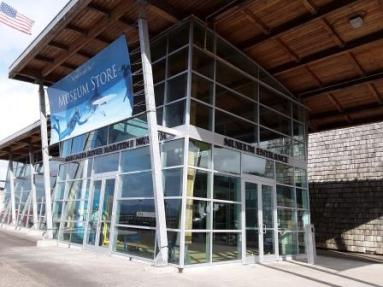 If you are going camping in a tiny trailer, and you left your bikes at home because the forecast call for a 99% chance of rain, better hope you can find some indoor activity to pass the time! If you are camping at
 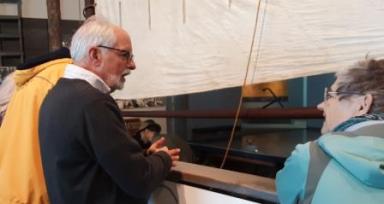 If you are going to spend some time in a small museum on a rainy weekend, it helps if Executive Director happens to be an old friend from college. Dr. Samuel E. Johnson and I had more than a few memories dating back to our freshman year Ballroom Dancing classes together. (I took the class to fill a Physical Education requirement; I suspect Sam took it because at that time the ratio of men to women at our college was officially 3.5 / 1, and it was chance to meet girls.)
 We are all familiar with pictures of the


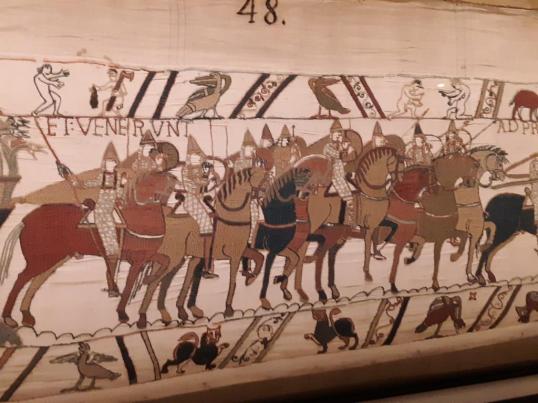 Bayeux was the first French city to be liberated by Allied Forces. Troops marched into the city on a street bordered with cheering townsfolk who waved French and American flags, and offered kisses from happy young women and fresh baked treats from older ones. The Germans evacuated so quickly that they had no time to organize a defense, so the most of the medieval structures remained intact.
 We first stopped at Bayeux Cathedral, with its mix of old and new stained glass, its ornate Gothic verticality, its mystic paintings decorating the crypt beneath the alter. The apse was decked in French tricolor, British Union Jacks, Canadian maple leafs, and American stars and stripes. Behind the altar there was a large concert band practicing for Prince Charles’ visit the following day (Wed. June 5). This was a truly excellent brass ensemble, plus some woodwinds and tympani. The sound reverberating through the cathedral was thrilling. One piece was “The Spitfire Overture” and another, appropriate for a visiting Brit, was the lovely, noble main theme from “Jupiter” from “The Planets” by Gustav Holst. My partner, a music-lover with bad knees, stayed in the church for the whole rehearsal while I wandered around the side chapels and lower levels.


 Right across from the cathedral is an old store front set us as a
  Of course, Bayeux is most famous for that other artifact of war, the


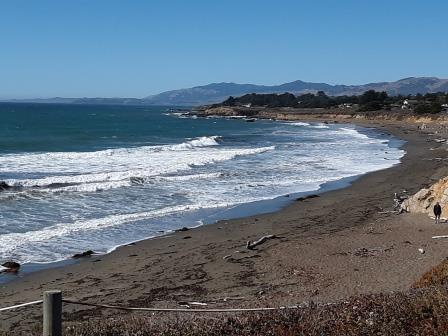


 We took the remains of a bottle of local Pinot Noir back to our balcony to finish off the evening with the complimentary chocolate chip cookies from our check- in desk. We sat on our balcony again to watch the crescent moon setting near where the sun had set before our dinner. Suddenly stars! The Milky Way! D even saw a shooting star. Only one spotlight shining on the entry sign for our hotel spoiled the dark sky.
 Did I mention that Bilbao is the unofficial capital of the Basque region of Spain? I am a little bit familiar with Basque family-style dining due to the heritage of Basque shepherds which has been perpetuated in part of northern California. But nothing had prepared me for the pintxos (appetizer plate) bars which are the pride of Bilbao and San Sebastian. Above you see a typical spread (pardon me and my spouse for having partially blocked the view).


 The
The 


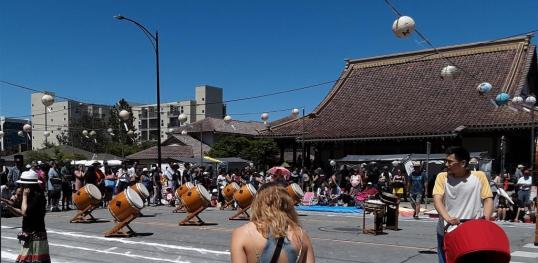 San Jose’s Japantown, centered around the intersection of Jackson and Fifth Restaurant, is one of only three remaining centers of Japanese culture in the US (the other two being in San Francisco and in Los Angeles.) Almost destroyed by the forced internment of most of its citizens during World War II, it has bounced back as a nucleus of Japanese restaurants, shops, and community organizations.
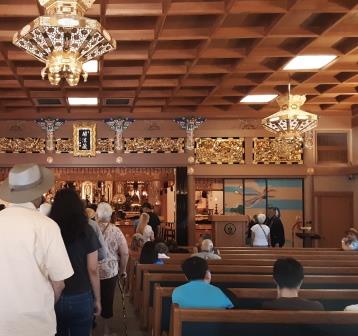 After lunch, a stroll along 5th street on the other side from Kubota’s will lead you to the


 We got the fog we had hoped for on our second day at Point Reyes. Since we had part of the area south of our home base on our


 Allyson Johnson