Freeway Free in Texas – The Civil War’s Westernmost Outpost
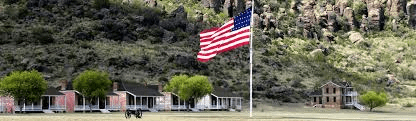 Ft. Davis National Historic Site preserves an outpost in the Back of Beyond which actually saw some action in the Civil War. The Federal troops at Fort Davis fled the advance of CSA General Henry Hopkins Sibley, who dreamed of conquering New Mexico and establishing the Confederacy all the way to the Pacific. Sibley’s forces were beaten back at Glorieta Pass, ending Sibley’s dream.
After the Civil War ended, the fort was re-manned mostly by black soldiers, with the mission of keeping wagon caravans safe from Indian attack as they headed toward El Paso and the gold fields of California. There is some evidence that officers with a black mark on their record were sent to command the black troops, although in general Ft. Davis was considered to be a very comfortable posting, tucked into a stream-fed canyon, with reasonably decent weather most of the year and relatively little actual fighting required.


An informative short video sets the stage at the Visitor’s Center, which also offers a very good museum dealing very fairly with the black soldiers and the racism they encountered, and their medal-worthy battles with the mostly Kiowa and Commanche Indians. The Kiowa, Apache, and Commanche tribes are also given a fair presentation, and the museum reminds us not to judge the behavior of the soldiers by our current gauge of how native peoples should be treated. And a full shoutout is also given to the roles of the officer’s wives and children in providing structure and keeping up society’s standards in this remote outpost
It’s hard to be politically correct in so many directions! But where are the Latinos? Maybe there weren’t many, as this part of what is nowTexas was not part of the disputed territory which became the Republic of Texas before the Mexican-American War. W says that there were outposts of Spanish rule all along the Rio Grande, (Presidio, El Paso) but maybe not above in the desert.


The fort is in process of being restored to its 1860’s appearance. Some homes and hospital rooms and barracks are already fully restored and furnished, others not, so you can see what has been done and is still to do. Lots of walking is required, as the Parade Ground needed room for cavalry manoevres. In the restored sections, you are likely to find a docent in period costume eager to tell you all about life in the fort back in the day. It is a peaceful place for a National Historic Site, with less than 50,000 visitors a year.
 If you stop, I can recommend the Stone Village Market and Deli in the nearby town of Fort Davis – excellent soup and sandwiches and a cheerful decor full of oddities to look at man maybe purchase.
It is located just up the street from the courthouse square, with its requisite ornate detailing, historic marker, pictures of stern mustachioed judges from time out of mind, morphing into smiling, nicely coiffed modern ones , and of course a carved cowboy statue. It’s a nice stroll to settle your soup and sandwich.


 If you are going to spend time in the desert, it’s best to know what you may be seeing, smelling, and getting stuck onto. The Chihuahua Desert Research Institute and Botanical Gardens, about 10 miles east of Ft. Davis, provide a convenient and comprehensive introduction.


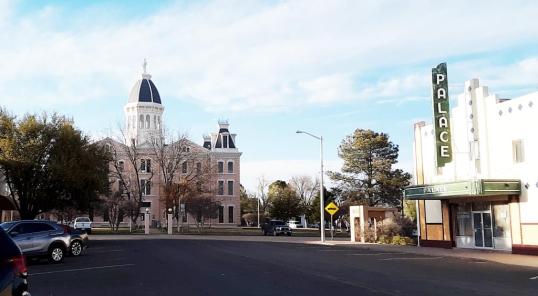 Marfa, in the Big Bend Country of Texas, is the home of the mysterious
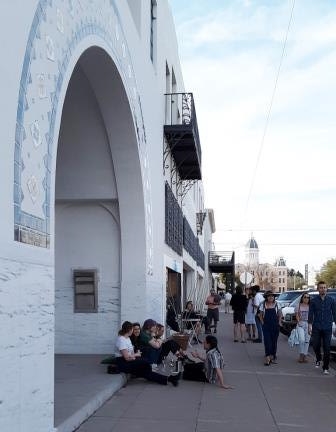
  But the real mystery of Marfa is not the lights, but how a town of scarcely 3000 manages to maintain not just the grand old




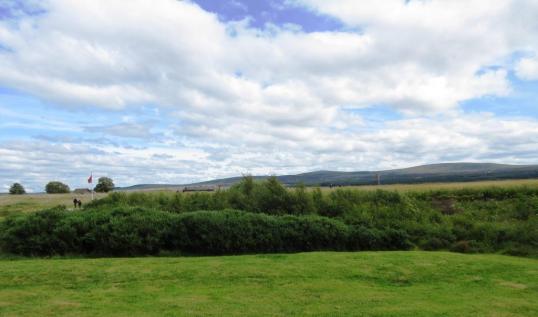 Why do we yearn over battlefields and lost causes? At the Battle of Gettysburg, the High Water Mark of the Confederacy gets more photos than any other monument. Even on our cruise in Alaska we toured a battlefield – the last stand of the Kwakiutls or some such. We are in awe of places where lots of young men died for reasons they and we no longer understand. And here we are at Culloden, where young Scotsmen in kilts wielded swords and battle axes against British cannon and riflery, and died bravely for a prince who escaped the carnage and lived out a wastrel life in Italy. .


 You see, you understand.
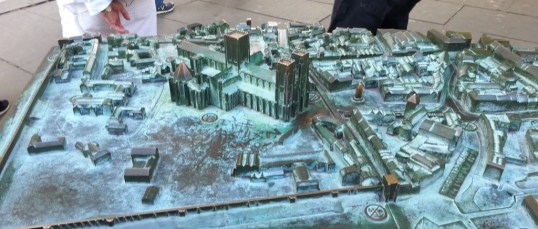
 I was thrilled to be going to York long before I had seen a picture or read an itinerary – as a long-time fan of Josephine Tey’s


 You recognize this photo of the Cathedral Square in the French Quarter of New Orleans. It could almost be a postcard if the cars would get out of the way and the sky be a bit bluer. It was a warm day in May, and I was glad of the clouds.


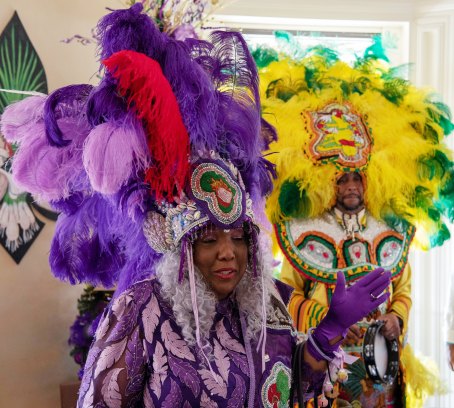
 Why, I wondered, is the
  I guess I was not the only visitor with this question in my mind, as the neighboring plaque explains how A.J. Higgins’ design for landing boats “won the war for us” per Eisenhower, leading to the establishment of a D-Day museum in New Orleans, site of four Higgins plants. Once the D-Day museum was established, widening its scope to include the rest of the war seemed sensible and cost-saving. And the National World War II Museum is a true gem.
 An excellent introductory film, “Beyond All Boundaries” shows in the Victory Theater Complex, which also offers live entertainment in vintage 1940’s style. the film orients you to what was at stake in World War II and how the conflict developed. Even with this as a guide, there is too much to cover in one day. The Home Front section includes a 40’s era -themed Soda Shop where a visitor can sit down and refuel.
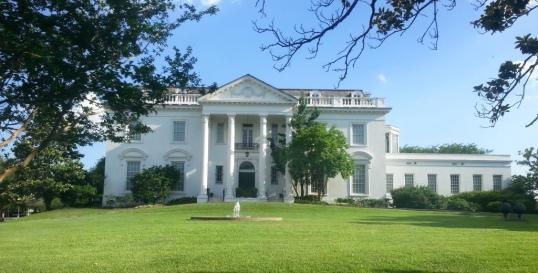 Baton Rouge is to New Orleans as Oakland is to San Francisco, forever in the shadow of its more glamorous sister city further south along the Mississippi. As the capital of the State of Louisiana Baton Rouge has its own history and its own character. Like Washington DC, it started out as a small town strategically located in the center of the state. Just as Washington grew into its role and was transformed by Pierre L’Enfant and his grand plan, Baton Rouge was also transformed by a man with a vision. That man was not an urbane French urban planner like L’Enfant. Baton Rouge had “the Kingfish” the great populist politician
  Before the Long Reign, Baton Rouge sported a perfectly ghastly
 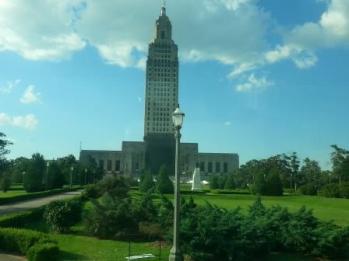 The
The 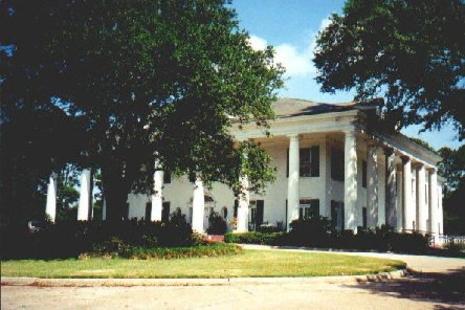
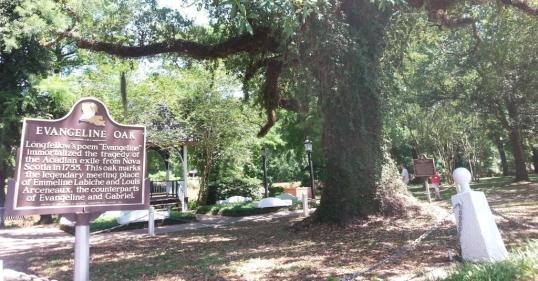


 Allyson Johnson