Freeway Free in Wales: Life in the Town, Life in the Castle
 From Caernarfon Castle we moved inland to Conwy, a walled market town with some beautifully preserved Elizabethan homes. I could imagine the burgher who lived in Plas Mawr inviting other village citizens to dine, quaffing local ale and bemoaning the unreasonable demands of the lord of the adjacent castle. Meanwhile, the servants in the adjacent kitchen would be skinning the local game and trying to keep drops of sweat from dropping into the soup.


Moving forward several centuries, we stopped at Betws-y-Coed. The ultra-quaint railway station with its ivy covered veranda spoke of Victorian solidity and permanence.
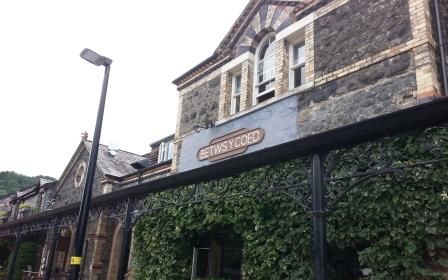
But the twin ecological monuments on the veranda spoke to very different 21st century concerns.


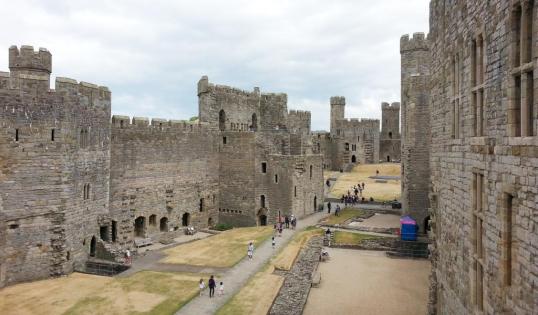
Our next stop brought the world of the castle firmly into the 21st century also, as we stopped at Gwydir Castle, a Tudor-era manor whose young owners have taken it from being an abandoned white elephant to being a reasonably profitable and comfortable bed and breakfast.


The 500 year old cedars have been saved, the ghosts (both human and animal) have been exorcised), the plumbing, including the fountains, has been restored, decorations plundered by William Randolph Hearst and others have been (at least partially) restored, and there are peacocks begging for crumbs when tea is served in the garden. (If you want to know more about the restoration, Judy Corbett has written a charming book about the process, Castles in the Air. You will never be able to hear or see the term “fixer-upper” again without a smile.


 I’m a lifelong fan of


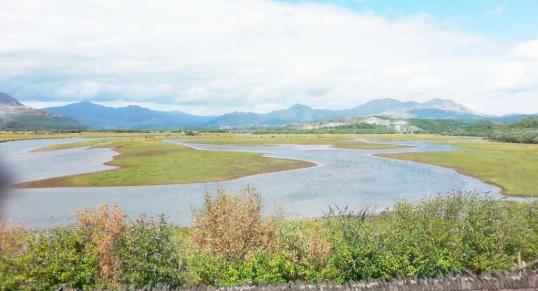 Among the hazards of a pre-organized group tour is that one day may be PACKED with events and places to see, while the next may find you bus-bound as your itinerary hustles you off to the next attraction. (Above is a view from the bus of the beautiful Welsh countryside near Snowdon. Time to explore on your own, and time to digest your experiences may both be limited.


 We are still traveling first class: we were picked up at the Manchester Airport by Jason, a deferential fellow with a strong accent. He loaded our gear into a Mercedez limo/van, and off we go through misty rain (the first rain in six weeks, Jason says) to Wales, home of unpronounceable names. We are staying outside of Llandudno in a 17th century carriage house named Bodysgallen Hall. The castle for which this ample residence formerly served as gatehouse is visible from our windows, at least a couple of miles away across the valley. Talk about an impressive entrance!


 You recognize this photo of the Cathedral Square in the French Quarter of New Orleans. It could almost be a postcard if the cars would get out of the way and the sky be a bit bluer. It was a warm day in May, and I was glad of the clouds.


 Why, I wondered, is the
  I guess I was not the only visitor with this question in my mind, as the neighboring plaque explains how A.J. Higgins’ design for landing boats “won the war for us” per Eisenhower, leading to the establishment of a D-Day museum in New Orleans, site of four Higgins plants. Once the D-Day museum was established, widening its scope to include the rest of the war seemed sensible and cost-saving. And the National World War II Museum is a true gem.
 An excellent introductory film, “Beyond All Boundaries” shows in the Victory Theater Complex, which also offers live entertainment in vintage 1940’s style. the film orients you to what was at stake in World War II and how the conflict developed. Even with this as a guide, there is too much to cover in one day. The Home Front section includes a 40’s era -themed Soda Shop where a visitor can sit down and refuel.
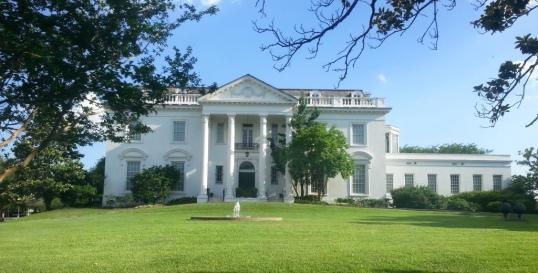 Baton Rouge is to New Orleans as Oakland is to San Francisco, forever in the shadow of its more glamorous sister city further south along the Mississippi. As the capital of the State of Louisiana Baton Rouge has its own history and its own character. Like Washington DC, it started out as a small town strategically located in the center of the state. Just as Washington grew into its role and was transformed by Pierre L’Enfant and his grand plan, Baton Rouge was also transformed by a man with a vision. That man was not an urbane French urban planner like L’Enfant. Baton Rouge had “the Kingfish” the great populist politician
  Before the Long Reign, Baton Rouge sported a perfectly ghastly
 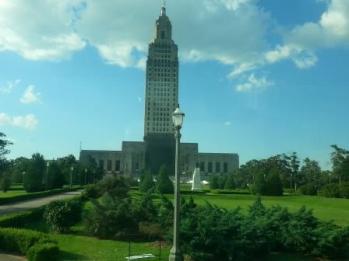 The
The 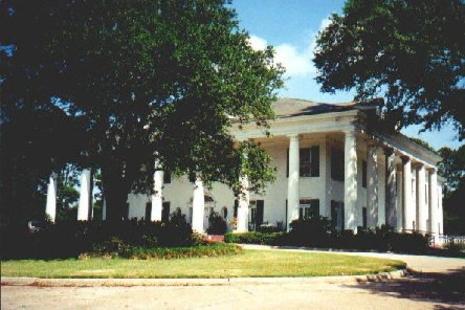
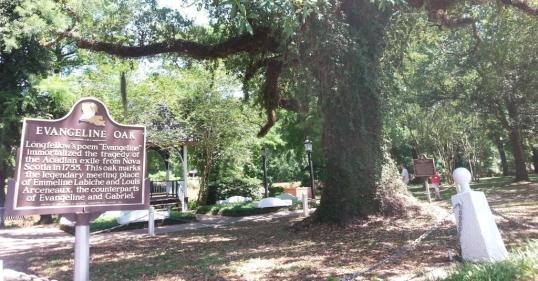


 Allyson Johnson