Freeway Free in Colorado: The Other Side of the Rockies – Grand Lake

Most non-Coloradans probably think of Denver when they think of the Rockies – the wonderful postcard panorama of the city’s skyscrapers dwarfed by the huge mountain range rising abruptly out of the Great Plains. Some might think of the Air Force Academy in Colorado Springs, another tourist magnet. If they get as far as Rocky Mountain National Park, most only make it as far as the hiking trails around Bear Lake before turning back to Boulder or Ft. Collins or Colorado Springs or other east side centers. But there is a lot to appreciate on the western slope of the Continental Divide.
We planned to eat lunch at the Trail Ridge Store at the Alpine Vistors’ Center, but we were delayed by road work as we slugged up and over the summit of the Continental Divide in Rocky Mountain National Park. By the time we arrived, but the parking lot at visitor’s center was full to over-flowing, and the presiding ranger politely but firmly turned us away. We coasted down the other side of the summit hoping at best for a coffee shop in Granby when my ravenous sister spotted a sigh for the Grand Lake Lodge – “Lodging/ Cocktails”. Where there is a bar, she reasoned, there must be bar food. And thus we happened on a hidden treasure on the west side of the divide.
The lodge itself is worthy of comparison to the great lodges of the National Parks such as the Ahwahnee at Yosemite and Old Faithful Inn at Yellowstone. It is built of local timber, and features an expansive veranda billed as “Colorado’s Front Porch.” The veranda looks out over the lodge pool and the Grand Lake – a spreading expanse of blue shining far below the deep veranda of the Lodge.


Inside is a huge gathering room, with quaint twig-and-slat rockers circled around a huge firepit. Since the weather was excellent, we elected to eat on the porch with that great view, but we could imagine on a cold or wet day how comforting that fire would be.


On separate trips to Grand Lake, we also discovered the eponymous town, a hyper-quaint log village beside the lake. It boasts a wonderful ice cream shop (very welcome after hiking the nearby trails) as well as an informative museum of local history and an excellent repertory theater which offers three or four musicals rotating over the course of the summer, with cast members recruited from university theatre companies all over the country. This summer we were there for “West Side Story” and lucked into Cabaret night, when the audience is invited to join the cast members after the show for some bonus music, each cast member presenting their own favorite song. The performance is free, and the wine/beer bar is open.


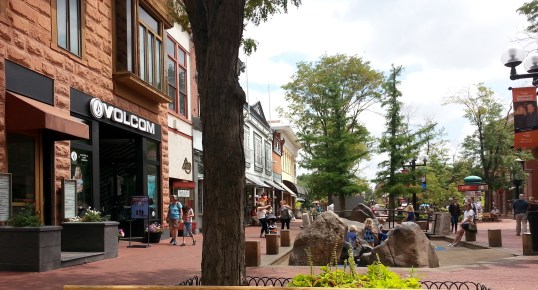 Once you are in Boulder, you could simply enjoy the atmosphere of the bustling University of Colorado campus, or spend your time hiking and rock-climbing in the FlatIrons above town. But if your interests are less academic and less strenuous, your explorations may lead you to a number of Hidden Treasures.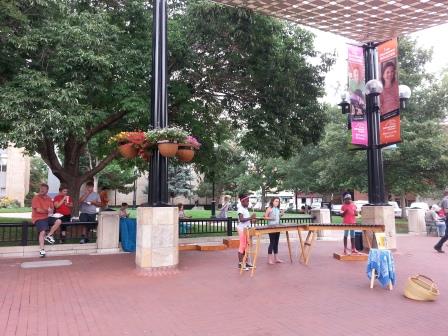


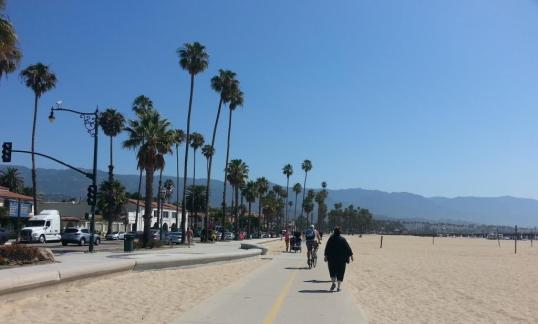
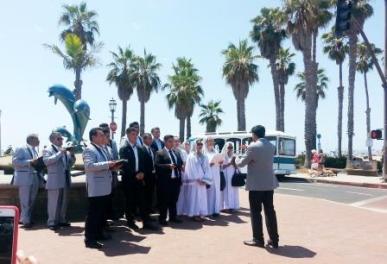
 We proposed at first to walk uptown, but W noticed signs for a shuttle going up and down State street every 1o minutes. The trolley was open air, crowded with tanned beachgoers and families, and at 25 cents for Seniors , 50 cents for youth, it was a bargain. Looking for historic Santa Barbara, we set down at the Paseo, but we were disappointed to find that it was merely a modern shopping center dressed up in red tile roofs and Adobe.



 After breakfast we headed out to Carol Vesecky’s organic orchard, where she cultivates about 40 different varieties of fruit. These included several varieties of mulberry, oranges, grapefruit, apples, figs, and several exotic south and Central American varieties that I did not recognize, though my companions who had spent time in South America greeted them like old friends. After picking some mulberries (and eating half of what we harvested as it was picked) we headed for the
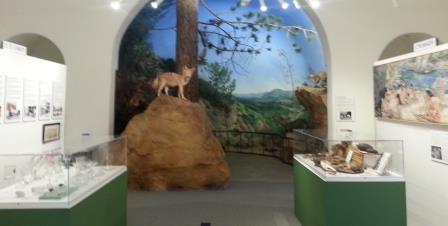
 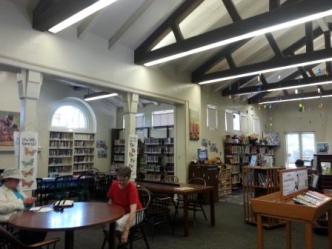 We checked in at the library, an old -style adobe and beam rambling building, then left W there, still writing, and continued to the Ojai Museum, located in a re-purposed church. My cousin, a long-time resident, had never visited before, and found out quite a few things about Ojai that after 27 years of residence she had never learned.
 Some might have been daunted at prescribing mission architecture when in fact Ojai had nothing resembling a mission. No problem. Libbey engineered the building of a mission-style Post Office, complete with a four-story bell tower which chimed each quarter hour. The false storefronts were replaced with cream-colored stucco and tile roofs; the wooden sidewalks were replaced with terra-cotta pavers and covered with arched arcades. Abracadabra! – Instant ambience!
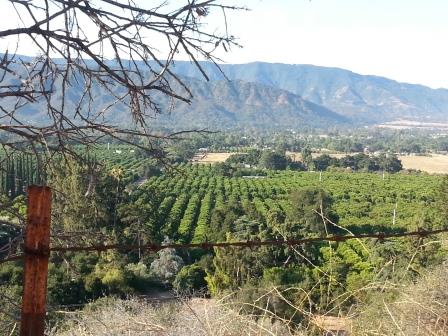
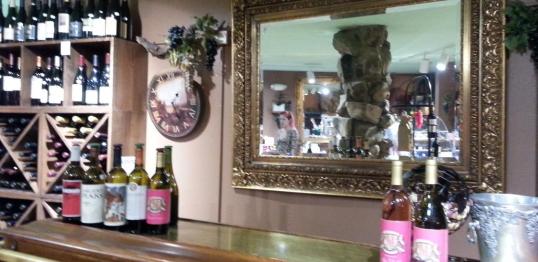 I am off to visit my cousin and friends who are rendezvousing in Ojai, 500 miles south. Google Maps sends me down the old main artery of California, US Highway 101, known as the Bayshore on the San Francisco Peninsula, the Monterey Highway in San Jose, and a dozen other names as it passes, (or nowadays bypasses) every mission town – the brown Historical Marker signs for San Juan Baptista, San Carlos Borroméo del Carmelo, San Miguel, La Purissima, and a number of crumbling Adobe dwellings are more abundant than the Golden Arches on this particular road. But today I am on the freeway, dodging big rigs and RV’s, not looking for picturesque byways.
  For lunch, I treat myself to a stop at the


 Allyson Johnson