 Unfortunately WB has developed some problems with her knee and has not been able to hike for the last couple of days, but she has gotten a free ride in the luggage van and enjoyed some leisure. The other three have enjoyed walking through the countryside on back roads and grassy trails, sampling wild blackberries, feral figs, late-season asparagus sprouts, and sunflower seeds.
***
We had an easy day today, with a gentle descent from Domme down to the verge of Dordogne River, and along the riverbank for quite a while. Then we cut through some bends in the river on grassy paths and gravel roads, through woods, corn fields, past impressive farmhouses with lots of outbuildings and HUGE stacks of wood, whose use is somewhat mysterious. There are not many wooden fences, it’s mostly barbed wire supplemented with electricity, and the pieces are too long for firewood.
 By noon we were looking for luncheon options, and happily came upon a small shop in a small village which had, to DM’s delight, cold Coca-Cola available. We purchased a few other snacks and continued until we found a convenient stone to serve as both stools and table. We enjoyed the sun, sipping and munching, then snuck through a gap in the wall for a view of the Chateau de Montfort (privately held, unfortunately)
About two/thirds of the way to Carsac we started on the Green Way, which is a former railroad right of way converted to bike and hiking path. Very pleasant, though a bit sad to walk past the abandoned railway stations in the small villages. Lots of scenic views, lots of picturesque eroded sandstone formations in the hills and along the river. 
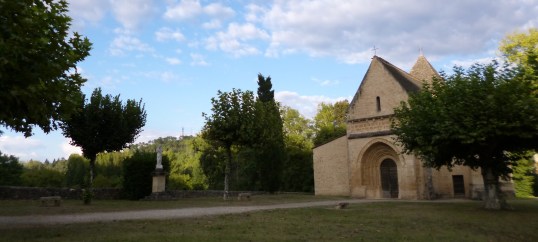
Our hotel, La Villa Romaine, is a three star affair with a beautiful courtyard and an infinity pool (solar heated, but it felt wonderful to wade my hot feet in. After a shower and a change of clothes I was up to a stroll along the river into town, where there was a lovely park, an old medieval community laundry shed built over a spring, and a Romanesque church which was closed for the day, but very lovely in the evening glow.
Then a glass of wine on the patio, with the restaurateur coming over to ask our dinner choices (How would you like your foie gras tonight?) Dinner of duck breast for me, with some interesting vegetable side dishes of a whipped-potato-with-puréed-this-and-that sort. Dessert for me was “sticky pudding with salted caramel sorbet” = a kind of bread pudding with caramel sauce + artisanal salty ice cream.
And a very comfortable bed, thank goodness.
I’m wondering, though, how this three-star hotel/spa can survive on the outskirts of a small village like Carsac – there is no famous cathedral, no well-known wine appellation, no nearby major road. And yet this hotel is the height of elegance. Perhaps it will be a get-away spot for people from the much-less-picturesque town of Sarlat, which will be our destination next as we complete our loop .
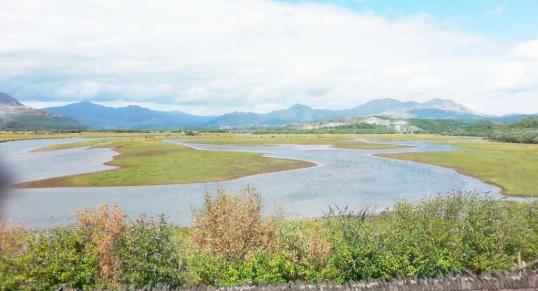 Among the hazards of a pre-organized group tour is that one day may be PACKED with events and places to see, while the next may find you bus-bound as your itinerary hustles you off to the next attraction. (Above is a view from the bus of the beautiful Welsh countryside near Snowdon. Time to explore on your own, and time to digest your experiences may both be limited.


 We are still traveling first class: we were picked up at the Manchester Airport by Jason, a deferential fellow with a strong accent. He loaded our gear into a Mercedez limo/van, and off we go through misty rain (the first rain in six weeks, Jason says) to Wales, home of unpronounceable names. We are staying outside of Llandudno in a 17th century carriage house named Bodysgallen Hall. The castle for which this ample residence formerly served as gatehouse is visible from our windows, at least a couple of miles away across the valley. Talk about an impressive entrance!


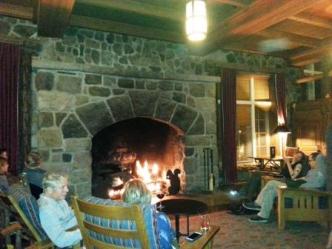 The Crater Lake Lodge is not the Ahwahnee, no yet El Tovar or the Old Faithful Inn, but has done its 1995 restoration/renovation best to revive the rustic resort ambience within the limits of a hotel located in one of the snowiest spots in the US, open only May through October if the weather permits. It does boast pillars and stairways made from Douglas fir trunks with the bark still on, and big stone fireplaces surrounded by the kind of chairs you can sink into.
 The next morning the smokiness has magically disappeared and the lake is the blue seen normally only on cheap postcards. We decide to take the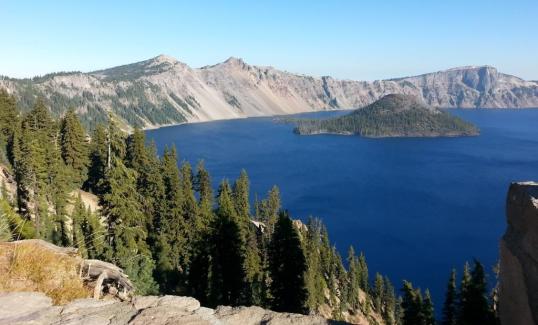
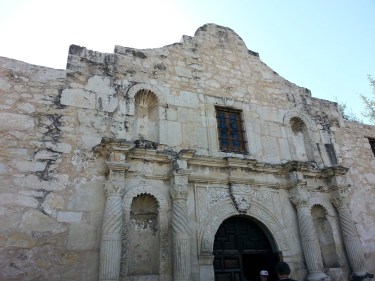 The Alamo is not a large building, and until the Daughters of the Republic of Texas appealed to the state government, it was in danger of disappearing entirely under one or another wave of urban development which swept over San Antonio. Now, of course, it is a cultural icon as well as a huge tourist attraction. The State of Texas has taken over responsibility for funding its maintenance, with the DRT acting as custodians.


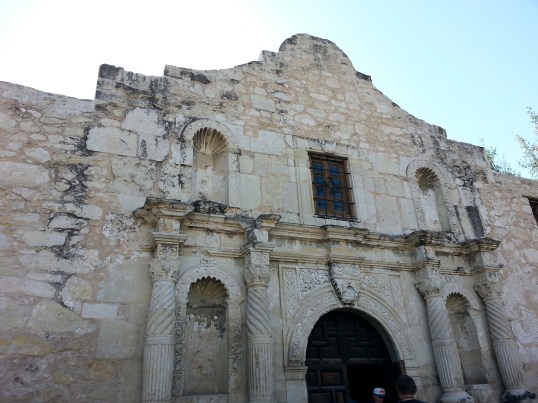
 Davy Crockett went to Texas to try to recoup his fortunes after a failed attempt at reelection to his Tennessee Congress post. He was essentially bankrupt.
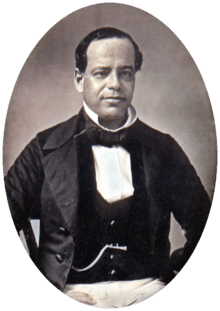 Santa Ana was not just the general defeated by Sam Houston at San Jacinto. He was the Mexican general who led a coup against the established Federalist government of Mexico after Mexico gained independence from Spain. He quickly established himself as the center of power, and had already put down revolts against his coup in three other Mexican provinces before moving north to put down the rebellion in Texas. Following his defeat in Texas he was in and out of power as the President of Mexico for another twelve years.
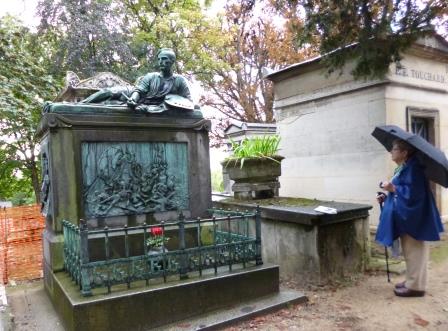 What better way to spend a gray and drizzly Sunday in Paris than wandering around the cemetery of Pere-La-Chaise, site of burial of many notable and not-so-notables of recent (since the 1800’s ) French history? The requirement for burial here is that one must have been a French citizen OR have died in France (which is why Jim Morrison and Maria Callas are here.) WB and I spent several contemplative hours in the light rain contemplating the mortality of such immortals as Delacroix, whose masterpiece “The Raft of the Medusa” is harrowingly evoked in bas relief on his tomb.


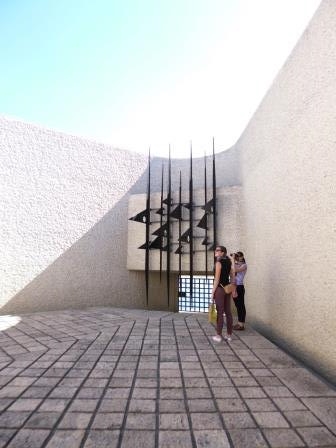 Then we went to the memorial to the
 Next up to the rooftop terrace to admire the view of everywhere we had been and wave at the folks up on the Eiffel Tower.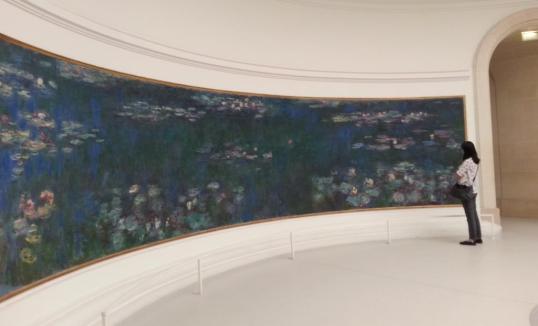
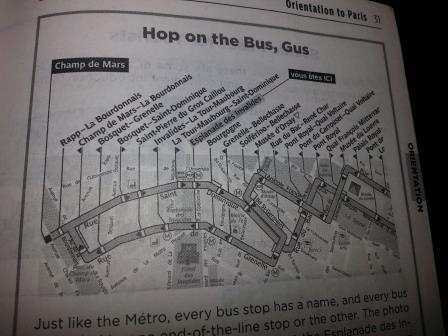


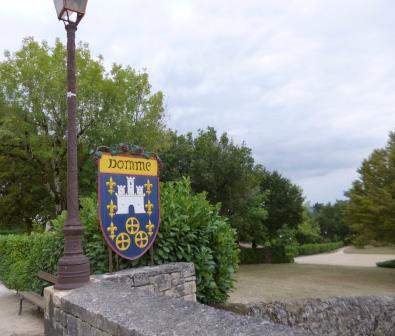 Domme is a medieval island perched on top of a bluff, too remote from normal four-lane roads to have been changed much by the advent of the automobile. As we trudged up the winding road, we were wishing for a donkey cart!


 This day was the scenic highlight of our walking – we stayed the previous night at Beynac, beneath the cliff topped by the medieval fortress which we had wandered through the afternoon before. After our breakfast of croissants, cafe au lait, and local yogurt and strawberries, and after wrestling our luggage down three flights of narrow stairs, DM, DB, and I set out along the “grassy track” by the Dordogne River. (W has developed a painful knee after too many ups and downs and decided to cop a ride in the van.). The path led along the river through woodsy patches – lots of bird calls, some families of ducks on the water, the occasional fisherman, the occasional egret. We stayed mostly level through a series of acricultural meadows and fields (DM sampled the sunflower seeds, I sampled the fresh asparagus spears pushing up from the ground) and took turns pointing out the yellow sandstone castles on the successive cliffs – Beynac behind us, its hated rival Castelroud across the river on the English side.

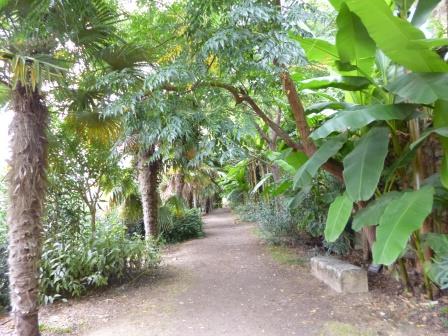
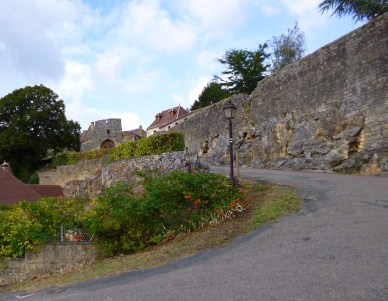
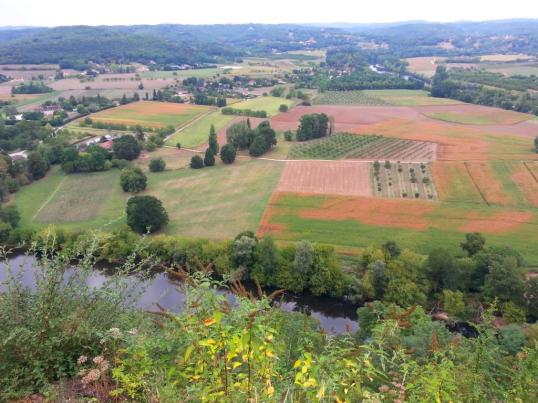 .
. Allyson Johnson