Freeway Free in Texas: The Missions of San Antonio
I had not been aware that the Alamo is only one of five San Antonio missions which together comprise a National Historic Park as well as a World Heritage Site. W and I saw them all.
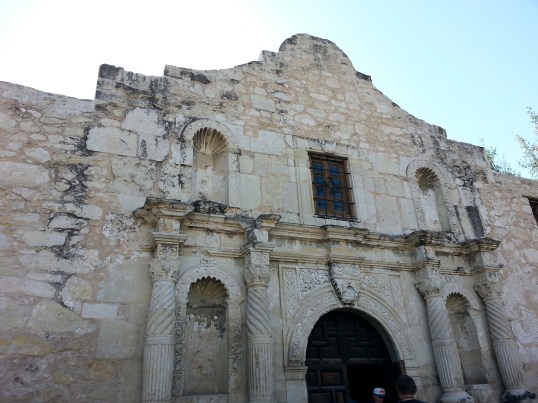
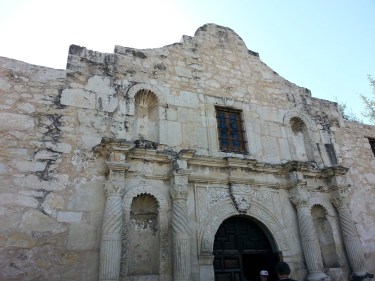 The Alamo is not a large building, and until the Daughters of the Republic of Texas appealed to the state government, it was in danger of disappearing entirely under one or another wave of urban development which swept over San Antonio. Now, of course, it is a cultural icon as well as a huge tourist attraction. The State of Texas has taken over responsibility for funding its maintenance, with the DRT acting as custodians.
Since its time as a church, the Alamo has been an army barracks, a fort under bombardment, an army storehouse, and simply abandoned. No wonder it is the least lovely of the five San Antonio missions. It has no bell tower, no frescoes, no WPA restoration of dubious accuracy, no green lawns. It does have some beautiful old live oak trees which were transplanted to the grounds, and a very well stocked gift shop, and mobs of tourists coming in waves from tour buses. We chose an audio tour so that we could try to go where the bus tours and field trippers were not, but were only partially successful.

The other missions make up in picturesque elegance what they lack in historical drama. Conception has two towers a la Notre Dame de Paris. San Jose has expansive grounds and a lovely window called “Rosita’s window” through which those Indians who were yet unbaptized could peek in and observe the religious ceremonies. Here we were guided by the incredibly perky Ranger Tatum who gave us a chirpy but very modern tour of the “Queen of the San Antonio missions” – exposing the inauthenticity of the WPA’s reconstructions, and the wrong-headed -ness of the priests’ aspirations regarding the natives.


San Juan has been spiffed up with whitewash and has an open belfry with the five bells arranged in tiers. Estrada is the last and least restored, but its dilapidation has a raffish charm all its own.


The missions were opened as a way of establishing Spanish culture and faith in the New World; the missionaries were at the same time agents of the King as well as of God. The natives came to the missions as a last resort – they were being terrorized by tribes of Apaches who were invading south Texas in order to escape the even more martial Comanches, and they were dying of sicknesses brought by their early contacts with the Spanish. The missionaries promised shelter from and defense against the Apaches, which they delivered in exchange for the natives’ abandoning their language, beliefs, and culture – even their names. However the missionaries could not protect against the illnesses. The priests believed that the natives were dying because of their sinful lives, not because of contagion, which was not then understood. By the end of the mission era, 80% of the indigenous tribe members who had come to the mission for help were dead.
Lovely weather, and as we proceeded sown the Mission Trail the outer Missions were progressively emptier. We walked a lot, mostly on paving stones and bricks and clinkers. We felt we had earned a margarita at the end of the day at spangle-lit Mi Tierra, the doyenne of San Antonio’s Mexican restaurants. followed by a delicious platter of Monterrey Speciale, and a middling good flan to share at the end of the meal at the end of the Trail.


 Davy Crockett went to Texas to try to recoup his fortunes after a failed attempt at reelection to his Tennessee Congress post. He was essentially bankrupt.
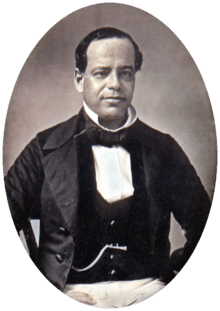 Santa Ana was not just the general defeated by Sam Houston at San Jacinto. He was the Mexican general who led a coup against the established Federalist government of Mexico after Mexico gained independence from Spain. He quickly established himself as the center of power, and had already put down revolts against his coup in three other Mexican provinces before moving north to put down the rebellion in Texas. Following his defeat in Texas he was in and out of power as the President of Mexico for another twelve years.

 We had noted only a couple of restaurants which were not Mexican, and since W has a favorite Mexican place she has scheduled for us tomorrow night, we settled on the
  On the west of the Rockies, one is expected to hike and bike in the summer (not having visited in the winter, I can only speculate about activities then). The point of hiking and biking is to see lovely bits of flora and fauna than one might miss in a car. Here is a collection of photos from my experiences on food and on pedal.


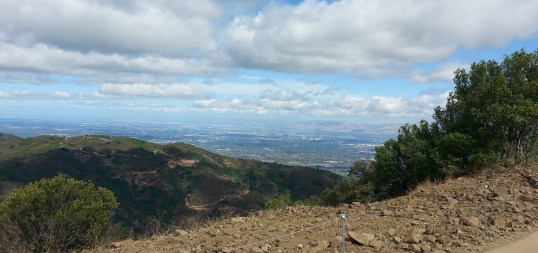
 Then a controversy prompted action. In 2009 Midpen obtained Federal funding to clean up the site, and one of its first ideas was to tear down the remains of the radar tower and restore the site to its pristine pre-Cold War state. Valley residents erupted with letters and meetings – the tower was ugly and dilapidated, but it was an icon none the less, part of the Valley’s landscape and history for 60 years, and we didn’t want it to disappear without ever having had the chance to visit it.


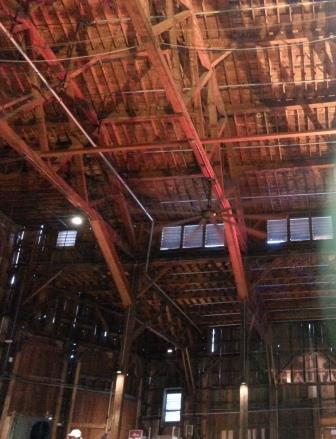

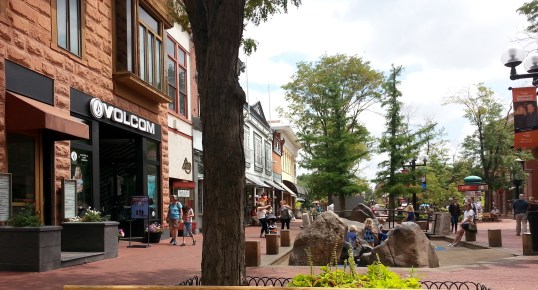 Once you are in Boulder, you could simply enjoy the atmosphere of the bustling University of Colorado campus, or spend your time hiking and rock-climbing in the FlatIrons above town. But if your interests are less academic and less strenuous, your explorations may lead you to a number of Hidden Treasures.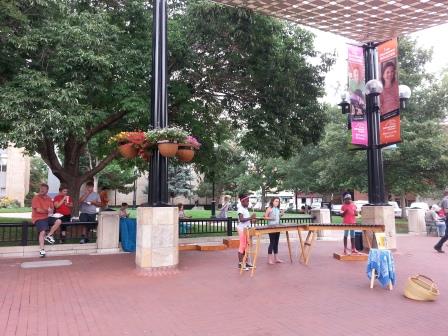

 Allyson Johnson