Freeway Free in California: San Jose’s Japantown
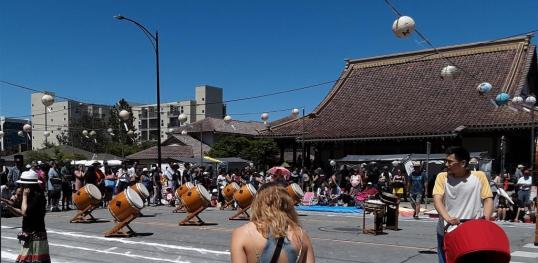 San Jose’s Japantown, centered around the intersection of Jackson and Fifth Restaurant, is one of only three remaining centers of Japanese culture in the US (the other two being in San Francisco and in Los Angeles.) Almost destroyed by the forced internment of most of its citizens during World War II, it has bounced back as a nucleus of Japanese restaurants, shops, and community organizations.
If you go to Japantown, it’s best to start with a good meal. Kubota’s on 5th is an upscale favorite of local Japanese businessmen and their visitors from Japan. I’m a big fan of their chirashi, which comes with a really good tofu salad along with a sizable bowl of rice topped with generous slices of raw fish. If you want a more casual meal you might try Gombei, the sister restaurant around the corner on Jackson, which specializes in sushi.
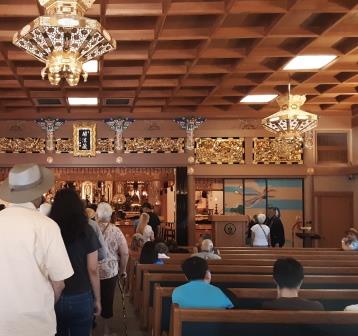 After lunch, a stroll along 5th street on the other side from Kubota’s will lead you to the San Jose Betsuin Buddhist Temple, with its serene garden inviting some digestive meditation. If you can, enter the temple and admire its beautiful sliding shoji screens, gilded lanterns, and handsome icons.
From the intersection of 5th and Jackson, a stroll up and down Fifth Street gives you a chance to browse in shops featuring Japanese anime action figures and bobble-head toys, music stores featuring Japanese stringed instruments and taiko drums, houseware stores, and a variety of Japanese and Korean restaurants and tea shops.
My favorite is Nichi Bei Bussan – a gift shop which has been in business over 100 years, featuring all things Japanese, including kimono fabric and patterns, whimsically decorated socks designed to be worn with flip-flops or Japanese sandals, beautiful tea sets and platters, origami paper, craft books, gift wraps, Japanese graphic novels and magazines and charming, helpful sales people who will gladly help you find the perfect item.


After shopping, time to reflect on the history of Japantown. Go back down Fifth street past Kubota’s and find the memorial sculpture and garden next to the Nissei Memorial Building housing the Japanese American Citizens League. It’s worth studying each face of the three-sided memorial before visiting the Japanese American Museum just a few doors further down.
The Japanese-American Museum traces the history of Japanese immigrants in the US, from their being imported as easy-to-exploit agricultural laborers to their forced removal to concentration camps during World War II. The museum includes videos, recorded intreviews, and a replica of a family’s space at Manzanar, one of the relocation camps. You cannot spend time in this museum without feeling a bit queasy at how easy it seemed to have been to deprive thousands of U.S. citizens of their rights, even as our country fought against the same arbitrary cruelty as seen in Nazi Germany.
On a lighter note, try to schedule your visit to coincide with one of the special festivals. I recently happened to arrive during the summer Obon Festival, which featured dancers, taiko drummers, men and women in traditional costumes, lots of food and crafts booths, and an open house at the Buddhist temple offering one-hour classes in “Buddhism 101”.


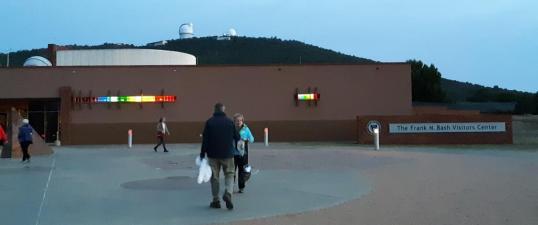 W had made arrangements for us to attend a Star Party at the McDonald’s Observatory 15 miles west of the Lodge. We knew reservations were required and had them, but did not realize that each party had over 200 invitees. I negotiated the twisty road in Moby Dick, our outsized 4×4 pickup, and parked in daylight, hoping to be able to find the truck later in the dark.
 We were early for the star-gazing, and browsed the Visitors’ Center and Gift Shop, as my spouse, a big fan of the Observatory’s Star Date broadcasts on PBS, had asked me to bring him something from MacDonalds. I managed to find some postcards and an affordable and portable book at the gift shop, and made it through the line at the cash register just as they were calling for the partygoers to come to the outside auditorium for the start of the star gazing.
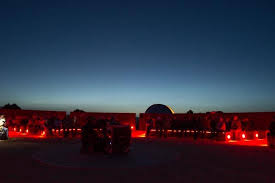 Whatever did we do before fleece! Cozy in fleece jacket and pants and three layers beneath, topped with hats and scarves, we sat on concrete benches as the star ranger pointed out details we had never seen before of Orion. The ranger drew a big laugh with his description of “the hunter, he has a sword, shield and these two bright stars mark his brawny shoulders, but like some other athletes, his head is this fuzzy thing…;” We were introduced to Leo, Taurus,
 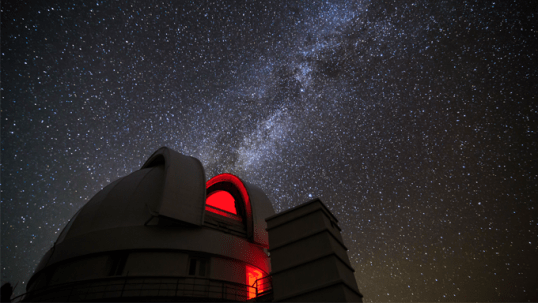 Then the host recommended we adjourn to the telescopes for viewing, as clouds were beginning to obscure the sky. There were three outdoor telescopes and two domes open, but even though some of the 200+ viewers had left the amphitheater early to get a head start, there were still long cold lines. We wished we had a fourth fleecy layer. We saw the Pleiades up close and two star clusters and then headed for the interior Sky Tour, which was rather redundant but at least it was indoors, warmish, and sitting. We bailed at 10:30, foregoing another classroom talk, and I drove prudently down the mountain. We crashed into bed at 11:15, piling on all the warm quilts we could find.


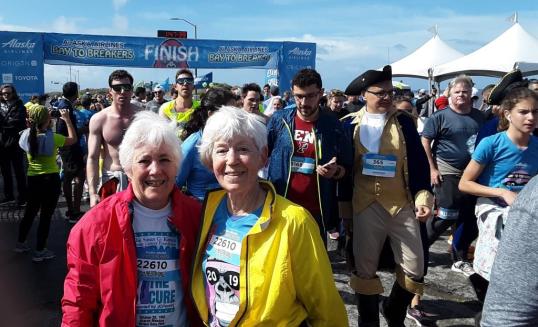
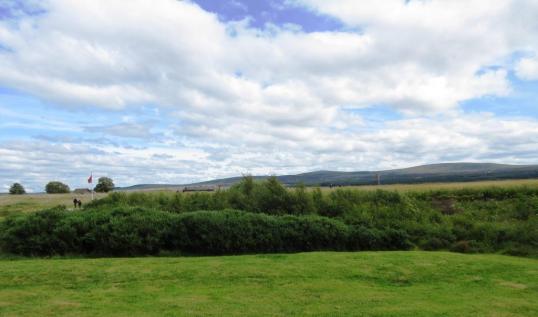 Why do we yearn over battlefields and lost causes? At the Battle of Gettysburg, the High Water Mark of the Confederacy gets more photos than any other monument. Even on our cruise in Alaska we toured a battlefield – the last stand of the Kwakiutls or some such. We are in awe of places where lots of young men died for reasons they and we no longer understand. And here we are at Culloden, where young Scotsmen in kilts wielded swords and battle axes against British cannon and riflery, and died bravely for a prince who escaped the carnage and lived out a wastrel life in Italy. .


 You see, you understand.
 Homecoming Parade – Now and Then
 Main Street had been blocked off between State Street and First Street. Both sides of the street was lined with people, some who had brought chairs for better viewing. Many of the spectators wore T-shirts with the “HOCO” Home coming Logo, overlying a large candy-swirl sucker honoring the Candyland parade theme. There was a lively mix of parents, grandparents, younger siblings, and fellow students of the marchers. Lots of hugs were being exchanged.


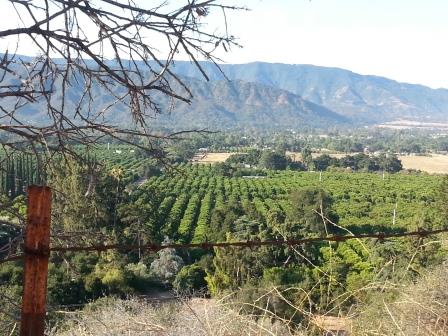
 Imagine if Walt Disney, instead of building Disneyland with his own profits from the Mickey Mouse Empire, had gone to the city fathers of Anaheim and asked them to go in with him in making Anaheim a really interesting place to visit (After all, it already had beautiful orange groves and a scenic mountain backdrop.) That’s kind of what happened at a crucial point in the history of Ojai, except the mogul who re-made Ojai was not Walt Disney, but
  Some might have been daunted at prescribing mission architecture when in fact Ojai had nothing resembling a mission. No problem. Libbey engineered the building of a mission-style Post Office, complete with a four-story bell tower which chimed each quarter hour. The false storefronts were replaced with cream-colored stucco and tile roofs; the wooden sidewalks were replaced with terra-cotta pavers and covered with arched arcades. Abracadabra! – Instant ambience!


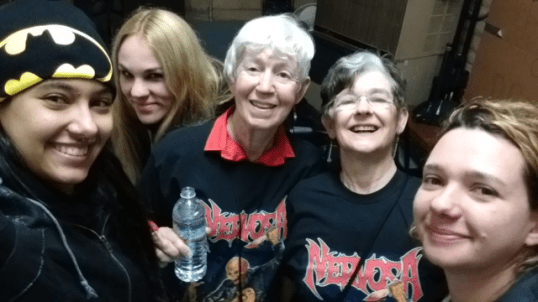


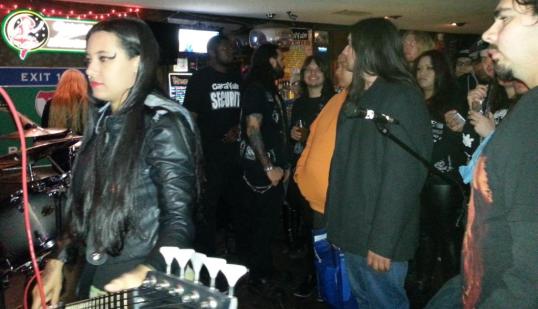
 Apparently silver hair at a heavy metal concert is irresistible. No less than three different groups of black-clad, pierced concert-goers approached us to ask “Can we have our picture taken with you?” We were turning from the last set of admirers when Pitchu appeared beside us and invited us backstage. Behind the shelter of a cinderblock wall and a steel door we were able to remove our earplugs and enjoy watching Pitchu practicing her drumming on the steel locker, Prika in lotus position on a crate checking notices from the previous gig, and Fernanda applying the makeup which transformed her from a clear-skinned smiling All-Brazilian Girl to a wild-eyed punk rocker.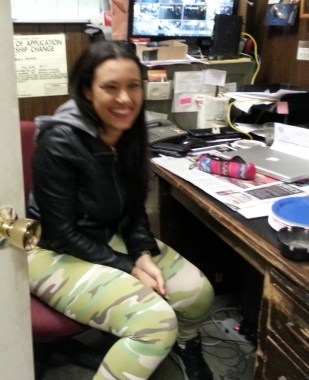
 Allyson Johnson