Allyson Johnson

Pieces of my Mind

Archive for the tag “publishing”

The Publishing Journey: Step 3 – Design a Cover
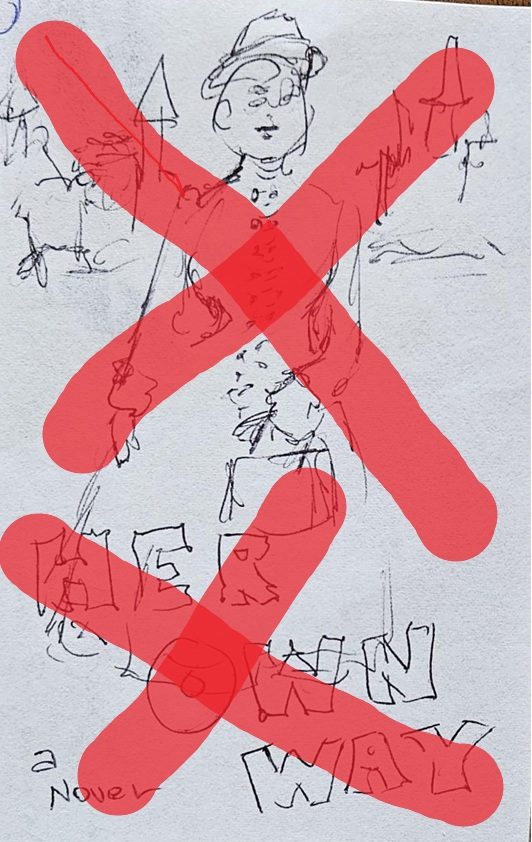
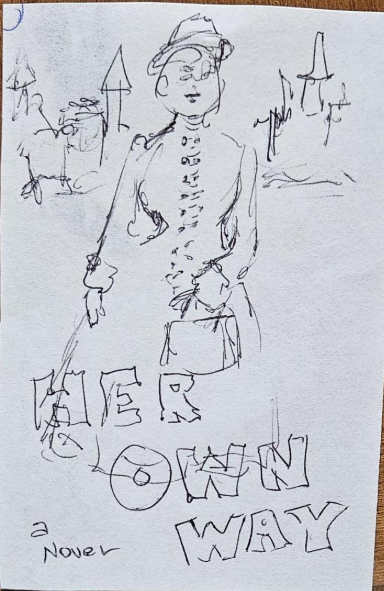
I had a title for my novel.  “Her Own Way”. I thought this indicated clearly that the book is about a woman, one who carves her own path rather than meeting the expectations of others. Would you want to read that book? 

My publisher’s crew did not like that title. “Too generic” they said.  They gave me some other choices: 

The Liberation of Nellie Young

The Many Lives of Nellie Young

The Three Lives of Mary Sutton

The Sutton Sisters

I had jokingly suggested that “I led Three Lives” would have been  a good title for the book if that title had not been claimed already by a long-running TV series (though few of my prospective readers would ever have head of it.)  So I went with Option 3. 

I had suggested that I wanted a picture of the great-grandmother who inspired my novel on the cover.  the publishing crew seemed amenable, and Isent two different photos.  Sorry, these are not in the required high-definition format and would look pixilated on the cover – ok if this were a Sci-fi novel but not for a historical.  

Fortunately, I have a friend who worked for Adobe and knows all about creating a 300 dpi photo file fro a 150 dpi scanned image. I scanned the photos on my home multi-function printer and Jim transformed the scanner’s output into the required format.  Hurdle overcome. Enhanced versions sent. 

Sorry.  After several tries, the publisher’s crew of artists communicated that it would not be possible to make a cover that was properly eye-catching using the historic photos.  The one I liked had too much old-=fashioned detail (a chair, a fern) and could not be cropped.  The other one was possible, but they could not figure out how to make her static figure look dynamic against a historic street scene. And the whole effect was too busy. 

In several exchanges of letters, I was educated in the new requirements of cover design.  

Most importantly, the cover needs to convey its message when shrunk to a dimension about the size of a large postage stamp.  

*This is the size which will be displayed in print inserts to local newspapers from local bookstores. 

* This is the size which will appear in print advertising in magazines such as my University’s alumni magazine or in “Wirter’s Digest” or in the New York Review of books.  And above all 

*This is the size which will appear on a potential reader’s phone or tablet when he/she clicks through Amazon looking for something of interest. 

The artists sent four suggestions: 

One simply showed a woman’s expressionless face. What does that tell you?  Not that one. 
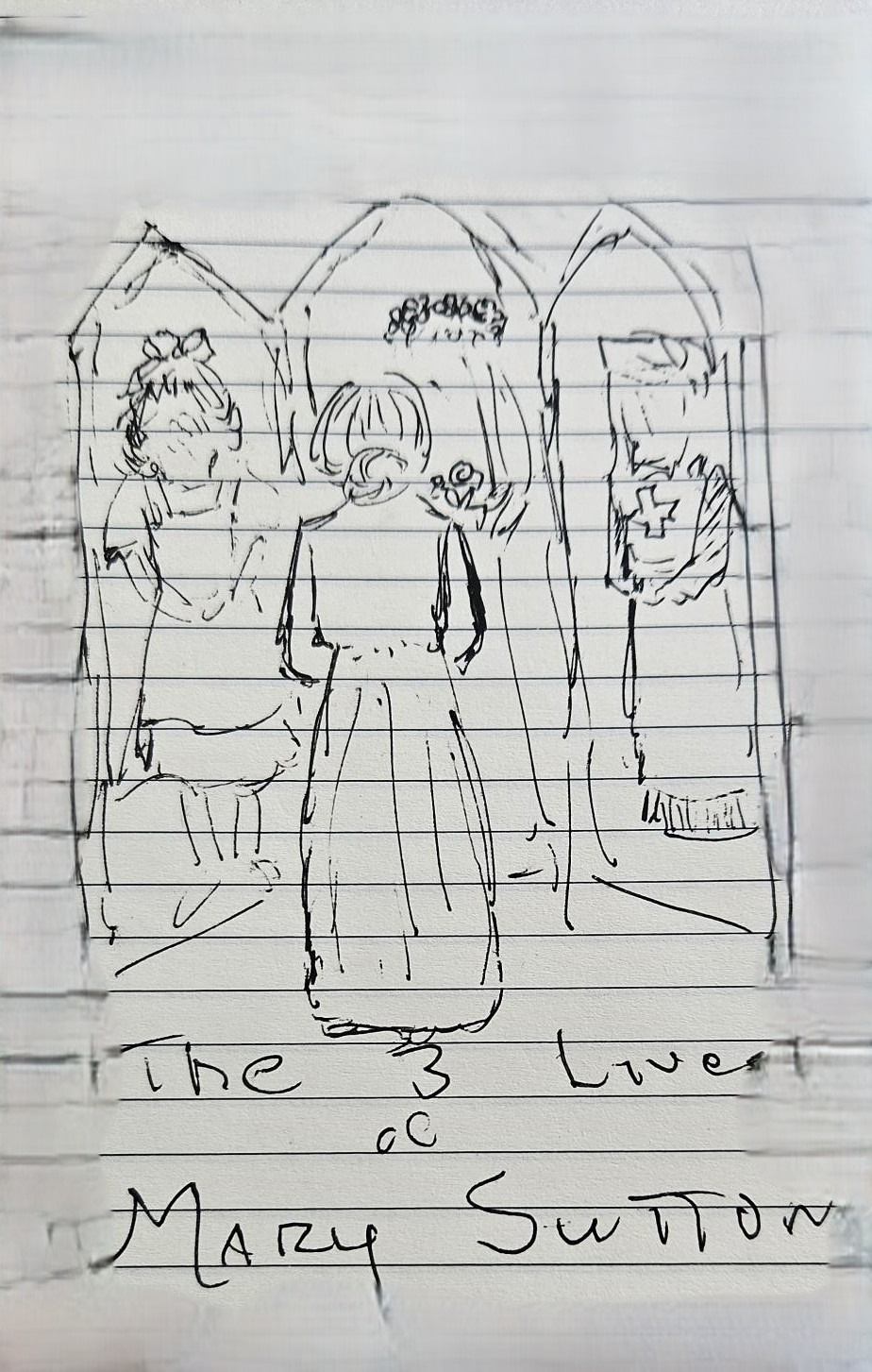
One showed a woman from the back, wearing a long black dress, arms pressed close to her sides, her hair in a severe bun.  She looked like Morticia. Why would you want to read about her?  Not that one.

One showed a rather plain young girl dressed again in a long black dress, looking sadly out of a window. No fun.

The fourth was ok.  I sent a note indicating that I thought this was the best of the four.  To my dismay, the team took this to be a full approval . I had expended energy already over my photo failure, and did not demur, as I had no alternative suggestion prepared.   

Of course, a week or so later I had all sorts of better ideas for the cover, but that ship had sailed.  Maybe when the book goes to its second printing? (Ha!  In your dreams – but why not dream?) 

No, I’m not showing you the actual cover.  Apparently the “cover reveal” is a big deal later in the process.  Stand by. 
The Publishing Journey: Step 2 – Find a Publisher

The book publishing world has changed a lot since I first imagined publishing a book.

Back in the day, there wree local and regional newspapers that regularly reviewed books by local authors. Almost every downtown had at least one bookstore which featured readings by and interviews with local authors. Non-profit organizations like PTA, AAUW, DAR, and PEO hosted Author’s Lunches as fundraisers, inviting local authors to speak. The Internet, still in its early stages, was begging for content to fill its channels.

New world. Amazon has steam-rollered local bookstores. Online sales channels have sucked advertising revenue from newspapers, which have either folded or are on life support. Non-profit organization struggle to get membrs to attend live meetings post-COVID. And it seems that every Boomer has written a book, flooding literary agents and publishers with as many as one hundred and twenty manuscripts a day. And those publishers are increasingly reluctant to take on any new writer who is not already a well-known name.

So what’s an author to do? An industry has materialized offering aid to authors who lack the time and stamina to go the route of independent publishing. I talked with a friend who had gone the route of “hybrid publishing”, where the publisher takes on the jobs of editing, cover design, print layout, printing, and supplying a distribution channel, and perhaps for additional cash will also help with marketing and publicity. Some of the hybrid presses will accept anyone with cash to pay for service; others are more selective. “The Cadillac of the hybrid presses is She Writes Press,” my friend remarked. “They only accept maybe one in five of the manuscripts they see”. My friend had selected Girl Friday Press as her route to publication, and was happy with her choice, although she said she had to stand firm on the cover art she preferred against her project manager’s recommendation. “After all, I told them,” she said, “you are working for me.”

I checked out some of the hybrid presses my friend had mentioned on the internet. Girl Friday had an extensive questionnaire which included the query “How much are you willing to commit financially to support your book?” At that moment I recoiled, as I had not thought at all of how much I would need to commit up front. I ended up submitting my first pages to Feminist Press, because they are based in New York where my book is set, and, feeling I was taking up a dare, to She Writes Press. She Writes warned that submissions would be evaluated as “red-light – not interested,”, “Yellow-light – interested, but manuscript needs work”, or “green light – looks good, but we may change our minds when we see the full manuscript.

A few weeks later, Submittable, the website which many agents and publishers are currently using to manage submissions,, alerted me to a communication from She Writes Press:

Dear Allyson, Thank you so much for your submission and congratulations on passing through our two-tier submissions process with such flying colors. I’m attaching your assessment for Her Own Way here.I’m excited to be writing to let you know that we would love to offer you a contract to publish with She Writes Press.

OK, I was seduced. The idea that I had been chosen, approved, green-lighted above other competing manuscripts was irresistible. Plus I noted that an old friend of mine had just published a book through She Writes – I would have someone to hold my hand. I signed on. I had a publisher, and pretty soon, after my full manuscript was vetted, a publication date – November 10, 2026. Hang on for a bumpy ride!

The Publishing Journey: Step 1 – Write a book

The first novel I wrote took me ten years to finish. I had expected once I retired that I would whip it into shape in six months from the fragments I had generated during my off hours at work. Vain dream. I had hoped that once it was finished I would find an agent, who would find a publisher, who would find an audience. More vain dreams. I ended up publishing that first effort online (see ajmccready.com) where instead of going viral it sank like a dime into jello, without a ripple.

Undaunted, I’ve written another book. This one took me only about two years, as I had a historical framework to start from – the fragmentary story of my paternal great-grandmother. And I got a lucky break: a previously unknown relative contacted me, hoping to complete a genealogical record she had been researching, and she ended up being my personal research savior, digging up details of my great-grandmother’s story from census reports, cemetery documents, ship’s passenger lists, and poorhouse records.

There were still enough gaps in the history to allow my imagination free rein. My great-grandmother lived in New York City during the Gilded Age, so there was a wealth of historical possibility I could insert into her story. E.L. Doctorow had inserted Teddy Roosevelt and other historical personages into his classic “Ragtime”; I could do the same. I had fun. I put together almost three hundred pages. I imagined the book being published, with a cover featuring a photo I had recovered of my great-grandmother looking resolute and intrepid.

Onward!

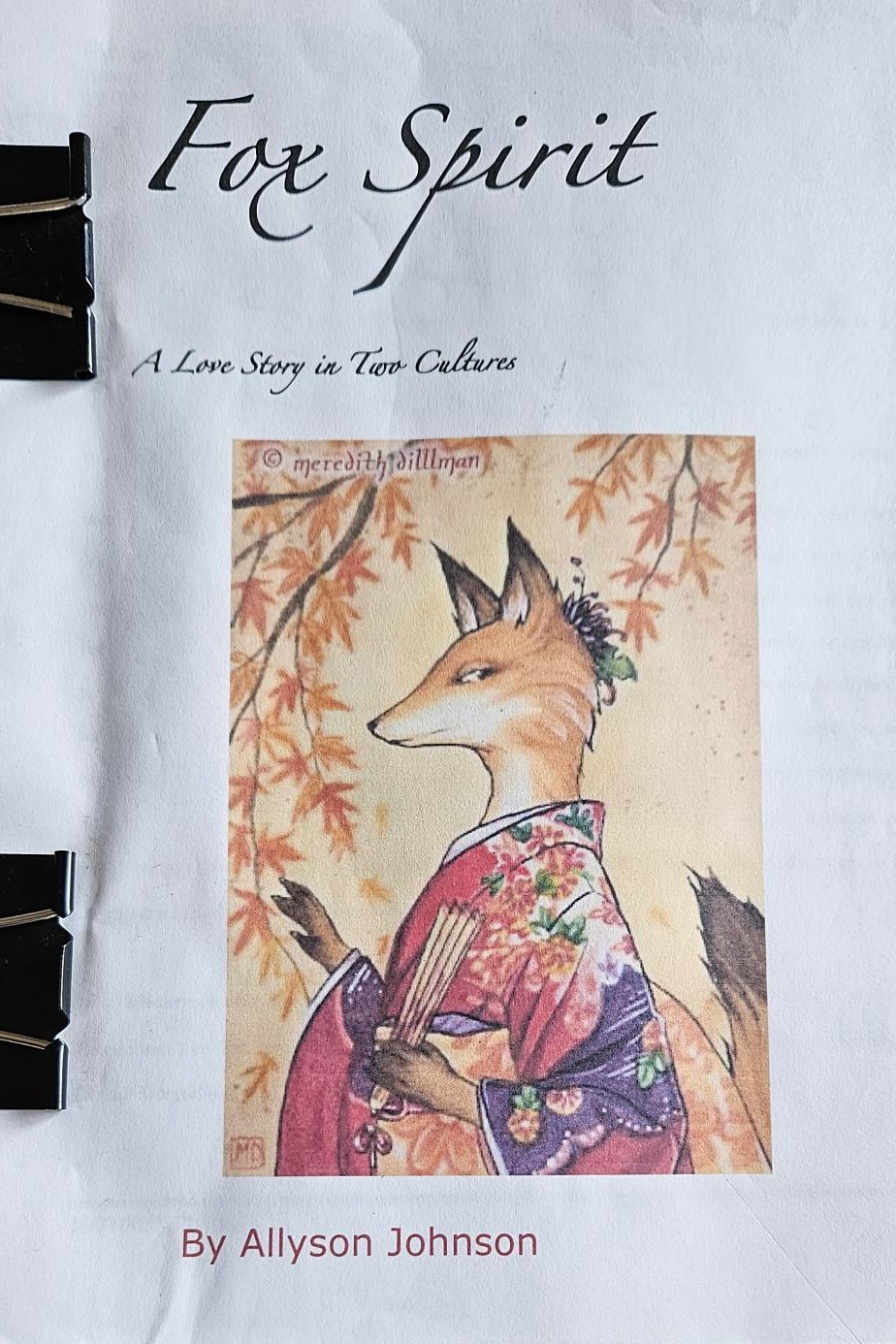
[Graphic on imagined cover of “Fox Spirit” is copyrighted by artist Meredith Dilllman]

Post Navigation