Freeway-Free in Texas – Houston’s Julia Idelson Library – a Hidden Treasure

Some folks probably only visit’s Houston’s main library because you can get validated free parking in the library garage by making a visit to its downstairs lobby. They miss a lot.
On my recent trip, I was attracted by the garden and wrought iron fence surrounding the OLD library building (now known as the Julia Ideson Building, located right next to the new concrete edifice which supplanted it. )Once in the garden, I had to take a look at the historic building’s insides. And as often happens in old libraries (I am somewhat of a library junkie) I found hidden treasures.
In the downstairs lobby was an extensive exhibit of original letters and news articles in glass showcases, chronicling the struggle of Houston’s black population to gain entrance to the city’s libraries. It was fascinating and chilling to see how earnestly, politely, and stubbornly the black citizens of Houston staked their claim to equal access to the libraries their taxes helped pay for, and how circuitously, hypocritically, and stubbornly the city and the education system of 1920’s-40’s Houston resisted their claim. (Houston’s black populations did not have equal access to the libraries until the 1950’s, under pressure from returning black veterans and the Eisenhower administration.)
Upstairs we found a beautiful painted ceiling and plaster-relief fresco above the wood-paneled walls. Off one side of the vaulted second floor landing was a wonderful old reading room, presided over by Venus de Milo herself.


And behind an updated glass door was another exhibit, featuring the first black student to enroll in a major university in the South, John S. Chase. He was an architecture student, and there was no black college in Texas where the university system could pretend to offer him a “separate but equal” education. Despite many obstacles (e.g. Texas regulations had to be waived to allow him to get an architect’s license without having served an internship, as no architectural firm would hire him) Chase went on to become a successful architect and mentor to a generation of successors. 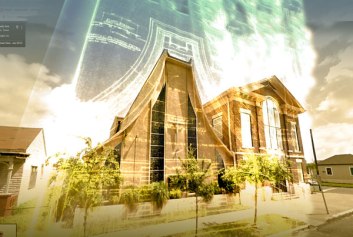
On our way to the ladies’ room, we spotted a door at the end of the corridor marked “Authorized Researchers Only” . Of course we considered ourselves authorized researchers, and went in. Behind the oak doors was the original children’s room of the old library, with its age-darkened bookshelves crammed with the children’s books which were too old, too little in demand, too overtly racist, or for some other inscrutable reason were deemed unsuitable for general circulation in today’s Houston Library network. 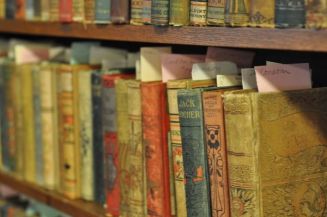
Of course, many of these books were very familiar to W and I and some had been much loved (Robert Lawson’s Smeller Martin and Elizabeth Coatsworth’s The White Horse were two I remember well and paged through once more with great glee, despite their racist stereotypes). It was an Ali Baba’s cave to booklovers.
If you are in Houston with some hours to while away (I’m thinking maybe a rainy day, of which there are many) this would be a wonderful way to while.


 We had noted only a couple of restaurants which were not Mexican, and since W has a favorite Mexican place she has scheduled for us tomorrow night, we settled on the




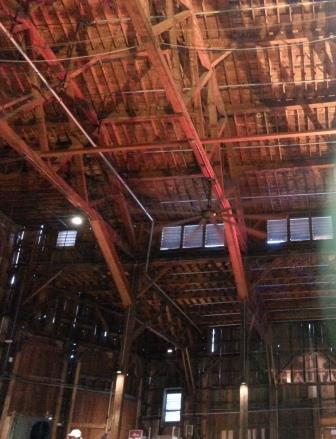


 After breakfast we headed out to Carol Vesecky’s organic orchard, where she cultivates about 40 different varieties of fruit. These included several varieties of mulberry, oranges, grapefruit, apples, figs, and several exotic south and Central American varieties that I did not recognize, though my companions who had spent time in South America greeted them like old friends. After picking some mulberries (and eating half of what we harvested as it was picked) we headed for the
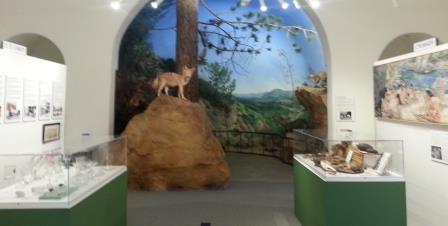
 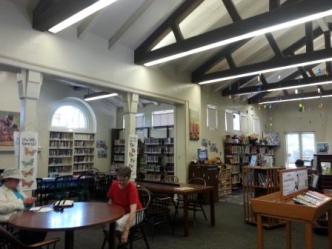 We checked in at the library, an old -style adobe and beam rambling building, then left W there, still writing, and continued to the Ojai Museum, located in a re-purposed church. My cousin, a long-time resident, had never visited before, and found out quite a few things about Ojai that after 27 years of residence she had never learned.


 Having figured out the advantage of attracting tourists to their market on Saturday morning, the city fathers of Sarlat have lost no time in figuring out ways to keep those walking cash dispensers in town as long as possible. On the Saturday of our stay we were tempted back onto the streets long after the market closed with


 The Dordogne area of southwestern France is rife with sandstone caverns, many of which hold spectacular displays of calcite formations, and several of which hold samples of Paleolithic art, most preserved unseen for over 20,000 years because the entrances to the caves collapsed, cutting off access.
 Still in Arles
 We started off with a stop in the 12th century at the Cloistre de St. Trophies, a cool and calm spot right off the main square. The cloister included many statues which had been so badly eroded you could hardly make them out, but a few that had been sheltered are very human and evocative. Then we walked along the wall of the city overlooking the Rhone, well culverted against flooding, admiring an old Romanesque church which had been converted during the Revolution to a union hall for shepherds, a large domed building which was the remains of a steam bath built by Constantine, and a number of long views down the river to unnamed castles and fortifications in the distance.
 Scanning the arena, we spotted her in the Tower! Heading back to the tower, I heard my name called. It was DB, AWOL from the garden, who had just seen WB at the base of the tower. “I’ll meet you at the entrance to the tower, ” she said. By the time we got there, WB was back a quarter of the way around the arena, and DB was nowhere to be seen. And so on. We finally joined forces and made our last tourist stop at the old Roman theatre, much pillaged (as was the Arena) for building materials over the years, but now set up for open air musical and theatrical performances. We tested the acoustics and found them sadly lacking compared to Ephesus in Turkey or the Mormon Tabernacle in Salt Lake City.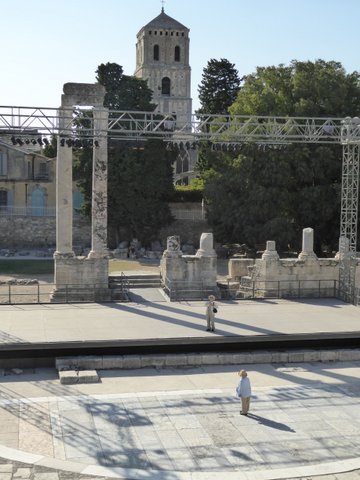




 Allyson Johnson