Freeway Free on the Snake River: Locked In, Locked Out
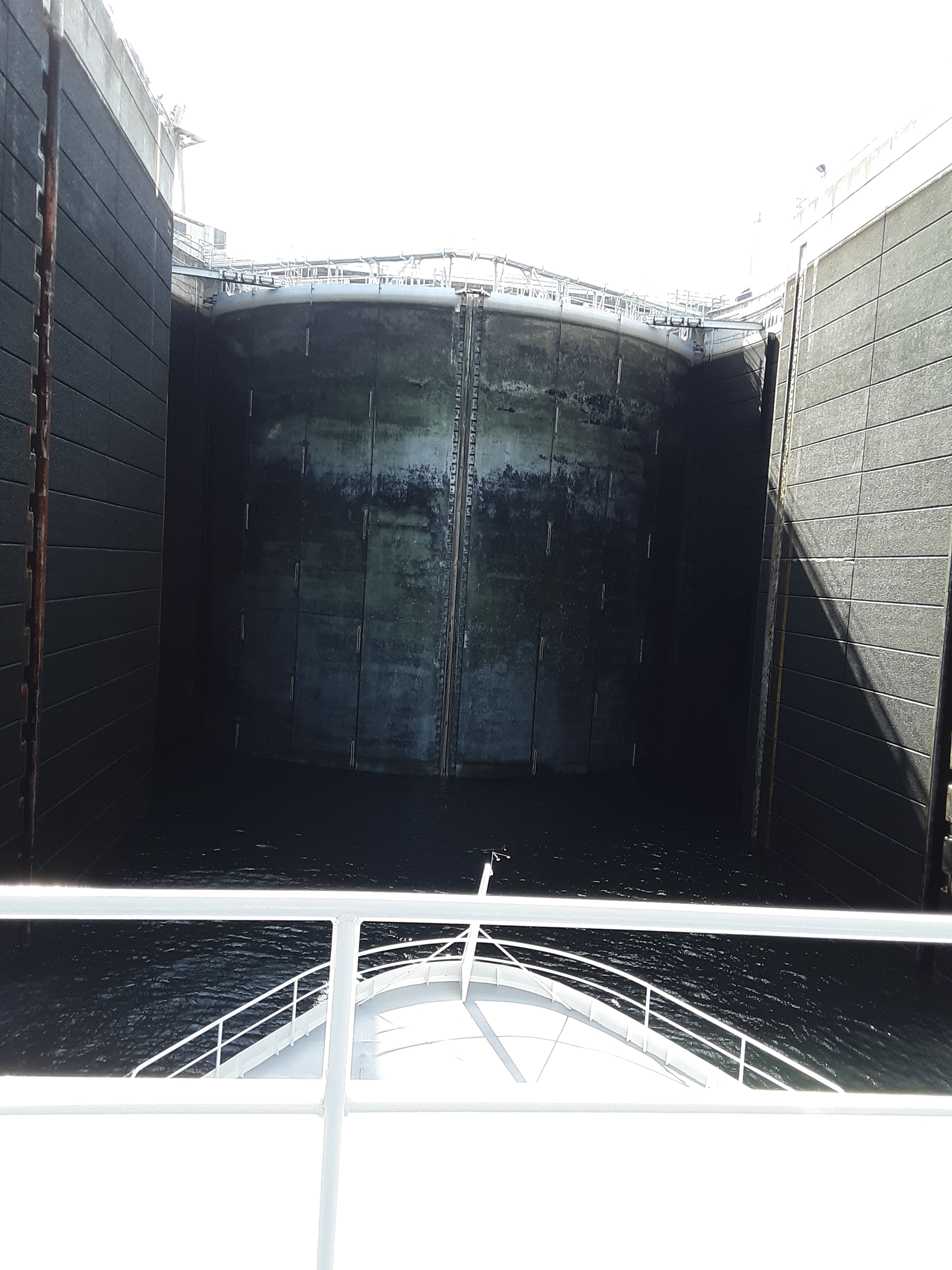


Our boat goes through our first lock – 80 feet or more down from one level of the Snake to the next. We move into the lock; a bridge is before us, an open space behind. Then a wall seems to rise from beneath the river behind us as the water level in the lock is let out and we begin to descend. The walls rise, only two feet from the boat on either side. The bridge before us is now far above, with a large and getting ever higher curving wall ahead. We descend and descend. The black wall behind us is holding back the river, though it appears there are leaks. The black wall ahead is now 80 feet high. On the side are dripping black concrete blocks a yard high piled up and up. Finally we stop descending. We wait. There is a loud shudder, and a crack appears in the wall ahead. Sunlight, and color, a view of hills and sparkling water. The crack opens wider – the feeling is like the scene in “The Wizard of Oz” where Dorothy steps out of the sepia-toned world of Kansas into a technicolor Oz. The engines throb and we move forward into the light and space.
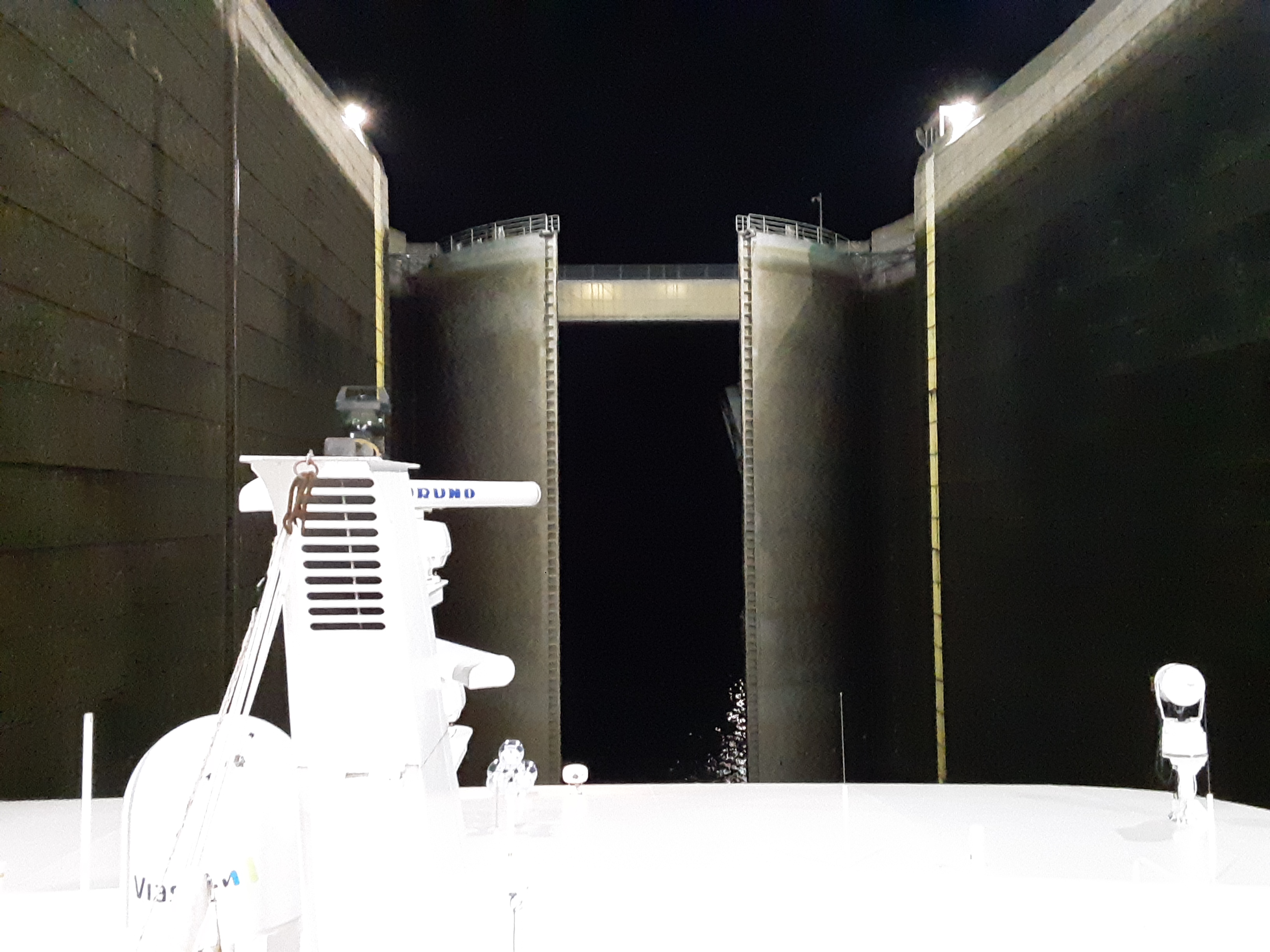
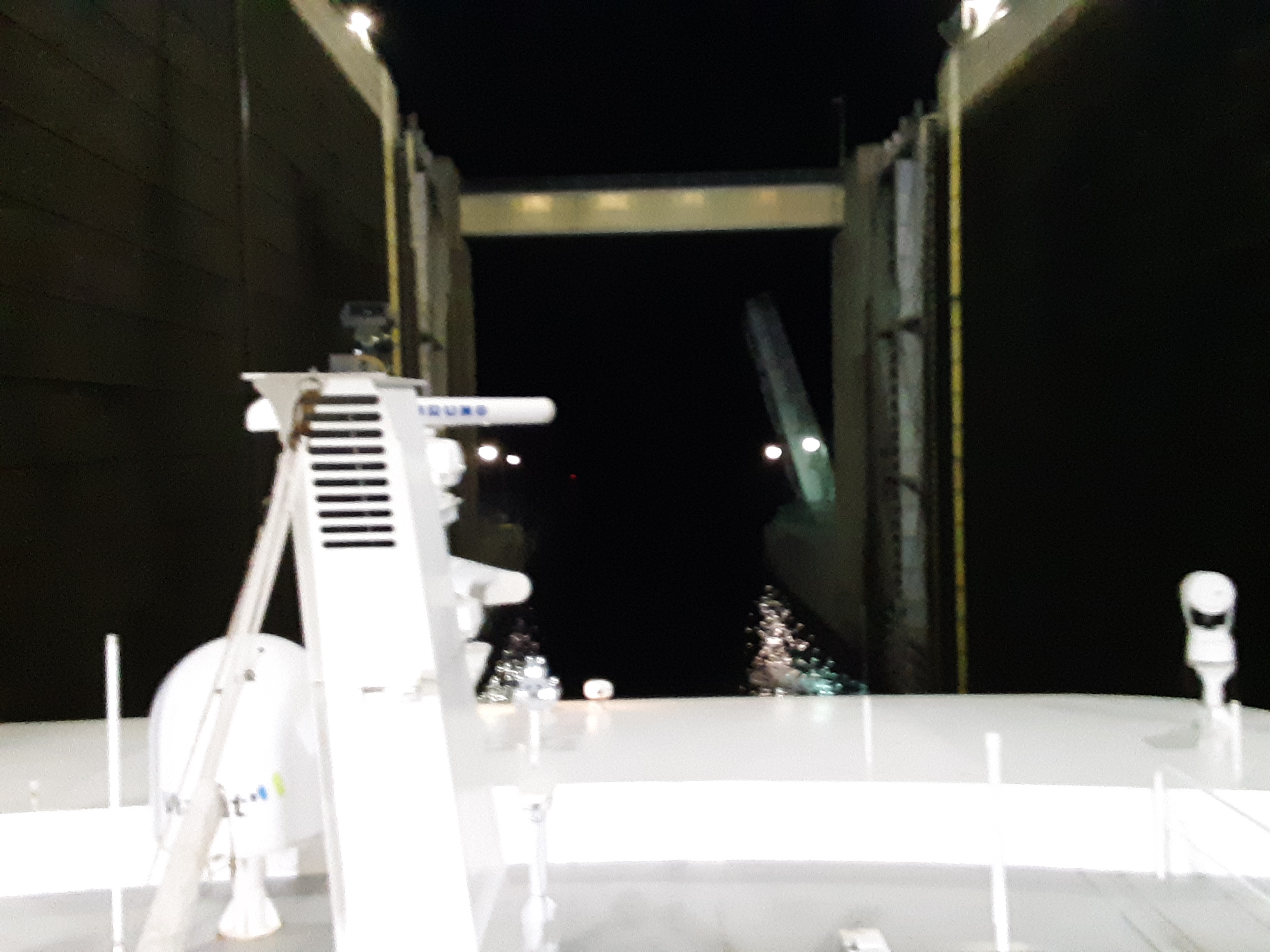
We go through a second lock at night – it is still magical. There is only black and white, the white boat, the black night, the gleaming gate, the sparkling water.

Later we explored off the boat at the Bonneville Dam, whose Visitor Center is a self-congratulatory celebration of the transformation of the wild rolling Columbia river into “a damn fine machine” for generating hydropower, in the words of an industry lobbyist.*

We saw another aspect of the locks and dams at the fish hatchery, where tiny salmon fry are nurtured until they are large enough to release downstream from the dams and make their way to the sea, and at the fish ladder, where returning salmon are given a chance to circumvent the dam in a series of cascades. These makeshift replacements of natural features are an attempt to appease the fishermen and native peoples whose lives depend on the salmon run. In another section of the hatchery, a bit off the self-guided tour, the sight of frustrated salmon leaping in vain against a current backed by a three-foot fence made me sad. In the hatchery these fish are artificially milked for their semen or eggs before dying, so the salmon fry can be created. The salmon would die anyway after spawning, but as they frantically jumped over and over against the impassable barrier, theyseemed to know they are supposed to get further to their spawning grounds than a hatchery.
===
*Quoted from Blaine Harden’s A River Lost; the Life and Death of the Columbia









 All is well as we head out. We make a brief stop at
 Back to Bro’s house after our wet, windy, but wonderful weekend at
 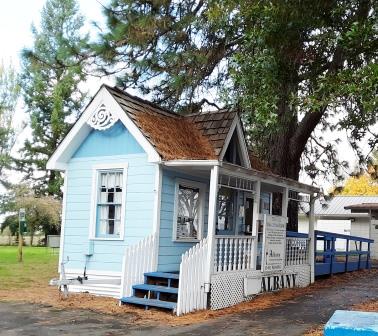 Our first stop – a quick visit to the local grocery to replenish our stocks of butter, cheese, and wine. By the time we exit the grocery, the morning drizzle has given way to sunshine. We make excellent progress down I-5 through Portland and Salem, and stop for our mid-day refreshment at the Albany rest stop about 15 miles south of Salem. Okay, so a highway rest-stop is not exactly a camping haven, but the big rigs kept their distance, and this particular stop does boast the world’s quaintest rest stop visitors’ center.




 Astoria is way out on the furthest northwestern tip of Oregon, at the mouth of the Columbia River. It is the oldest city in the state of Oregon, founded in 1811, and named for John Jacob Astor, the New York investor whose American Fur Company founded Fort Astoria at the site. (Yes, the Waldorf-Astoria in New York is also named for him.) In bygone years Astoria was a bustling harbor, with schooner after schooner fighting her way past the dreaded Columbia River bar to pick up timber, fish, and furs, dropping off supplies and merchandise for the well-to-do families of trappers, fishermen, and lumberjacks.
 We stopped for lunch after our museum visit at the Rogue Public House, a brewpub located in a re-purposed fish cannery out on a pier just down from the museum. We enjoyed their boutique beer, plus an excellent pizza and salad. Then we took advantage of a temporary cessation of rainfall to stroll the delightfully un-restored, un-modernized, un-redeveloped downtown.
 At one end of Commercial Street is the wonderful wedding cake-like Liberty Theatre, located, of course, in the Astor Building. (See photo above.) We were visiting in October, so the Box Office was spectrally staffed.
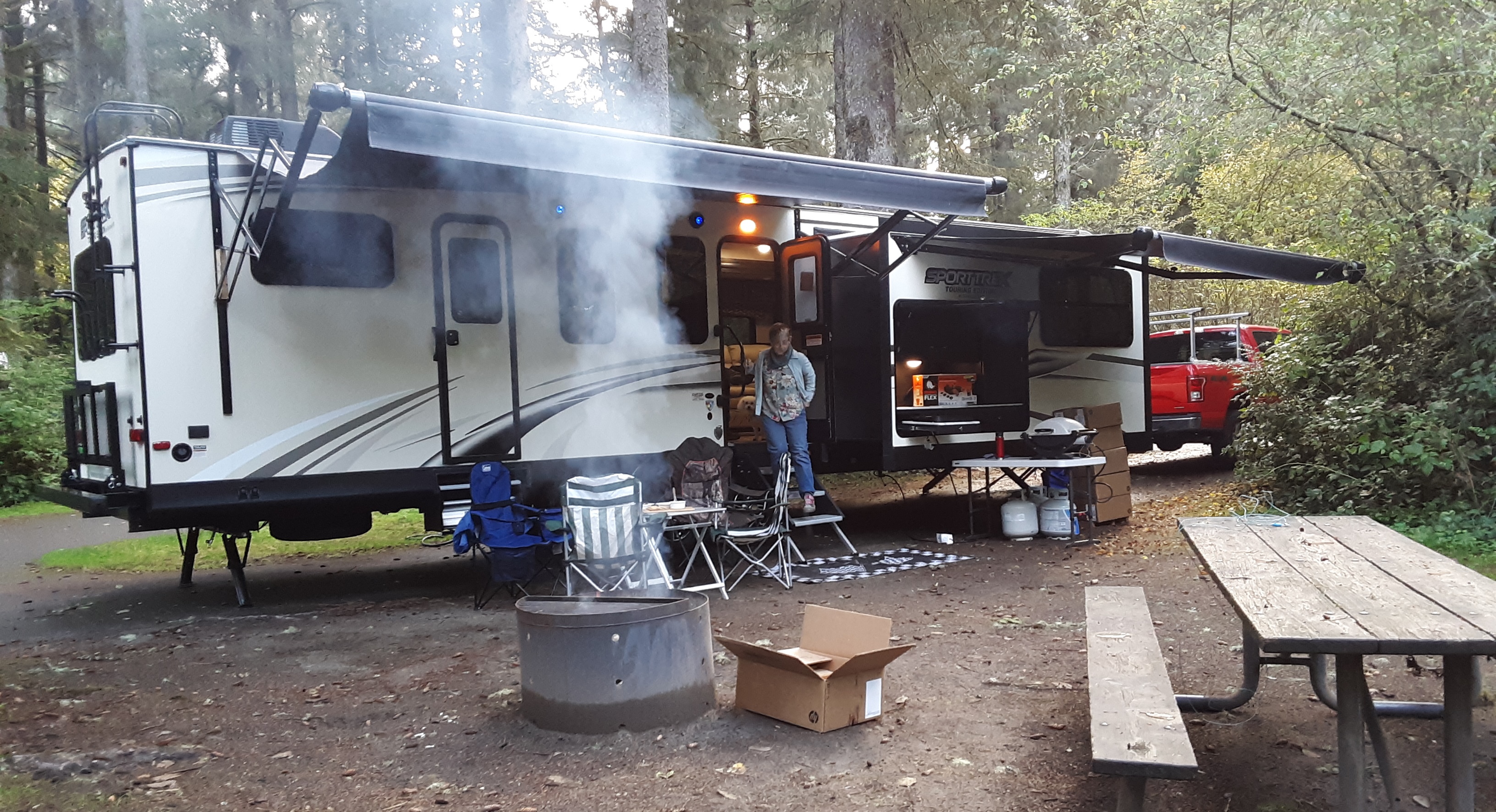
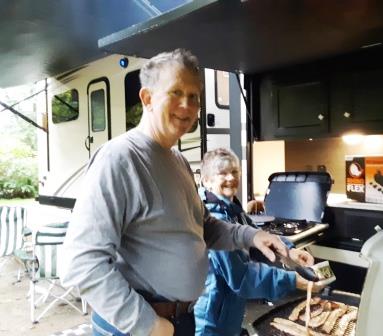
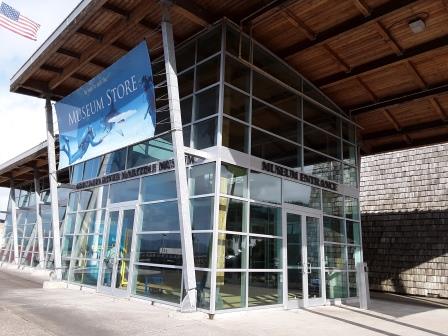 If you are going camping in a tiny trailer, and you left your bikes at home because the forecast call for a 99% chance of rain, better hope you can find some indoor activity to pass the time! If you are camping at
 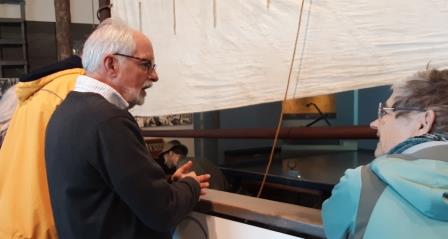 If you are going to spend some time in a small museum on a rainy weekend, it helps if Executive Director happens to be an old friend from college. Dr. Samuel E. Johnson and I had more than a few memories dating back to our freshman year Ballroom Dancing classes together. (I took the class to fill a Physical Education requirement; I suspect Sam took it because at that time the ratio of men to women at our college was officially 3.5 / 1, and it was chance to meet girls.)
 Allyson Johnson