Allyson Johnson

Pieces of my Mind

Archive for the category “Freeway Free”

Freeway Free in Texas: What my Texas History book forgot about the Alamo
20170403_081959.jpg

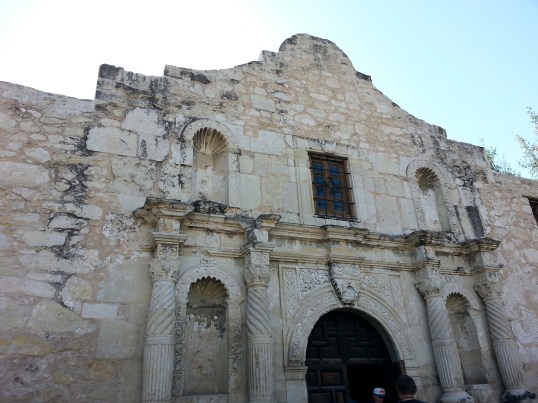
I had not been aware that the Alamo is only one of five San Antonio missions which together comprise a National Historic Park as well as a World Heritage Site.  The Alamo, of course, is the famous one, enshrined in national memory by a succession of movies – Fess Parker as David  Crockett, Steward Granger as Jim Boweie, John Wayne as David Crockett again, all making this bit of history larger than life.  I learned a lot that I had not taken in during my 7th Grade Texas History class, including:

Davy CrockettDavy Crockett went to Texas to try to recoup his fortunes after a failed attempt at reelection to his Tennessee Congress post.  He was essentially bankrupt.

Native born residents of the province of Tejas were mostly mixed-blood of indigenous and Spanish settlers, and were called Tejanos.  Immigrants from the United States were mostly from the Southern states and were called Texians.
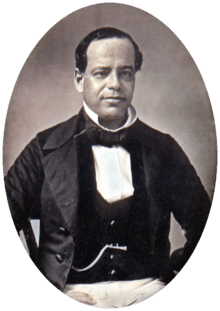
 

220px-Antonio_Lopez_de_Santa_Anna_c1853Santa Ana was not just the general defeated by Sam Houston at San Jacinto.  He was the Mexican general who led a coup against the established Federalist government of Mexico after Mexico gained independence from Spain.  He quickly established himself as the center of power, and had already put down revolts against his coup in three other Mexican provinces before moving north to put down the rebellion in Texas.  Following his defeat in Texas he was in and out of power as the President of Mexico for another twelve years.


Many Tejanos joined the rebellion against Santa Ana because they resented the loss of local control under the new centralized authority.  Many Texians rebelled because they had moved to Tejas with their black slaves, and the new centralized government outlawed all slavery.

William Travis, leader of the troops at the Alamo, had a black slave, Joe, who survived the battle and was allowed to go free to carry the news of the defeat to Sam Houston and the other rebels.  Sarah Dickinson, a Texian woman whose husband was killed in the battle, was also allowed to go free, just in case a slave’s tale would not be believed. (Or was it the other way around?)  The Tejano women and children who survived were also freed.  Joe was reported to have impressed the Texas Cabinet with “the modesty, candor, and clarity of his account“, but all the same he was returned as chattel to the heirs of the Travis estate.

So in some ways the war for Texas independence was a preliminary skirmish in the Southern defense of  their “peculiar institution” of slavery.  Somehow the heroic defense of the Alamo did not come across that way in my 7th grade Texas History class.

Freeway Free in Texas: San Antonio’s Riverwalk

20170402_162858.jpg

My friend W had lived in San Antonio for several years, so when I revealed to her that despite 10 years in Texas I had never visited that most historic of Texas cities, she immediately volunteered to be my guide in and around the area. 

The Contessa Hotel where we stayed is actually a suite hotel.  We chatted up Nadja, the reception clerk, and explained how I had come from CA to see San Antonio and my old friend was acting as my guide,  so she gave us a nice set of rooms on the 12th floor with a sitting area with a view looking down the river,  or up to the Tower Life Building, a wonderful copper-roofed brick construction lit at night. We each have a double bed, and there is plenty of counter space and plugs for charging all our techno gear. The location, right up against the riverbank with an exit to the Riverwalk, could not be better. 

One of San Antonio’s soubriquets is “The Venice of America”, a name it owes to the San Antonio river which meanders through the downtown area.  Once a dank, flood-prone channel threatened with being paved over, The Riverwalk has been redeveloped over decades with charming sidewalks decorated with tilework, art, and blooming plants, plus what seems like one endless Mexican restaurant stretching end to end along both banks. It is a perfect pedestrian stroll on a balmy spring night.  We joined with folks from all over enjoying the sound of falling water, the bustle of river boats navigating up and down, the flower-decked carriages, and the cheerful babble of many voices having sipped many margaritas.

20170402_160506.jpg

We took a side trip to explore the art colony of La Villita (just closing down an open air street market, to W’s relief – browsing little gew-gaw shops is NOT her favorite pastime.}  Again, the bridges and plazas overlooking the river, coupled with the tilework and adobe architecture, make a place for wandering, lingering, sitting, and savoring.

20170402_184306.jpgWe had noted only a couple of restaurants which were not Mexican, and since W has a favorite Mexican place she has scheduled for us tomorrow night, we settled on the Little Rhein Steak House, which she remembered as being Germanic.  Maybe once, but now the menu is quite focused on steak, with a few shrimp and salmon and chicken dishes for the nonTexan visitors. We each ordered a salad and split a grilled salmon entree.  It turned out to be the right choice. – each salad was beautifully presented and nicely dressed, the salmon was plenty for two, we each got one asparagus spear, I ate the potato filling and W ate the skin, and we both felt quite satisfied. So our first day in San Antonio ended with the view from our window of the Tower Life Building lighting our dreams.


Freeway Free in Colorado – Flora and Fauna

062docOn the west of the Rockies, one is expected to hike and bike in the summer (not having visited in the winter, I can only speculate about activities then). The point of hiking and biking is to see lovely bits of flora and fauna than one might miss in a car.  Here is a collection of photos from my experiences on food and on pedal.

I don’t know the names of the flowers, but they are authentically Coloradian.  And each is a jewel-like discovery as one wanders along a much or not-much travelled trail.

The moose, of course, I recognized!


Freeway Free in Colorado: It’s Fun to Stay/at the YMCA

083web

Coming down from Rocky Mountain National Park, having gotten our full dose of quaintness at Grand Lake,   we were expecting more of the same.  But once we hit the T intersection with Highway 40, the next outpost of civilization was Granby, perhaps the most unpicturesque town in Colorado.  It is as though the town fathers along US 40 had gotten together and agreed to put all the useful, practical, unromantic elements necessary for civilization in one town: we passed a medical clinic, a truck stop, a modern hardware store, a fire station, and a post office, all seemingly made of the same uncompromising beige 1950’s era cinder block.   One building, the Longbranch saloon, shows on the town website festooned with flags and/or flowers, but maybe this is only for photo shoots.  Poor Granby is the ugly old-maid sister who makes herself useful.

Happily, we could breeze right by Granby.  We had already selected our local home base, an unfussy family-type resort at the Snow Mountain Ranch (AKA YMCA Camp of the Rockies) just a little further down the road.  In winter this center offers fine cross country skiing as well as an indoor pool and a roller-skating rink;  in summer there are hiking trails with great veiws, a canoeing lake for beginners, an archery range, horseback riding,  a miniature golf course (pretty bare of grass, but it’s there), and other outdoorsy things, as well as a craft center for rainy days.

Best of all, this place is ridiculously affordable.  A 2-bedroom cabin that sleeps five is $249/day.  There are also rooms available in various lodge building which can accommodate up to six people in a single room at true bargain rates, or you can opt for a yurt.   If you wish, at a very reasonable cost you can opt for three square meals at the cafeteria.  Food is about the quality of Denny’s, except for watery scrambled eggs in the morning.

So we hung out at the Y for a week, hiking, biking, and scaring the local fauna. (More on this next post)


Freeway Free in Colorado: The Other Side of the Rockies – Grand Lake

20170818_125515web

Most non-Coloradans probably think of Denver when they think of the Rockies – the wonderful postcard panorama of the city’s skyscrapers dwarfed by the huge mountain range rising abruptly out of the Great Plains. Some might think of the Air Force Academy in Colorado Springs, another tourist magnet.  If they get as far as Rocky Mountain National Park, most only  make it as far as the hiking trails around Bear Lake before turning back to Boulder or Ft. Collins or Colorado Springs or other east side centers.  But there is a lot to appreciate on the western slope of the Continental Divide.

We planned to eat lunch at the Trail Ridge Store at the Alpine Vistors’ Center, but we were delayed by road work as we slugged up and over the summit of the Continental Divide in Rocky Mountain National Park.  By the time we arrived, but the parking lot at  visitor’s center was full to over-flowing, and the  presiding ranger politely but firmly turned us away.  We coasted down the other side of the summit hoping at best for a coffee shop in Granby when my ravenous sister spotted a sigh for the Grand Lake Lodge – “Lodging/ Cocktails”. Where there is a bar, she reasoned, there must be bar food.  And thus we happened on  a hidden treasure on the west side of the divide.

The lodge itself is worthy of comparison to the great lodges of the National Parks such as the Ahwahnee at Yosemite and Old Faithful Inn at Yellowstone.  It is built of local timber, and features an expansive veranda billed as “Colorado’s Front Porch.”  The veranda looks out over the lodge pool and the Grand Lake – a spreading expanse of blue shining far below the deep veranda of the Lodge.

Inside is a huge gathering room, with quaint twig-and-slat rockers circled around a huge firepit.  Since the weather was excellent, we elected to eat on the porch with that great view, but we could imagine on a cold or wet day how comforting that fire would be.

On separate trips to Grand Lake, we also discovered the eponymous town, a hyper-quaint log village beside the lake.  It boasts a wonderful ice cream shop (very welcome after hiking the nearby trails) as well as an informative museum of local history and an excellent repertory theater which offers three or four musicals rotating over the course of the summer, with cast members recruited from university theatre companies all over the country.  This summer we were there for “West Side Story” and lucked into Cabaret night, when the audience is invited to join the cast members after the show for some bonus music, each cast member presenting their own favorite song.  The performance is free, and the wine/beer bar is open.20171022_154109web


Freeway Free in California: a New Point of View on Silicon Valley (Los Altos Town Crier October 4, 2017)

20170921_112707doc

For years the inscrutable gray monolith  had loomed over us from the summit of the forbidden mountain.  Now the curse has been lifted, the prohibition ended – how could we not hurry to visit the newly opened summit of Mt. Umunhum?

When I moved to the Peninsula  Mt. Umunhum was an off-limits Air Force Base, directing the surveillance of the wasp-tailed submarine chasers flying out of Moffett Field.  With the end of the Cold War the summit with its surroundings was purchased by the Mid-Peninsula Open Space Trust (Midpen) , but it was still off-limits, poisoned by toxic waste left from its radar and other installations. The Loma Prieta earthquake in 1989 damaged the radar tower, making the location still more hazardous. 

20170921_112932webThen a controversy prompted action. In 2009 Midpen obtained Federal funding to clean up the site, and one of its first ideas was to tear down the remains of the radar tower and restore the site to its pristine pre-Cold War state.  Valley residents erupted with letters and meetings – the tower was ugly and dilapidated, but it was an icon none the less, part of the Valley’s landscape and history for 60 years, and we didn’t want it to disappear without ever having had the chance to visit it. 

Midpen back-pedaled, but the residents were now energized.  We passed a bond measure which enabled the site to become a destination, with paved access roads, parking, restrooms, and all the other amenities expected of a public park.  And in September of this year the gates were opened.

Exalted Personages were there on the first day to cut ribbons and make speeches.  But on a weekday of the following week, we made the trip, feeling like pioneers as we drove up and down Hicks Road into an area of San Jose we had never visited before. Finally we reached a STOP sign, and on the right the gate to the newly opened park, now christened “Sierra Azul Preserve”- the blue mountain range.

The wiggly black arrows on the yellow signs are not to be ignored;  this is a seriously winding and steep road, requiring downshifting to second gear both coming and going. But as we ascended, our conversation went roughly

                Me: “Oh, Wow!

                Him: “I can’t look!”

as the views of valley, mountains, and ocean began to come in sight. 20170921_113257doc

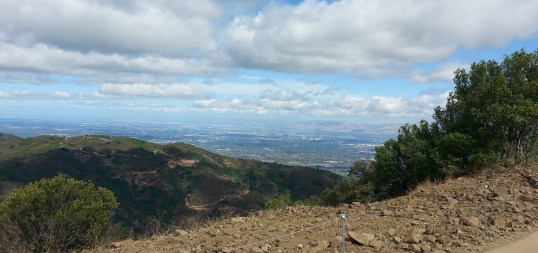
At the top, the view expands from a misty Mt. Tamalpais in the north well past Morgan Hill to the south, from Mt. Diablo and Mt. Hamilton to the east to the gleaming ocean west of Santa Cruz.  Far below are the toy skyscrapers of down-town San Jose, the parquet of roof-tops carpeting the suburbs, the tiny white pyramids of the Shoreline Amphitheatre, the blue Lexington and Almaden reservoirs, and miles and miles of woodland and pasture and empty air.  Everything human-made looks extremely small and insignificant. 

Everything, that is, except the tower, looming now right next to us, still inscrutable, and still closed to public access.  

 The park service has added a lot of informational signs about the mountain’s history. (The name, by the way, is an Ohlone word meaning “resting place of the hummingbird.”) 

Some pointers if you go:

·         It takes about an hour from Los Altos to get to the summit parking lot.

·         Dress in layers;  at the summit it was 20 degrees cooler than in the Valley. 

·         The road is narrow, turnouts rare, guard rails incomplete, lots of blind curves.  Take it slow.

·         Watch out for bikers coming and going.  This new mountain road is a biker magnet, and the shoulders are narrow to non-existent.

·         Parking at the very top is reserved for handicapped.  There is a circle to drop people off, but unless you have a blue tag park below the summit at the restrooms. 

·         There are 159 steps to the summit, punctuated by frequent landings with benches where you can sit, admire the views, and catch your breath.

·         There are two picnic tables under a shelter just below the parking lot.

                ENJOY!


Freeway-Free in Colorado: Boulder Beyond the Campus and the Mall

Chatauqua Hall

Chatauqua Hall

The Flat Iron Mountains loom over Boulder’s western side, and many of the hiking trails in and around these peaks begin or end at the equally picturesque Chatauqua Institute.  This is a wonderfully conceived set of Victorian-era buildings arranged around a grassy meadow with the intent of promoting adult education in a healthful and beautiful setting.  It has been in continuous operation since the late 1800’s, and continues to fulfill its mission with artists-in-residence, concerts, films, and as a bonus, delicious food available during the temperate months on a wide veranda overlooking the meadow, and in the cold season inside a cozy lounge with a huge stone fireplace. 20170817_181344web

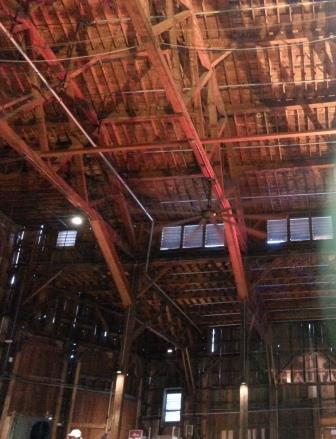
The films and concerts take place in a huge beamed barnlike structure which has burned several times over the history of the Colorado Chatauqua , but has always been reconstsructed in the spirit of its predecessors – think of a giant barn with good acoustics and lighting.   On a recent summer evening I attended a showing of a couple of Buster Keaton silent films, with an expert live piano accompaniment providing authenticity.  The audience of about 500 only half-filled the vast space, but the gleeful giggles of the kids seeing Keaton’s acrobatic pratfalls for the first time filled the space beautifully.


For  a different kind experience, visit the Celestial Seasonings factory just north of Boulder.  Here you can sip samples of dozens of different teas, and take a tour of the factory where the teas are stored, processed, boxed, and prepared for shipment.  Be warned:  If you are sensitive to odors you may be in for sensory overload here;  on the other hand if you are suffering from nasal congestion a few moments in the special room where the mint tea is stored will clear you out amazingly.

If you are interested in  more modern types of architecture, the National Center for Atmospheric Research is just a bit further up the road from the Chatauqua Institue, in a fascinating building designed by I. M. Pei.  The group of rectangular forms juts out of a ledge of the Flat Irons as though created by some upheaval.  The exterior is made of red sandstone that blends perfectly with the surrounding rocks, and the views from the exterior plaze and the restaurant inside are to die for.  I have not eaten at the restaurant, but with that view how could the meal be less than delightful?  The exhibits explaining how cyclones form, how ocean currents affect climate, and so on, are also interesting, though you will likely have to compete with a busload of elementary school field trippers to get close to them. 20170727_105455doc


Freeway-Free in Colorado: Treasure-Hunting in Boulder

20170726_112617docOnce you are in Boulder, you could simply enjoy the atmosphere of the bustling University of Colorado campus, or spend your time hiking and rock-climbing in the FlatIrons above town.  But if your interests are less academic and less strenuous, your explorations may lead you to a number of Hidden Treasures.
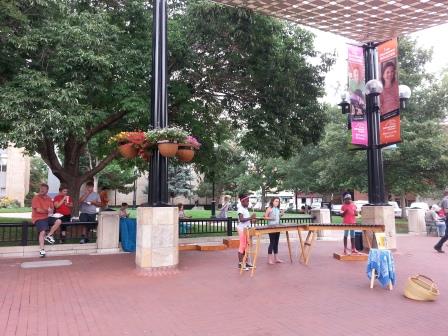
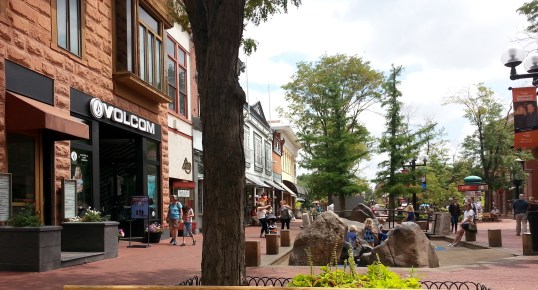
Easiest to find and most likely to absorb a full afternoon:  The Pearl Street Mall.  Boulder was among the first small towns to recognize that its brick-clad downtown was a potential magnet for walkers and shoppers.  Instead of succumbing to the lure of Federal redevelopment dollars, and trading in the red-brick buildings for stucco blocks and a parking garage as did many similar towns, the town fathers opted for blocking off several blocks of the old downtown area, labeling it a Historic District, and converting it into a park for browsers and strollers.

One of the don’t -miss shops is the Boulder Book Store, a multi-leveled maze of marvelous tomes both new and used,  that looks like it was conceived by the same interior decorator as put together Ollivander’s Wand Shop in the Harry Potter novels.  It is almost impossible to enter this store and leave again without finding at least one volume you have always wanted to read, have been trying to find forever, or for some other reason cannot leave without.

Another don’t’-miss is Peppercorn, a housewares shop which as far as I can tell really does have everything.  If you have always wanted corn-cob holders in the shape of cows, or have been looking for a mango splitter, this is the place.  Happily, the staff knows their stock and can lead you directly to the item you ask for;  otherwise, you might wander forever among the fascinating cooking tools and cutlery. Sticking with the Harry Potter metaphors, this shop is like the Room of Requirement, stuffed with everything anyone might have ever wished for.

But the Mall is more than just shopping.  Almost every block boasts a fountain, sculptures, benches for sitting, and performance spaces.  On the day I last visited I caught a performance by a group of youngsters performing on xylophone.  A sunny day, an ice cream cone in hand… who could ask for more?

20170726_113718web

?


Freeway-Free in Colorado: Boulder Beyond the Rocks

The Flat Irons above Boulder

If you’ve heard of Boulder, CO at all, you probably know that it is one of the hippest college towns in the country, surrounded by beautiful mountain scenery, and with a tech-savvy population. (89% of households have broadband access, the highest rate in the country.)

But you might not know that Boulder  also boasts an I.M.Pei-designed National Center for Atmospheric Research, that it is home to one of the original Chatauqua Institutes (established, oddly enough, by a group of Texans who felt that the weather in their home state was just too oppressive to host conferences), and that its Leanin’ Tree Museum of Western Art had one of the largest private collections of Western-themed art in the country [Note: Unfortunately, this Hidden Gem closed in August 2017, soon after my visit. And it is also the headquarters of the Celestial Seasonings tea company.

Boulder is a wonderfully walkable town, once you get there, and happily, you can get there without having to drive.  If you fly into the Denver Airport, you can get to Boulder by bus for less than it would cost to pay the tolls on the E-470 tollway just outside the airport. 

When you land, grab your baggage and head for the whale’s-tail shaped Westin Hotel  at the east end of the lobby.  Instead of going up the escalator to the Westin lobby, hang a U-turn at the ATMs and you will find yourself in the  RTD Transportation Center. The SkyRide bus for Boulder costs $9 for a 70 minute ride to downtown Boulder, and leaves from Gate 8 at least once an hour beginning at 4:25 AM and ending at 12:55 AM.  The bus will be full of UC – Boulder students no matter what time of day or night you get on, so be sure to purchase your ticket right away and stand in line for the next bus.

Once you are in Boulder, you can take advantage of the many whimsically-painted and whimsically – named  (HOP, SKIP, JUMP, DASH, STAMPEDE…) Community Transportation buses to get just about anywhere in and around town.

Next: What to see when you get to Boulder

Freeway-Free in California – Santa Barbara by Pedal, Foot, and Trolley

20170708_103930doc

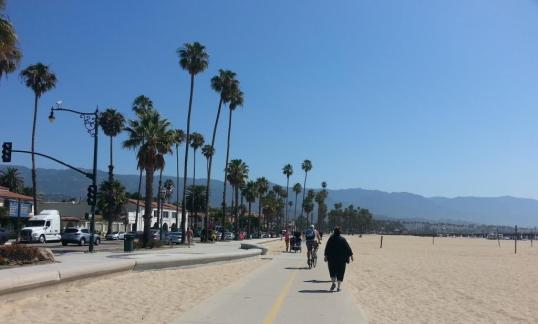
With another day of 90+-degree heat threatening Ojai, we decide to head for the coast and the Queen City of Santa Barbara just thirty miles west. .  We slide off Highway 101 on xxxx, the beach-front road which stretches the length of Santa Barbara beach from the tony Fess Parker Inn down to the harbor. We are a bit daunted by the slow flow of traffic, the hundreds of beach parasols, and the cars seeming to circle the pay parking lots, but Griselda – the-GSP-lady steers us to the far end of the harbor, where we score Free Parking  at the community college stadium, buzzing with hardy athletic types running steps. No more car for the day!

Griselda also points us to a Visitors Center at the Coast Guard Museum adjacent to the harbor. It is 10:40 AM ad the center does not open until 11.  The very pleasant gray haired man behind the kiosk at the museum gives us three copies of a Santa Barbara beach/downtown map, tells us about the shuttle downtown, and directs us to bike shops near Shear Wharf at the end of State Street.  We walk along the promenade.  It is already hot, but we find a breeze to cool us, and get to the Wheel Fun Rentals bike shop before 11.  Three bikes and a dragged -out search for helmets that fit later, and we are on our way, teetering on old-fashioned cruiser bikes with coaster brakes and high handle bars.

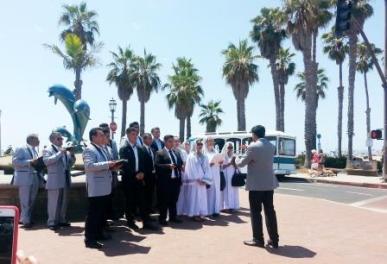
We biked all the way to the end of the promenade past the Fess Parker Lodge, where I had stayed a decade ago with my husband and mother-in-law and admired the authentic Davy Crockett coonskin cap under glass.  Then we turned and went all the way to the other end near where we had parked the car, then back to Start, in just under an hour.  Along the way we admired surfers, micro-bikini-wearers, and a bus load of choristers serenading the beach-goers as the end of  State Street.  A perfect way to begin, though I was already wishing I had worn my long pants as protection against the sun.20170708_114546web

20170708_120656webWe proposed at first to walk uptown, but W noticed signs for a shuttle going up and down State street every 1o minutes.  The trolley was open air, crowded with tanned beachgoers and families, and at 25 cents for Seniors , 50 cents for youth, it was a bargain.  Looking for historic Santa Barbara, we set down at the Paseo, but we were disappointed to find that it was merely a modern shopping center dressed up in red tile roofs and Adobe.

We did pick up a Santa Barbara walking and business map from the tourist table set up at the entrance to the Paseo, and as we walked up toward what looked like a likely cluster of restaurants, we happened past the Tamira Restaurant, offering an Indian buffet which promised a nice change from tacos or deli sandwiches.  Delicious chicken marsala and butter chicken,  I didn’t try the tandoori) and vegetables and salad with spicy cucumber dressing and marinated vegetables.  No dal.


Lunch having been taken care of, we moved on to the Santa Barbara Art Museum, which had conveniently located all its most interesting pieces on two rooms while the back wing was undergoing renovation.  My ROAM card from membership in the San Francisco Asian Art Museum  got all three of us in for free.  We spent an hour looking at beautiful things in elegant air-conditioned surroundings – W even spent time in the gift shop!


Then to the lovely Santa Barbara Courthouse, with its beautiful sunken garden inner quad, and of course there was a bride, and an adorable little blond ring-bearer, and a self-conscious flower girl, and a bunch of groomsmen gleefully showing off their argyle socks under their tuxedos.

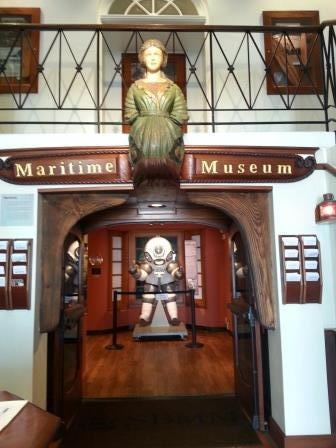
By that time we were dragging, too over-dosed with Adobe and red tile even to peek into the beautiful library or walk a couple of blocks down to the official Old Town.  We caught the Shuttle all the way back to the harbor and then spent time  in the Maritime Museum, fascinated by exhibits of storms and wrecks and deep-sea expeditions – definitely a Hidden Treasure!
20170708_164412web

Post Navigation