Allyson Johnson

Pieces of my Mind

Archive for the category “books”

The Publishing Journey: Step 1 – Write a book

The first novel I wrote took me ten years to finish. I had expected once I retired that I would whip it into shape in six months from the fragments I had generated during my off hours at work. Vain dream. I had hoped that once it was finished I would find an agent, who would find a publisher, who would find an audience. More vain dreams. I ended up publishing that first effort online (see ajmccready.com) where instead of going viral it sank like a dime into jello, without a ripple.

Undaunted, I’ve written another book. This one took me only about two years, as I had a historical framework to start from – the fragmentary story of my paternal great-grandmother. And I got a lucky break: a previously unknown relative contacted me, hoping to complete a genealogical record she had been researching, and she ended up being my personal research savior, digging up details of my great-grandmother’s story from census reports, cemetery documents, ship’s passenger lists, and poorhouse records.

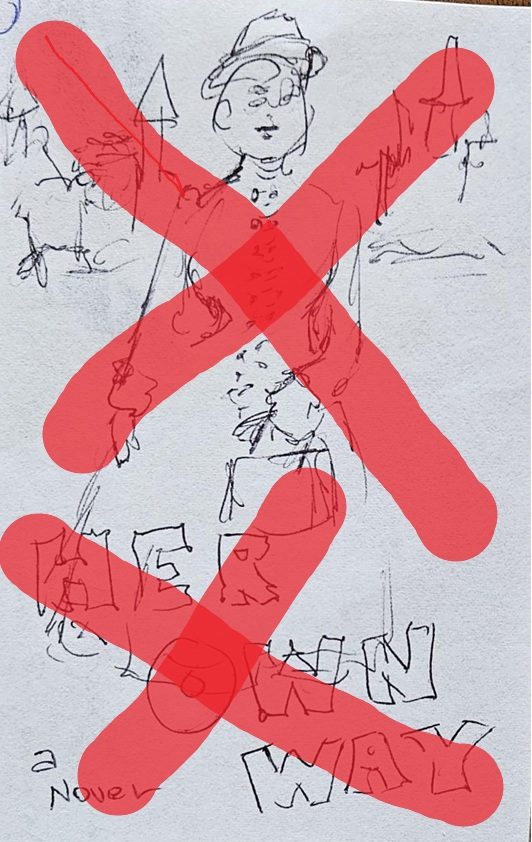
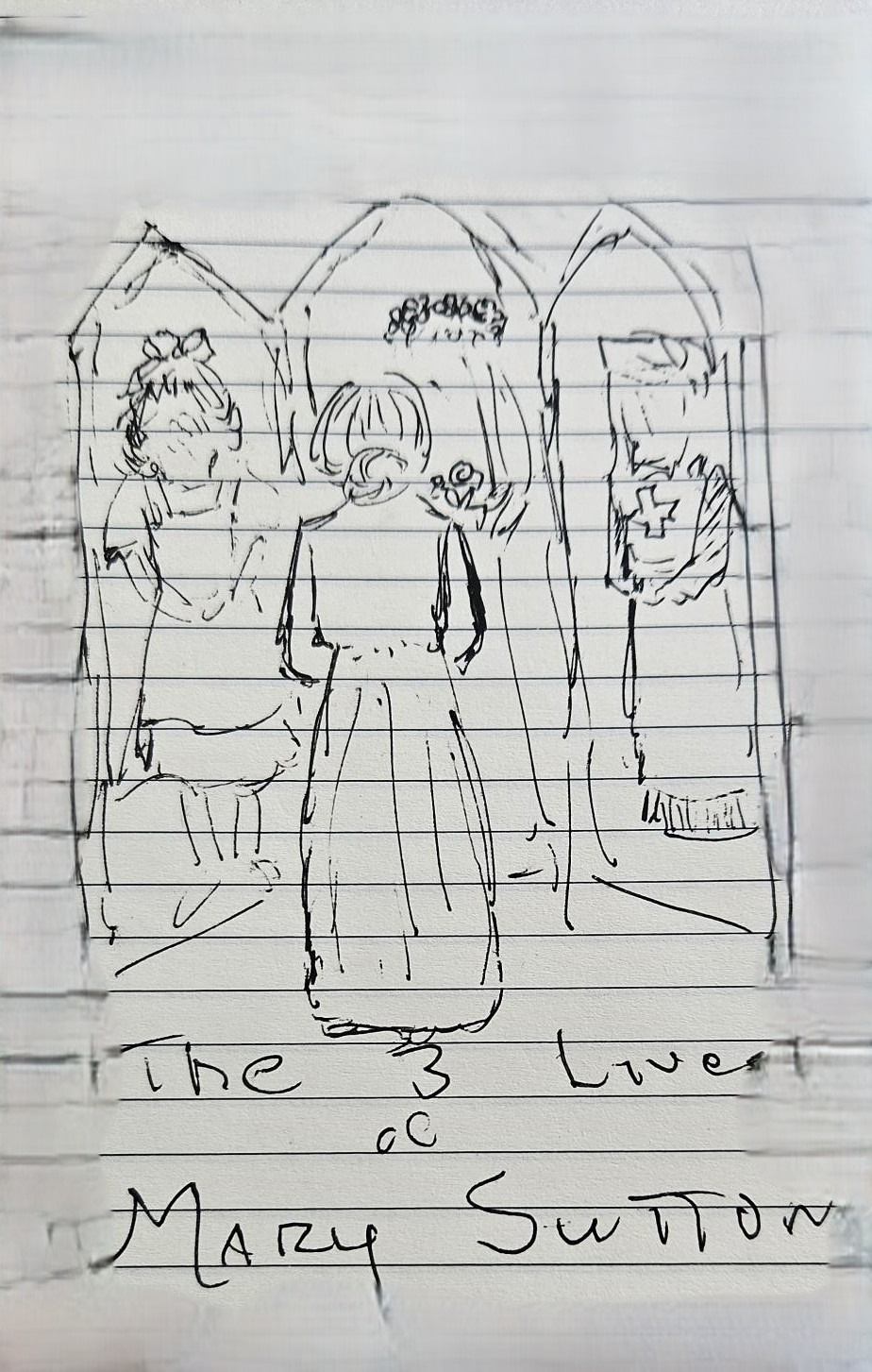
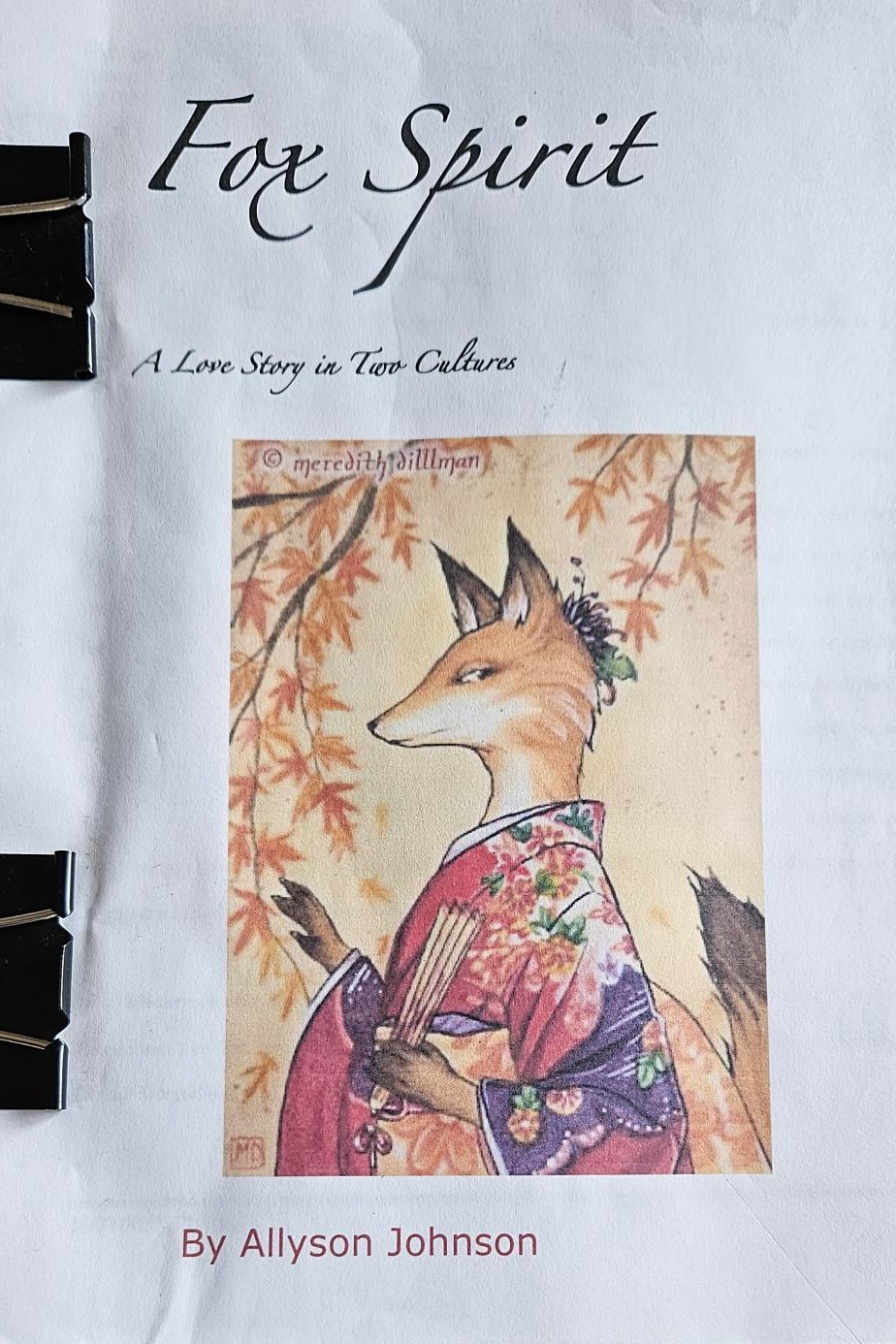
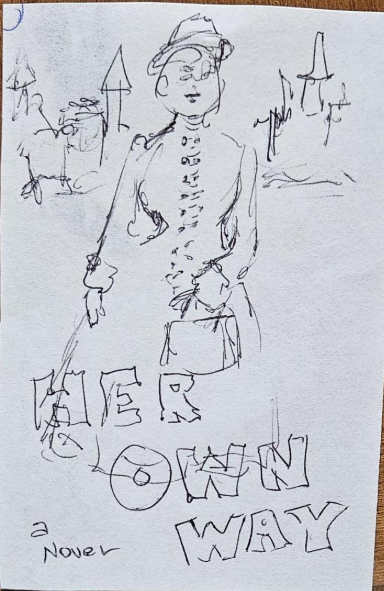
There were still enough gaps in the history to allow my imagination free rein. My great-grandmother lived in New York City during the Gilded Age, so there was a wealth of historical possibility I could insert into her story. E.L. Doctorow had inserted Teddy Roosevelt and other historical personages into his classic “Ragtime”; I could do the same. I had fun. I put together almost three hundred pages. I imagined the book being published, with a cover featuring a photo I had recovered of my great-grandmother looking resolute and intrepid.

Onward!

[Graphic on imagined cover of “Fox Spirit” is copyrighted by artist Meredith Dilllman]

What I’ve Been Reading: Triple Trouble/ The Hate U Give

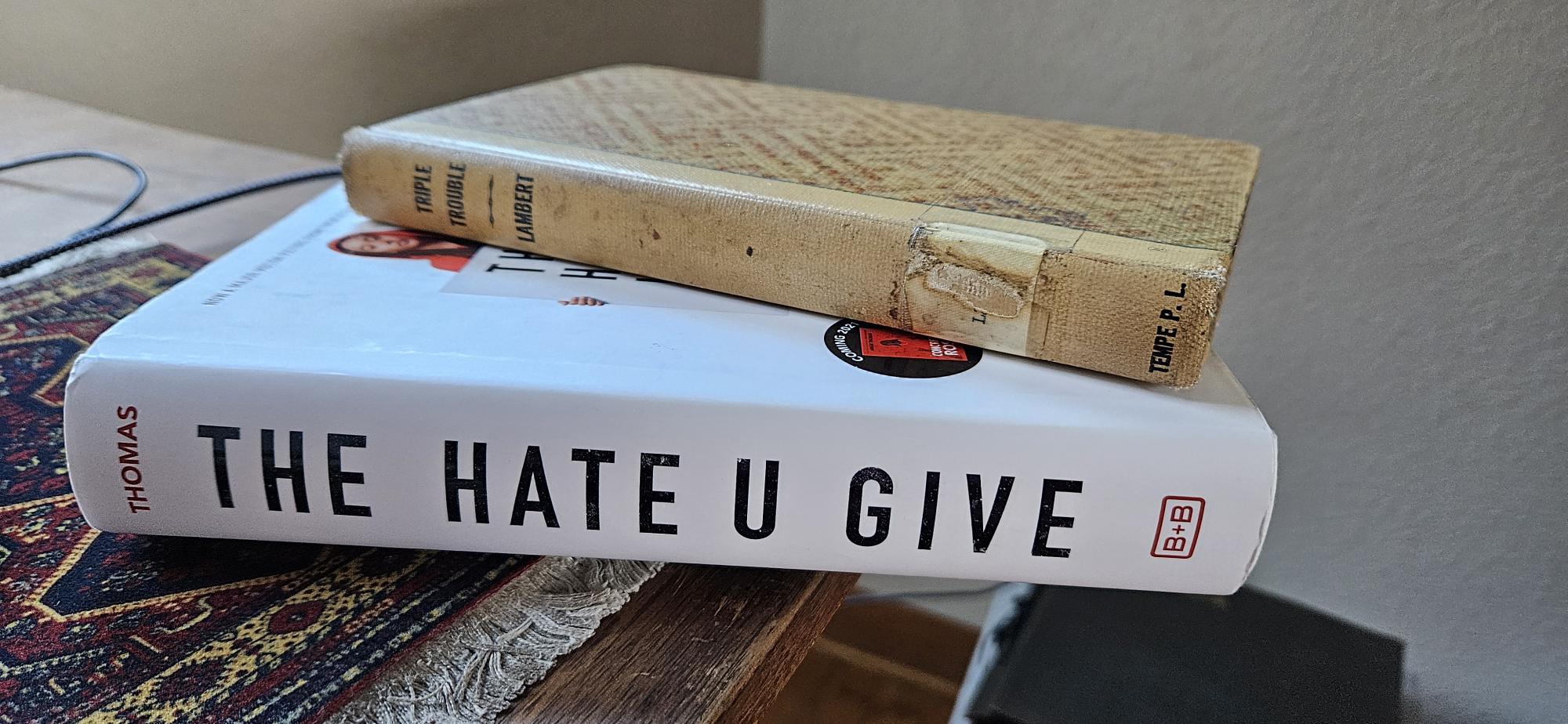
Triple Trouble/The Hate U Give

My eyes lit on a battered discarded library book in one of the neighborhood Little Free Libraries.  “Triple Trouble – Lambert” in black capitals on the spine. Could it be?  Yes it was – written by Janet Lambert, the queen of Young Adult fiction in the 50’s, and part of a series that somehow I had never read. (Ah, the publication date was 1965 – I had grown out of the Teenage section of the library by then.) I took the book home, and settled down into a time warp.

Cinda Hollister, the seventeen year old protagonist of “Triple Trouble” lives in a house with a library and a Persian rug and hardwood floors and columns on the front porch and a balcony and a broad slope of lawn and a basement with a rec room.  Her oldest brother is at Princeton, the second is into sports at a the University of Michigan and coaches Little League, and she also has a fourteen-year-old “terror” of a little brother and a quiet little sister. The house isn’t air-conditioned, but they can cool off at the club pool.  They have a cottage at the shore but rent it out for part of the summer.

So what is the Triple Trouble?  Will the oldest brother drop out of Princeton to marry his girlfriend?  Will the second brother drop out of college to accept a contract with a pro baseball team? Will Cinda be taken in by the artsy poet who fascinates her or will she stick with her white-bread suburban high school boyfriend?  At the end, Cinda says ““You know, [Mom], this has been quite a summer…. But you weathered it in fine style.  And because you stood by and kept your good sense of values, we all did.”

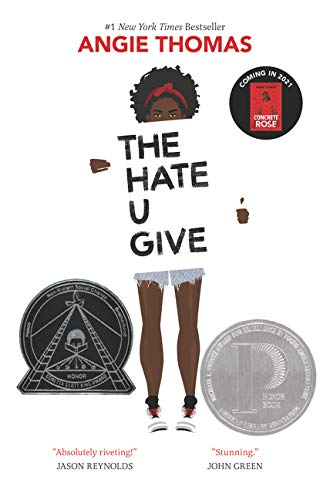
By chance, at home I had just begun to read a different Young Adult book, “The Hate U Give” by Angie Thomas, published in 2017.  Starr Carter, the 16-year-old protagonist, lives in a black neighborhood of Los Angeles with her father, an ex-con who runs a grocery store, her mother, a nurse,  and off-and-on her half-brother, who stays with his father when the man his mother lives with gets violent. The language is graphic, and the action is violent.

Starr has already seen her childhood friend Natasha killed in a drive-by shooting, and early on in “The Hate U Give” she is the passenger in a car which is pulled over by a white policeman who with little provocation shoots the driver, Starr’s close friend) in the back. The rest of the book deals with Starr’s wrestling with her nightmares, the media, the legal system, and the different demands of her friends and family.

Lambert writes of a world that could pass as a MAGA fantasy, while Thomas writes of a reality nearly as dystopian as “the Hunger Games.” Oddly, though, they both end in the same place – the importance of family, community, and values. 

I grew up in a suburban bubble not very different from the one in “Triple Trouble” and felt very much at home in Janet Lambert’s world. I’m sorry that today’s Young Adult readers face a much grittier reality than I had to, but glad that the fundamentals underlying what they are reading about seem to endure.

What I’ve Been Reading: The Flanders Panel

Arturo Perez-Reverte has constructed a marvelous mystery which spans centuries. One mystery involves the restoration of a 15th century Flemish painting which depicts a chess game in progress. In the course of the restoration the cryptic inscription “Who killed/took the knight?” is revealed. Does the painting hold the clue to solving a 15th-century murder?

The second mystery develops as Julia, the young art restorer, tries to decipher the painting’s mystery and becomes involved in a series of murders which seem to be related to the painted chess game.

If you are interested in art history, or the miracle of modern art restoration, and have even a passing interest in the game of chess, you will be charmed by this novel. The setting, in Madrid, with some of the key incidents occurring in El Prado, enhances the action perfectly. The solution – without giving the story away, I will say that it is both outrageous and satisfying.

What I’m Reading: “Loved and Missed” by Susie Boyt

Loved and Missed by Susie Boyt

My rating: 5 of 5 stars


Susie Boyt’s 200-page novelette takes on the story of a mother hoping against hope to bring her daughter back from drug addiction, while at the same time raising the granddaughter abandoned by the addicted mother and her lover.
Sounds like a downer. But somehow it is not. Ruth, the narrator for most of the story, explores all the ups and downs of a love which is patient, is kind, that alters not when alteration finds. She doesn’t give up, despite the well-meant urgings of her friends to “move on.” And she works hard also to prevent her love for Lily, her granddaughter, from being possessive, or from seeing Lily as some kind of earned compensation for the sorrows Eleanor, the daughter, brought down.

Love and hope. Not a downer.


View all my reviews

What I’ve Been Reading: Fools and Mortals

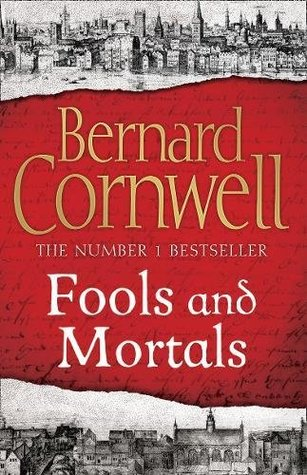
Fools and Mortals by Bernard Cornwell

My rating: 4 of 5 stars

Bernard Cornwell is a master at recreating a past society, whether it’s life on the battlefield of the Napoleonic Wars, an immersion in the Saxon society of Arthurian England, or in this case, the pinnacles and pitfalls of the evolving theatre in the time of Elizabeth I.
The protagonist is Richard Shakespeare, the younger brother of William, who escapes from a brutal apprenticeship and runs to London in hopes of joining his brother’s theatre group, the Lord Chamberlain’s Men. But William’s welcome is chilly, and Richard must pay a steep price to learn the skills he needs to be a player on his brother’s stage.
Did Richard Shakespeare actually exist? Yes, there was such a sibling, ten years younger than William, but the historical record is mute as far as his life is concerned, leaving Cornwell an open field to imagine. The plot is a little thin, involving the rivalry between the Lord Chamberlain’s Men and the struggle to find new plays to please the populace. The world is so real, though, that I could feel the drip of rain down the back of Richard’s neck, hear the pounding of the carpenters working on stage sets as Richard is trying to rehearse, and see the flickering lights of dozens of candles used to light the stage.
Cornwell assumes that the reader is pretty familiar with at least two of William’s plays, A Midsummer Night’s Dream and Romeo and Juliet. If you’ve gotten that far in studying Elizabethan drama, you’re ready to plunge in to Richard Shakespeare’s world.


View all my reviews

What I’ve Been Reading: Old Babes in the Wood

Old Babes in the Wood: Stories by Margaret Atwood

My rating: 5 of 5 stars


Margaret Atwood is having fun in this collection of short stories. A half dozen involve a long-married couple, Tig and Nell, and the rest include a Grimm’s fairy tale retold by an extraterrestrial, a story of reincarnation from the point of view of a snail, a gin-soaked reunion of old (female) friends, and others. Atwood is a fine writer, which is gratifyingly evident in the first few sentences of the first story. (I’ve been reading too many not-so-fine writers lately; Atwood was like settling into a first-class seat on the 20th Century limited after traveling miles on potholed roads).


The last of the Nell and Tig stories follow Nell’s grieving after Tig’s death. She is one of the few writers who can write about feelings without becoming sentimental. Highly recommend.


View all my reviews

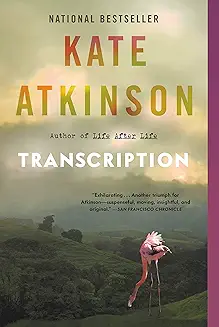
What I’ve Been Reading: Kate Atkinson’s “Transcription”

My rating: 3 of 5 stars


I wish I could have liked this better. I really enjoyed Kate Atkinson’s “life after life” and the early Jackson Brodie novels, and thought I had found a writer whose works were beautifully written, satisfying, and prolific.

Well, two out of three.

Judith Anderson, the protagonist of “Transcription, is a young woman drafted into a clerical position in Britain’s M15 spy corps during WWII, and then is “promoted” to being a transcriber of secretly recorded meetings between an M15 agent posing as a German spy and fascist sympathizers. These recordings short-circuit the passing of useful information about military installations and preparations to the Nazis, so they are theoretically a useful contribution to the war effort. But for the most part, the meetings are composed of long stretches of puerile conversation half-heard over the noise of traffic, paper rustling, a barking dog.

But “things are seldom what they seem”, as Gilbert and Sullivan are quoted by Judith’s boss. The book descends into a tangle of “coincidental” encounters, possible betrayals, shifting identities, pseudonyms, and a couple of quite unpleasant deaths.

Atkinson artsifies the plot by shifting the time back and forth. We see Judith in 1981, the victim of an apparent hit-and-run accident. Then we are in 1950, where Judith spies a former colleague from M15, who denies knowing her. And then we are in 1940, at the beginning of the war, and Judith is being reassigned to her transcription duties. We jump back between the war years and the post-war years several times. It’s a way to build suspense – we know that something horrible happened and want to find out what- but it’s not a way to build sympathy for Judith.

So I ended up admiring the technique, but not caring very much whether that hit-and-run was really an accident. Reading the reviews, I see the book is “laced with wit”. I wonder if I have an insufficient sense of humor? or maybe I sympathized a bit too much after all with Judith, preventing me from laughing at her predicaments.


View all my reviews

Post Navigation