Allyson Johnson

Pieces of my Mind

Archive for the month “February, 2026”

What I’ve Been Reading: Triple Trouble/ The Hate U Give

Triple Trouble/The Hate U Give
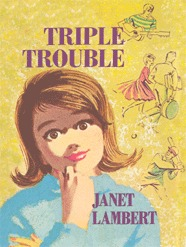
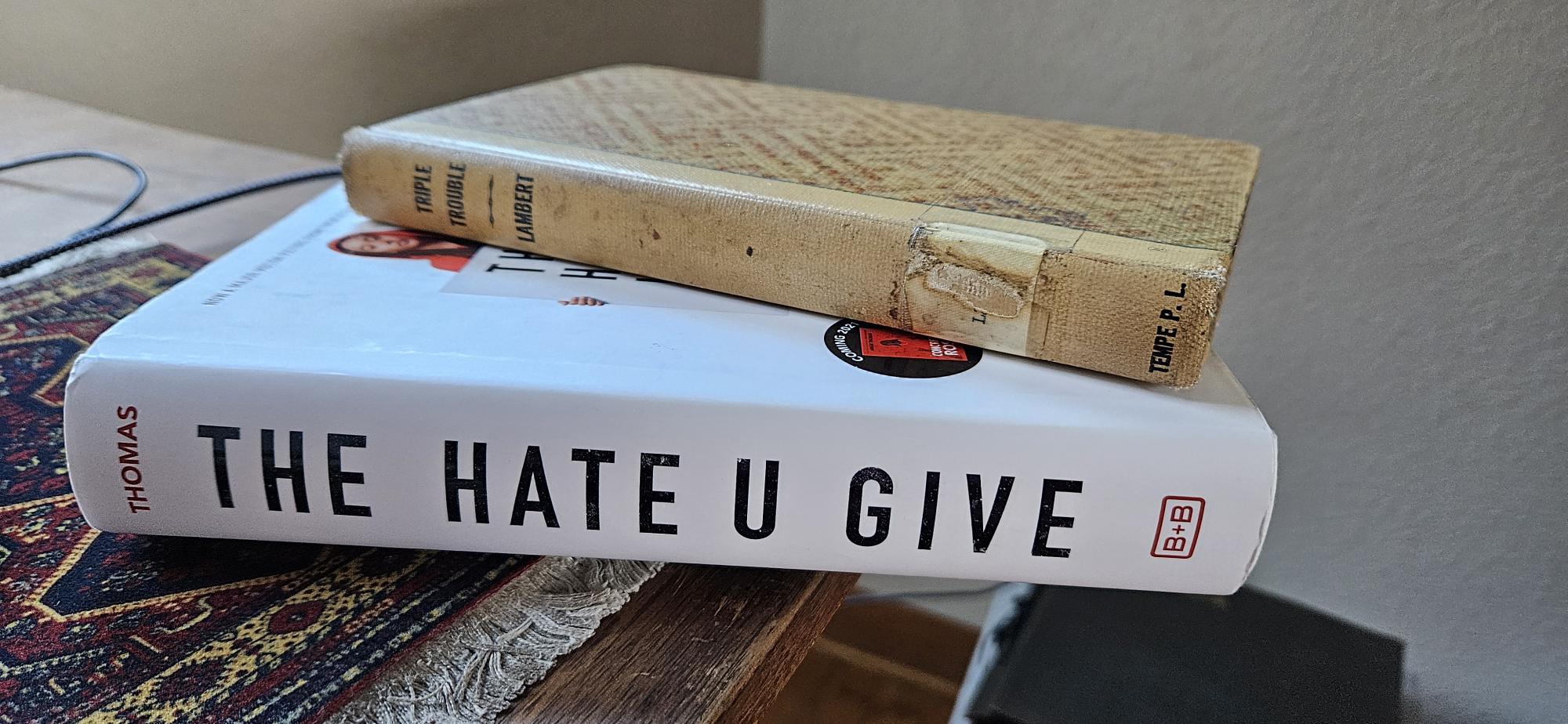
My eyes lit on a battered discarded library book in one of the neighborhood Little Free Libraries.  “Triple Trouble – Lambert” in black capitals on the spine. Could it be?  Yes it was – written by Janet Lambert, the queen of Young Adult fiction in the 50’s, and part of a series that somehow I had never read. (Ah, the publication date was 1965 – I had grown out of the Teenage section of the library by then.) I took the book home, and settled down into a time warp.

Cinda Hollister, the seventeen year old protagonist of “Triple Trouble” lives in a house with a library and a Persian rug and hardwood floors and columns on the front porch and a balcony and a broad slope of lawn and a basement with a rec room.  Her oldest brother is at Princeton, the second is into sports at a the University of Michigan and coaches Little League, and she also has a fourteen-year-old “terror” of a little brother and a quiet little sister. The house isn’t air-conditioned, but they can cool off at the club pool.  They have a cottage at the shore but rent it out for part of the summer.

So what is the Triple Trouble?  Will the oldest brother drop out of Princeton to marry his girlfriend?  Will the second brother drop out of college to accept a contract with a pro baseball team? Will Cinda be taken in by the artsy poet who fascinates her or will she stick with her white-bread suburban high school boyfriend?  At the end, Cinda says ““You know, [Mom], this has been quite a summer…. But you weathered it in fine style.  And because you stood by and kept your good sense of values, we all did.”
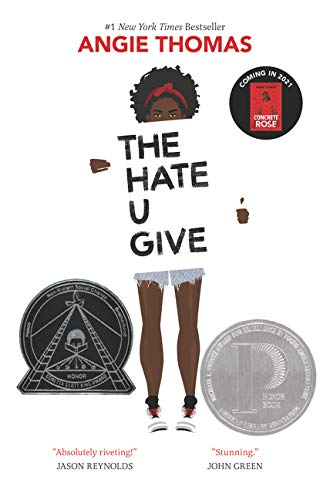
By chance, at home I had just begun to read a different Young Adult book, “The Hate U Give” by Angie Thomas, published in 2017.  Starr Carter, the 16-year-old protagonist, lives in a black neighborhood of Los Angeles with her father, an ex-con who runs a grocery store, her mother, a nurse,  and off-and-on her half-brother, who stays with his father when the man his mother lives with gets violent. The language is graphic, and the action is violent.

Starr has already seen her childhood friend Natasha killed in a drive-by shooting, and early on in “The Hate U Give” she is the passenger in a car which is pulled over by a white policeman who with little provocation shoots the driver, Starr’s close friend) in the back. The rest of the book deals with Starr’s wrestling with her nightmares, the media, the legal system, and the different demands of her friends and family.

Lambert writes of a world that could pass as a MAGA fantasy, while Thomas writes of a reality nearly as dystopian as “the Hunger Games.” Oddly, though, they both end in the same place – the importance of family, community, and values. 

I grew up in a suburban bubble not very different from the one in “Triple Trouble” and felt very much at home in Janet Lambert’s world. I’m sorry that today’s Young Adult readers face a much grittier reality than I had to, but glad that the fundamentals underlying what they are reading about seem to endure.
A Piece of my Mind: Wasted Day?

My fingertip went to sleep.

“That’s odd,” I thought. “I must have leaned on that hand while I was doing my morning crossword.” But it was my writing hand; I had been using it to fill in the crossword, not leaning on it.

I got up from my chair and went to the kitchen table which serves as my desk.  I massaged my fingertip while I checked my email.  The fingertip was still numb and tingling. When I looked at my finger, the first joint was swollen and blue above my wedding ring.  But the ring was not tight; I could bend the finger;  there was no pain.

Then a wave of strangeness came over me.  I felt as though I didn’t quite fit in my body, not confident that it would do what I asked.  I got up and groped my way to the living room, holding onto chairs and walls.  My husband was there.  “I feel strange,” I said, sitting down carefully in my armchair. My hands began to tremble.

He saw my shaking hands and maybe heard a tremor in my voice. “I’m calling 911.”

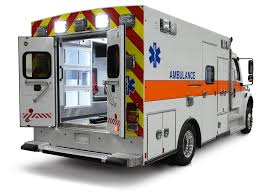
I didn’t move as we waited.  I breathed deeply, trying to clear the strangeness.  The ambulance arrived within five minutes, beating out the firemen from the local station. The two EMTs were crewcut, calm, and patient.  “Are you in pain?”

“No.”

“Feel dizzy?  Nauseated? Light-headed?

“That’s the word I was looking for.  Light-headed.” 

They loaded me onto a gurney and cranked me into the ambulance.  No siren, no flashing lights to alarm the neighbors. 

Brian was the EMT who stayed with me in the ambulance, while Braden drove.  Brian asked me my age.  I told him.  He asked what year it is. I told him.  Then he placed a half-dozen sticky pads on various parts of my torso and revved up the EKG machine.  After a few minutes it spat out a long white tape. “You have a beautiful heart,” Brian said. “You have the heart of a 20-year-old.”

No fever. Pulse normal.  But blood pressure was sky-high – over 180.  “You have high blood pressure usually?”

“Not usually – it was about 130 last spring.  But when I donated blood a week ago it was high – 180.  They barely let me donate.  I put it down to the four weeks of plumbing repairs we just finished going through.”

“That could do it.  Or right now it could be nervousness from riding in an ambulance. Let’s put an IV in you, just in case they need it at the hospital.” Brian jabbed me with a needle, attached an IV stent.  and went on talking calmly until we arrived at the hospital’s emergency entrance.  Down came the gurney, and I was rolled into PIT 4.  Patient in Transit?  I was to wait there for a doctor.

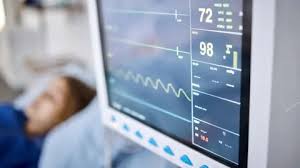
A nurse plugged me into a magic box which would monitor my temperature, pulse, and blood pressure every five minutes.  Brian’s stent failed to deliver enough blood for the testing Nurse Nina wanted, so she repositioned the needle. “You’re going to have some bruising. Now what started this?”

I told her about my tingling finger, the blue finger joint, and the wave of strangeness. By this time, of course, the tingling had stopped, the finger joint was a normal color, and the light-headed feeling had passed.  But the machine was still flashing yellow every five minutes to warn of the high blood pressure.

“Let’s take off that ring.  You don’t want to have that finger get swollen and have to cut the ring off.”  I tried, but the ring had been on my finger for decades; it was not about to come off easily.

“I’ll go get some lubricant.” And that was the last I saw of Nurse Nina.

My husband arrived and was allowed into PIT 4.  He was armed with a sheaf of crossword puzzles in case there was a delay in processing me through the ER.  It was about 11AM, and a busy day in the Emergency Ward.  I had to wait my turn behind the folks who were bleeding, in obvious pain, having seizures, or in other ways much more seriously troubled than I was. Lunchtime came and went.

“You should go get something to eat,” I told my husband. “I’ll be right here.”

“No, as soon as I do that you’ll be seen and transferred somewhere.  I’ll wait.”

I was allowed my phone.  I cleaned out my inbox.  I discovered a couple of Solitaire games and played many rounds.  My husband finished half of the crossword puzzles.

At about 2PM a young woman in a white coat with a badge certifying her MD status arrived.  I went through my history again.

“Can’t explain the strange feeling.  But I want to be careful about that finger. You should take off that ring.  I’ll schedule you for an X-ray.” And that was the last I saw of the doctor.

We waited again.  I found another game on my phone involving coloring in complex mandala patterns.  I completed two mandalas. My blood pressure monitor was no longer flashing yellow.

My husband was about out of crossword puzzles.  He went to the nurse’s station: “What about that X-ray?  Have you forgotten my wife?”

“Sorry.  We’re really backed up.  She should be up soon.”

At 4:30 I was wheeled into the X-ray area.  My finger was taped down to the surface and the machine whirred.

“That’s it, you’re done,” the orderly said as he escorted me into another room.

“Can I go?”

“As soon as the discharge paperwork is done.  And the doctor wrote a prescription for an antibiotic and some baby aspirin.”

My husband went down to the pharmacy to pick up the prescription.  I started work on another mandala.  My phone was down to 16% charge.

At 6:30 the discharge paperwork was completed, I had my pills and instructions in hand, and we headed for home. “So much for that day,” I grumbled/ “Eight hours in ER and nothing but baby aspirin to show for it.”

Was it a wasted day?  I now have confidence that, in case of a more severe emergency,  my local care would be prompt and thorough. I know that all my systems are working as they should.  The blood tests came back normal.  Normal feels good.  And going forward, I have the heart of a 20-year-old.    

Maybe not completely wasted.

Post Navigation