Allyson Johnson

Pieces of my Mind

Freeway Free in California – Hidden Gem – Triton Musuem in Santa Clara

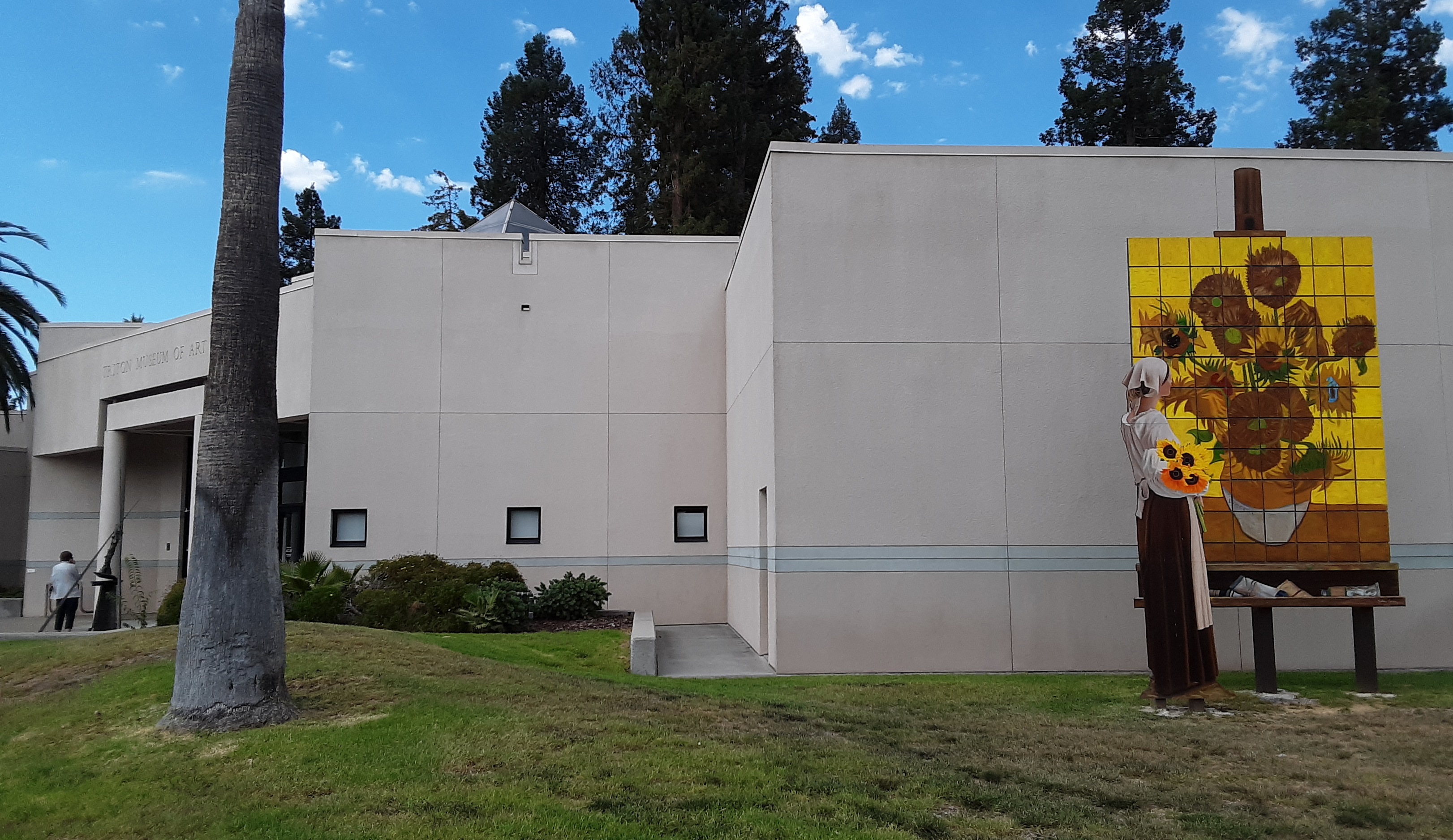
The Triton Museum of Art, tucked away in a quiet corner near the City Hall, is one of the many small museums dotting the Bay Area, and one of the pleasantest. It specializes in contemporary and historical works with an emphasis on artists of the Greater Bay Area. The permanent collection includes 19th and 20th century American art of the Pacific Rim, Europe and beyond plus an extensive collection of American Indian art and artifacts. The museum was founded in 1965 in San Jose, California, by rancher, lawyer and art patron W. Robert Morgan and his wife June.[3][4] It is the oldest non-university museum in Santa Clara County. 

On a recent visit, there were four major exhibits being celebrated. The first featured abstract sculptures by Jeff Owen, placed around the lobby in accessible spots. I saw one man taking a picture of his wife peeking through the circle of a sculpture, like one of those carnival sets where you are invited to put your face on a blowup of Marilyn Monroe.

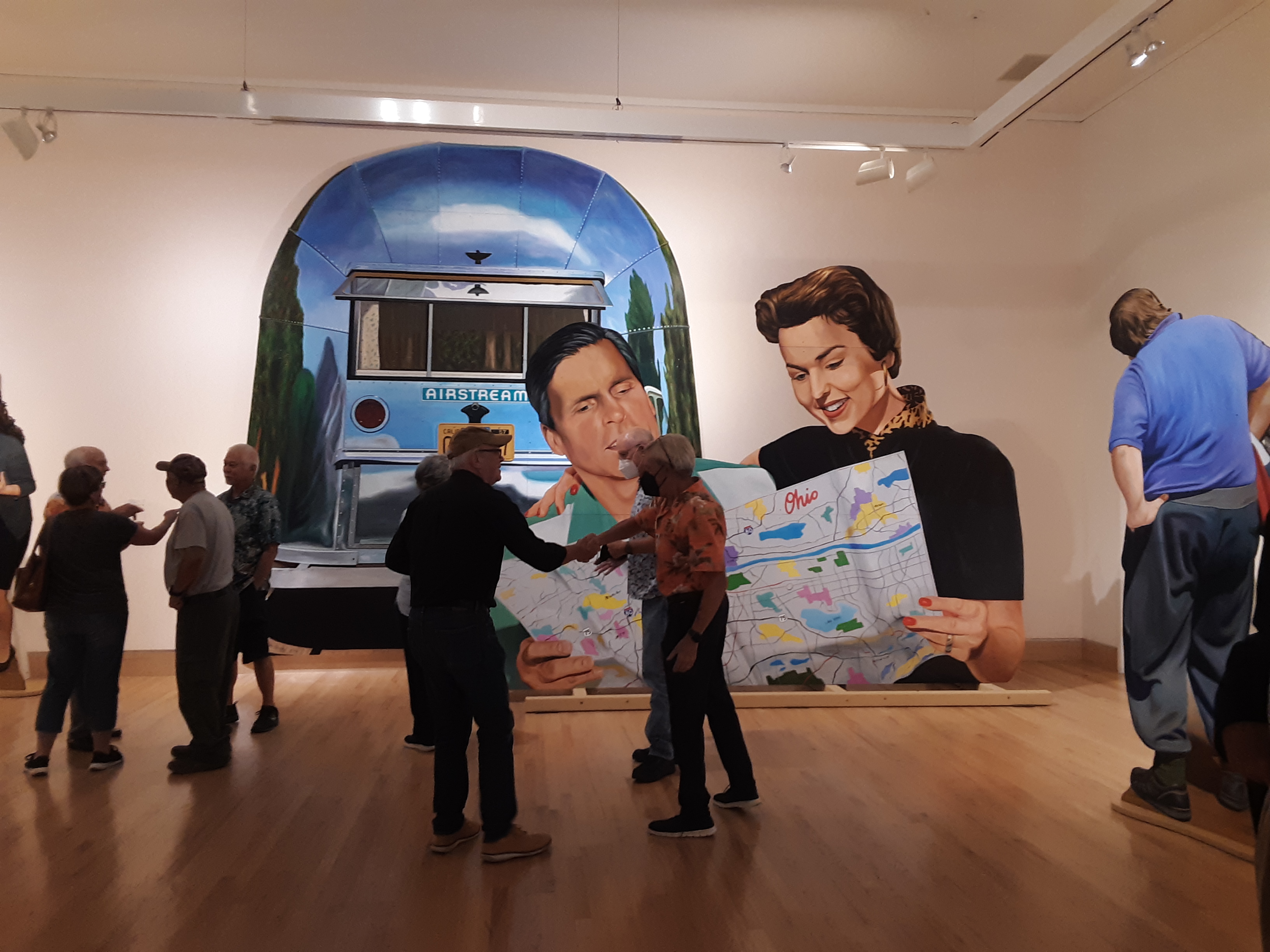
Perhaps she was inspired by the second exhibit, a collection of larger-than-life bill-board-like figures conceived by John Cerney and inviting viewers to make themselves part of the scene.

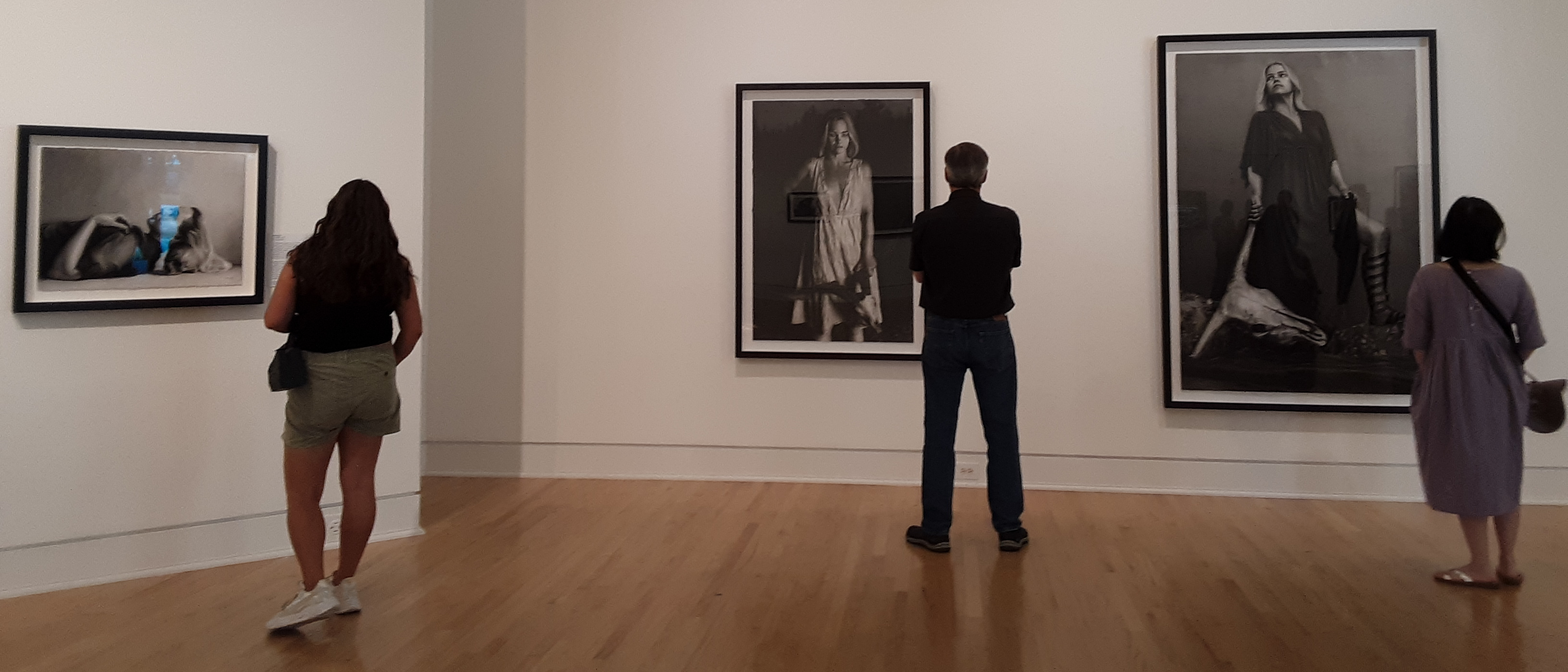
The third exhibit was a series of larger-than-life charcoal drawings, most of them self portraits of the artist Julie Grantz, and embodying a series of feminist themes.

The last and largest exhibit was a roomful of paintings by May Shei, inspired by Chinese tradition. They included calligraphy scrolls, delicate nature vignettes, vibrantly colored still lifes, and monumental landscapes in the style of Zhang Da Qian.

The Triton is perfectly sized to allow appreciation of the diversity of its offerings without wearing the viewer out with an over-supply of stimulation. Admission is free, as is the plentiful parking, though of course donations are encouraged.

Freeway Free in Colorado: Strolling through the past in Georgetown

Instead of turning north at the Granby junction off I-70, DM suggested that we continue another five miles and have our lunch in Georgetown, a discovery she and a friend had made in exploring the west side of the Colorado Rockies.

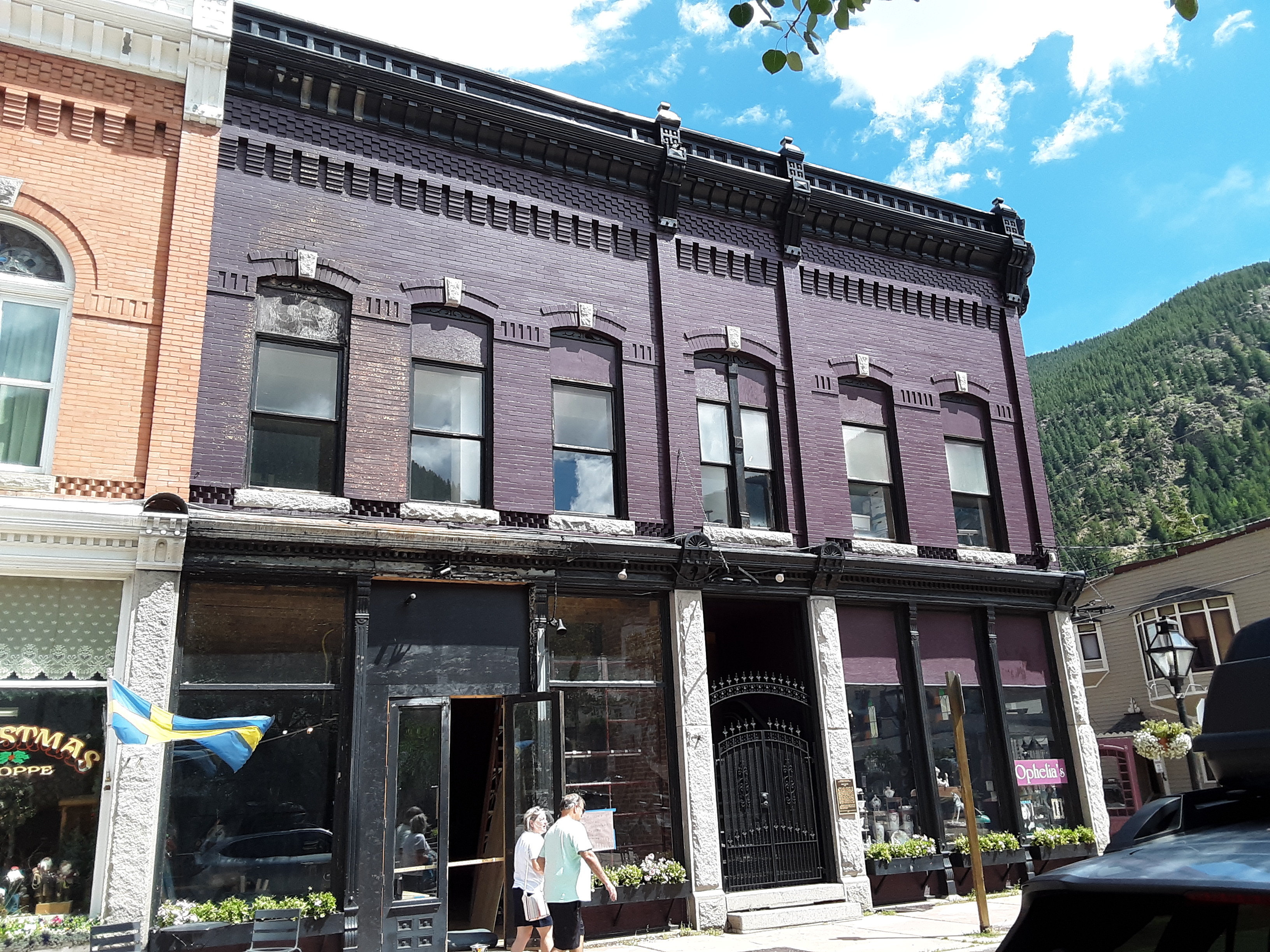
Georgetown is a town preserved in the 1889’s, except it has been somewhat cute-sified with colorful paint a la San Francisco’s Painted Ladies.  What used to be the bank is now painted a trendy purple and contains an assortment of “antiques”, “local crafts” (some made in China) and kitsch shops selling Xmas ornaments, Colorado souvenirs, “Indian” turquoise and silver jewelry,  etc.  The town includes several attractive restaurants; we ate at “The Happy Cooker” – a cottage with a cheerful patio outside decorated with oddments, friendly bustling service, and ample servings of French fries to go with wraps and salads. Wandering around as we waited for our table to be cleared I even found a shop with a fine assortment of Georgetown postcards – increasingly a rarity in the days of email and Instagram.

There is also a railroad running just outside of town, a relic of the old mining days. We did not visit the railroad, being on a schedule, but we heard a very authentic-sounding whistle, and there were postcards. (If you go, check out the railroad and report back!)

After lunch we strolled the other side of the street and stopped in at the charming little library beautifully laid out with the more modern children’s wing tucked away behind so as not to disturb the overall quaintness.

A perfect way to break a trip from Denver or Boulder to the western slope!

Freeway Free in California: Along the River in SLO

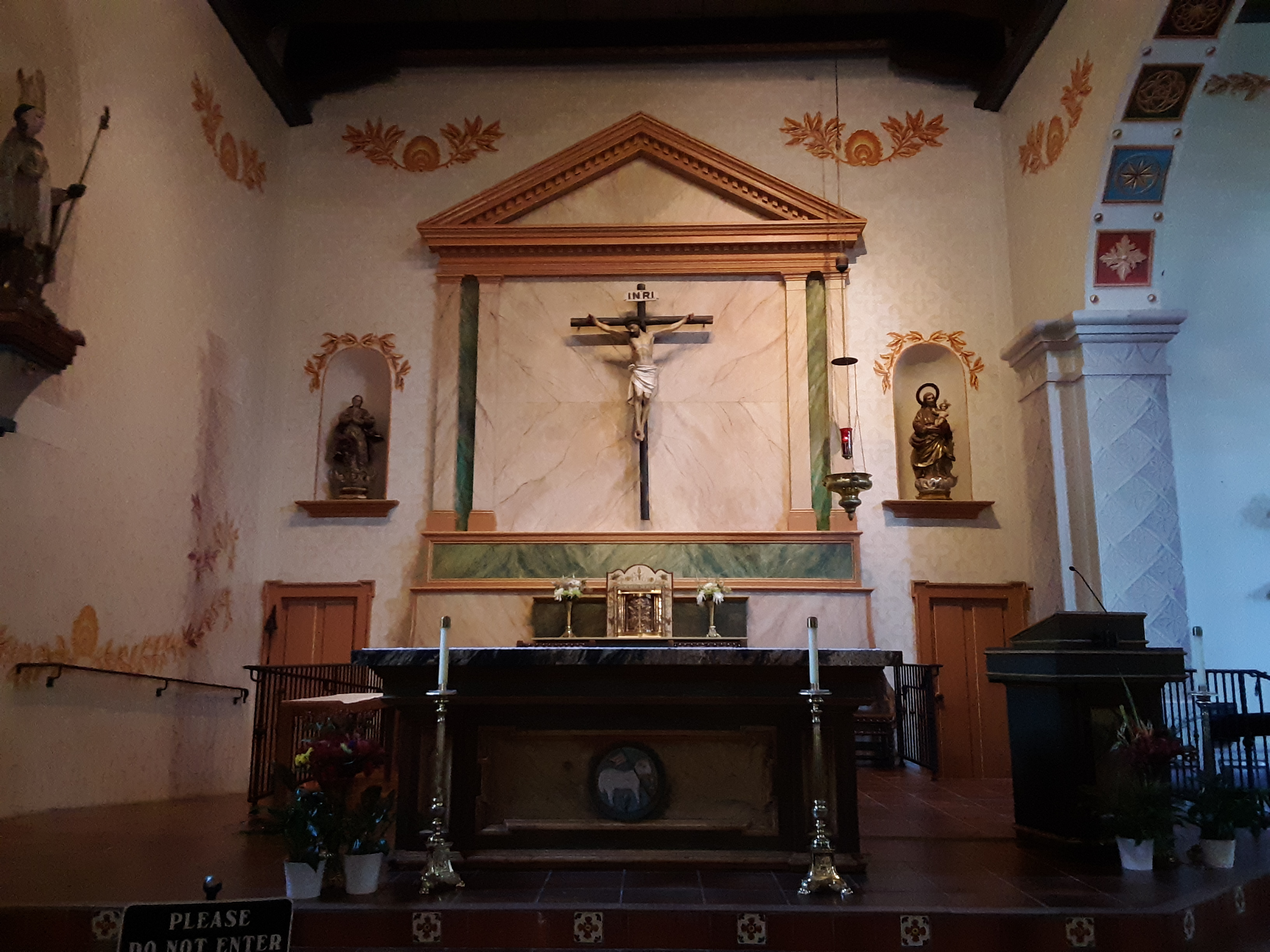
 This morning we went to downtown San Luis Obispo, magically stripped of its food stalls, produce, and acrobats from last night’s farmer’s market, and checked out the mission – lovely, quiet, full of apologetic acknowledgement of the mistreatment of Indigenous People’s.  We left W, who had seen plenty of missions, outside on a bench by the creek, and returned to find her having befriended Adrian, a very well-spoken and tidy vagrant who welcomed us all to SLO. 

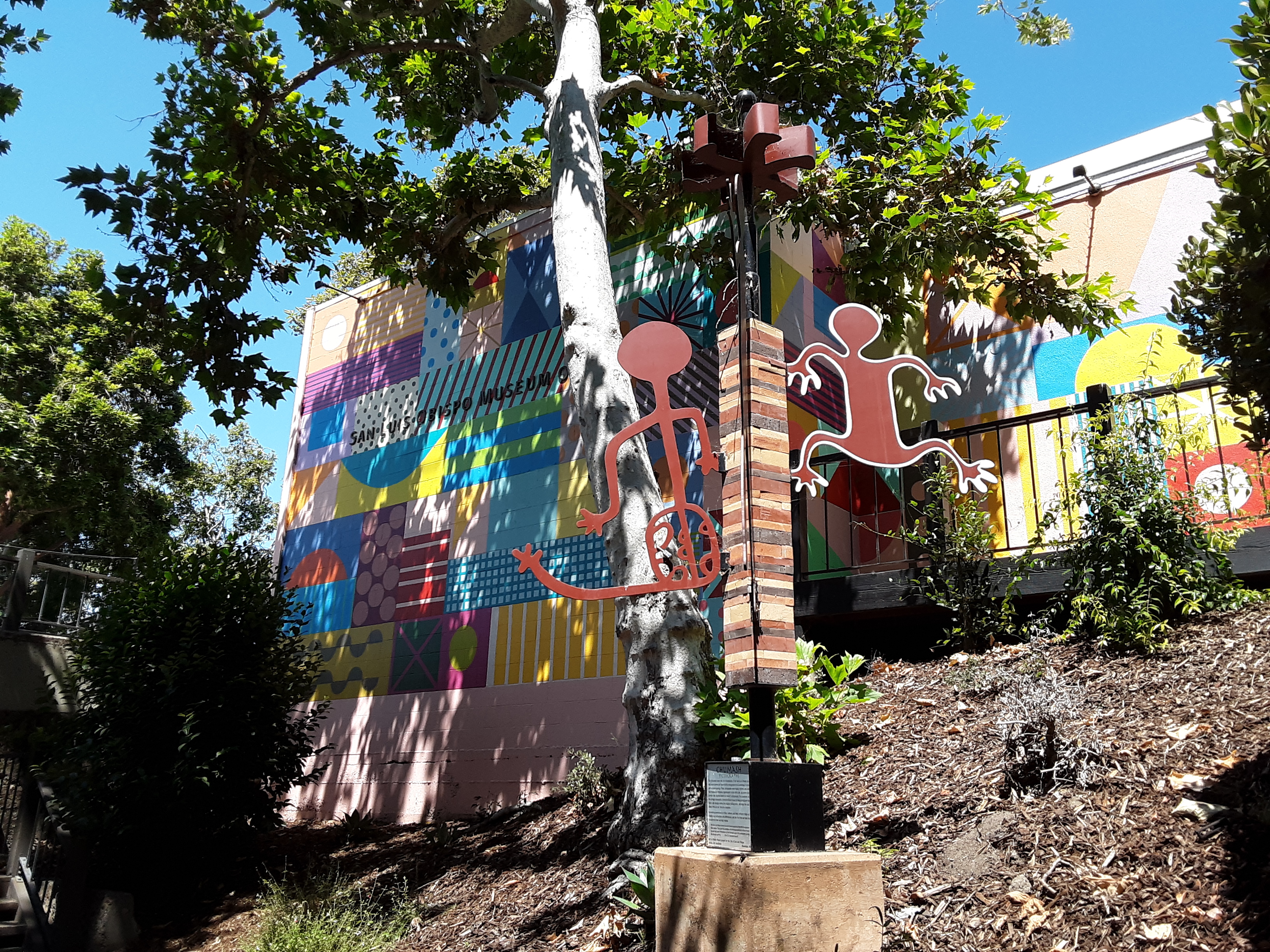
We wandered along thecreek to the SLO Art museum, a very small but attractive venue with three local artists exhibiting (loved Anila Agha’s India-inspired lanterns), plus a colorful abstract mural which wrapped completely around the outside of the museum.

On our way back to the car we couldn’t pass up the old Carnegie Library, now the home of the SLO History Museum.  The exhibits and the docent who talked about them were unexpectedly fascinating – I had to go out for extra time on our (very expensive) parking meter. The docent was a Viet Nam vet who knew a lot about the Dust Bowl and the Japanese internment, and is doing research on WR Hearst.  He explained and enhanced a lot about the old photos which were displayed, and recommended The Habit for a light hamburger lunch just a block away.

The Habit is a fast food place a cut or several above McDonalds – I had a fancy burger with mushrooms and garlic aioli and tempura string beans instead of fries for about $12 including tax.  The most unusual aspect is the ordering, all done at touch-screen kiosks at the front of the store, with a buzz to your cell phone when your order is ready.

When we left the mission in the morning, we had seen people setting up already for the free Friday concert in the Plaza in the evening. (People were already reserving their spaces at 11AM). We thought about attending, but decided instead to reserve a riverside table at Novo just down San Luis Obispo Creek from the mission and the Plaza.

 Our dinner at Novo was a triumph – all participants raised a toast to D for having suggested and reserved the place.  We were outside next to the creek, but far enough down the creek and across so that the noise of “The Molly Ringwald Experience” rock band going in in the Plaza was just incidental background noise.  

We feasted on four appetizer plates:  calamari with 2 kinds of sauce, roasted Brussels sprouts, warm Chèvre (goat cheese) with olives and sourdough toast, and minced chicken in lettuce cups.  We finished off with a shared chocolate decadence fudge thing, all deliciously accompanied by a generous pour of the house Merlot. 

Catching up with FOX SPIRIT – Episodes 1-50

Did you mean to follow my on-line novel Fox Spirit but fell behind? Here’s a quick synopsis to catch you up to the first 50 episodes (they’re short, but still, 50 is a daunting number!)

====

Sara Miller needs a fresh start after the death of her husband John, so when China opens up to the West in August of 1997, she accepts an offer to work at a startup video game company in Beijing. But things don’t go smoothly: she finds she has been hired only to provide an American Face for the company as it seeks investors, she must repel unwanted advances from Chinese  executives, and she meets with suspicion and jealousy from some of her coworkers—especially the accountant, Trueheart Zhang, and the much younger, volatile sales manager, Storm Cheng.

Sara had quarreled with her daughter-in-law Rennie shortly before coming to Beijing, she does not want to make life difficult for her son Mark, but she longs to see her grandson Richie, and returns home at Christmas to make an uneasy peace with Rennie, although by flirting with Rennie’s father at Christmas dinner she makes an enemy of Inez Cavallo, Rennie’s mother.

Returning to Beijing, Sara continues to play the role of American Face for investors, and does her best to win over her co-workers.  She finds additional rewarding work helping to teach English at the local Children’s Palace, a pre-school. Storm Cheng offers to help with some of the translations and a friendship begins.

On a rainy evening Storm saves Sara from being hit by a speeding car, and the friendship sparks to a passionate affair. Storm introduces Sara to his friend Bright Liu, an easy-going Buddhist. Storm, Bright, and  Trueheart Zhang had met as student activists and survived the government crackdown of Tiananmen Square, and are now close friends. As Sara and Storm learn more about each other, their passion grows into love.

But history moves on, and culture gaps widen.  A visit to Beijing by US President Clinton sparks an argument about free speech. Sara is invited to dinner with Storm’s family, and she is insulted by Mrs. Cheng’s treatment of her as a courtesan. Storm tells Sara of his childhood, raised by peasants in the countryside when his parents left him to go to university in Beijing. He was reclaimed by his parents when they were established in Beijing, and he never saw his foster parents again. Sara is appalled by the story.

Sara has weekly phone calls with her son Mark, and senses trouble in his marriage. She is unsure of a welcome at Christmas, but a quarrel with Storm makes her eager for a change from Beijing. The visit goes smoothly and on her return Storm meets Sara at the airport and they reconcile. But their life is disturbed when Bright Liu is caught up in a Falun Gong demonstration, and even more when anti-American riots roil Beijing after the bombing of the Chinese embassy in Kosovo.  The differences between American and Chinese points of view threaten the love between Sara and Storm.

====

Once you’ve read the synopsis, you can pick up Sara Miller’s story here:

You can follow the story from then on by scrolling to the very bottom and clicking on the little blue bar “Follow Chinese Puzzle Box”. New episodes appear every Monday and Thursday.

Freeway Free in California: Cool Stays in SLO

If my posts have you thinking about a stop in San Luis Obispo, you’ll want a place to stay. Here are three very different choices:

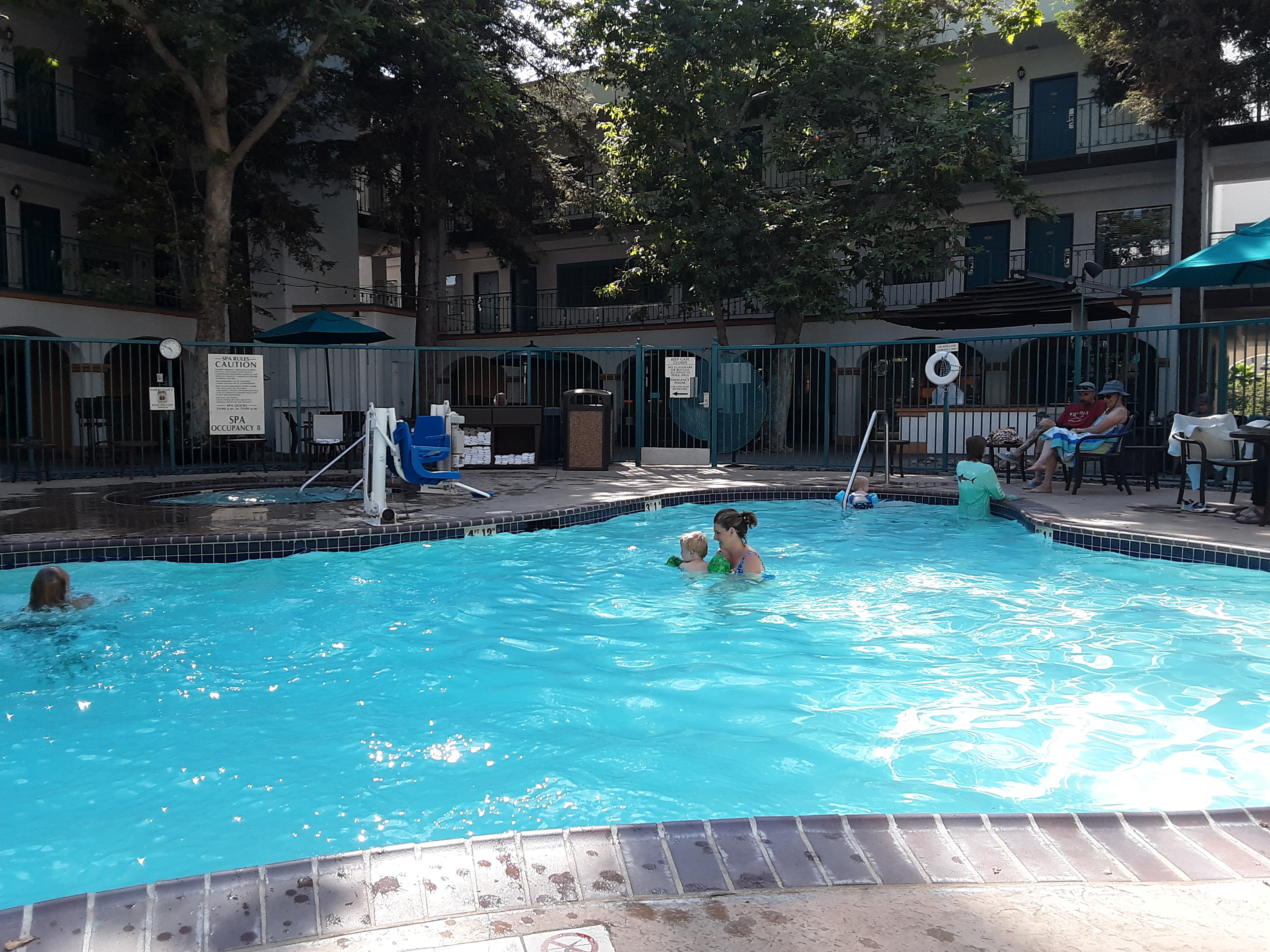
For families: Quality Inn Suites  (qualitysuitesslo.com) – Located well off the freeway and only a few blocks from downtown. This is a great value. TQuality Suites in SLO is a beautifully laid out establishment with lots of outdoor shady sitting spots for contemplation.  One courtyard adjoins the breakfast cafe and the Lobby and contains the spacious swimming pool as well as plenty of outdoor seating for patrons of the Cafe or the evening Manager’s Reception (one generous pour of wine or one beer.) The second, quieter courtyard hat has a gazebo, a fountain, and several tiled tables with benches for sitting as well as a gazebo and a fountain.). Behind the hotel is the river with several nicely situated benches for even quieter contemplation and perfect fend shut.

The complimentary hot breakfast offers a variety of egg dishes, pastries, bagels, cereals, and the usual trimmings.   In the evening along with the complimentary wind and beer, an evening barbecue grill on the swim deck offers hamburgers, hot dogs, cheese steak sandwiches, and grilled chicken sandwiches along with help-yourself salad fixings and cole slaw. If you want something fishy, I can recommend the Splash Cafe for takeout fish tacos and wraps just down Monterey Avenue.

The rooms are large and well equipped. W, C and I rented a Suite, which has two double beds plus a comfortable sofa bed. If you are traveling with children, the pool and the barbecue are easy entertainment and eating options if you have had a long traveling day or a strenuous time getting a student settled at Cal Poly.

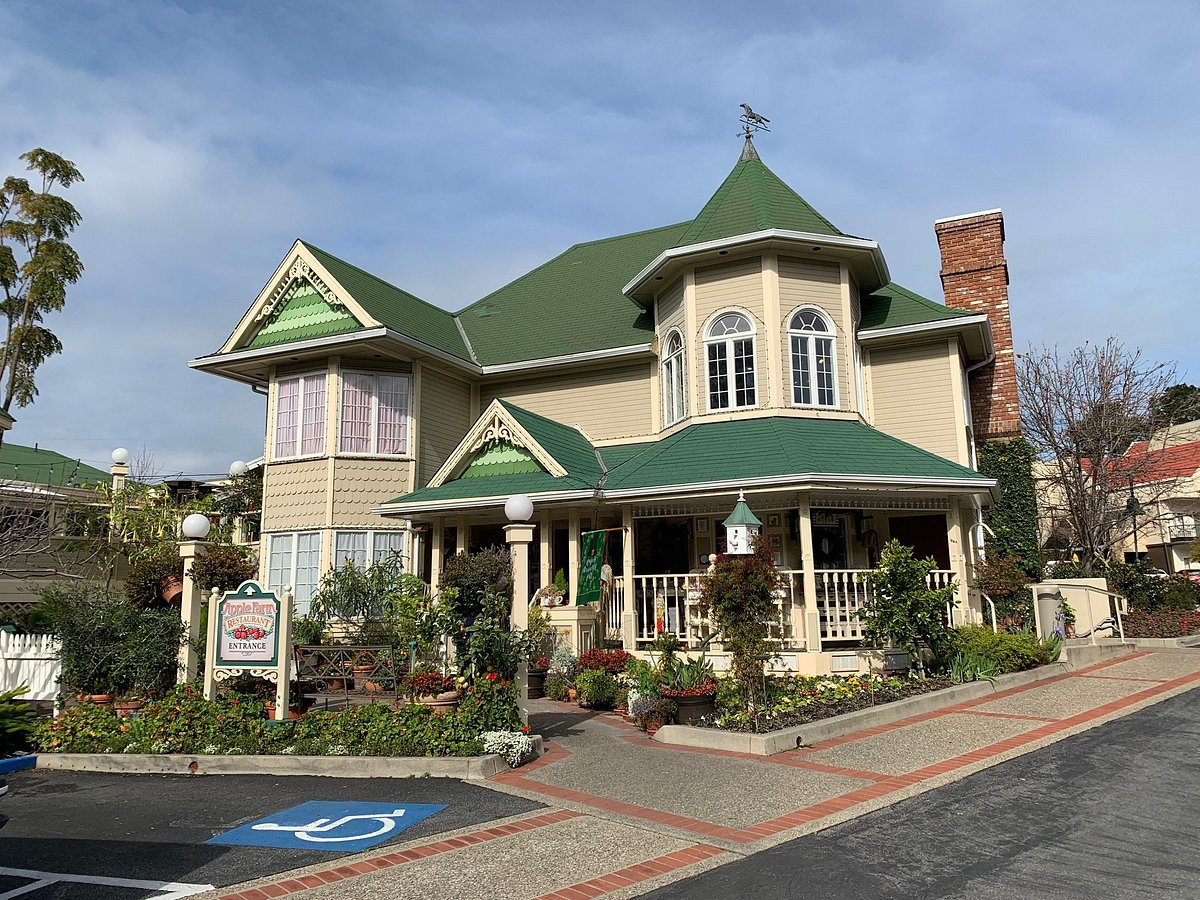
For couples or BFFs on a girls’ weekend who are into kitsch – The Apple Farm Inn is up the street from the Quality Inn, a little further from downtown, and offers floral decor and chintz galore, with poster beds, ruffled pillows, overstuffed chairs, and a gift shop full of china in traditional patterns and knickknacks. It’s a new establishment that is trying to be quaint, but with modern gas fireplaces in the rooms. D and I stayed here years back and remember that the breakfast, though not complimentary, was to die for (or die after from surfeit). Current pix look less ruffly and chintzy than I remember.

For couples who want genuine vintage without the kitsch and don’t mind stairs, the Garden Street Inn is a quaint and charming B&B located in a historic Victorian within easy walking distance of downtown. It has stained glass windows, a library with a ladder to help you to the top shelves, clawfoot tubs in the bathrooms, and a sunny breakfast area for enjoying a different creative breakfast every morning.

Freeway Free in California – SLO Farmers Festival

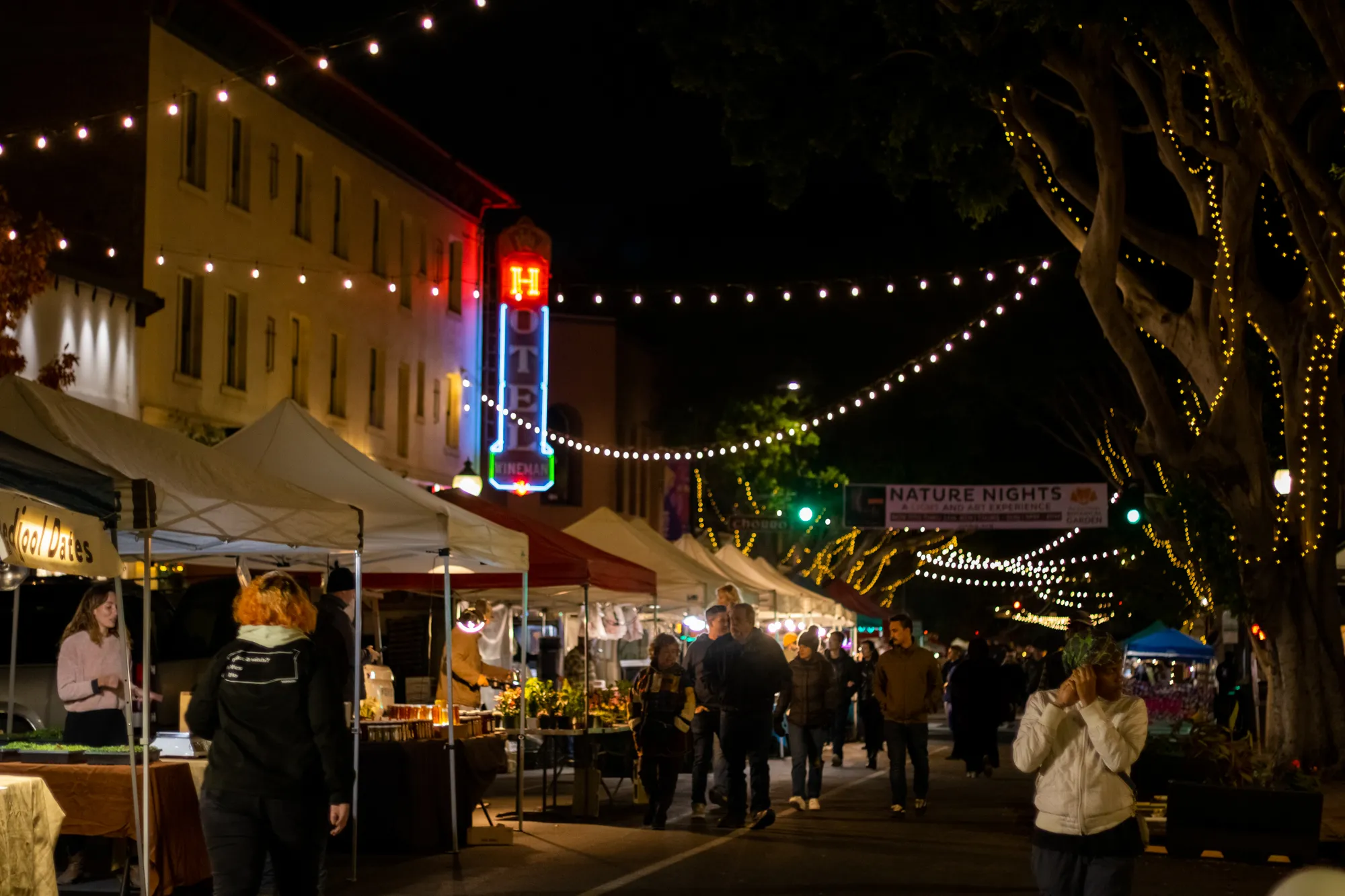
The San Luis Obispo “Farmers market” is justly famous, but not for farming.   I put the quotes because the actual produce-vending section occupies maybe two blocks, while the food stalls, real estate booths, craft booths, and beer dispensers made up at least five.  You might also see a balloon guy with balloons that light up in rainbow colors, an acrobat who climbs a pole held steady by four volunteers and does gymnastics thirty feet up in the air, a group of rock performers who alternate on instrument playing and K-pop style dancing, or a dancing dread-locked saxaphonist. 

The market is held every Thursday evening beginning at 6PM on SLO’s main street, Higueroa Street, which is decked in lights and lanterns and shut down to all but foot traffic. In summer, long-lasting daylight allows you to appreciate the beauty of the produce and see the performers more clearly, but there is something magical about lantern-light and sparkly garlands which will lure you to spend more time after dark.

The food-stall section offers a huge variety of walk-away food, as many of the local restaurants set up food stands and offer sample platters of their standard menu items. W and I shared a couple of platters of Indian food from the Shalimar restaurant, with mango lassi as drink/dessert, while C wolfed her way through a plate of large juicy beef BBQ ribs. Roasted corn on the cob, churros, tacos, gyros, hummus. BBQ chicken, varieties of satay,, ramen, and chowmein, ice cream, crepes, and many other exotic, vegan, and other choices were available.

W sat and people-watched (lots of summery swirly dresses, bare midriffs, ripped jeans… SLO is a college town, after all) while Cindy and I explored up and down the blocks. Market closed down at 9 and so did we, making it back to our hotel by 9:30 and everyone well-fed and snug in bed by 10. 

One word of warning: Parking in downtown SLO is expensive ($4/hour) and hard to come by on Market Night. I let W and C off a block from Higueroa and drove five blocks in the other direction before I found a parking place (at least it was beyond the range of the parking meters). Make sure to take note of where you park, and have a phone with a flashlight for your return, as the street lights of SLO are also few and far between once you are off the main drag.

Freeway-Free in California – Salinas is Steinbeck Country

It would be easy to breeze past Salinas on your way to the Monterey Peninsula, San Francisco, or San Jose, but that’s a mistake. Salinas is Steinbeck Country, the thinly disguised locale of “East of Eden”, “The Red Pony”, and “The Long Valley.” The National Steinbeck Center is a modern, manageably sized exhibition space right at the end of Main Street in the middle of “Old Town Salinas”, with easy access off 101, and a sizable parking garage on the same block. 

If you’ve been traveling up California’s Central Valley on 101 on a hot day, it’s worth the stop just to get out of the car and sit in the luxuriously air-conditioned theater (on the right as you enter) to watch the 15-minute documentary about Steinbeck’s life. Across the lobby space from the theater is the exhibition space, which includes displays and discussion covering each of Steinbeck’s novels, a number of movie screens showing excerpts from the movie versions of “East of Eden”, “Grapes of Wrath”, “viva Zapata”, and videos of Steinbeck’s Nobel prize winning speech and various interviews. 

And the rest rooms are lovely.

If you happen to be stopping near lunchtime, stretch your stay and your legs by walking two blocks down Central Avenue to the Steinbeck House Restaurant, run by volunteers in the renovated boyhood home of John Steinbeck. The menu features local produce and an eclectic selection of dishes, including of course “East of Eden Pasta”. During the summer you can also take a tour of the home from attic to cellar (location of the gift shop).

Catching up with Fox Spirit – Episodes 1-25

Did you mean to follow my on-line novel Fox Spirit but fell behind? Here’s a quick synopsis to catch you up to the first 25 episodes (they’re short, but still, 25 is a daunting number!)

====

Sara Miller needs a fresh start after the death of her husband John, so when China opens up to the West in August of 1997, she accepts an offer to work at a startup video game company in Beijing. But things don’t go smoothly: she finds she has been hired only to provide an American Face for the company as it seeks investors, she must repel unwanted advances from Chinese  executives, and she meets with suspicion and jealousy from some of her coworkers—especially the much younger, volatile sales manager, Storm Cheng.

After four months Sara view the coming Christmas with mixed feelings.  She had quarreled with her daughter-in-law Rennie shortly before coming to Beijing, she does not want to make life difficult for her son Mark, but she longs to see her grandson Richie. Her son’s urging and Rennie’s half-hearted invitation bring her back to California for a holiday visit.

In California, Sara and Rennie share an uneasy peace, until Rennie lets slip that she and her mother suspect that John Miller’s death was no accident. Sara prepares for dinner with the in-laws like a gladiator going to face the tigers.

====

Once you’ve read the synopsis, you can pick up Sara Miller’s story here:

You can follow the story from then on by scrolling to the very bottom and clicking on “Newer Entry” until you have caught up. New episodes appear every Monday and Thursday.

Los Altos Aging? Not a Problem

The Mercury ran a feature story a short time ago about the aging of the Bay Area.  The article noted all sorts of issues associated with an aging population, including lack of economic growth, strain on medical resources, declining school population, shortage of labor, and declining property tax revenues as seniors age in place.

I take issue with the article’s negative spin. What about the advantages of a mature population? These include:

Lower crime rate

 The prime age cohort for crime is historically 18-29. With an older population, the crime rate plummets.  Los Altos is one of the safer communities around, judging by the brevityof the weekly reports of criminal activity in the Town Crier.

Community stability

With a population that ages in place, traditions can be built and maintained.   Long-time residents are accustomed to a Pet Parade in spring, a Homecoming Parade in the fall, and a Festival of Lights Parade on Thanksgiving weekend.  On a smaller scale, our block has held a Labor Day block party every year for decades, missing only a couple of years during the pandemic.  It’s the long-time residents who keep it going.

Local wisdom shared.

Want to know how to keep raccoons from ravaging your lawn? How to deal with gophers gorging on your vegetable sprouts? How to protect your fruit trees from foraging squirres? Ask your long-time resident neighbor.

Curious about why Los Altos High has a Tom Burt football field, a Leo Long track, and a Dude Angius gymnasium?  The oldest person on your block can tell you who these people were and why they are honored.

Active volunteer groups.

Here are just a few of the many volunteer groups largely made up of seniors which enhance our community:

*The Garden Club of Los Altos maintains the beautiful gardens around History House, while other senior volunteers serve as docents at the Museum.  

*The League of Women Voters holds voter education panels for every election.

*Greentown Los Altos educates and advocates for the environment, as well as planting trees and preserving local history through their popular senior-led Bike tours.

*The Los Altos Community Coalition disseminates information about local issues through Zoom meetings and panels.

*The Los Altos Stage Company has kept local drama alive and vibrant.

*The Friends of the Library supply extra copies of best-sellers, raises funds through their Book Sales, and supplement paid staff with many volunteer hours of book shelving.

Imagine what it would cost to replace these services on the open market.

Rather than bemoaning the potential costs of an aging population, let us instead appreciate the many benefits our older citizens provide.

A Piece of My Mind: Collateral Damage (Los Altos Town Crier May 31, 2023)

The San Jose Mercury-News had a featured op-ed on the opinion page about “the unprecedented economic costs of COVID-19.”  The article cited an estimate from “our team of economists, public policy researchers, and other experts” of over $14 trillion lost due primarily to workplace absences and lost sales.  But authors Jakub Hlavka and Adam Rose noted that “we didn’t estimate a vast array of indirect costs, such as … mental health effects on the population  and the learning loss experienced by students.”  

Already, graphs and charts show economies bouncing back, workers returning to unused offices, or the offices being repurposed.  What can’t be measured, as Hlavka and Rose admitted, is the collateral damage to families and communities, and what can’t be predicted is the length of time required to truly heal. 

I know a young woman who was a junior in college when COVID hit.  Lockdown forced her into an unrelenting intimacy with her roommates which ended in hard feelings and frayed friendships. No internships or jobs materialized in the long locked-down summer.  To save money in her senior year, since all classes were being held remotely, she lived with her father and stepmother.  Again, the stress of too much proximity led to an argument, an explosion, things said that were hard to forgive, and now the daughter has been estranged from that part of her family for over two years.   

I know a young man who was a high school senior taking advanced classes.  Lockdown in the spring quarter of his senior year meant none of the traditional rites of passage happened: no Senior Sneak Day, no Senior Prom, no Yearbook signing, no Grad Night.  He decided to take a gap year rather than spend his freshman year (and tuition) on Zoom classes.  He did not make good use of the gap year, and when he started at an excellent private college he was out of the habit of attending to class schedules, dorm rules, and course requirements.  He has narrowly avoided expulsion, and after turning over and spoiling a number of new leafs, hopes to start again this fall in a local public university. 

Younger children, also, have been affected in hard-to-measure ways.  A pre-kindergartener I know was outgoing and self-confident about meeting new people, but during lockdown she saw almost no-one except her parents.  An extended trip before starting kindergarten didn’t provide much more opportunity for interaction with strangers without her parents beside her.  Now in kindergarten, she is doing well in classes, but any disruption to her normal after-school  and bedtime rituals may bring on a meltdown.  She has never been put to bed by anyone but Mommy or Daddy that she can remember, and she’s not ready to start now. 

Multiply these examples by hundreds and thousands. Then try to measure the disappointment, pain and anxiety that has been caused by COVID-19’s social disruption.  How many tears add up to a dollar? 

=====

My debut novel, Fox Spirit, is published in twice – weekly episodes on ajmccready.wordpress.com. It’s not too late to catch up! – here’s the link to the first episode: February | 2023 | Chinese Puzzle Box (wordpress.com)

Post Navigation