Allyson Johnson

Pieces of my Mind

Exploring Columbia SC – Day One

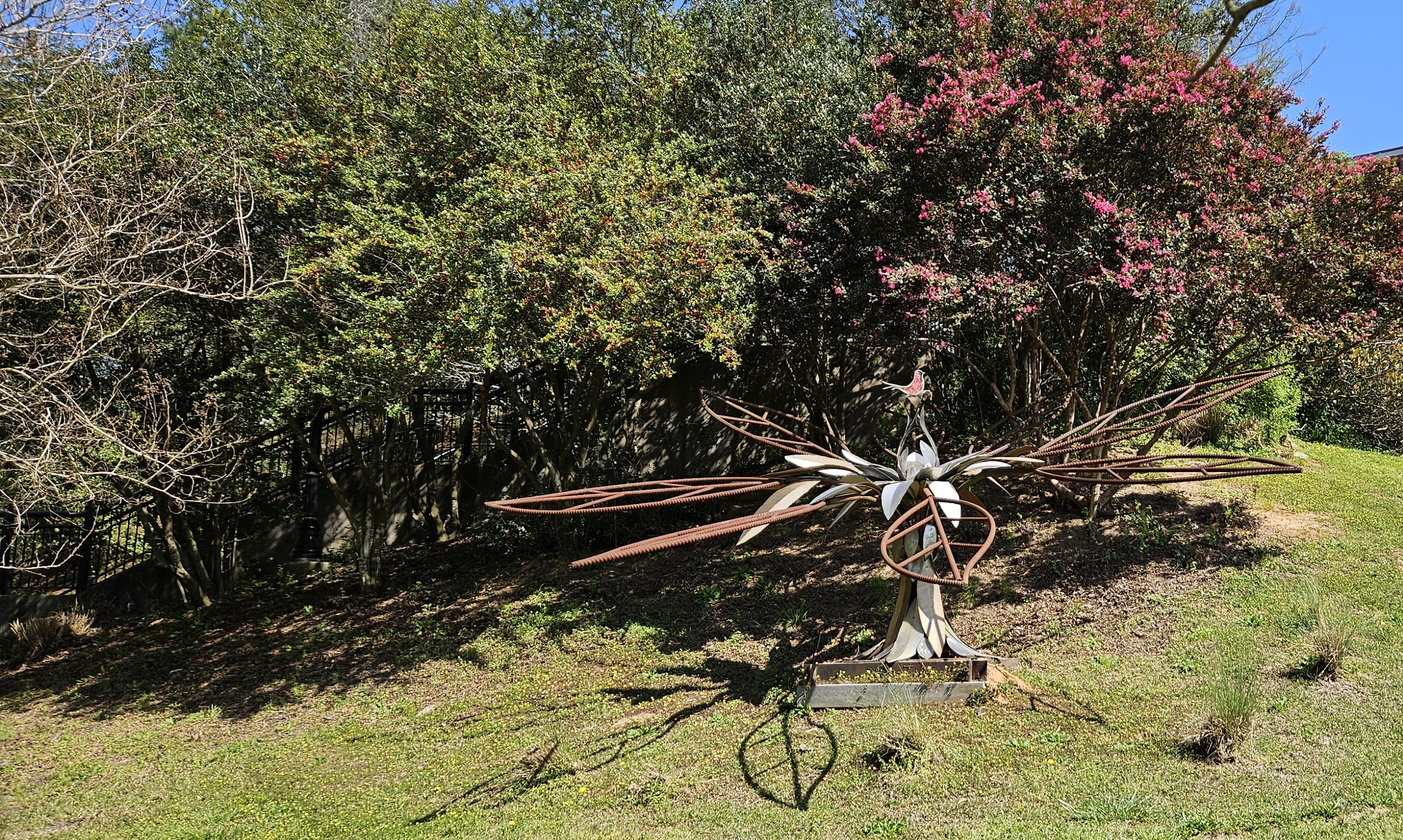
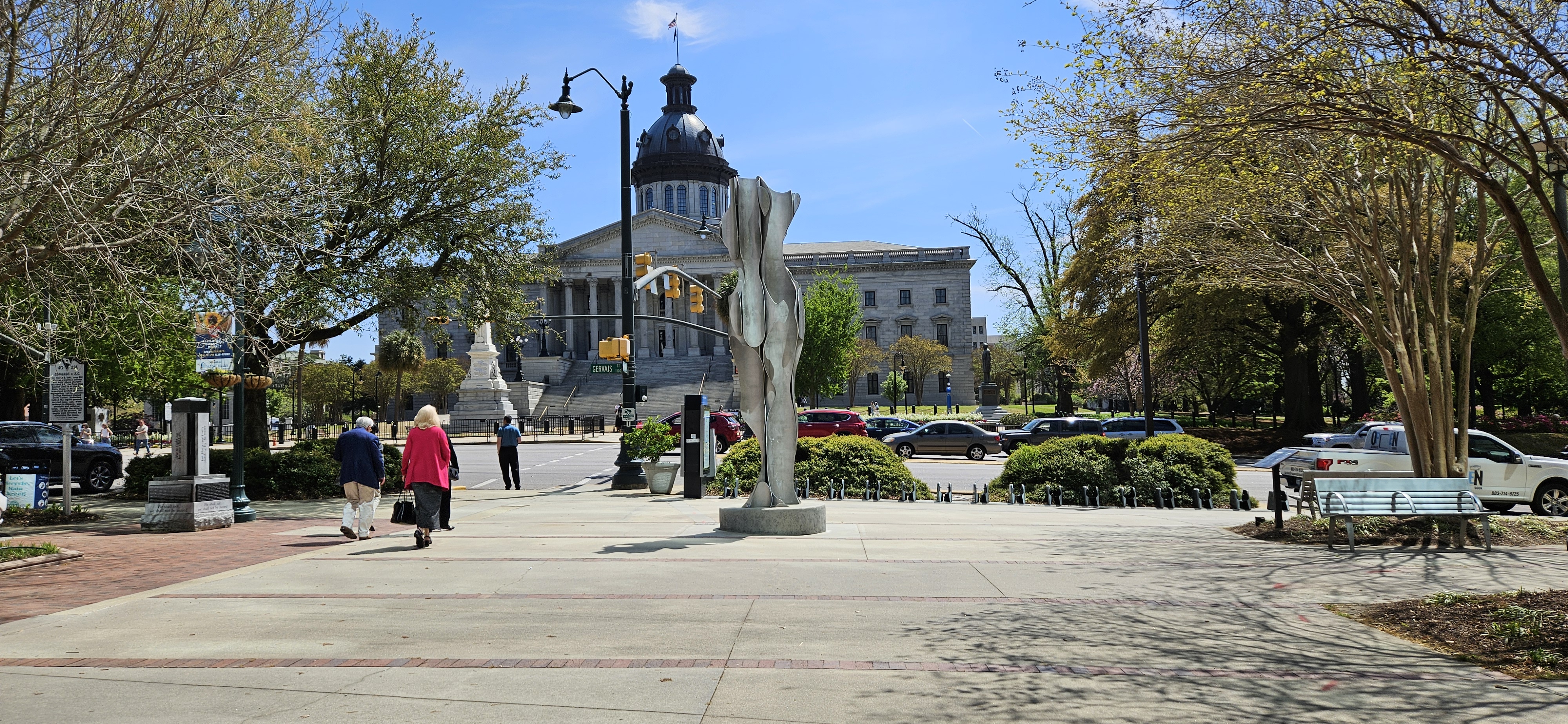
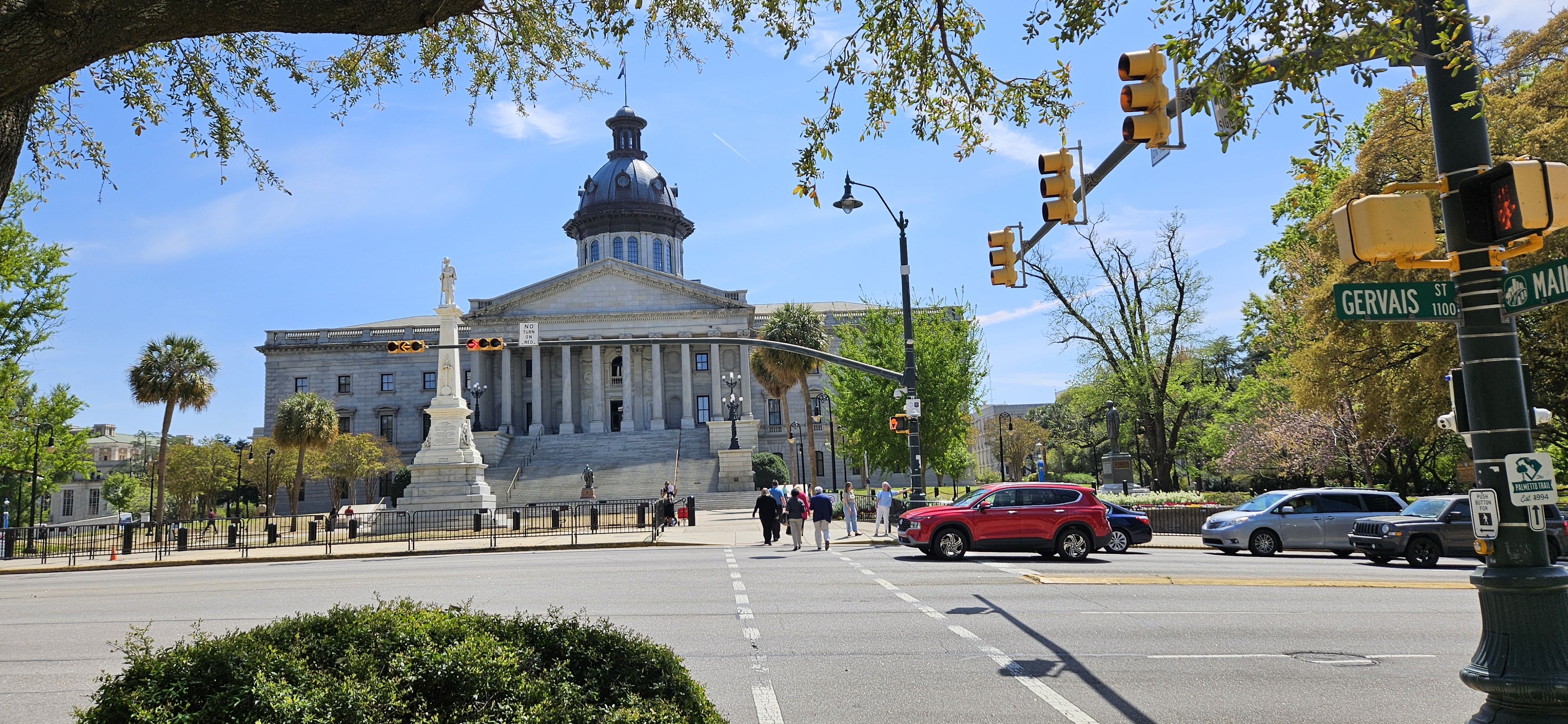
Columbia, South Carolina is a walkable state capital, and the area around the Capitol building has plenty of agreeable spots to walk to. The Capitol building itself is a peculiar architectural folly – a classic Greek/Roman base complete with grandiose steps and towering pillars, but topped incongruously with a weathered bronze cupola and dome which seem to have wandered over from some eccentric Victorian’s mansion. The Capitol grounds have the requisite number of monuments to the fallen heroes of various wars, interspersed with (in March at least) truly splendid beds of blooming azaleas, dogwood, and other gifts of nature.

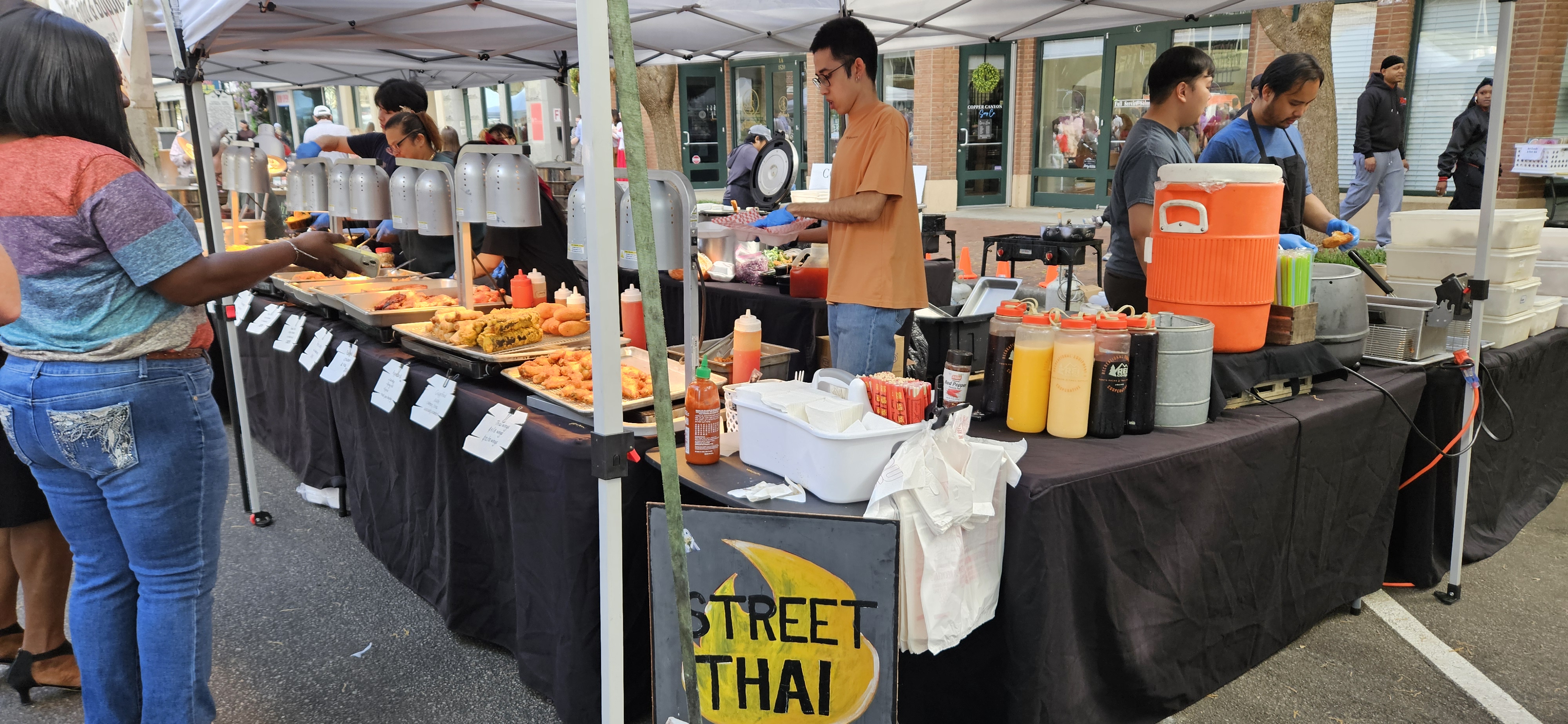
The main street of Columbia starts at the Capitol. Called, appropriately, Main Street, it is the core of activity every Saturday, when a craft/produce/food truck fair takes place from 9-2 year round. Folks line up for barbecue, for chicken with grits, and even just for coffee. If you are a fan of vintage clothing, kitchy art, and herbal cosmetics, you’ll have fun here. If not, you’ll still have fun watching the parade of people and pets that wander the street in search of that perfect vintage leather jacket, or the ideal potpourri.

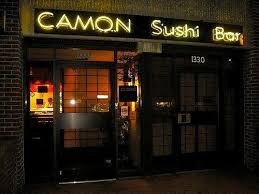
And there’s the food…

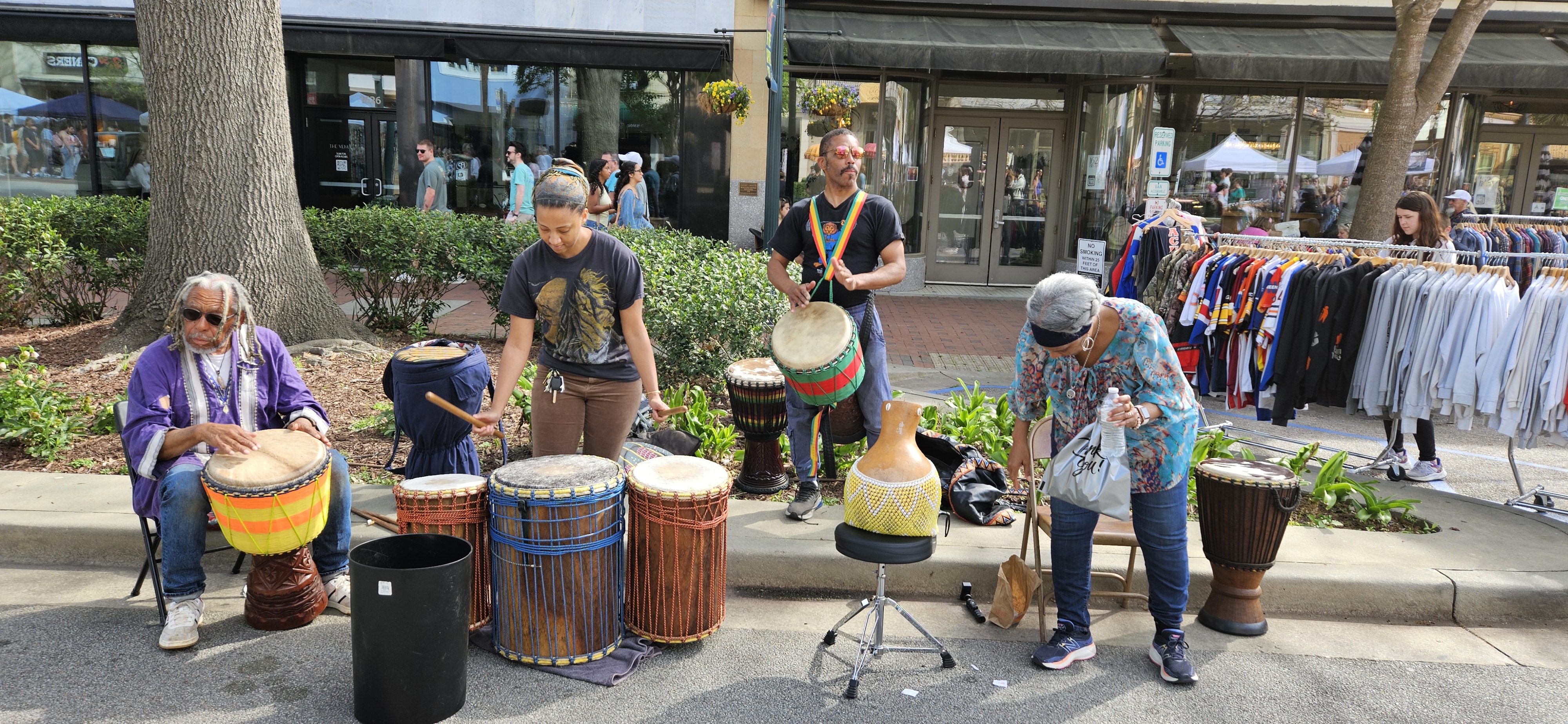
And the street musicians…

And if you get tired of the crowd, you can always go to the art museum, only a block off Main Street…

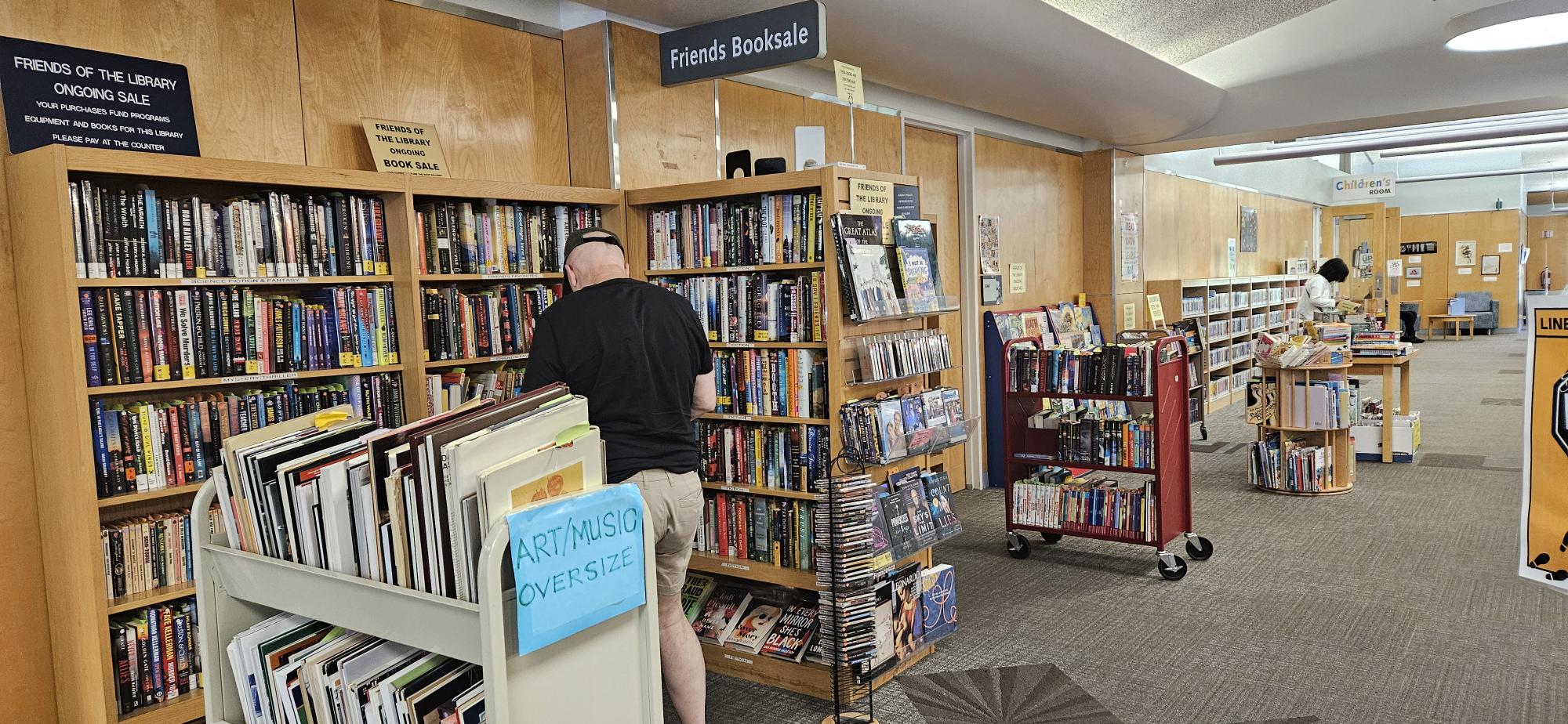
Or to the Richmond Library, a truly amazing collection of books and nooks to read them in. only a couple of blocks in the other direction…

Freeway Bound in South Carolina

If you must be on a freeway, make it forested. Stretching out on either side of Interstate 77, the road between Charlotte, South Carolina and the state capital at Columbia, is a piney woods. Almost no bill-boards, almost no signs of habitation for miles. Just green and rustling trees on either side, two strips of well-maintained gray asphalt, and a green lawn median.

If you must be on a freeway, make it flowery. I-77 is lined in spring with flowers. Gnarled wisteria vines twine through the long-leaf pines that line the road, bursting into garlands of purple blooms. In the understory are drifts of white dogwood. Every so often comes an accent of bright yellow – is it Scotch broom, or a Carolina native? At 70 mph I can’t quite make it out.

If you must be on a freeway, make it fast. I-77 heads almost due south from Charlotte to Columba, and once you clear the clutter surrounding Charlotte and its abysmal airport, it’s a very straight shot, with excellent signage directing us to our desired exit near the Capitol.

Charlotte International Airport – Flyer Beware!

My well-traveled son swears that the Newark Airport is the worst he has encountered in several cross-country and round-the-world trips. Based on my recent experience, I would contend that the Charlotte Douglas International Airport (CLT) in North Carolina is a challenger for the worst organized transit point that I have seen in the US. (Some middle-European airports have been worse, but they have the disadvantage of operating in a foreign language, so some allowance must be made.)

What’s wrong at CLT? It started when we landed. Most major airports swoop the traveler over ocean, beach, green farmland, with maybe a view of soaring skyscrapers in the distance. At CLT, you come in over red clay, bulldozers, and cranes. Construction is ongoing and omni-present.

Then you land. In some airports (Austin-Berstrom International in Texas is a good example) , the runways are bordered with flowers, shrubs, and other welcoming landscaping. At CLT it is dirt and asphalt, dirt and asphalt, as far as the eye can see.

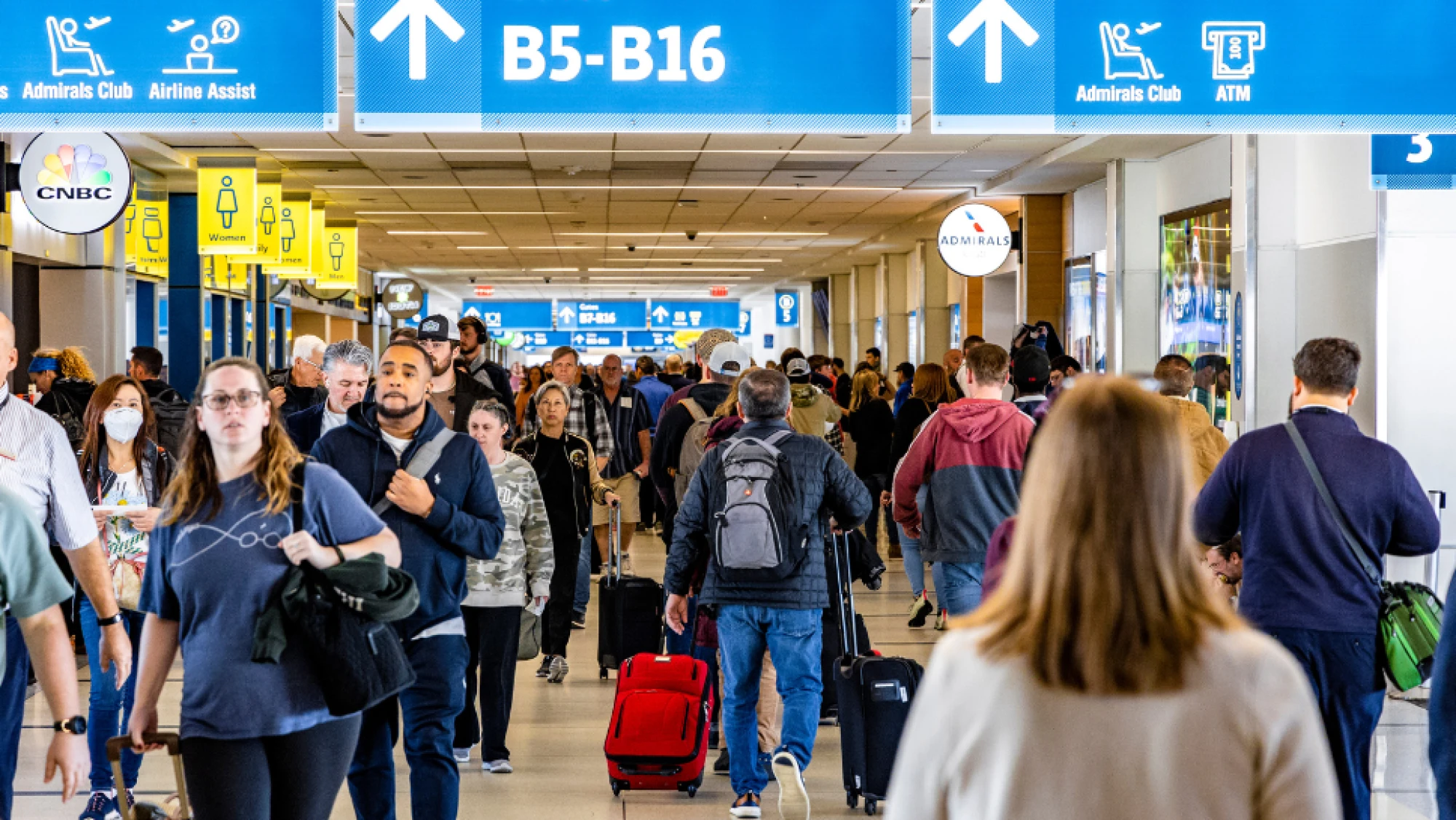
Once we were off the plane, we needed to navigate to pick up our rental car. Should have been east, but the construction was endemic inside the terminal as well as outside. Signs for the rental car desks seemed to point in both directions. Passengers thronged the endless passageways, most looking anxious. Per its own website, CLT “has one passenger terminal with 115 gates (more than any other single airport terminal building in the U.S.). That’s a lot of places to be intending to go.

If we hadn’t had a guide, we would have been wandering for hours. Fortunately, my companion’s limited mobility had moved us to reserve a wheelchair. We have learned that a wheelchair at an airport is the equivalent of a magic carpet, operated by a genie who can whisk you through doors marked “Emplyees Only”, take you to the front of the line at Security, and work other magic. But CLT puzzled even our expert.

We picked up our baggage on the second floor, and the rental car center, per our airport map, was also on the second floor – of the parking garage opposite. So near, and yet so far! There is no direct access from the terminal to the parking garage on the second level, so we followed the signs saying “Go to Level One and take Walkway to Garage.” It was a long wait for the elevator, and a long echoing bland tunnel to the other side of the street. There was another elevator – and a line a dozen people long. “We’ve been waiting quite a while,” said one of the queue members. We looked for signs of movement in the elevator cables visible through the glass walls of the elevator shaft. No visible activity. We waited a while longer, and our wheelchair attendant whispered, “There is another way.”

Back through the underground passage, and an elevator shaft in operation. Up to the fifth floor, and across the bridge to the parking garage. Another wait for an elevator down, and we were finally at our destination.

Once in the arms of Hertz, we felt safe and comfortable. Our car was waiting, the exit was marked, and we were on our way… almost. Even though the center of Charlotte is well away from the airport (see skyline in photo above), somehow the downtown traffic was RIGHT THERE. Several stoplights and many brakelights later, we made it to Interstate 77.

A Piece of My Mind: One Strike and You’re Out

A young friend of mine, after serving as a poorly paid intern/underling for several years, was finally offered his dream job, with a nice title and a decent salary and even some side benefits. He told his partner and they began to dream about upgrading their housing, maybe doing a bit of traveling, paying off some debts.

And then he failed the drug test. If you contract with or receive grants from the state of California, California’s Drug-free Workplace Act of 1990 requires you to certify that you provide a drug-free workplace. The Dream Job was partially funded by the state.

Studies from the American Psychiatric Association suggest that 5% to 10% of all drug tests may result in false positives and 10% to 15% may yield false negatives. The APA recommends that before submitting to a drug test you should confirm with the lab you visit that a second, confirmatory test will be performed on any positive drug test that may occur. “When initial screening drugs tests (called immunoassays) result in positive results, a second confirmatory (Gas Chromatography Mass Spectrometry or GC-MS) test should always be done.”

My young friend, confident that he had no problem, did not do this.

And  the organization for which the tests were being given had not contracted for retakes, so none were allowed.

Why he failed – he is not and never has been a drug user, but he grabbed one of his partner’s favorite poppy-seed bagels for breakfast as he was heading out the door that morning. 

I fancy I can hear my readers groaning “Yeah, right!” in disbelief.  But multiple reputable websites (including the National Institute of Health) note the possibility of a false positive result on a drug test because of the trace opiates in poppy seeds.  I believe my young friend, not least because of his partner’s tearful regret for her ill-fated preference.

If you were planning on crossing Death Valley in the summer, and your car had a 5-10% chance of dying on the way, would you make the trip? Would you trust its maintenance to a mechanic whose work had a 10-15% chance of failing?

If you had optional surgery scheduled, and you had a 5-10% chance of being paralyzed afterward, would you go ahead? What if there was a 10-15% chance you didn’t really need the surgery?

My young friend had no choice but to take the test, despite the odds. The drug test is required, though a 5-10% chance of a false positive result plus a 10-15% chance of  a false negative result means the test is only accurate 75-85% of the time.

What can my young friend do?  Jobs in his specialty are few;  the chances of a similar opportunity arising are probably less than the chance of a false positive which cost him this one.  The Dream Job is being advertised again, and candidates are being interviewed.

“I’ll have to find some kind of job to pay the bills,” he says.  “But I may never have another chance as good, no matter how many poppyseed bagels I don’t eat.”

Artificial Intelligence – a Cosmic Joke?

The media is full of information and speculation about AI – Artificial Intelligence.  Will it supplant human intelligence?  Will robots become sentient?  Will humans become obsolete, or at best slaves to their robot superiors?

Most of this speculation is poppycock, fueled by a misnomer.  AI as we see it in operation does not involve intelligence at all.  AI is a form of search technology that, in response to a request, can search through gazillions of online data points, accumulate the ones which seem relevant, and serve them up either as an undigested mass of trivial and not-so trivial information or a digested mass of pablum which reflects only the most common points made about the subject. 

At best, AI is a tool which can facilitate research by searching online texts, posts, and scanned media for keywords.  But it cannot judge which of the texts, posts or other media are most relevant to the question.  It cannot judge whether a given text is fact or fantasy.  For that you need a human interpreter.

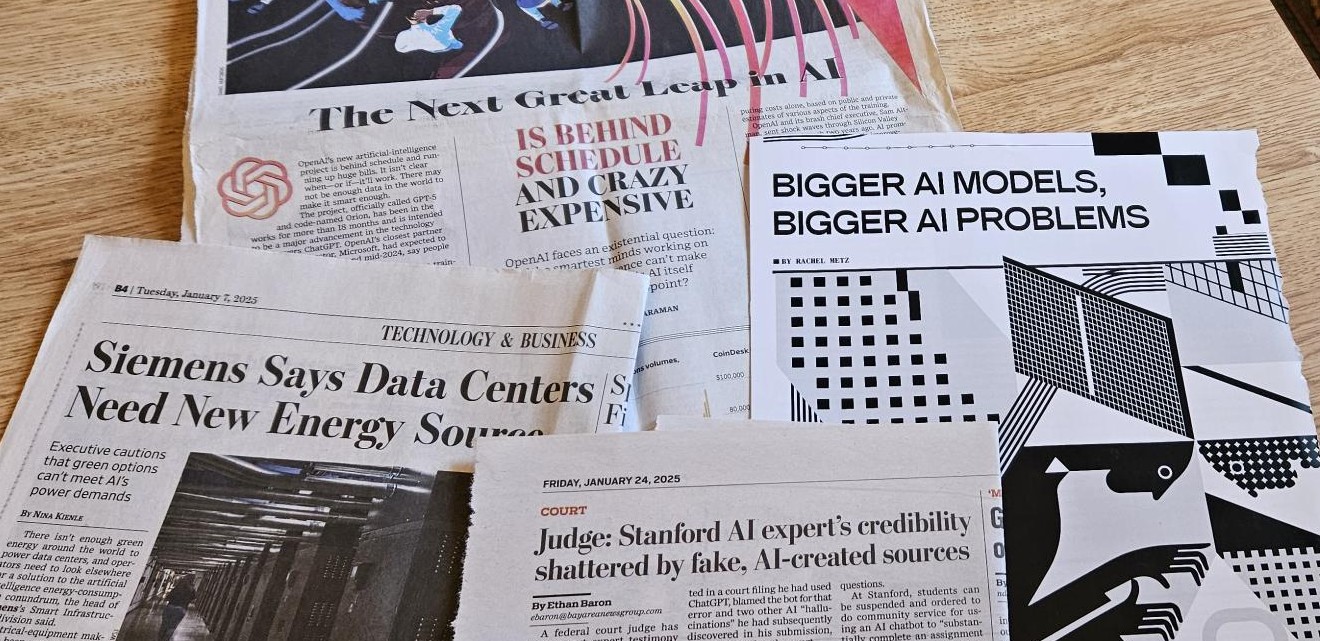
“Generative” AI can take the results of its research and, based on its scans of human writings, deliver it in the form of an essay or article.  But in aping human writing, it may slide over gaps in its story by inventing plausible-sounding text to fill in the gap.  Even AI experts can be taken in, as was Stanford professor Jeff Hancock, who was called as an expert witness in a case involving AI-generated “deep fake” photos.  Hancock used OpenAI’s ChatGPT to find and summarize articles on how AI can generate misinformation, and failed to notice that the software had inserted non-existent sources in spots where Hancock had noted “needs citation” in his request. [San Jose Mercury News, Dec 4 2024]  His testimony was thrown out.

I’ve begun to see generative AI’s pre-digested paragraphs popping up in unwelcome places.  Google search now often delivers an AI-generated paragraph in answer to such questions as “How often should I water my orchids?” and Microsoft’s CoPilot offers to summarize my incoming emails. But these paragraphs have no flavor or nuance, no detail or  backup or discussion of possible exceptions. 

Google has realized that the more web content is generated by AI rather than humans, the less reliable and interesting that content is going to be.  Further, the more people rely on these AI-generated summaries, the less they will scroll down to the sponsored links which generate Google’s revenue.  Melissa Schilling, professor of management at New York University’s Stern School of Business, has said “AI is to search what e-commerce was to Walmart.”

If the degradation of the Internet were the only adverse side effect of AI’s rise, we would have enough to worry about.  But AI is not just an attention-getting device.  It is a terribly hungry and expensive device.  According to Deepa Seetharaman writing in the Wall Street Journal [Dec 21, 2024, p. B1],” a six-month training run for a new AI product can cost around half a billion dollars in computing costs alone.”  The data centers which provide the computing power that AI needs to run require hefty amounts of energy, water for cooling, and land to build on.  Already some cities such as Atlanta are pushing back against the takeover of greenspace in its suburbs by proliferating data centers.   [WSJ Dec 28, 2024]

Our civilization is already struggling with climate change. We are trying desperately to cut back on the use of fossil fuels.  We urge water conservation to stop the desertification of open land due to the deterioration of underground aquifers and diversion of surface water for agriculture and industry.  But the energy requirements of the expanding AI industry will gobble up all the gains we have made in this area and demand still more energy to fuel its growth.  Already the energy requirements of AI are equal to the energy used by the Netherlands. [CITE?]

Is AI a kind of cosmic joke?  Just at the time when we need most to conserve water and energy, the Universe dangles this glittering toy in front of our innovation-hungry eyes. Humanity has a poor record of resisting temptation.  Will we be able to resist this time? 

American Dream?

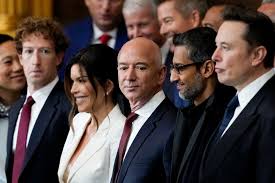
Mark Zuckerberg, Lauren Sanchez, Jeff Bezos, Sundar Pichai and Elon Musk during the inauguration in the rotunda of the US Capitol. Photographer: Julia Demaree Nikhinson/AP Photo/Bloomberg

Much comment has arisen about the front row seats at Trump’s inauguration being occupied by four of the richest men in the world.  Most of the comment implied that there was some plutocratic takeover of the government in mind, and Trump’s favored seating of these uber-capitalists was a slap in the face to the blue-collar workers who rallied to put him in office.  But there is another, more positive aspect of this lineup.  Viewed through a different lens, these men exemplify the American Dream in one of its major aspects – that through hard work and merit, an immigrant can achieve success.

Mark Zuckerberg’s great-grandparents were emigrants from Austria, Germany, and Poland. By the time Mark was born on May 14, 1984, in White Plains, New York, his family had attained prosperity as medical professionals.

Jeff Bezos was the natural son of a second-generation Danish immigrant, and was adopted when he was four years old by his mother’s second husband, a Cuban immigrant who came to the US as a refugee when he was sixteen. Miguel Bezos worked at Exxon for thirty-two years, and lend $250,000 to his adopted son in 1995 to start Amazon in exchange for 6% equity in the new company.  He and his son are now both billionaires.

Lauren Sanchez, Jeff Bezos’ fiancée, was born to a second-generation Mexican-American family in Albuquerque, New Mexico.  She was an award-winning news anchor and sports commentator when she became engaged to Jeff Bezos in March 2023.

Sundar Pichai, CEO of Alphabet Inc. and its subsidiary Google,  was born in India to a middle-class family.  He became a US citizen after arriving in the United States in 1993 to pursue graduate school at Stanford and later at the Wharton School in Pennsylvania. He worked as an engineer and product manager at Applied Materials before joining Google in 2004.  His annual salary is north of two million with another six million in “other compensation”. 

Elon Musk was born in South Africa.  His father was an successful engineering consultant and property developer, and also owned an interest in an emerald mine. At the age of 18 Elon immigrated to Canada, acquiring its citizenship through his Canadian-born mother, Maye. He moved to the US and become a US citizen in 2002, retaining his Canadian and South African citizenship.

All these front-row seats are occupied by people who are no more than three generations away from immigration.  Not all their immigrant forebears were “your tired, your poor, your huddled masses” but they all in some way “yearned to breathe free.”  Their success is just what many of the blue-collar and middle-class voters who flocked to Trump would dream of.  This success, as much as the wealth it generated, earned them their front-row seats.

Proof of the absolute Disneyfication of the world

I was asking my 8-year-old granddaughter if she ever skipped rope at recess with two other girls holding the rope.

“Nope. How would you do that?”

“The two girls twirl the rope, and you have to run in and start jumping, and you say a skip-rope rhyme and see how many jumps you can get.”

“Like, what’s a skip-rope rhyme?”

” Well, for example : ‘Cinderella, dressed in yella, came downstairs to meet her fella. How many kisses did he get? One, two, three… as many skips as you can”

“Oh, Grandma, that’s too silly. That can’t be right. Cinderella NEVER dresses in yellow! Cinderella’s dress is always blue!”

Word Gets Around

I was attending a Women’s Camp on the west side of the Rockies in Colorado. My sister-in-law was at the camp also, along with one of her besties. One evening one of the other campers (DH) drove me and my friend DB to dinner and a theatre in Grand Lake, while my SIL and her friend spent the day touring nearby Rocky Mountain National Park.

Dinner was lively, with sixteen campers chattering away, and afterward we hurried to get to the theatre as it was beginning to rain. I pulled out my phone to check the location of the theatre, and when we parked I hurried around to help DB extricate herself from the seat belt. Only after we were in the theatre and I reached to put my phone on silent mode did I realize that it was not in my purse where it belonged.

Had it fallen out in the car? Or in the parking lot where we had stopped? I rushed from the theatre – the car was locked, and there was no sign of my phone anywhere along the walkway to the theatre. I figured that best case, when the show was over I could ask DH to call my number; if the phone was in the car we would hear it, and if someone had picked it up maybe they might answer a call.

After the show I relayed my plan to DH, and she pulled out her phone. First thing she saw was an urgent message from my SIL: “Allyson’s lost phone was picked up by an Australian man named Barney. He and his friends are at the One Love Rum Kitchen and Bar for trivia night. If Allyson doesn’t get the message he will leave the phone with the bartender.”

Great! DH and I left DB to guard the car and hustled along to the One Love Rum Kitchen. We walked into the lively, well-lit pub and immediately a gentleman was waving my phone in our direction. ( Barney could not have looked more Australian if he had been sent from Central Casting.) Lots of excitement, thanks, hugs, and my phone was restored to me in perfect order (Nancy and Barney at left above). But how had the message reached DH’s phone?

Chain of circumstances:

  1. I had not gotten around to putting a password to secure access to the phone. (Shame on me, but…)
  2. When Barney and his friend Nancy opened the phone, they were able to see that I had recently called HOME.
  3. But when Nancy called HOME, she caught my husband drowsing over a book. He did not understand what Nancy was saying and, thinking it was a prank call, hung up on her.
  4. Undaunted, they went to the next call on the recent list, my younger brother C, who was trailer camping in Wyoming, but happily with decent Internet coverage.
  5. C got the message, and fortunately remembered that our mutual SIL was in Colorado at the camp with me. But he didn’t have her phone number.
  6. So C called my older brother D in Texas, who relayed the message to his wife, whose roommate happened to have the cell phone number for DH, who relayed it to me.

Happy Ending! thanks to the miracle of modern communication, and as always, thanks to the kindness of strangers.

Bodega Bay – Blink and it’s Gone

One afternoon W needs to rest, so I take a walk down our hotel’s street. Bodega Avenue is sidewalk free and pot holed, lined with little bungalows with bright-colored but peeling paint and cheerful geraniums in containers. At the end of the road are three redwood posts blocking access to what is beyond. I step through – into another world. 

Sidewalks. Gutters. New pavement. A green space to my left with a fountain burbling. And houses, all painted in placid neutral shades with gleaming white trim. At least half of the houses have the driveway blocked with big red fenders – to keep squatters out?  Some of the houses are large, two stories with a deck looking out to the harbor. Some, to my surprise, are small attached cottages no bigger than our suite at the Harbor Bay Inn. A few seem inhabited; in one, a BBQ party is happening on the deck. It seems I’ve been transported to Suburbia, but no, it is the Harbor View development at Bodega Bay.

I go out the flag-bedecked front entrance to the development and make my perilous way along the sidewalk free, shoulder-free Highway 1.

W is still resting, and the fog has lifted completely, so I take the car down to Duran County Park, the long finger that curls across the south end of Bodaga Bay.  There’s an entrance fee of $7, which takes my last folding money. I drive past a Bird Walk, a Day Use area, several Reservations Only campgrounds filled with tents and trailers, a Visitors Center, and a Coast Guard station, all the way to the tip of the finger, site of a Day Use parking lot and a fine view of the headlands we had been on in the morning. 

The Visitor’s Center is closed, but there is an information sign posted nearby explaining what you can see from this point:  Jetty, the coast guard station, Mt.Tamalpais in the distance on a clear day, Point Reyes in the near distance, and then to the east “South Harbor Bay” and “North Harbor Bay”. These are clearly seen and they are developments, which from this distance look very much like Harbor View. They encrust the hillsides south of Bodega Bay like barnacles.  Who lives in these developments. Are they all second homes?  How long will it be before their residents demand a Safeway instead of Diekmann’s Bay Store or the Pelican Point Grocery? How much longer than that before a Costco sets up in Valley Ford?

Better visit Bodega Bay quickly.  Blink and it’s gone.

Eating Out in Bodega Bay – Primitive to Posh

Our Personal Travel Agent has made a reservation for us at Drake’s, the most elegant restaurant in the area.  I am a bit intimidated since the fine print on our reservation says “Smart Casual” is the dress standard, and I left my smart pants at home.  Not to worry – the guy in jeans, suspenders, and a fishing hat has a window seat, so they are not being too picky on a Monday night.

 We splurge on a drink apiece beforehand. The Artisan Bread Basket comes from the delightful Della Fattoria Bakery in Petaluma, and includes delectable olive bread. We each have a bowl of onion soup, a delicious variation on the French theme – light broth full of barely caramelized onions, and just a small circle of toasted baguette with cheese melted on top floating in the broth. Plenty of room left for us to split a dish of mussels and pasta. Be warned – the most elegant restaurant in Bodega Bay has pricing to match. But it was worth it.

The next morning the fog is in, and we dilly-dally about the suite until the fog has lifted enough for us to see the headlands across the bay.

Bay Flat Road curves around to the west side of Bodega Bay, which shelters the bay against the Pacific.  The bay side of the road is lined with boat ramps and marinas, the hill side features crab shacks where you can again find “the best clam chowder in Bodega Bay“, along with crab cakes, crab cocktail, crab sandwiches, crab tacos…. Too bad I’m allergic to crab. But there are plenty of people sitting outside at picnic tables who apparently are not worried about allergies. My #2 son assured me that for crab lovers these shacks are the epitome of gourmet delight. I’ll bet their clam chowder is pretty good too.

For our second night we have dinner at the Tides, a large family-friendly restaurant with ample parking right next to the harbor. There is not so much elegance here as at Drake’s, the food is ample but just so-so, and service on a Tuesday night is slow though friendly. On the other hand, the dining room boasts a terrific view of the harbor, and the cost of a glass of red wine or a shot of good Scotch is about half the charge at Drake’s. If I had it to do over, I’d come to the Tides first, and move up to Drake’s as a finale.

Post Navigation