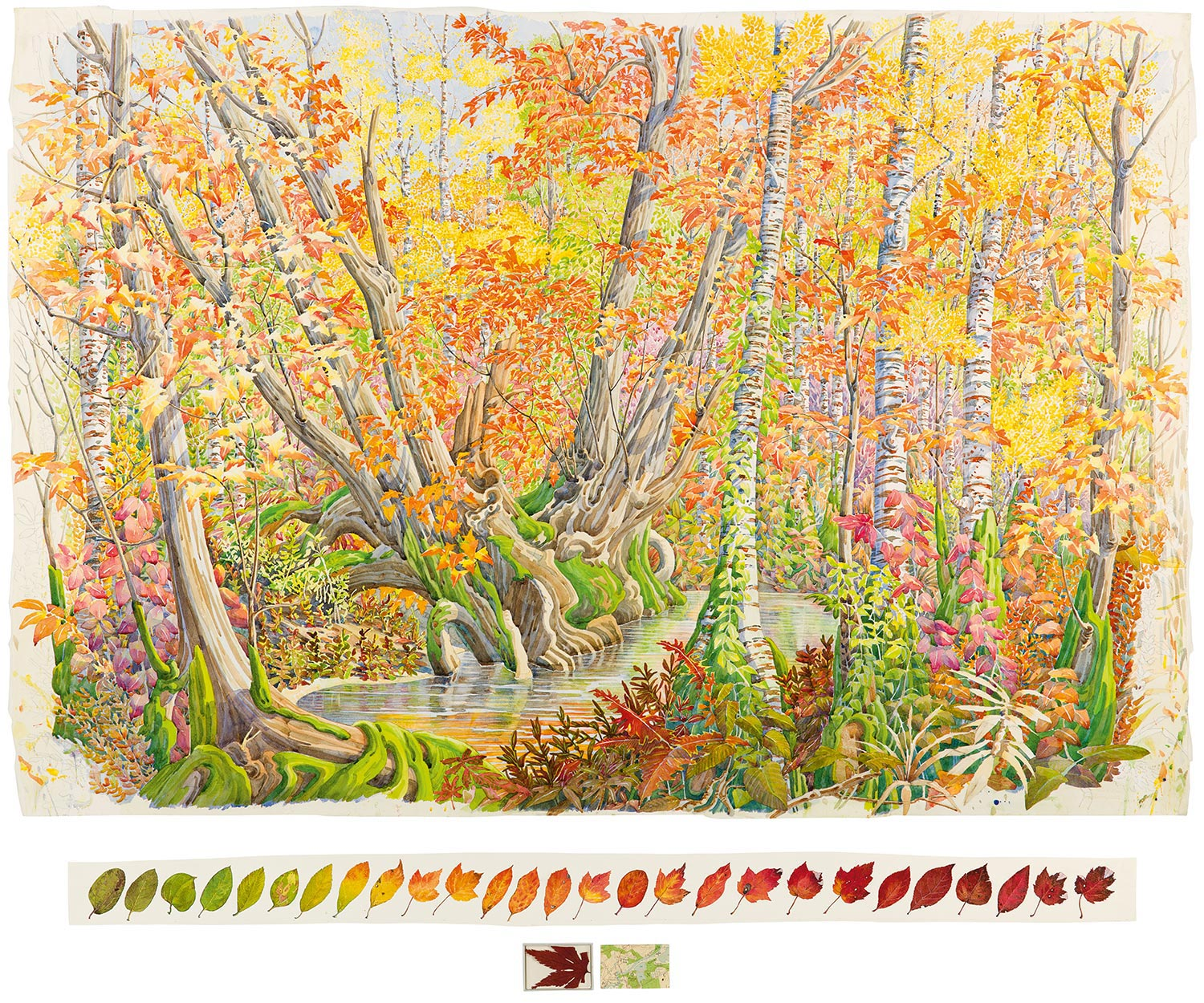
Tucked away in an industrial corner of Palo Alto, around the corner from an electronics recycling center and across the street from a geochemical testing laboratory, is the Foster Museum, a tiny jewel dedicated to showing the work of watercolorist Tony Foster.
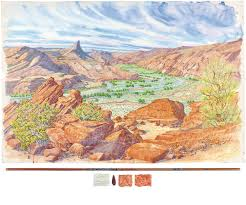
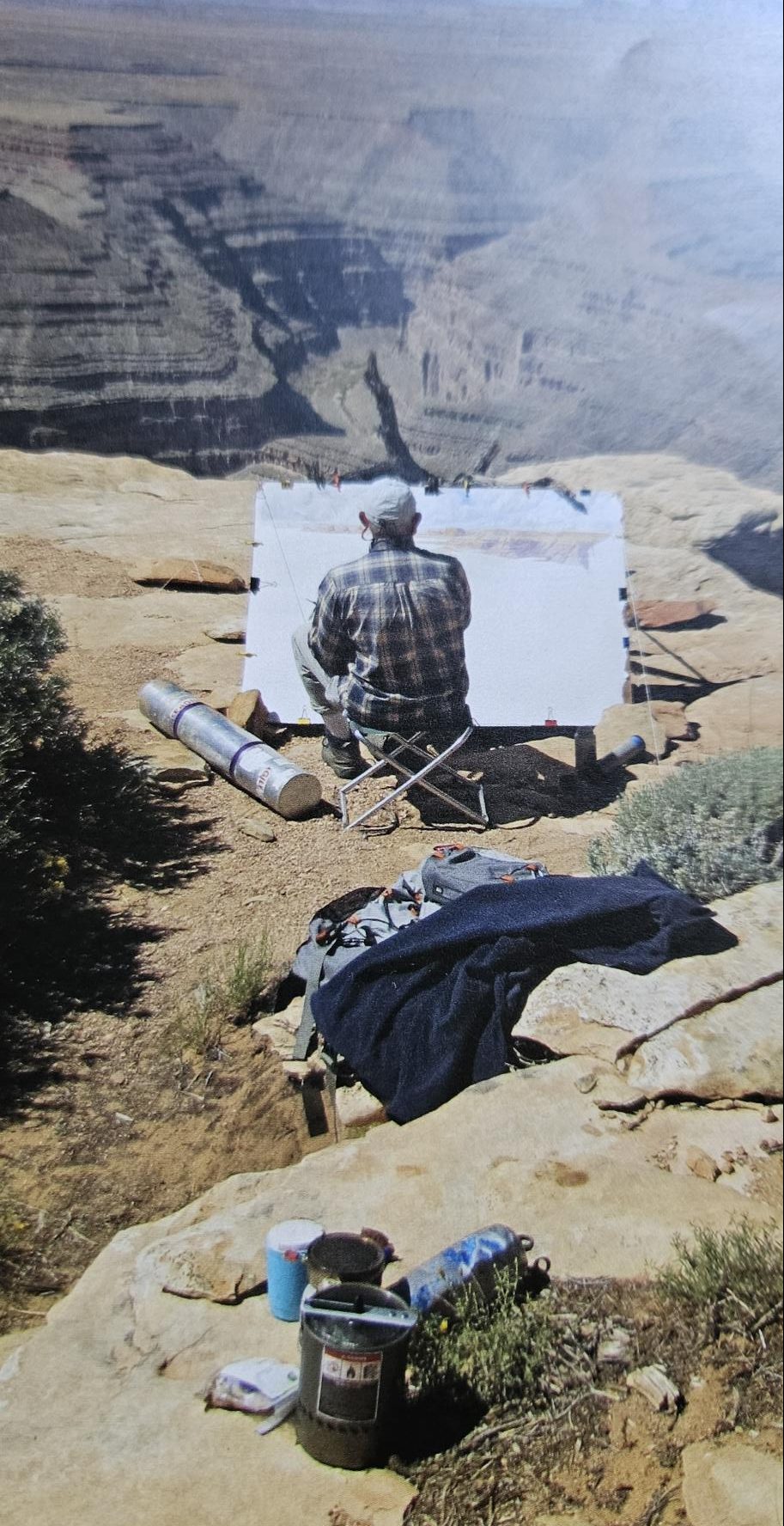
The museum is normally open by appointment only, but I happened to visit with a friend on a “Welcome to Walk In” day. Inside this ivy-covered block is a wonderland of watercolor murals, covering wall after wall with scenes of grandeur: the Grand Canyon, the Rockies, the volcanoes of Iceland, the rain forests of Borneo, the Himalayas, the High Sierras, the coral reefs of the Caymans. Amazingly, the paintings were done plein air rather than from photographs.
The paintings are specially framed with inclusion of leaves, pebbles, and other artifacts from the scene, and many of the paintings include handwritten notes by the artist in the margins of the painting. These artifacts and notes give an authenticity to the art which is terrifically engaging.
Foster writes of his struggles holding onto his palette and easel against howling winds in the Rockies, keeping his materials intact in desert dust storms and tropic rain, and even drawing with wax crayons underwater while wearing scuba gear near a coral reef.
The net effect is absorbing – I spent almost two hours perusing the amazing artistry and detail of Foster’s work, and only stopped because the museum was closing. If you are a fan of water color painting, or of outdoor adventure, this museum will satisfy in many ways.
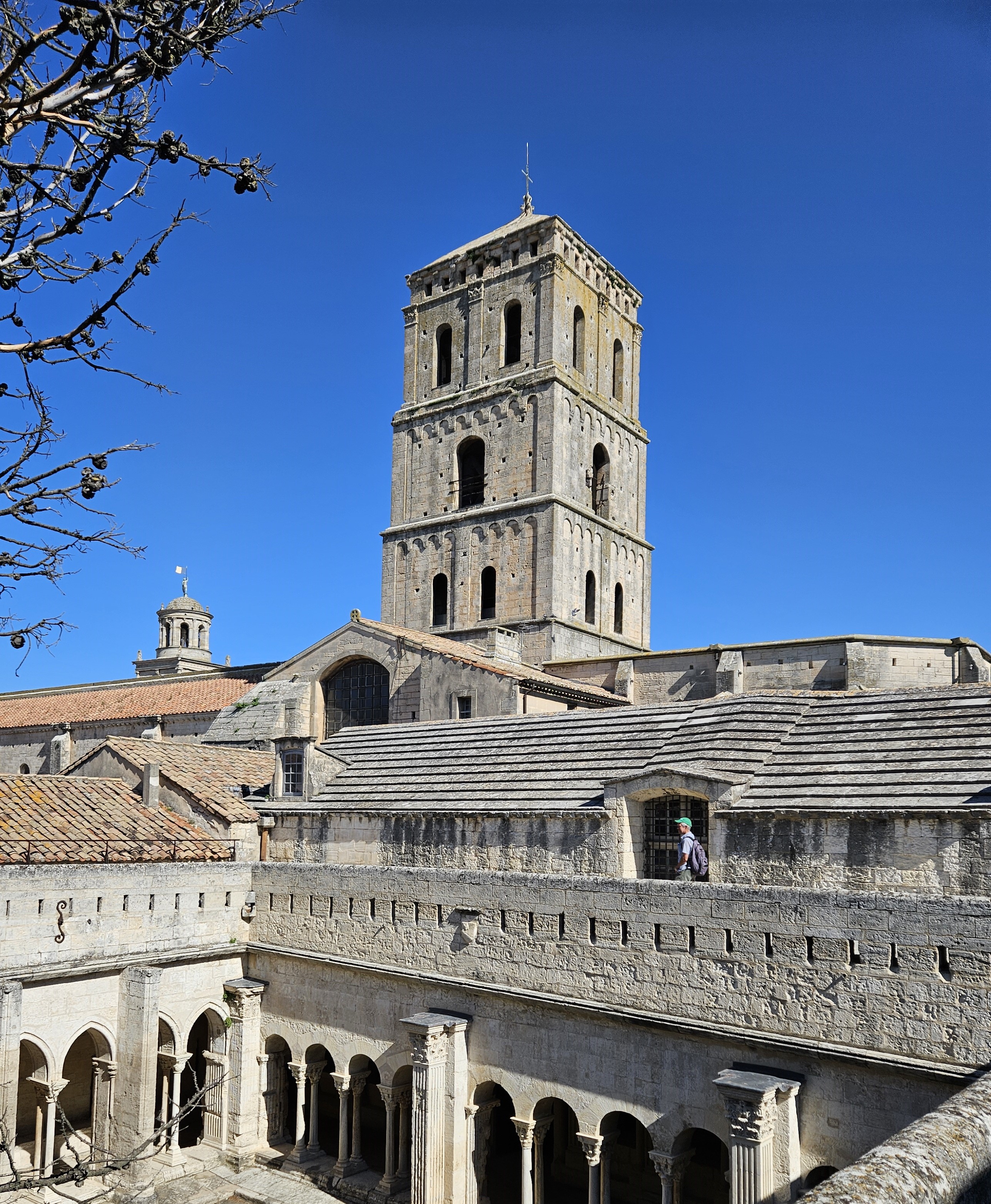
This was our “What shall we do while the rest of the group goes to Avignon?” Day. EJ and I met for breakfast (rather ordinary, but fortifying) downstairs, put on our walking shoes, and set off for the Tourist Information Office down the street. We picked up our Arles 365 Passes, allowing us into ten historical sites and museums, and started across the street directly to the Hotel de Ville (City hall) and the neighboring Cloitre de St. Trophime (St. Trophime’s Church And Cloister). This was our dose of Gothic/medieval Architecture – lots of biblical motifs, Christ in judgment with unhappy souls being led off in chains to the left, while the sanctified get their angel wings on the right, all over the Church door in graphic detail. Inside, lots of chapels with minor saints (St. Roch is my new favorite dressed in the garb of a Conquistadore, but evidently he lived in the time of the plague, and had one of those incredibly faithful dogs.)
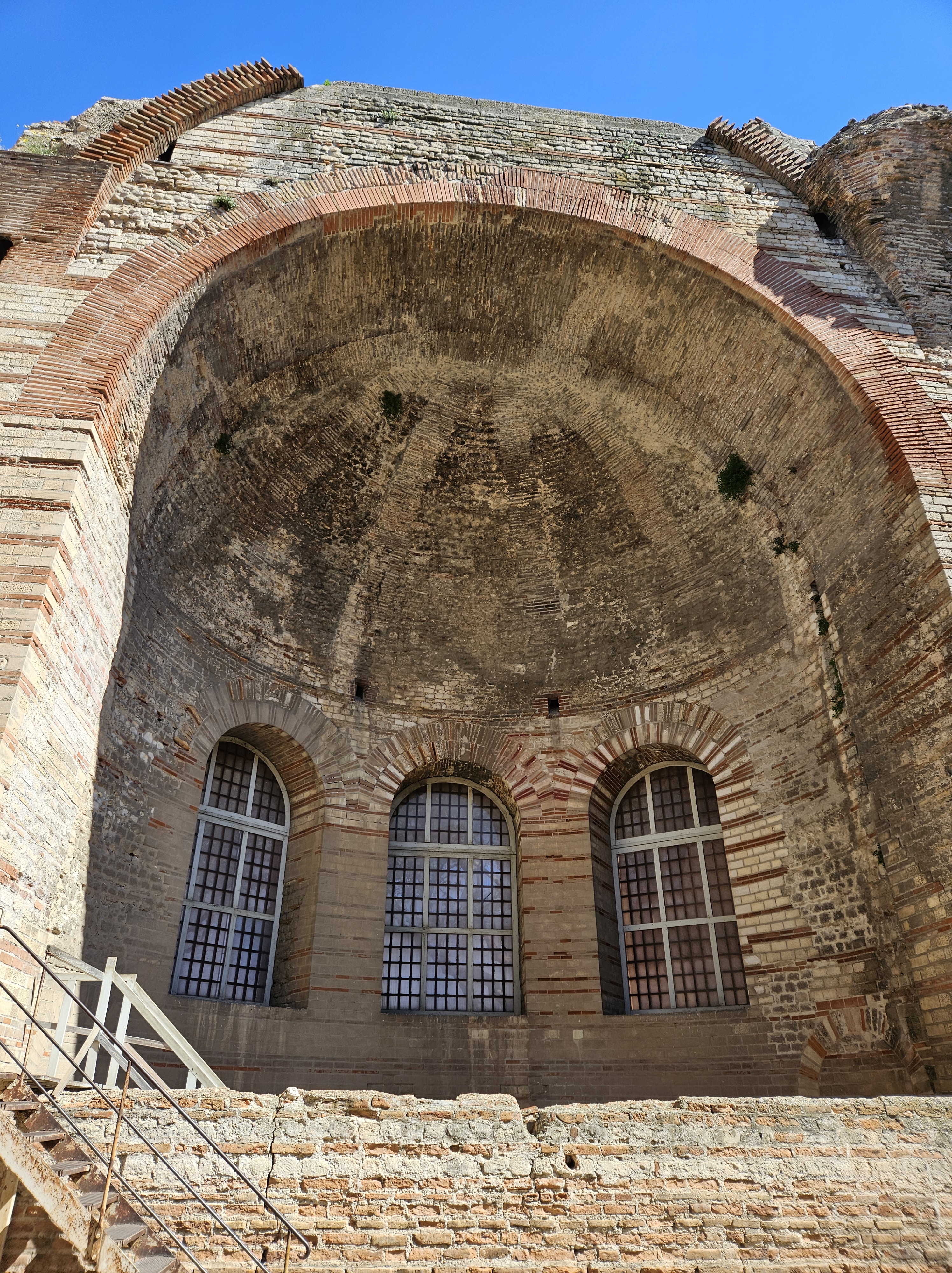
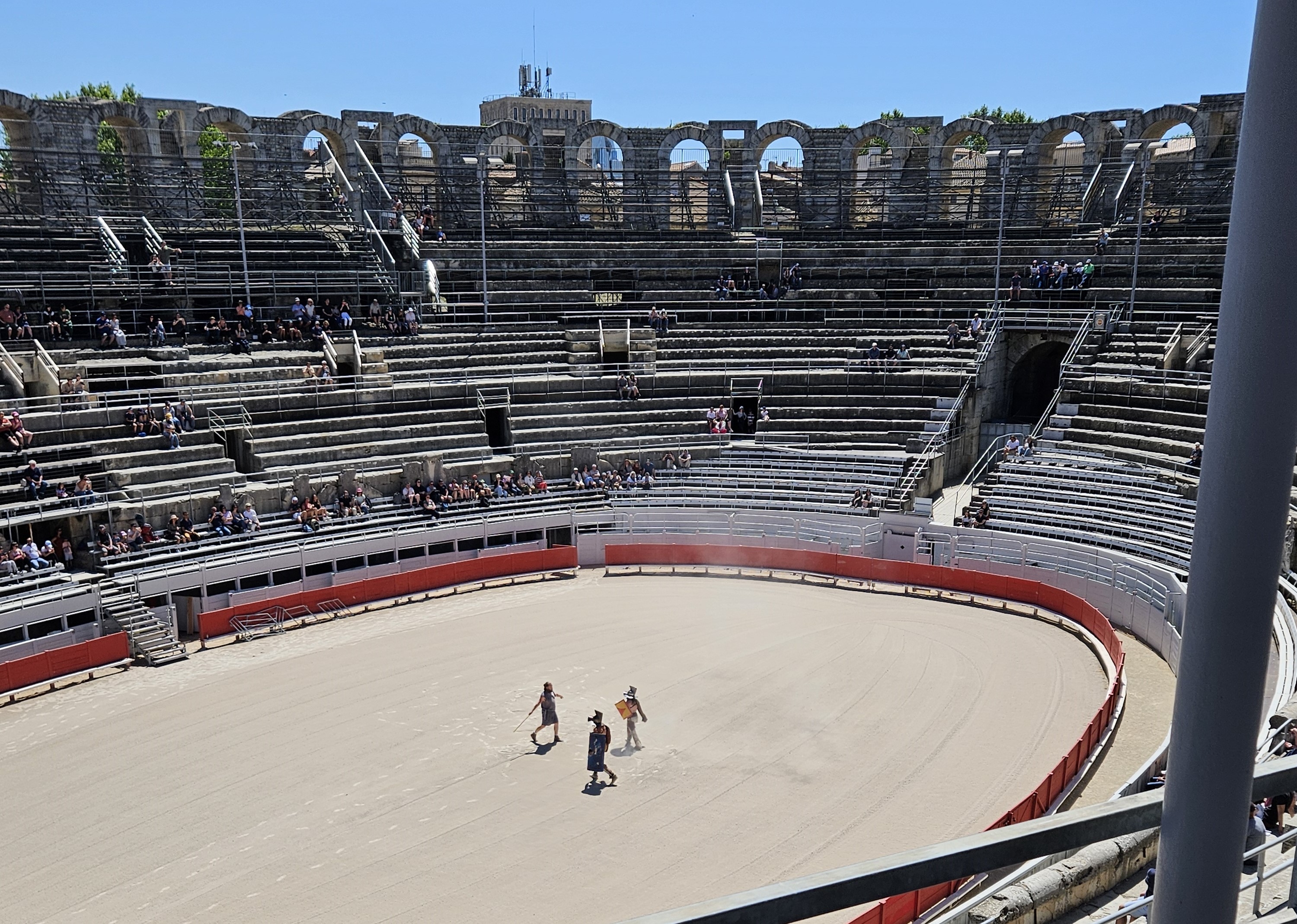
Then up to the riverside where we explored Constantine’s Baths (public steam room, exercise room, sun room, swimming pool – an incredible structure which, when first unearthed, was assumed to be a palace) Then through the adjacent Musee Reattu, an odd collection of 18th century and modern works (“The museum went to sleep during the world wars” explained the catalog), and down to the Arena, where we saw two gladiators battling rather cheesily.
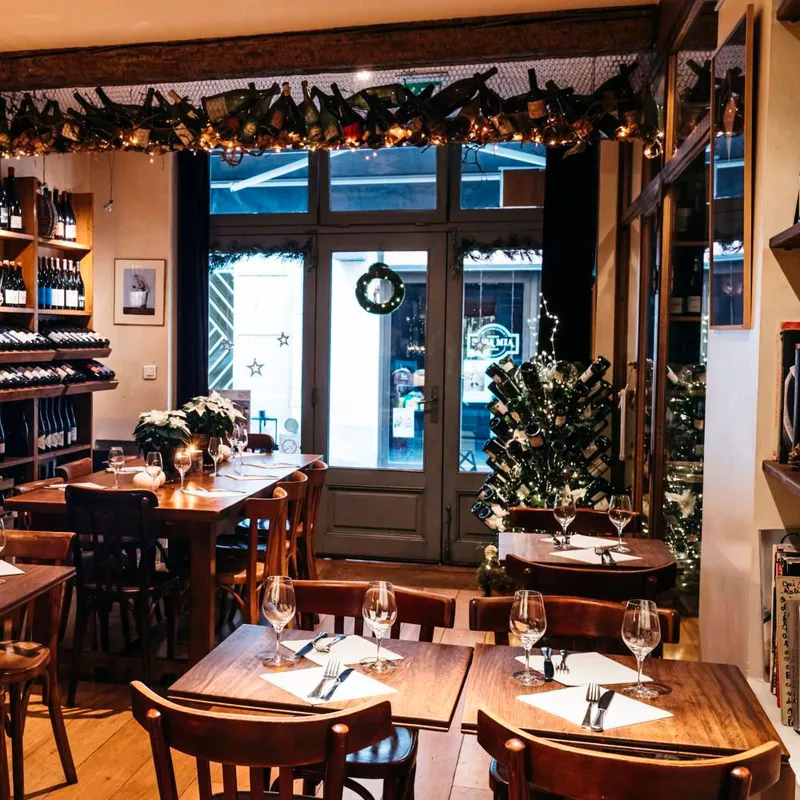
Hungry and hot, we spotted the sign of Le Criquet, a restaurant that had been highly recommended by the Canadians EJ met the previous night, so we plopped down and were treated to delicious fresh shellfish over linguini or over potatoes (we had 2 different entrees) and a floating island pudding that relates to what they used to serve in our college dormitory as Italian gelato relates to a Fudgecicle. Fluffy, meringue, creamy pudding…. The picture can’t do it justice.
Almost dizzy from deliciousness, we decided to work off lunch by walking the length of George Clemenceau Blvd to the Musee d’Arles Antiques.
The museum’s modern bright-blue exterior belies the wealth of ancient artifacts contained within, including a cemetery’s worth of sculpted sarcophagi, murals re-constructed from villas excavated in the neighborhood, an ancient wooden boat retrieved from the Rhone river, its cargo of urns intact, and reconstructed, Greek statuary… and on and on. And, an extra plus after a day of sight-seeing – it’s air-conditioned.
EJ has scheduled a birding expedition led by an expert local guide this evening and may miss dinner, which is why we splurged on lunch a bit. After a short rest back at the Hotel Constantin he leaves to rendezvous with his guide, while BB and I walk to meet the rest of the group at Le Gibolin, a Michelin -recommended restaurant within walking distance.
There we meet PS, former leader of our student group in France, whom I briefly dated afterward (he taught me to appreciate hot buttered rum), and SF, who traveled with me and two other students for three weeks crammed into a VW beetle – and still remained friends afterward! Rounding out our table was MV, who had been a high school student in Tours during our stay and whose family had informally adopted PS and me. I had not seen her for over 60 years – the other three I had seen briefly at reunions or visits. Would our camaraderie endure after all this time?
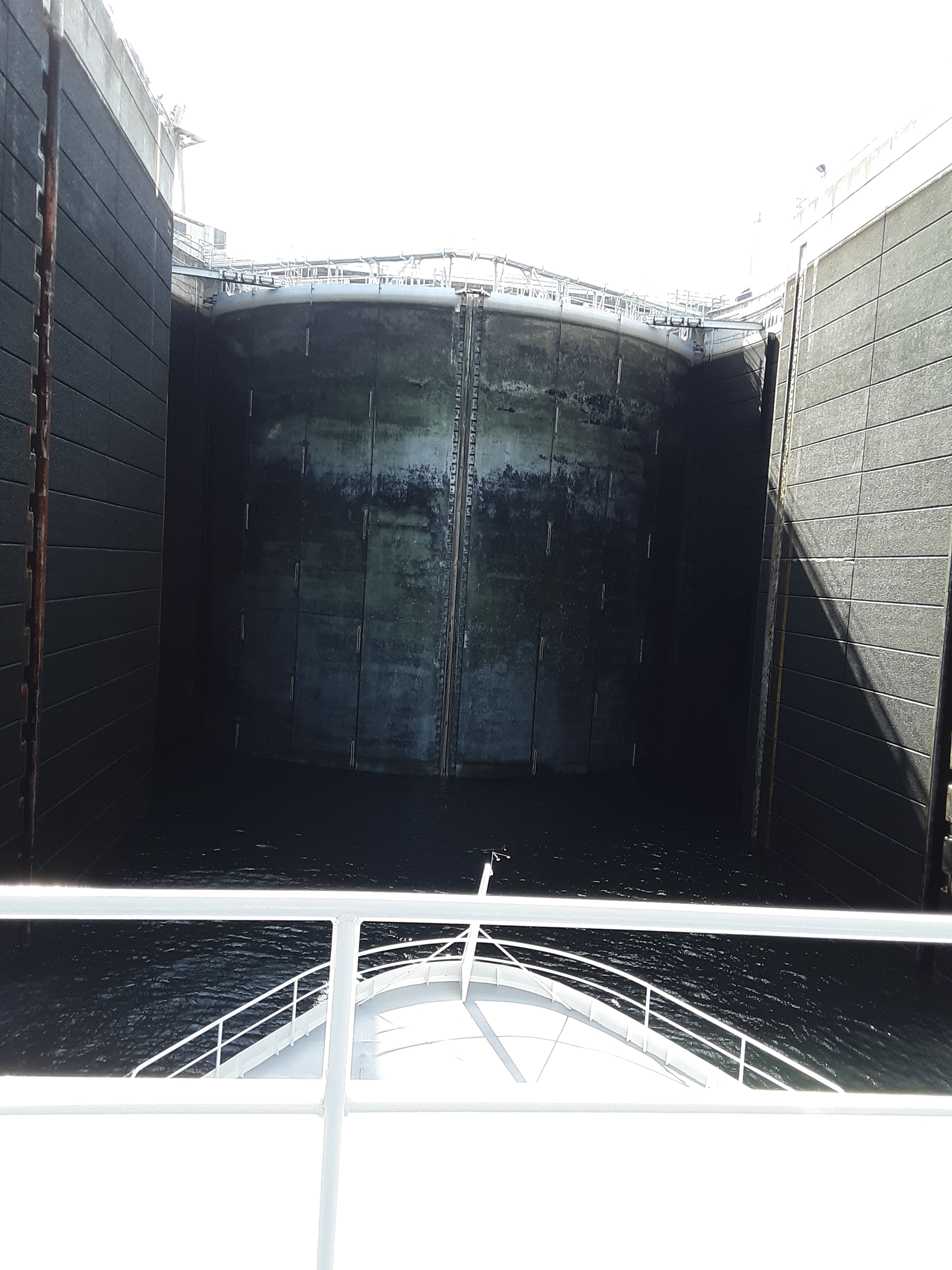
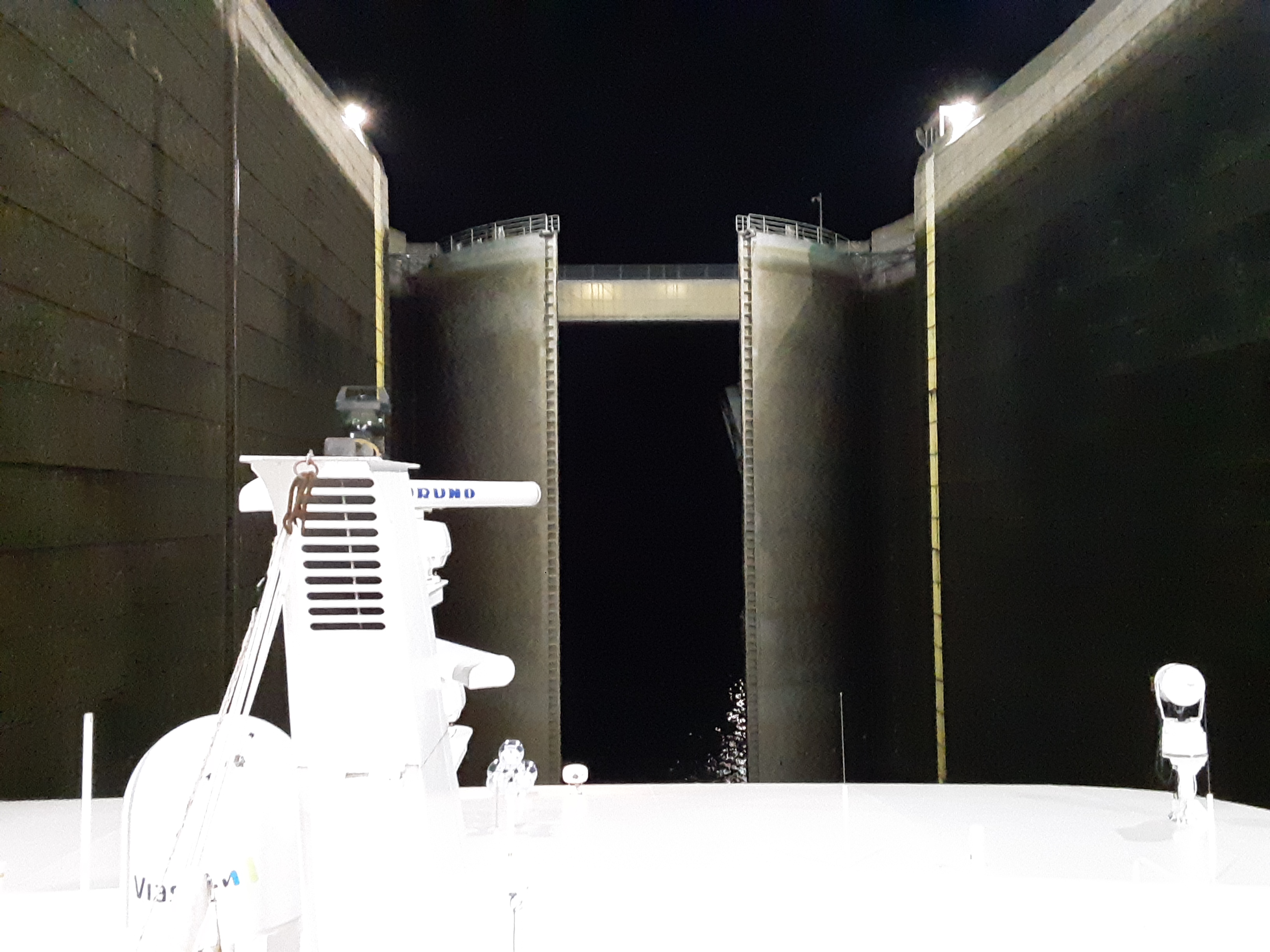
Our boat goes through our first lock – 80 feet or more down from one level of the Snake to the next. We move into the lock; a bridge is before us, an open space behind. Then a wall seems to rise from beneath the river behind us as the water level in the lock is let out and we begin to descend. The walls rise, only two feet from the boat on either side. The bridge before us is now far above, with a large and getting ever higher curving wall ahead. We descend and descend. The black wall behind us is holding back the river, though it appears there are leaks. The black wall ahead is now 80 feet high. On the side are dripping black concrete blocks a yard high piled up and up. Finally we stop descending. We wait. There is a loud shudder, and a crack appears in the wall ahead. Sunlight, and color, a view of hills and sparkling water. The crack opens wider – the feeling is like the scene in “The Wizard of Oz” where Dorothy steps out of the sepia-toned world of Kansas into a technicolor Oz. The engines throb and we move forward into the light and space.
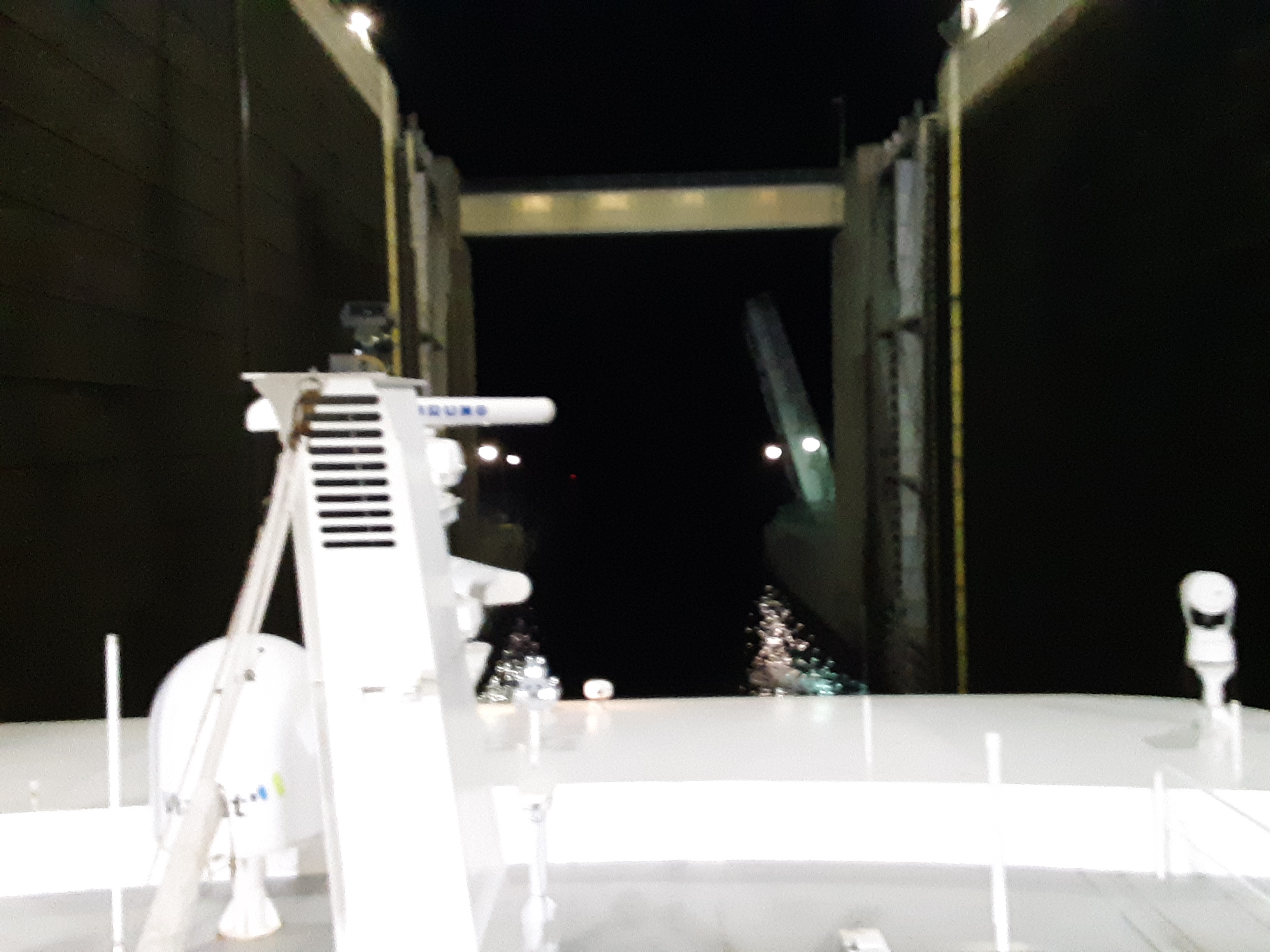
We go through a second lock at night – it is still magical. There is only black and white, the white boat, the black night, the gleaming gate, the sparkling water.
Later we explored off the boat at the Bonneville Dam, whose Visitor Center is a self-congratulatory celebration of the transformation of the wild rolling Columbia river into “a damn fine machine” for generating hydropower, in the words of an industry lobbyist.*
We saw another aspect of the locks and dams at the fish hatchery, where tiny salmon fry are nurtured until they are large enough to release downstream from the dams and make their way to the sea, and at the fish ladder, where returning salmon are given a chance to circumvent the dam in a series of cascades. These makeshift replacements of natural features are an attempt to appease the fishermen and native peoples whose lives depend on the salmon run. In another section of the hatchery, a bit off the self-guided tour, the sight of frustrated salmon leaping in vain against a current backed by a three-foot fence made me sad. In the hatchery these fish are artificially milked for their semen or eggs before dying, so the salmon fry can be created. The salmon would die anyway after spawning, but as they frantically jumped over and over against the impassable barrier, theyseemed to know they are supposed to get further to their spawning grounds than a hatchery.
===
*Quoted from Blaine Harden’s A River Lost; the Life and Death of the Columbia
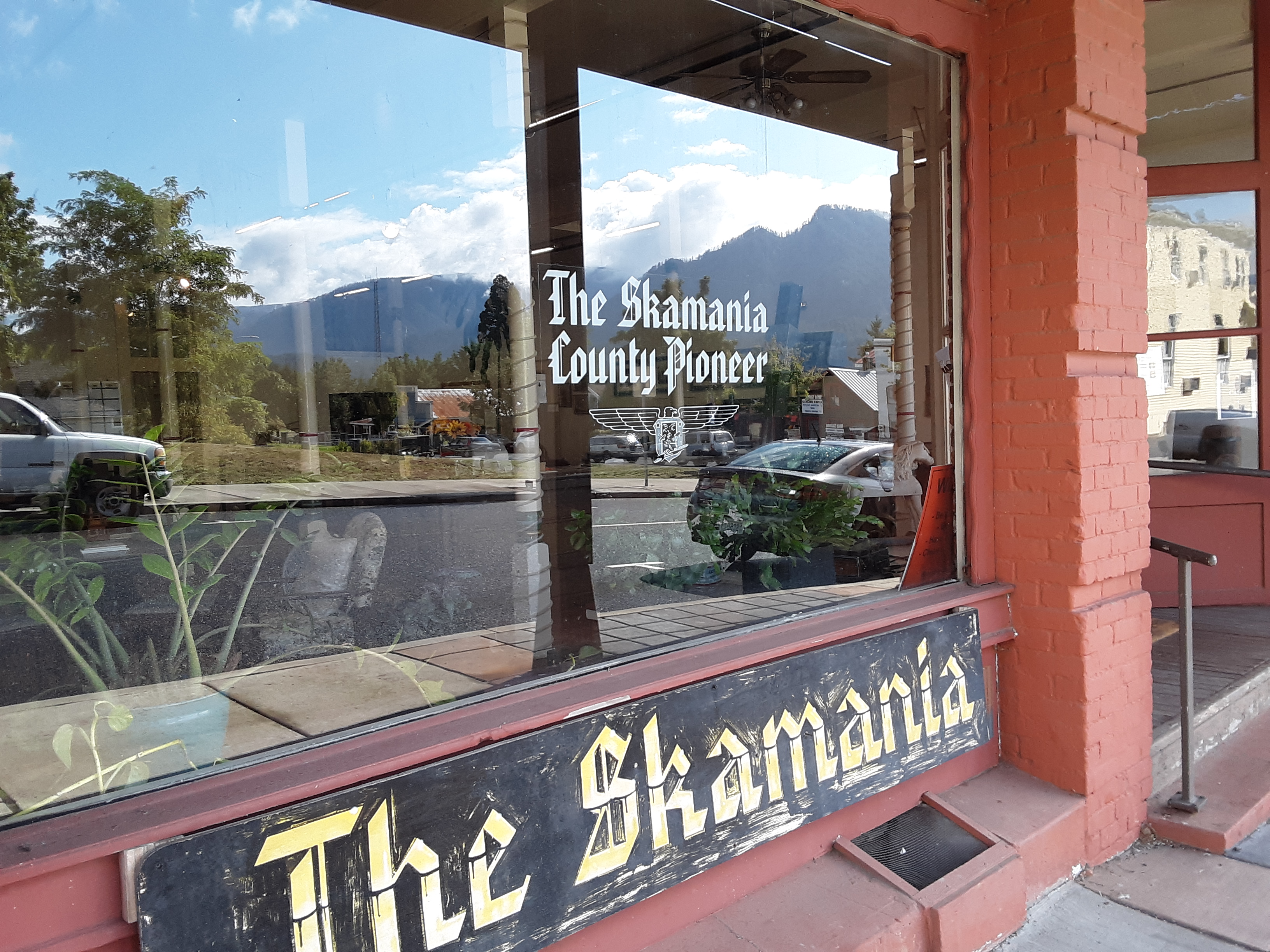
Stevenson Washington is a town of no more than 2000 people, with one main street that stretches from the Port of Skamania boat dock and park along the north bank of the Columbia River up three blocks to the brutally modern Skamania County Courthouse, with two cross streets, one of which is Washington State Route 14. But those three blocks are oddly charming, with shops that would be perfectly at home in an elegant Palo Alto shopping center. How do they survive?
Probably they survive because the boat dock is host several times a week during the summer months to American Cruise Line riverboats, which have picked Stevenson for a stopping point due to its convenient access to the Bonneville Dam, the Columbia Gorge Interpretive Center, and Multnomah Falls. In between excursions, the passengers are tempted to stroll off the boat, through the green and inviting park, and up the gentle hill to browse in North Bank Books, one of the prettiest and best curated bookstores I have ever seen, or examine goods in Out and About, a purveyor of beautifully tailored outdoor clothing, look for buried treasures at the Gorge Thrift Store, or taste a local craft beer at the Big River Grill, admire local art and crafts at Riverhouse III Gallery, or… but you should stop in Stevenson and see for yourself.
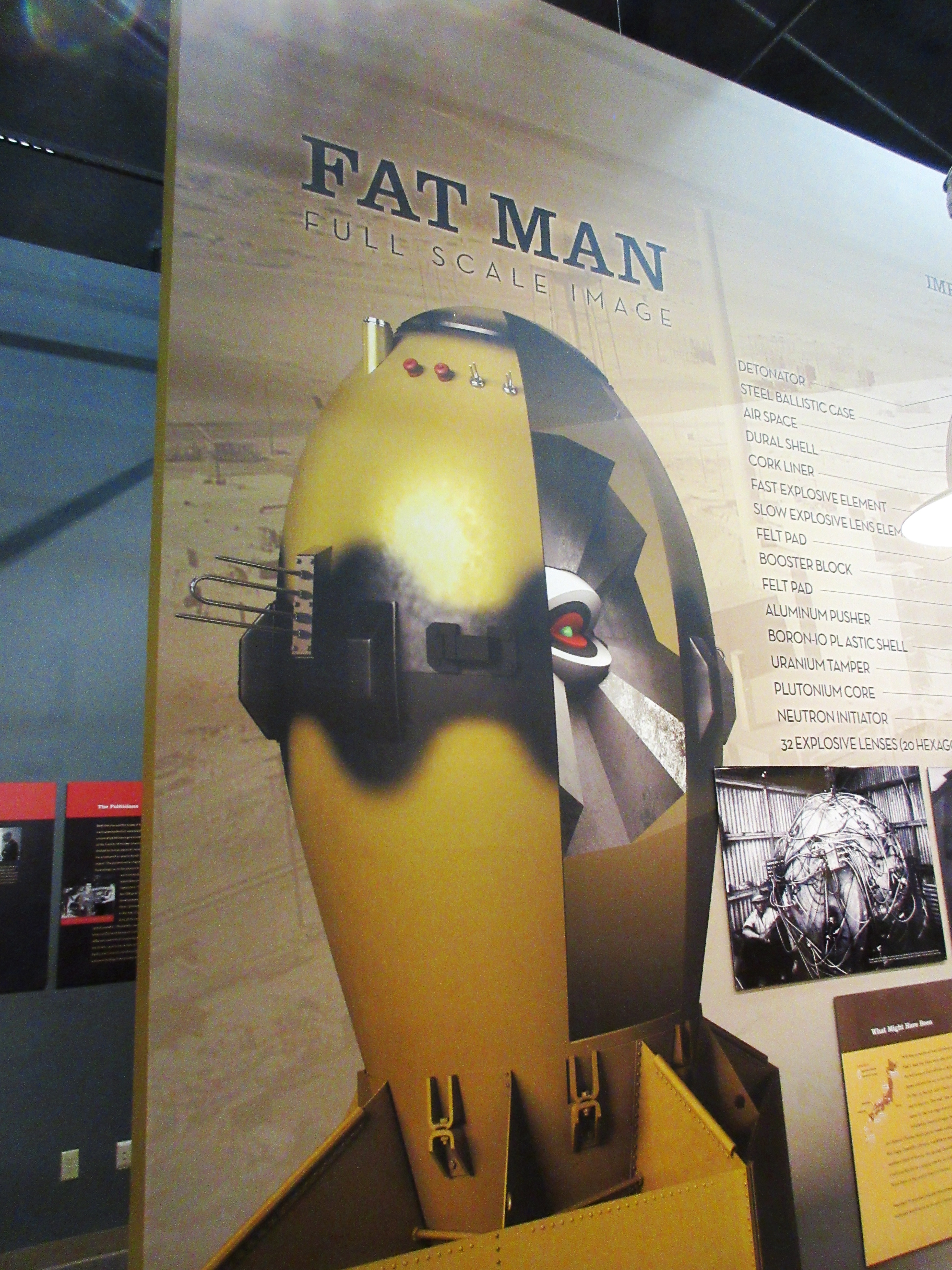
With all the discussion about “Oppenheimer” and his role in the development of the atomic bomb, one would have thought there were be more discussion of the other two locations which were key to his success. One was Oak Ridge in Tennessee, where uranium was refined for the first bomb, the other was Hanford, Washington, where plutonium for the second bomb was manufactured.
Like Los Alamos, Hanford was built in the most remote location possible, shrouded in secrecy, and filled with scientists who believed their labors would end World War II. At one point the town of Hanford was the fourth largest city in the state, with the largest General Post Office in the world (since addresses would have been Top Secret.) And as at Los Alamos, the scientists involved in the project worked with little apparent thought of the long-range effects of their labors.
The REACH museum outside of Hanford overlooks the longest undammed free-flowing reach of the Columbia River – hence its name. The country surrounding the museum is a sage and scrub desert, but it teems with wildlife including elk, antelope, an occasional bear, and all sorts of minor rodents, insects, and birds. Ironically, the reason for this virgin territory lies buried underground in unmarked sites and in leaking canisters – the radioactive waste left over from the plutonium project. No-one wants to drink water that may have overlain these poorly-conceived and poorly protected waste dumps.
The museum itself is a hybrid – half of it is devoted to the geology and wildlife associated with the Columbia River, the other half tells the story of Hanford, the plutonium project, and the community’s pride in its contribution to ending the war. Only one exhibit addresses the threat of radioactive contamination left behind, and that exhibit invites you to compare the amount of radioactivity in a vintage Fiestaware coffee cup to that in a sample of dirt from Hanford. (Surprise! the coffee cup’s red glaze has more!)
The US government has belatedly spent millions of dollars to remove or contain contamination around Hanford, and will need to spend millions more before it is safe to drink the ground water. But the town is still proud of its contribution to V-J day, still cherishes the government houses (Models A through F) thrown up almost overnight to accomodate the families, and wishes that “Barbenheimer” was”Barbanford”
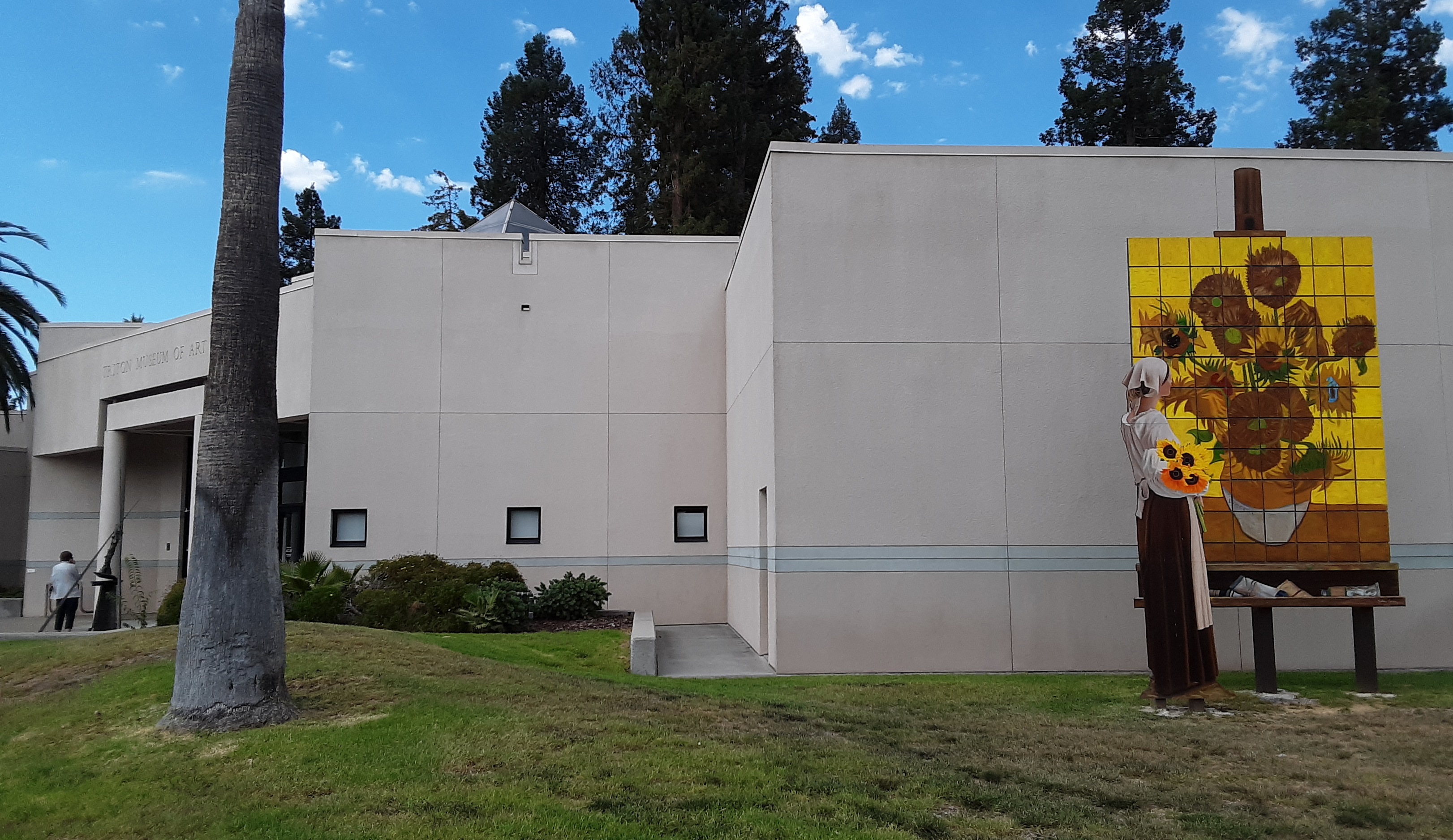
The Triton Museum of Art, tucked away in a quiet corner near the City Hall, is one of the many small museums dotting the Bay Area, and one of the pleasantest. It specializes in contemporary and historical works with an emphasis on artists of the Greater Bay Area. The permanent collection includes 19th and 20th century American art of the Pacific Rim, Europe and beyond plus an extensive collection of American Indian art and artifacts. The museum was founded in 1965 in San Jose, California, by rancher, lawyer and art patron W. Robert Morgan and his wife June.[3][4] It is the oldest non-university museum in Santa Clara County.
On a recent visit, there were four major exhibits being celebrated. The first featured abstract sculptures by Jeff Owen, placed around the lobby in accessible spots. I saw one man taking a picture of his wife peeking through the circle of a sculpture, like one of those carnival sets where you are invited to put your face on a blowup of Marilyn Monroe.
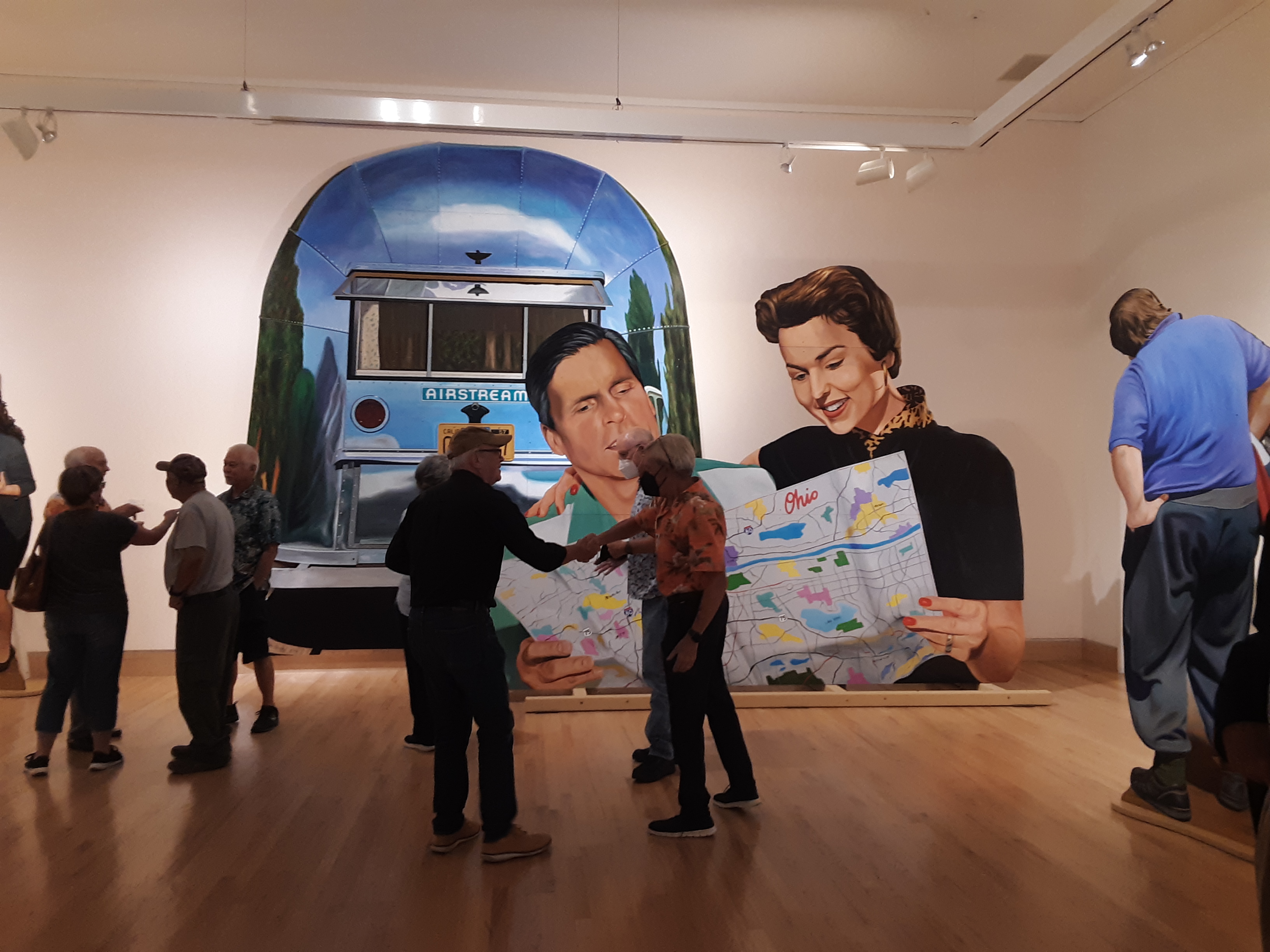
Perhaps she was inspired by the second exhibit, a collection of larger-than-life bill-board-like figures conceived by John Cerney and inviting viewers to make themselves part of the scene.
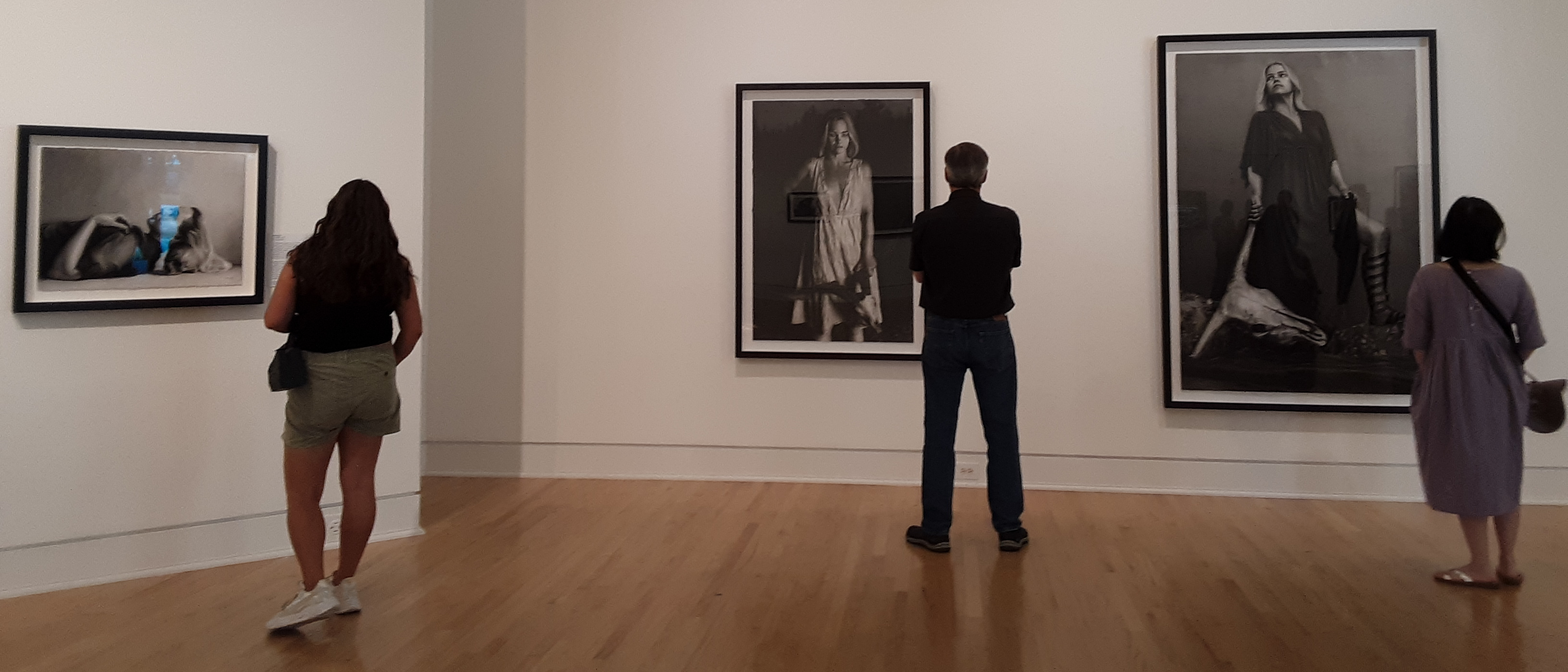
The third exhibit was a series of larger-than-life charcoal drawings, most of them self portraits of the artist Julie Grantz, and embodying a series of feminist themes.
The last and largest exhibit was a roomful of paintings by May Shei, inspired by Chinese tradition. They included calligraphy scrolls, delicate nature vignettes, vibrantly colored still lifes, and monumental landscapes in the style of Zhang Da Qian.
The Triton is perfectly sized to allow appreciation of the diversity of its offerings without wearing the viewer out with an over-supply of stimulation. Admission is free, as is the plentiful parking, though of course donations are encouraged.



















 Allyson Johnson