Allyson Johnson

Pieces of my Mind

Archive for the category “California”

Bodega Bay – Blink and it’s Gone
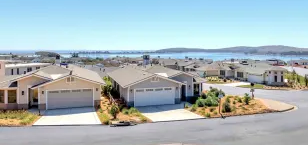
One afternoon W needs to rest, so I take a walk down our hotel’s street. Bodega Avenue is sidewalk free and pot holed, lined with little bungalows with bright-colored but peeling paint and cheerful geraniums in containers. At the end of the road are three redwood posts blocking access to what is beyond. I step through – into another world. 

Sidewalks. Gutters. New pavement. A green space to my left with a fountain burbling. And houses, all painted in placid neutral shades with gleaming white trim. At least half of the houses have the driveway blocked with big red fenders – to keep squatters out?  Some of the houses are large, two stories with a deck looking out to the harbor. Some, to my surprise, are small attached cottages no bigger than our suite at the Harbor Bay Inn. A few seem inhabited; in one, a BBQ party is happening on the deck. It seems I’ve been transported to Suburbia, but no, it is the Harbor View development at Bodega Bay.

I go out the flag-bedecked front entrance to the development and make my perilous way along the sidewalk free, shoulder-free Highway 1.

W is still resting, and the fog has lifted completely, so I take the car down to Duran County Park, the long finger that curls across the south end of Bodaga Bay.  There’s an entrance fee of $7, which takes my last folding money. I drive past a Bird Walk, a Day Use area, several Reservations Only campgrounds filled with tents and trailers, a Visitors Center, and a Coast Guard station, all the way to the tip of the finger, site of a Day Use parking lot and a fine view of the headlands we had been on in the morning. 

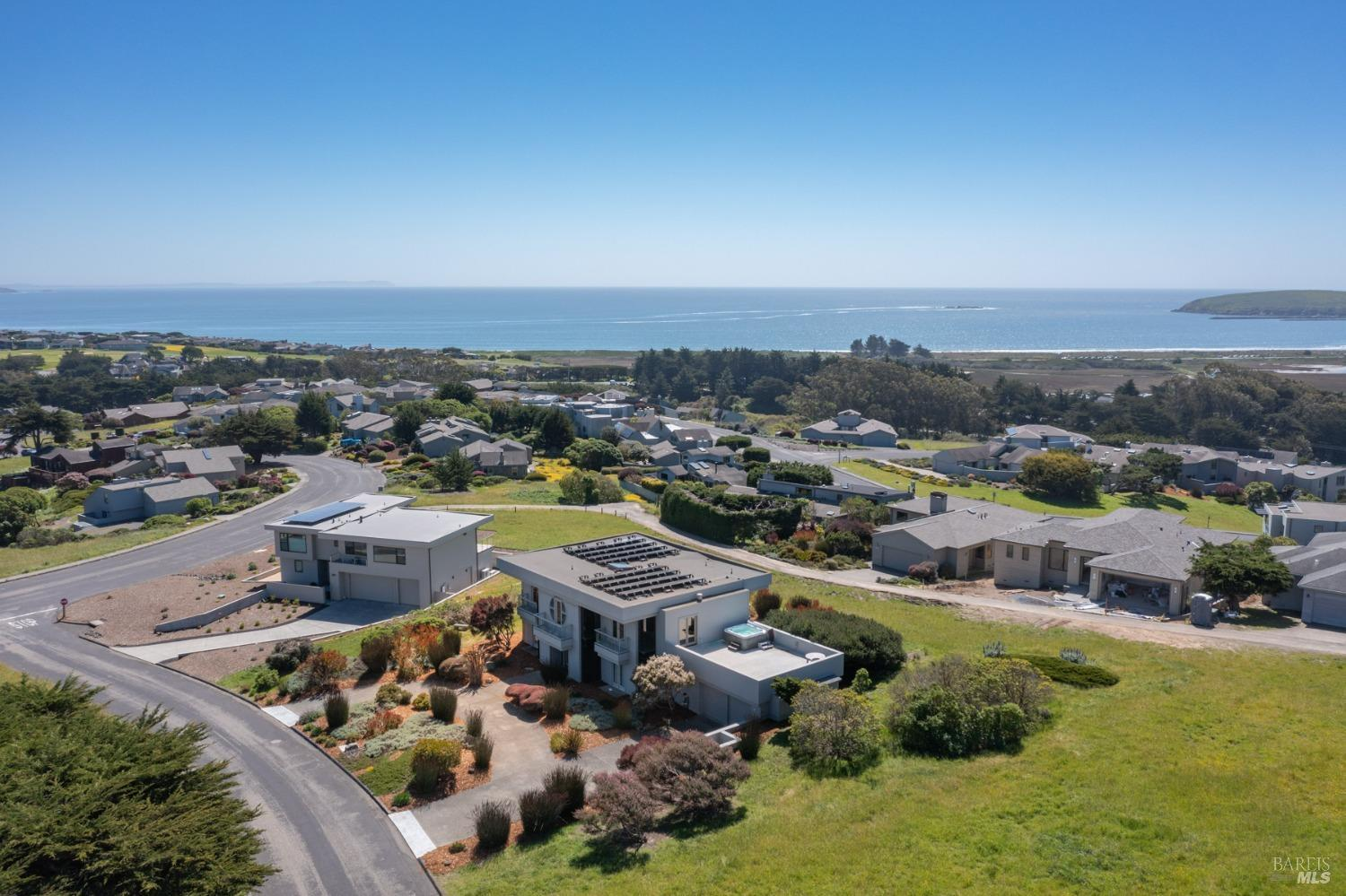
The Visitor’s Center is closed, but there is an information sign posted nearby explaining what you can see from this point:  Jetty, the coast guard station, Mt.Tamalpais in the distance on a clear day, Point Reyes in the near distance, and then to the east “South Harbor Bay” and “North Harbor Bay”. These are clearly seen and they are developments, which from this distance look very much like Harbor View. They encrust the hillsides south of Bodega Bay like barnacles.  Who lives in these developments. Are they all second homes?  How long will it be before their residents demand a Safeway instead of Diekmann’s Bay Store or the Pelican Point Grocery? How much longer than that before a Costco sets up in Valley Ford?

Better visit Bodega Bay quickly.  Blink and it’s gone.
Eating Out in Bodega Bay – Primitive to Posh

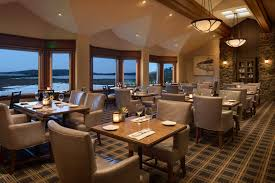
Our Personal Travel Agent has made a reservation for us at Drake’s, the most elegant restaurant in the area.  I am a bit intimidated since the fine print on our reservation says “Smart Casual” is the dress standard, and I left my smart pants at home.  Not to worry – the guy in jeans, suspenders, and a fishing hat has a window seat, so they are not being too picky on a Monday night.

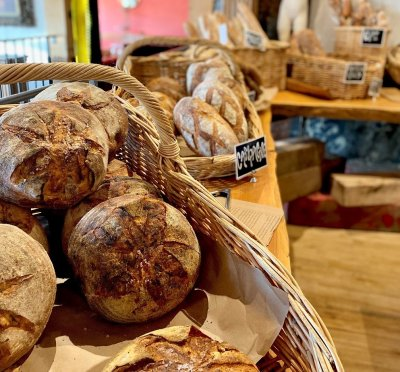
 We splurge on a drink apiece beforehand. The Artisan Bread Basket comes from the delightful Della Fattoria Bakery in Petaluma, and includes delectable olive bread. We each have a bowl of onion soup, a delicious variation on the French theme – light broth full of barely caramelized onions, and just a small circle of toasted baguette with cheese melted on top floating in the broth. Plenty of room left for us to split a dish of mussels and pasta. Be warned – the most elegant restaurant in Bodega Bay has pricing to match. But it was worth it.

The next morning the fog is in, and we dilly-dally about the suite until the fog has lifted enough for us to see the headlands across the bay.

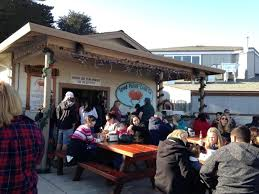
Bay Flat Road curves around to the west side of Bodega Bay, which shelters the bay against the Pacific.  The bay side of the road is lined with boat ramps and marinas, the hill side features crab shacks where you can again find “the best clam chowder in Bodega Bay“, along with crab cakes, crab cocktail, crab sandwiches, crab tacos…. Too bad I’m allergic to crab. But there are plenty of people sitting outside at picnic tables who apparently are not worried about allergies. My #2 son assured me that for crab lovers these shacks are the epitome of gourmet delight. I’ll bet their clam chowder is pretty good too.

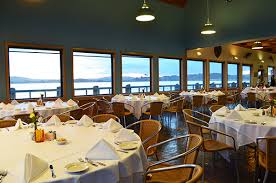
For our second night we have dinner at the Tides, a large family-friendly restaurant with ample parking right next to the harbor. There is not so much elegance here as at Drake’s, the food is ample but just so-so, and service on a Tuesday night is slow though friendly. On the other hand, the dining room boasts a terrific view of the harbor, and the cost of a glass of red wine or a shot of good Scotch is about half the charge at Drake’s. If I had it to do over, I’d come to the Tides first, and move up to Drake’s as a finale.

Freeway Free in California: Getaway to Bodega Bay

Past Petaluma and on through rolling hills and farmland, we roll through a few scattered small villages (Two Rocks, Valley Ford, Bodega) and then up a narrow two lane version of highway 1 to Bodega Bay. On the left the road bristles with boat masts, fishing shops, a fish market, and small restaurants all boasting “the best Clam Chowder in Bodega Bay”. On the right, small bungalows perch on the hillside, with pink naked ladies (more politely known as amaryllis lilies) thrusting up out of the bare ground, and brilliant geraniums overflowing from containers. A hairpin turn past The Birds restaurant (bodega bay was a filming site for Hitchcock’s classic) and the Candy and Kites store, a sharp right on Bodega Road, and we are at the Bodega Harbor Inn, our refuge for the next few days.

The Bodega Harbor Inn exceeds my expectations. For about $270 a night we have an attached cottage, including a spacious living room with a 180 degree view of the harbor, a tiny kitchenette with a mini fridge and freezer (real ice cubes!), a microwave, a coffee maker, an electric tea kettle, and plenty of mugs and plastic utensils. The two bedrooms offer a queen or king size bed. The smaller bed shares the space with an ample wardrobe and has the harbor view again, the larger one has no closet but is completely sheltered from road noise and street light. Outside, a pair of Adirondack chairs invites laid-back appreciation of the scenery and the passing parade of cars and families on the way to the Candy and Kites store.

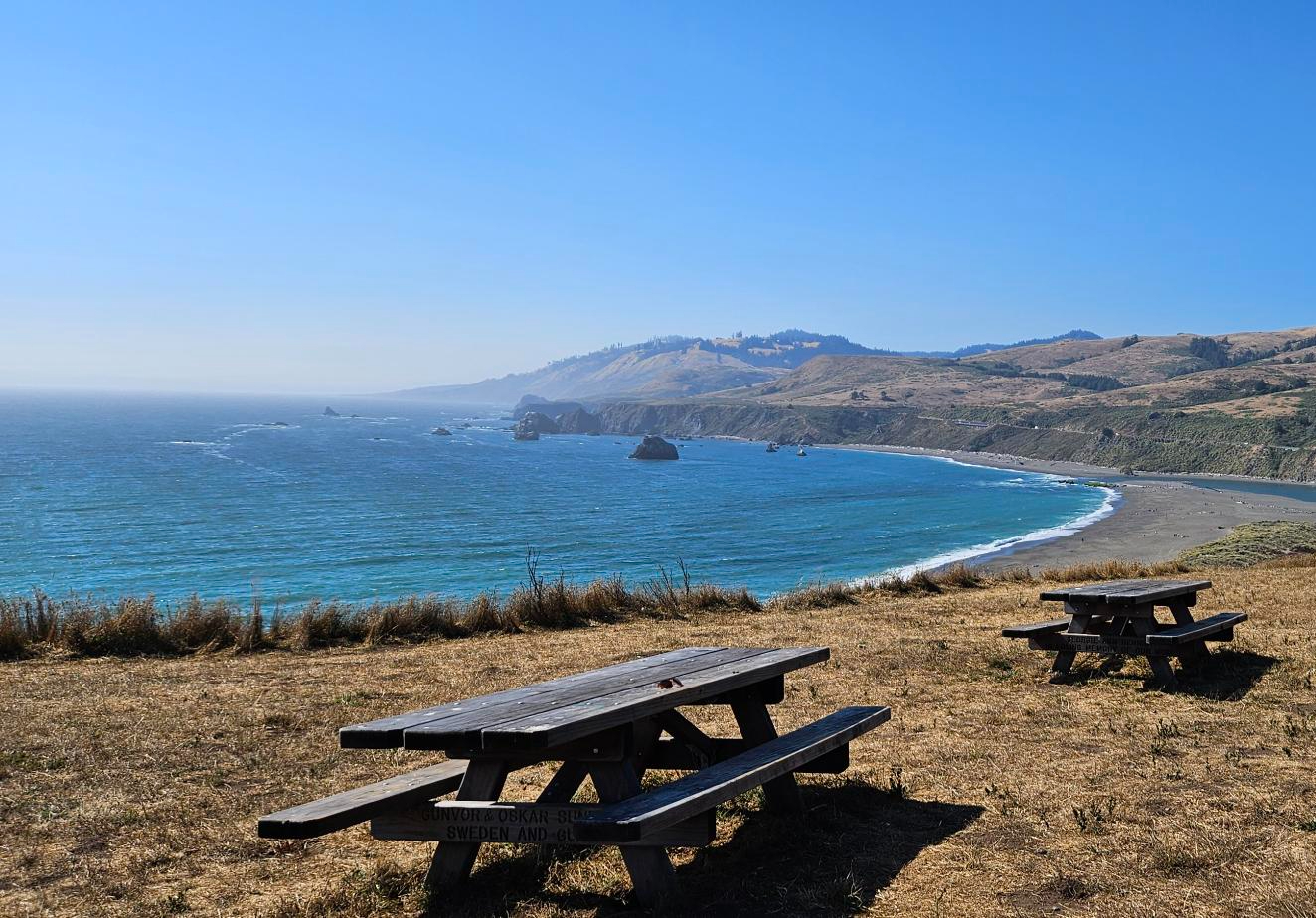
The afternoon is warm and sunny, and we spend it driving north along the Sonoma Coast Beaches: Salmon Creek, Shell, Carnet, Schoolhouse, and a half-dozen others all tempting a turnout. We have our sights on Goat Rock at the end of the string of beaches. There we find a wonderful view of sea and surf up and down the coast, with Arch Rock perfectly positioned for photos to the south, Goat Rock looming due west, and a sandy beach with easy access to the north. We take the photos, descend to the beach, get our feet sandy and our toes wet, and head south again. Southward we are on the scenic side of the road, and we enjoy the panorama of rocky coast and soaring spray all the way back to our refuge.

Freeway Free in California: Petaluma Rates more than a Pit Stop

On the way to a Getaway Weekend in Bodega Bay, we plan to stop in Petaluma for lunch, with fingers crossed as far as what we might find. Our apprehensions at first seem justified, as our first lunch choice has an empty parking space right in front (always a bad sign) and a sign on the door saying, “CLOSED FOR VACATION – see you soon!” So, we walk up the street to Della Fattoria’s Downtown Cafe -Bakery and Breakfast, where the waiting line on a Sunday morning is 30-40 minutes long.  But there is a chair for W, other options are few, and I set out to stroll the block while W waits and checks her email.

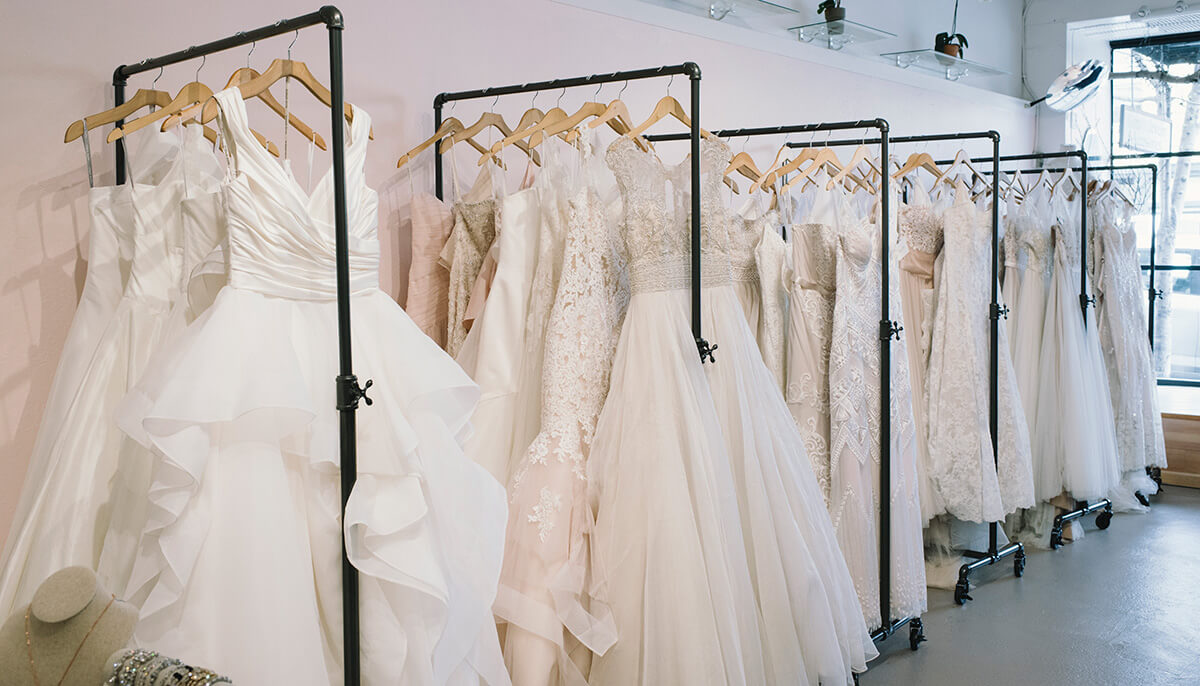
Petaluma’s “historic downtown” boasts impressive bank buildings and movie theaters from the 20’s which have been converted to event venues and antique malls, and storefronts of boutique shops – a bridal salon, exotic housewares, a pie shop, Tibetan handcrafts, and children’s clothing and toys. I’m tempted by the sale rack in front of the Bliss Bridal Salon – it almost would be worth getting married again if I could score a satin wedding gown for only $20! A closer look revealed the size 6 tags – a dream I could not fit into even in my youngest and curviest days.

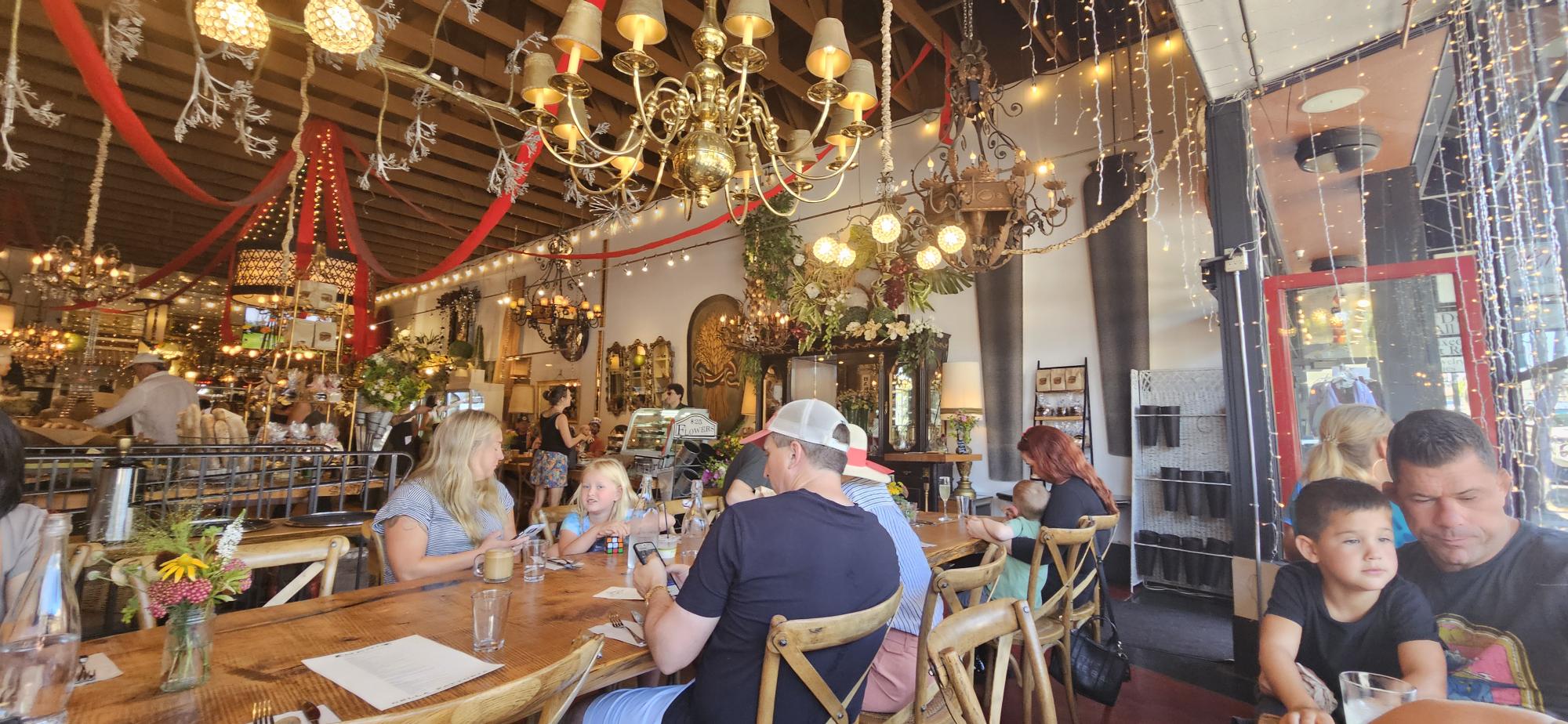
Back at Della Fattoria our number comes up, and we are glad we waited. The decor is eclectic (“No two chandeliers match!” remarks W) the service is a bit slow but friendly (servers seem to be the gating factor for the 30- minute wait – or maybe the kitchen – as there is plenty of seating at long tables, a breakfast bar, and lots of smaller tables.) The menu offered lots of interesting choices for breakfast/brunch/lunch.  I opted for my favorite Avocado Toast – an extra $2.50 for a poached egg on top- and W had Stacy’s Special Breakfast Salad, involving lettuce, arugula, two poached eggs, lots of bacon crumbles, and a heritage tomato.  The side basket of Artisan Bread includes delectable olive bread as well as excellent sourdough slices. (We learn later that Della Fattoria’s bread is famous throughout the North Bay.)

Replete with bread and avocado and eggs, we make our way out of Petaluma and onto the next adventure, but I have a secret resolution to return and check out some more of those interesting little shops, fortified by more of that wonderful bread.

Hidden Treasure: Palo Alto’s Foster Museum

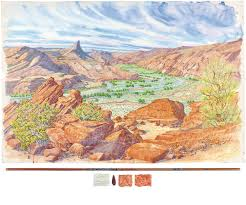
Tucked away in an industrial corner of Palo Alto, around the corner from an electronics recycling center and across the street from a geochemical testing laboratory, is the Foster Museum, a tiny jewel dedicated to showing the work of watercolorist Tony Foster.

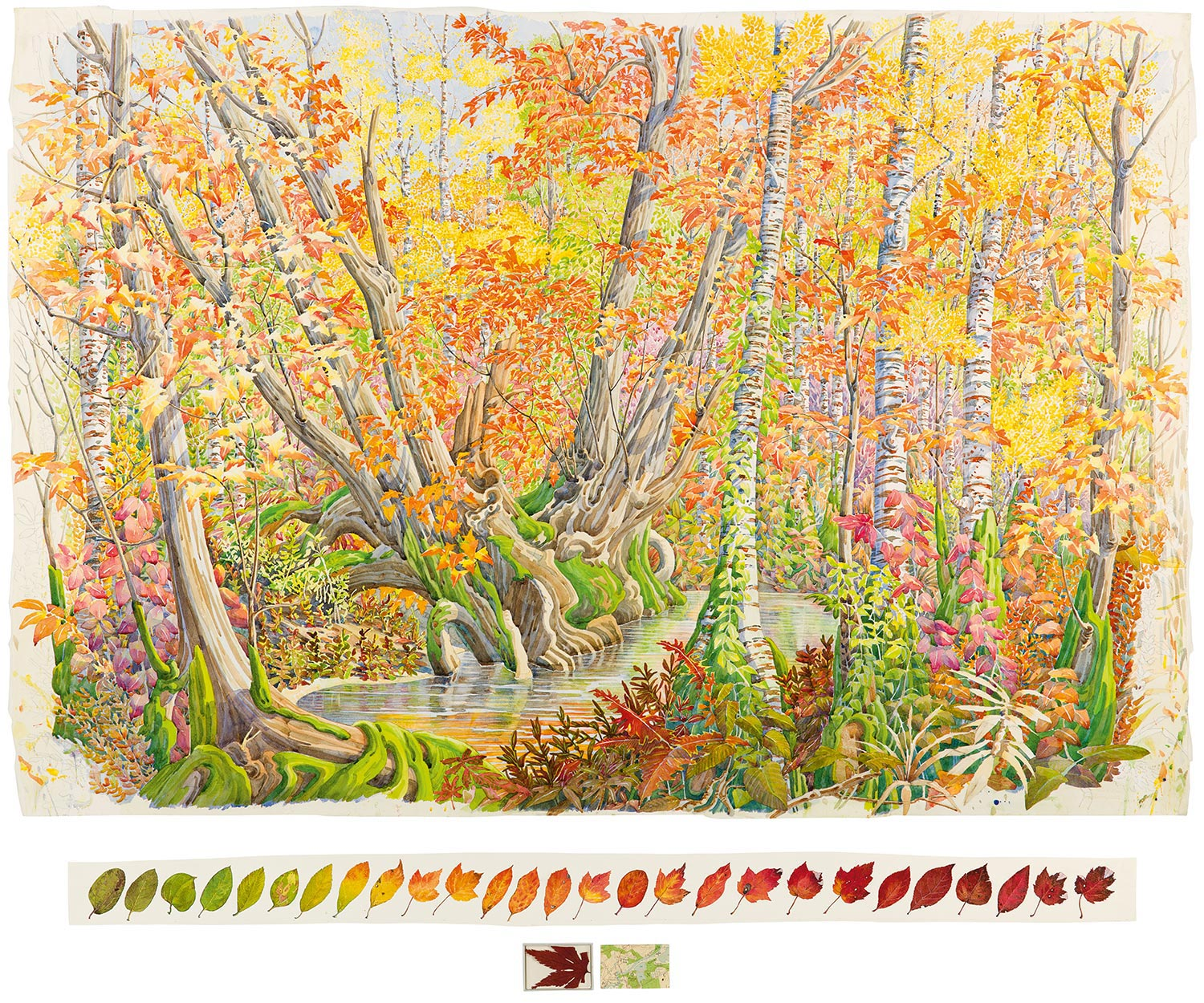
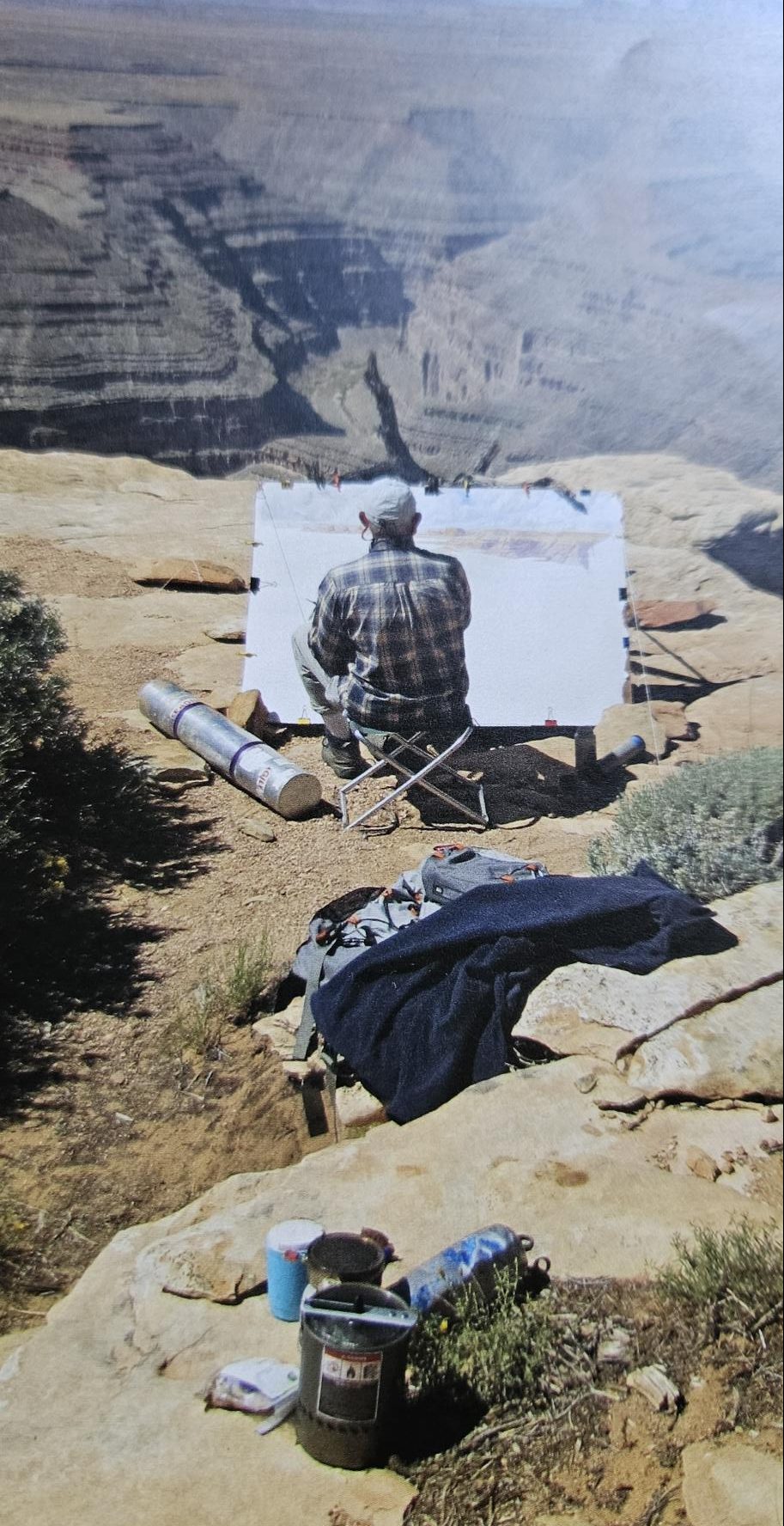
The museum is normally open by appointment only, but I happened to visit with a friend on a “Welcome to Walk In” day. Inside this ivy-covered block is a wonderland of watercolor murals, covering wall after wall with scenes of grandeur: the Grand Canyon, the Rockies, the volcanoes of Iceland, the rain forests of Borneo, the Himalayas, the High Sierras, the coral reefs of the Caymans. Amazingly, the paintings were done plein air rather than from photographs.

The paintings are specially framed with inclusion of leaves, pebbles, and other artifacts from the scene, and many of the paintings include handwritten notes by the artist in the margins of the painting. These artifacts and notes give an authenticity to the art which is terrifically engaging.

Foster writes of his struggles holding onto his palette and easel against howling winds in the Rockies, keeping his materials intact in desert dust storms and tropic rain, and even drawing with wax crayons underwater while wearing scuba gear near a coral reef.

The net effect is absorbing – I spent almost two hours perusing the amazing artistry and detail of Foster’s work, and only stopped because the museum was closing. If you are a fan of water color painting, or of outdoor adventure, this museum will satisfy in many ways.

Freeway Free: More Airports, Overseas

One of my recent posts covered four airports in the US where I had touched down in the course of one trip. Since then I have had exposure to additional airports on an extended trip in Europe. Do overseas airports manage better?

Not quite fair to start the discussion with the San Francisco International Airport (SFO) This is my home port, I’m quite familiar with it, and to boot, I had a business-class ticket which put me in United’s Polaris Lounge before the flight. I and my companion enjoyed champagne/grapefruit juice mimosas, tomato soup, cheese and crackers, fruit tarts, chocolate mousse – it was hard to tear ourselves away when our flight was boarding. My father used to say “It only costs a little more to go first class” but unfortunately that is no longer true, so I can only say “If you can afford it, it’s a great way to start a trip. A+

We had checked our flights before leaving and were pleased to see that our departure gate at Munich’s International Airport (MUC) was only steps from our arrival gate in terminal G – no problem with making the connection, and maybe a quick stop in the Lufthansa lounge while we waited. But no; our gate has been changed from nearly-adjacent G32 to different-terminal K01.  This means a stop through passport control, and then along endless moving and not moving sidewalks, up and down escalators to our gate. We breeze past attractive looking shops and eateries, wave at the Lufthansa lounge, and make it to the gate just as boarding is called.  The only thing I can vouch for at MUC is that the unexpected passage through passport control was efficient, and the signage is excellent. B+

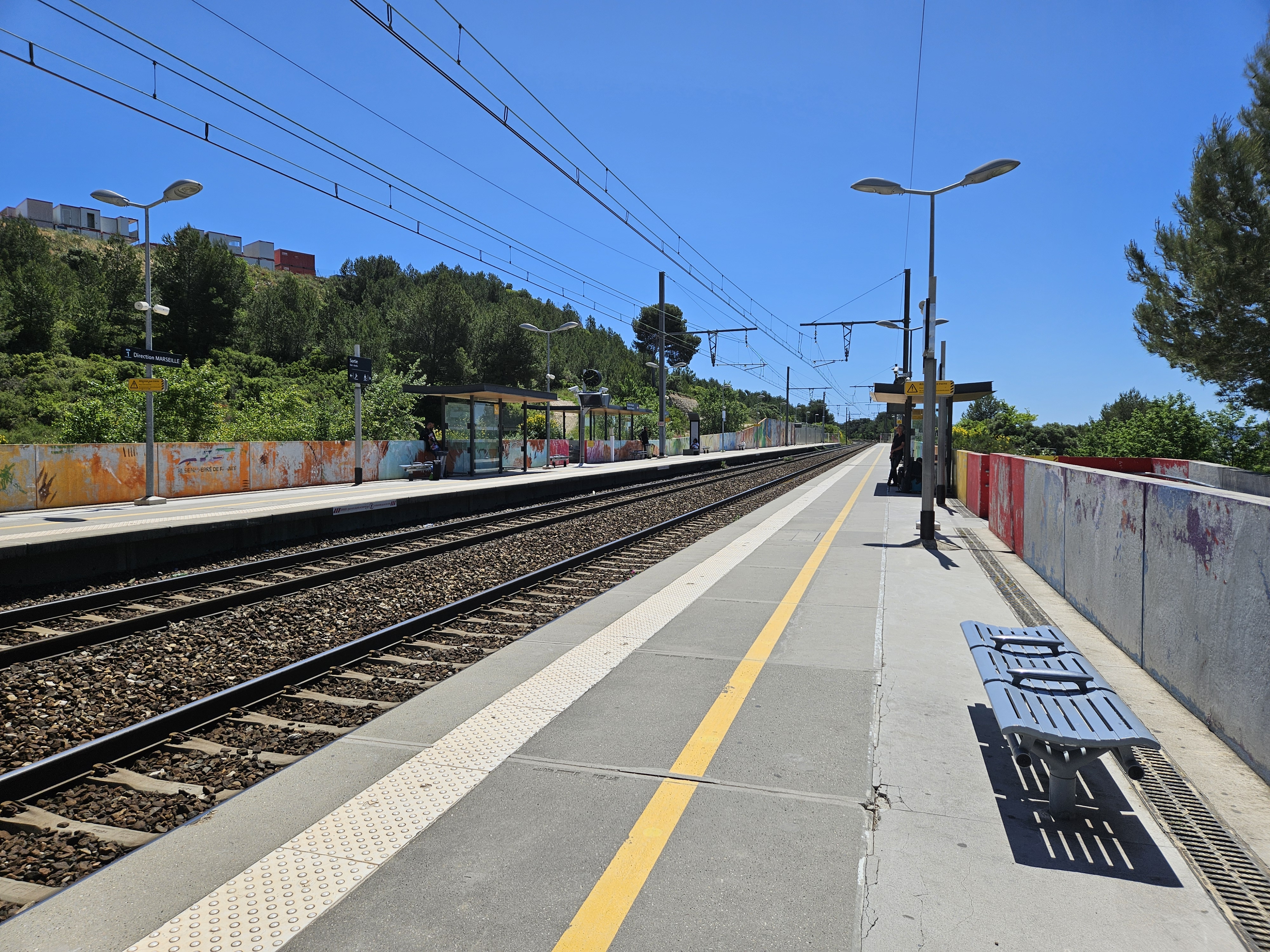
Next stop: Marseilles (MRS): This is a huge airport, hub for all sorts of African, Asian, and European airlines. We stopped at an ATM for cash, at a friendly information booth for directions to the train shuttle, and were on our way on the shuttle within twenty minutes of landing – slick as goose grease! [Full disclosure: We had carry-on luggage, and I speak pretty good French, which helped a lot]. Again, our rapid passage precluded any evaluation of amenities. One surprise: we expected the train shuttle to take us to central Marseilles, where we would have to negotiate a bustling station with lots of noise, people, and confusion. Instead, the shuttle dropped us at what seemed a remote suburban station, Vitrolles. Almost no-one waiting there, a small building with restrooms a quarter-mile from the tracks, and no posted routes. I looked at my trusty French map to confirm that any passing train would actually take us where we wanted to go. Reassured, we hopped the next train going north, and no worries.

On our return trip through MRS we had a bit more time to be confused by the construction at the entry and by the hugeness of the airport, and due to very poor signage we had to ask directions from a janitor to be directed to our proper terminal. I also was unable to download my boarding pass to my phone while inside the terminal, so we had to circle back to the check-in counter, where my carry-on was deemed too thick to make it onto my smaller plane to Lisbon (LIS). No more business class for us, but the waiting area was comfortable and not too noisy. C+

Zoomed through LIS as my flight from MRS left 40 minutes late. At the TAP gate there was confusion; it seemed there was a problem with my seat (2C) , so I was sent to the rear (8C) But there was a uniformed pilot sitting in 8C. More confusion. Eventually I was seated in 8C with many apologies, while the pilot dead-heading home was put in my original seat. Oh well. The flight to Porto (OPO) was easy and the young man in the adjoining seat friendly. But I can’t really give a grade to LIS – I have a hazy impression of lots of shops and advertisements and having to peer over the shelves to find the signage to my gate, but I will withhold judgment – InComplete

The Porto airport (OPO) is small and easy to negotiate. My hosts met me on exiting the baggage claim and guide me from there. On my return, I found my way to THE Business Lounge – all airlines share the same rather spartan space on the mezzanine level. Only later did I realize my good fortune in having access to the Lounge lavatories – there was not a trace of a WC visible on the plebeian level of the airport, although I’m convinced there must be at least a few. What’s fun about the Porto airport is the cosmopolitan veneer: Porto has a large expatriate colony from all over, and it shows in the variety of shops and food available. B+

And then I flew into Frankfurt (FRA), the largest, busiest, most harrowing airport in Europe. We landed a mile from the terminals, disembarked down a rolled-up stair onto the tarmac, boarded a bus, and drove through every ugly airline backyard the airport could show us before finally reaching Terminal A, Lufthansa’s pride. Unfortunately, it seems Lufthansa has quarreled with its code-share partner United, as my flight back to SFO was switched to Terminal Z. Are you kidding? No, Terminal Z is in fact at the far end of the line in Frankfurt, a dark, gray tunnel remote from any comforting Lounge. Its only recommending features are its Germanically hygienic rest rooms and the promptness of our departure from this depressing cave. D-

Freeway Free: a Tale of Four Airports

I spent quite a number of hours in four different airports last week.

San Francisco International (SFO) was my first and final. I have made many trips through this airport, but each one reveals a new aspect, as the airport is constantly re-inventing itself with new construction, new retail outlets and restaurants, and new airlines coming and old ones disappearing. I used to fly TWA and PanAm; now my flights are more likely to be United and Southwest. On departure day I am flying Southwest, and my departure is from one of the gates in one of the newer sections of Terminal One. SFO does its best to invoke the quirky sophistication of its namesake city, even though it is actually located thirty miles south of San Francisco, in San Mateo County. The shops offer authentic sourdough bread, See’s candy, and little packets of goodies wrapped in cable-car-shaped boxes, as well as t-shirts adorned with representation of the Golden Gate Bridge and Coit Tower. Restaurants invoke the Asian/European diversity of the City, with Vietnamese, Mexican, Filipino, Japanese, Vegan and Italian supplementing the standard Starbuck’s.

You can also pick up the usual sports-themed offerings from the Golden State Warriors and the 49ers (who actually play home games fifty miles south in Santa Clara, but hey, who’s picky!) Unfortunately, the airport has none of the Victorian charm of historic San Francisco, but I guess a Victorian airport would be oxymoronic.

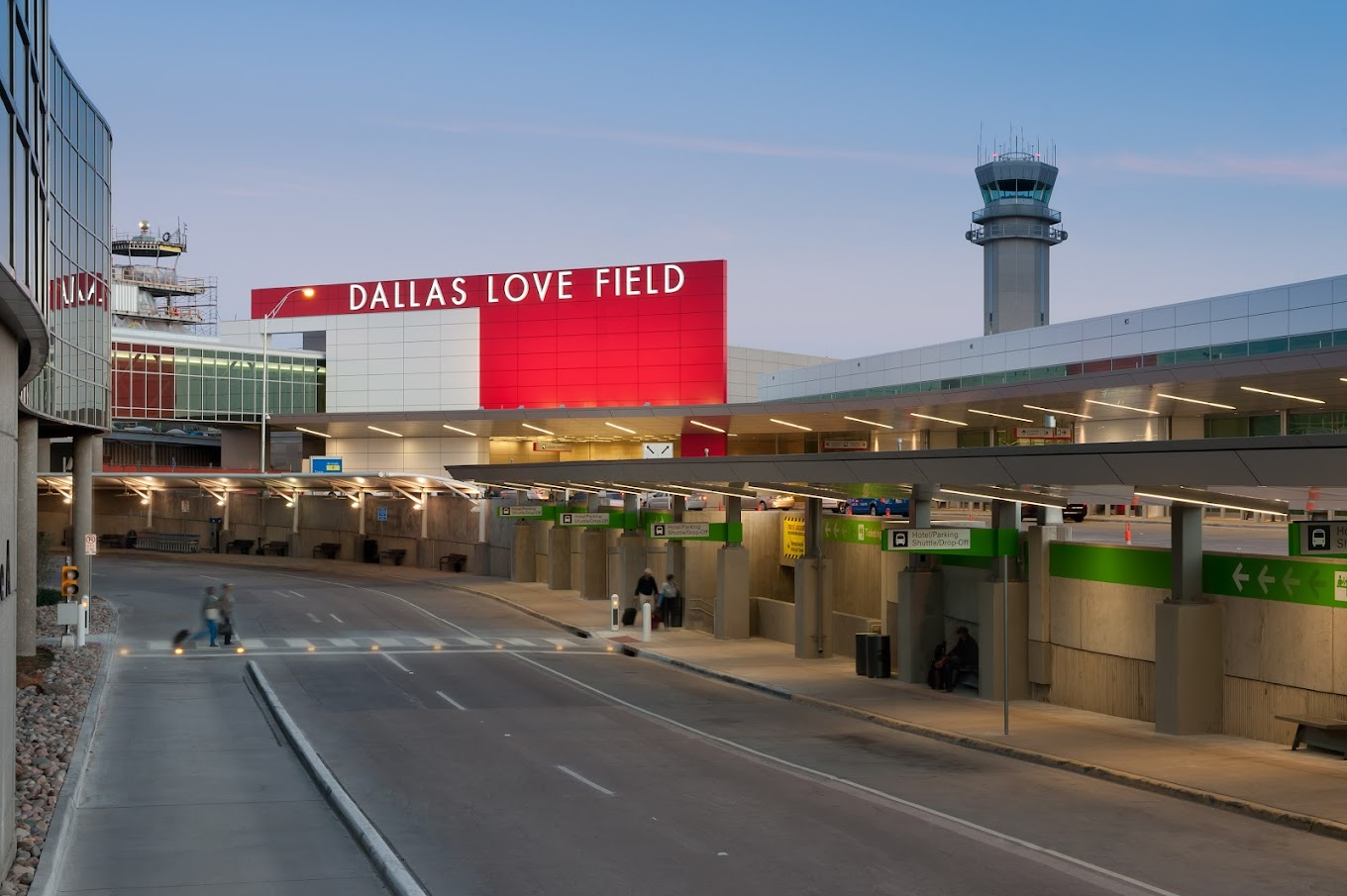
Dallas-Love Field (DAL) was my next stop. I had expected to be picked up right away, and had my carryon with me, but my friend was unexpectedly two hours delayed, so I had plenty of time to explore DAL.

Love Field is the former major airport into Dallas, but has been supplanted by the much larger Dallas/Fort Worth Intenational positioned exactly on the county line between the two rival cities. Dallas, I am afraid, lacks a civic personality, and this shows in its secondary airport. The shops offer vanilla t-shirts that say, basically, “I was in Dallas and I bought this t-shirt.” The restaurants include Dunkin Donuts, Maggiano’s, Baskin-Robbins, Chick-fil-A, and Chili’s. One Texas staple, Whataburger, is also available, and there is a Dallas Cowboys store, but in general one could as well be in St. Louis. I hunted in vain throughout the terminal for either a Dallas post card or a local newspaper.

I was aiming next to fly out of Austin-Bergstrom International on an American flight to DFW. The flight I had intended to exit on was cancelled, so I had plenty of time to check AUS out while waiting around on standby and then for an airport pickup from a friend.

Sophistication is not a word one associates with Austin, but quirkiness certainly is. Somehow I always seem to arrive or leave Austin around the time of Willie Nelson’ s birthday – or maybe they just celebrate this prominent citizen year round. Plenty of post cards here, celebrating the SWSX music festival, the Congress street bats, the mud-colored State Capitol, and the scenic downtown poised along the Colorado River. There are at least eight venues and stages where live music is presented during the week.

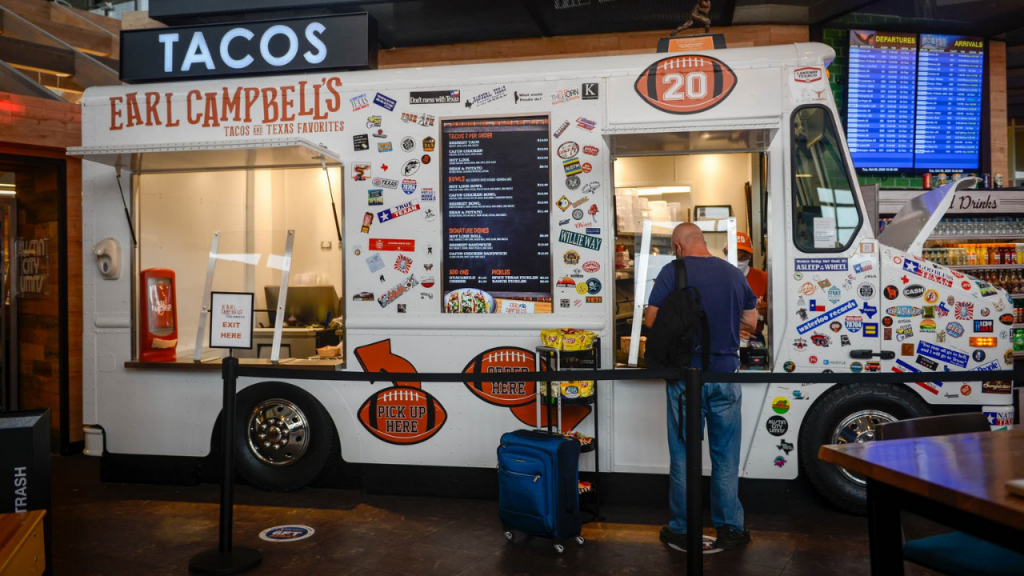
And plenty of local businesses are represented, including Book People (“the largest independently owned book store in Texas” now that Archer City’s Booked Up went belly-up), Earl Campbell’s Taco Truck (intact), East Side Pies, Haymaker and others. Not a sign of a chain restaurant anywhere. Nor any sports-related gear – Austin is blessedly free of major leaguery.

I never made it to DFW but was rescheduled on a flight to the Phoenix Sky Harbor International (PHX), with a two-hour layover. So, I went from the Barbara Jordan terminal, named for a firebrand Democratic governor in a state since turned GOP, to the Barry Goldwater terminal, named for a firebrand Republican governor in a state edging toward Democratic. Such is history.

A strange feeling of deja vu in the Phoenix Airport – it was just like the Dallas airport, only with mountains around. I’d swear the T-shirts were identical, except for the city name – same diamond-shape logo behind the name, same dusky blues, pinks, and lavenders. Phoenix, of course, is even shorter on history than Dallas. Flying out, the inhabited city looks like something blue (swimming pools) and green (golf courses) that spilled accidentally on the sere gray desert.

And finally back to SFO and the Harvey Milk terminal. American flights come into much less convenient gates than Southwest flights, and there is a lamentable lack of moving sidewalks for the weary returning traveler. The route to baggage claim is also poorly signed – a gentleman stationed at the end of the seeming blank corridor directed me around a kink in the hallway to the escalator down. But I was home.

Graffitti – Gritty, Ubiquitous, Affirming

The railroad tracks from the Coliseum to Jack London Square – everywhere the trash and debris of homelessness… rusted out cars, plywood shanties, abandoned chairs, strollers, buckets, tires, tarps…. But everywhere also the triumphant gaiety of graffiti – a rainbow of indecipherable words adorning every available concrete surface – amazingly no pornographic or obscene drawings or postings, only an occasional sad face, Raiders logo, anime girl in a sarong, a smiling blue tiger.   Some of the artists have mastered techniques that I have failed to grasp in art classes – shading, three-D effects. Odd that these artists don’t express more anger and frustration.  Every tag, every angular or curvilinear phrase (some out in the water on pipes, some twenty feet high) expressing “I am here!”

Some businesses have given in to the graffiti and put up their own murals using the curvilinear or anime style – these seem to be respected.  It is very bad form to paint over another artist’s work. And now at Jack London Suare the graffiti disappears amid the apartments and banners and “public artwork” of the respectable and established world.

Per Wikipedia,Graffiti (plural; singular graffiti or graffito, the latter rarely used except in archeology) is art that is written, painted or drawn on a wall or other surface, usually without permission and within public view.  Graffiti ranges from simple written words to elaborate wall paintings, and has existed since ancient times, with examples dating back to ancient Egyptancient Greece, and the Roman Empire.. Modern graffiti, focused on tagging, probably began on New York City subway cars and spread like a living cloak flung across railway cars, freeway overpasses, and abandoned buildings. When I first visited Japan in 1997 I remember my colleague remarking on the lack of graffiti . When I last visited in 2011 graffiti was everywhere. In some eyes, graffiti are acts of vandalism. In others, they are works of art.

We leave the Square, with its up-market businesses including a Ben and Jerry’s ice cream, a BevMo, a Cost Plus World Market… and then abruptly we are into the Port area and the graffiti erupts again. Dingier here, as though the artists lacked the energy to walk this far from warmth and people.  A huge recycling center.  Stacks of shipping containers, A row of black oil tankers, oddly un-graffitied, unlike the box cars and flat cars on the next track over. Is it hard to make the paint stick on the curved surfaces? The cattle cars and box cars are painted as high as a man can reach. Of course – why paint a lowly concrete barrier when one can send one’s aspirations across the country?

Freeway Free in California – Hidden Gem – Triton Musuem in Santa Clara

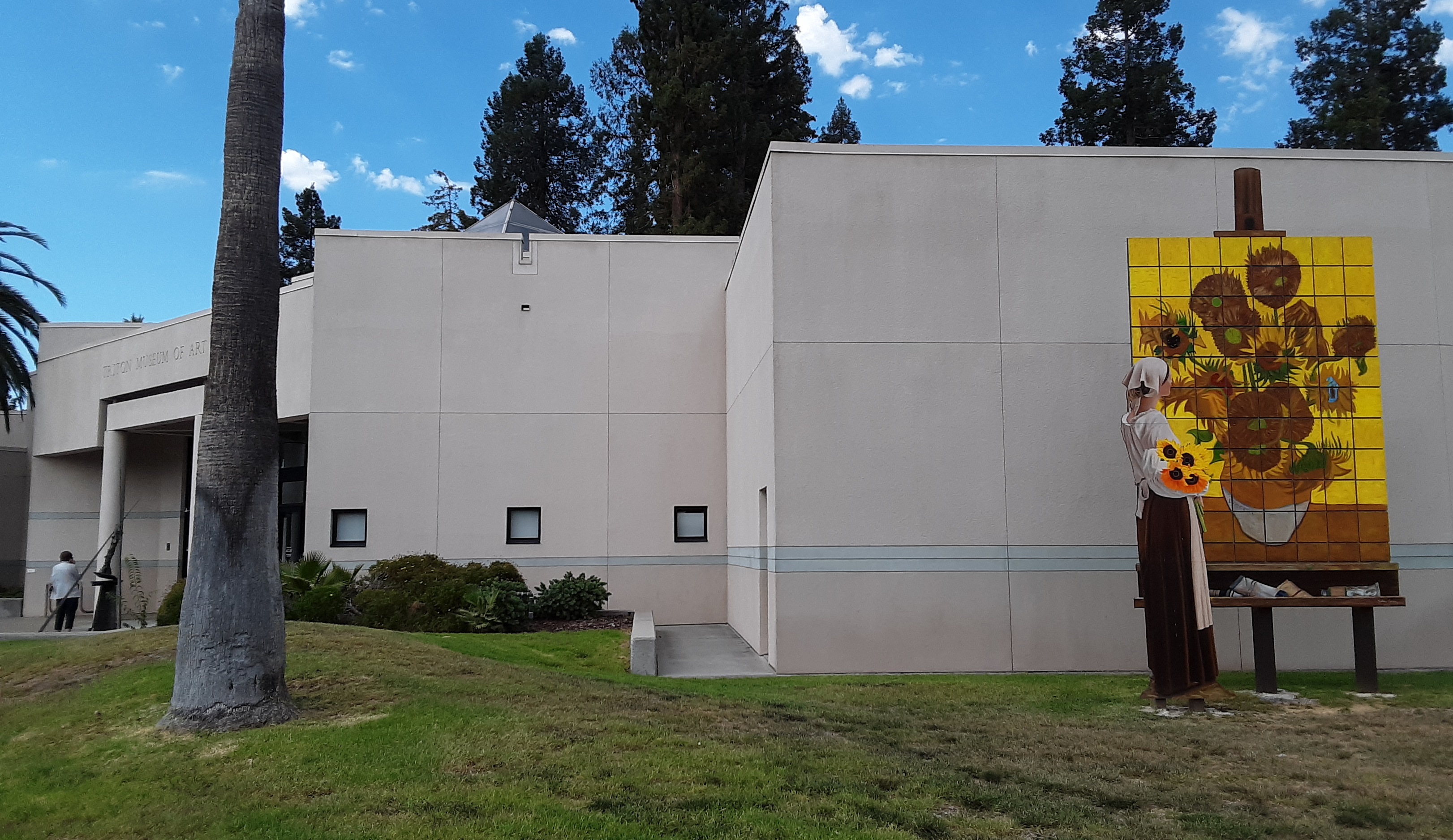
The Triton Museum of Art, tucked away in a quiet corner near the City Hall, is one of the many small museums dotting the Bay Area, and one of the pleasantest. It specializes in contemporary and historical works with an emphasis on artists of the Greater Bay Area. The permanent collection includes 19th and 20th century American art of the Pacific Rim, Europe and beyond plus an extensive collection of American Indian art and artifacts. The museum was founded in 1965 in San Jose, California, by rancher, lawyer and art patron W. Robert Morgan and his wife June.[3][4] It is the oldest non-university museum in Santa Clara County. 

On a recent visit, there were four major exhibits being celebrated. The first featured abstract sculptures by Jeff Owen, placed around the lobby in accessible spots. I saw one man taking a picture of his wife peeking through the circle of a sculpture, like one of those carnival sets where you are invited to put your face on a blowup of Marilyn Monroe.

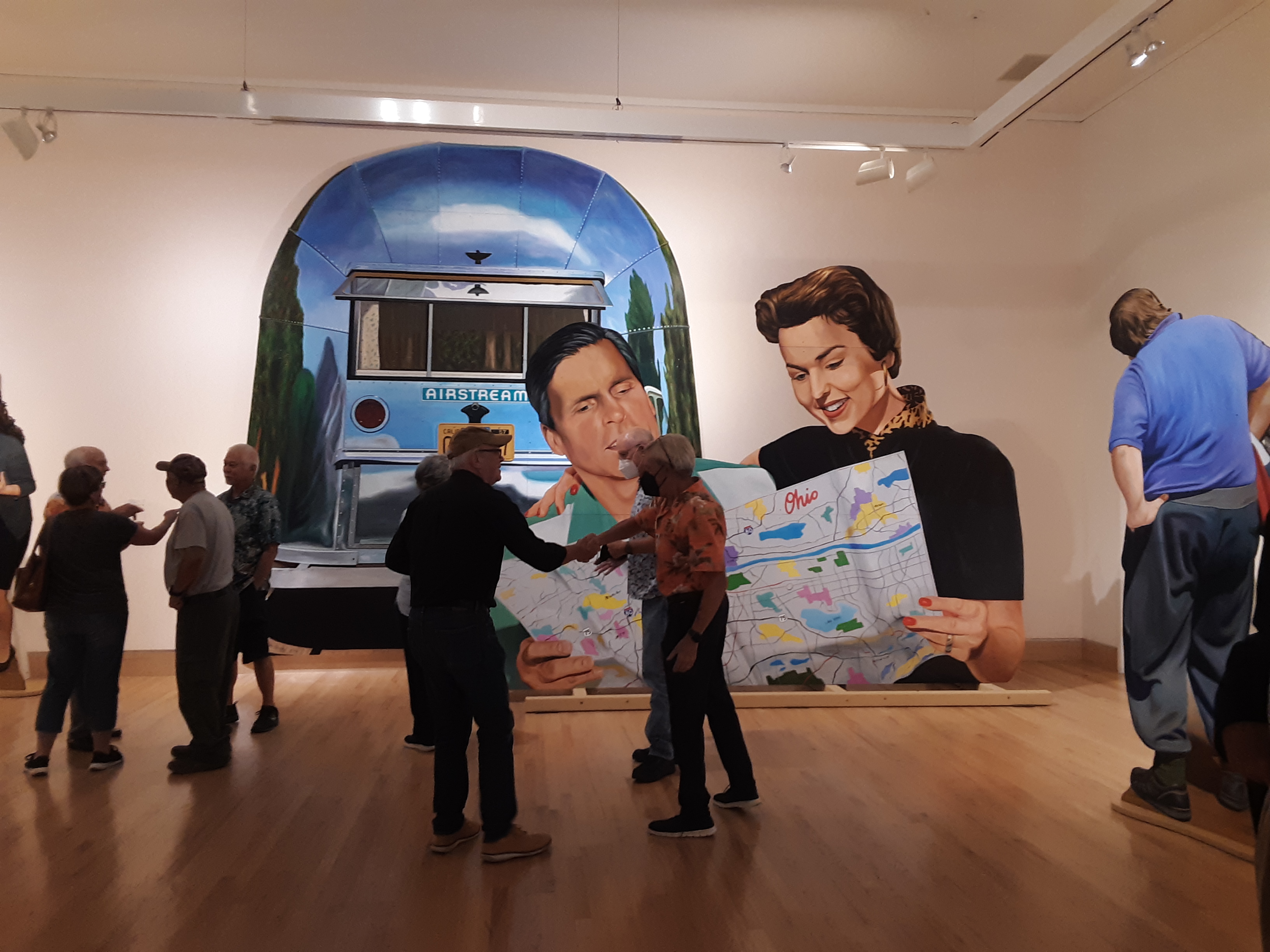
Perhaps she was inspired by the second exhibit, a collection of larger-than-life bill-board-like figures conceived by John Cerney and inviting viewers to make themselves part of the scene.

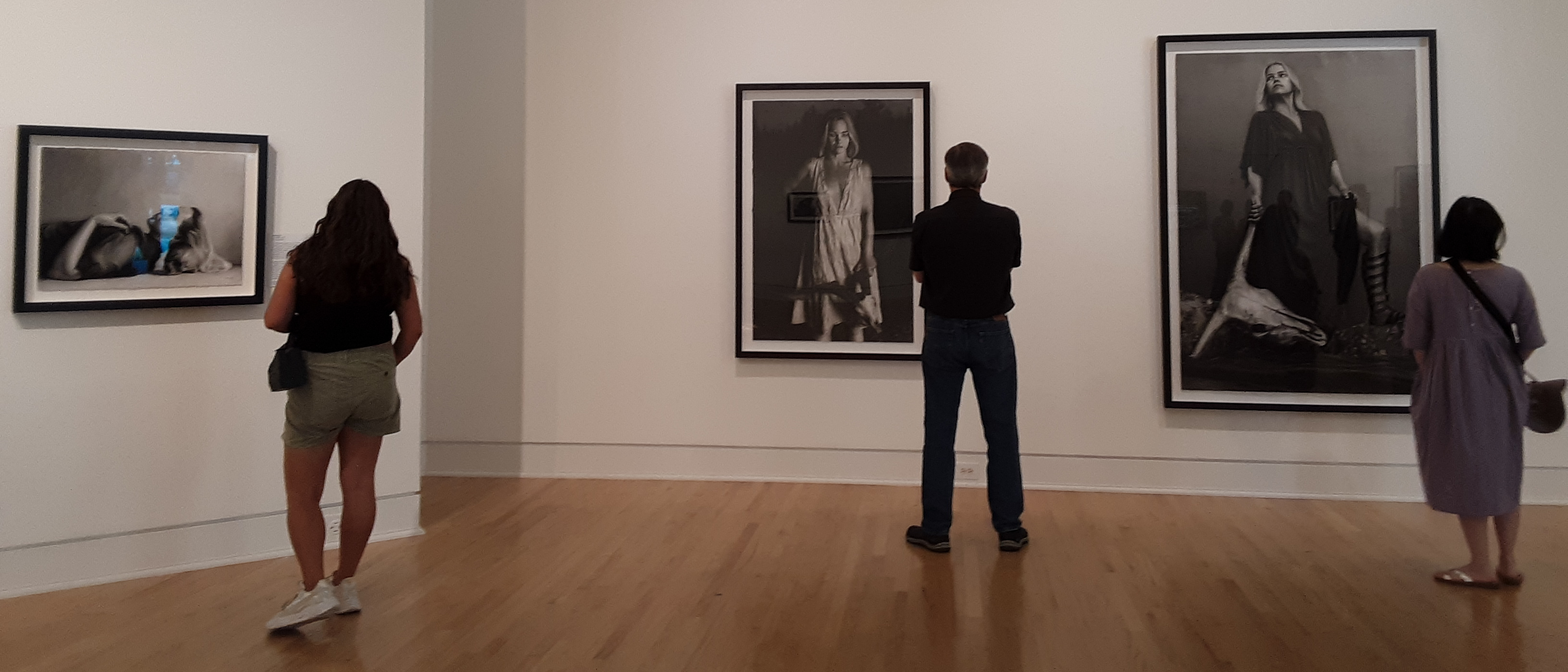
The third exhibit was a series of larger-than-life charcoal drawings, most of them self portraits of the artist Julie Grantz, and embodying a series of feminist themes.

The last and largest exhibit was a roomful of paintings by May Shei, inspired by Chinese tradition. They included calligraphy scrolls, delicate nature vignettes, vibrantly colored still lifes, and monumental landscapes in the style of Zhang Da Qian.

The Triton is perfectly sized to allow appreciation of the diversity of its offerings without wearing the viewer out with an over-supply of stimulation. Admission is free, as is the plentiful parking, though of course donations are encouraged.

Freeway Free in California: Along the River in SLO

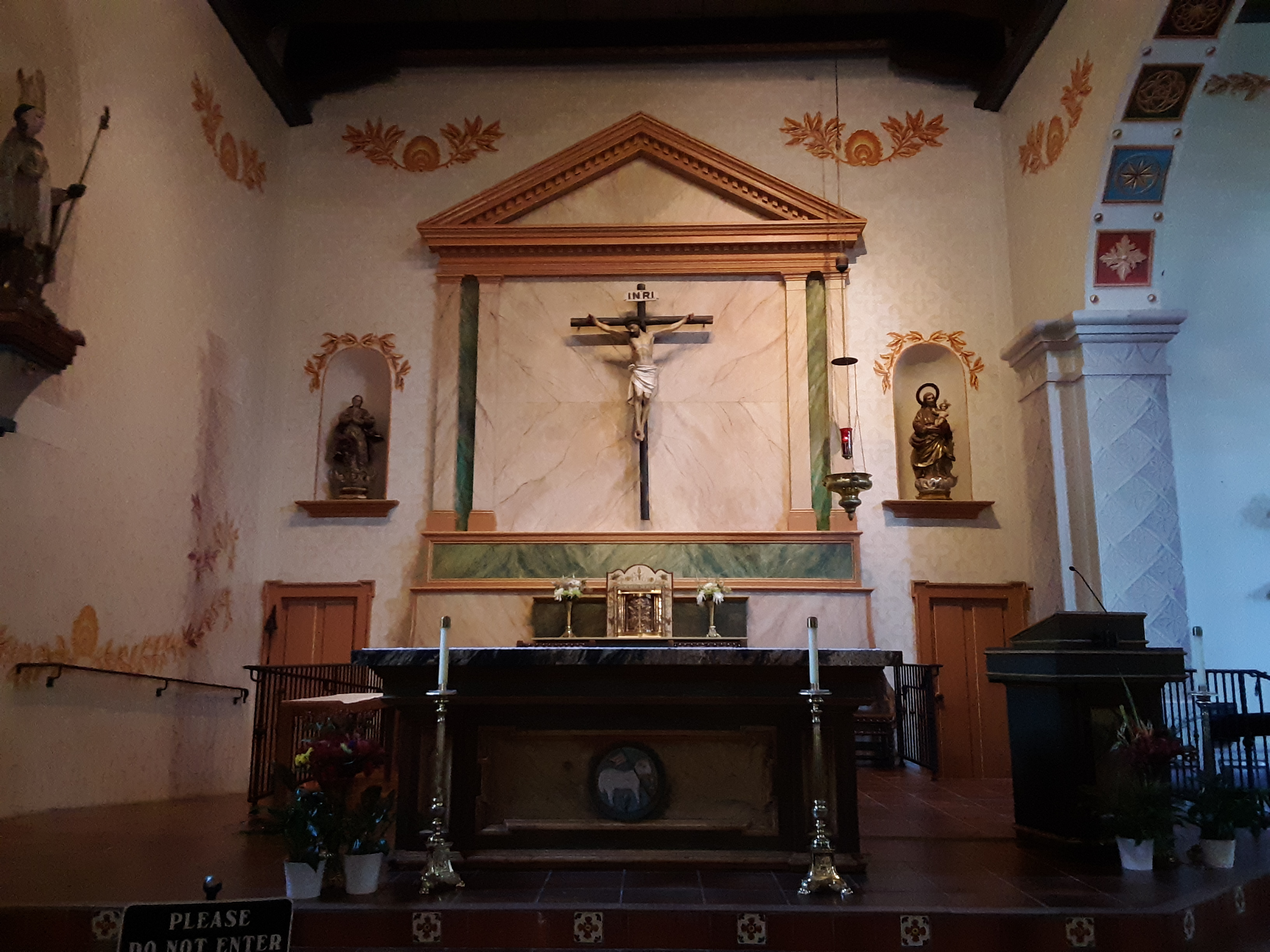
 This morning we went to downtown San Luis Obispo, magically stripped of its food stalls, produce, and acrobats from last night’s farmer’s market, and checked out the mission – lovely, quiet, full of apologetic acknowledgement of the mistreatment of Indigenous People’s.  We left W, who had seen plenty of missions, outside on a bench by the creek, and returned to find her having befriended Adrian, a very well-spoken and tidy vagrant who welcomed us all to SLO. 

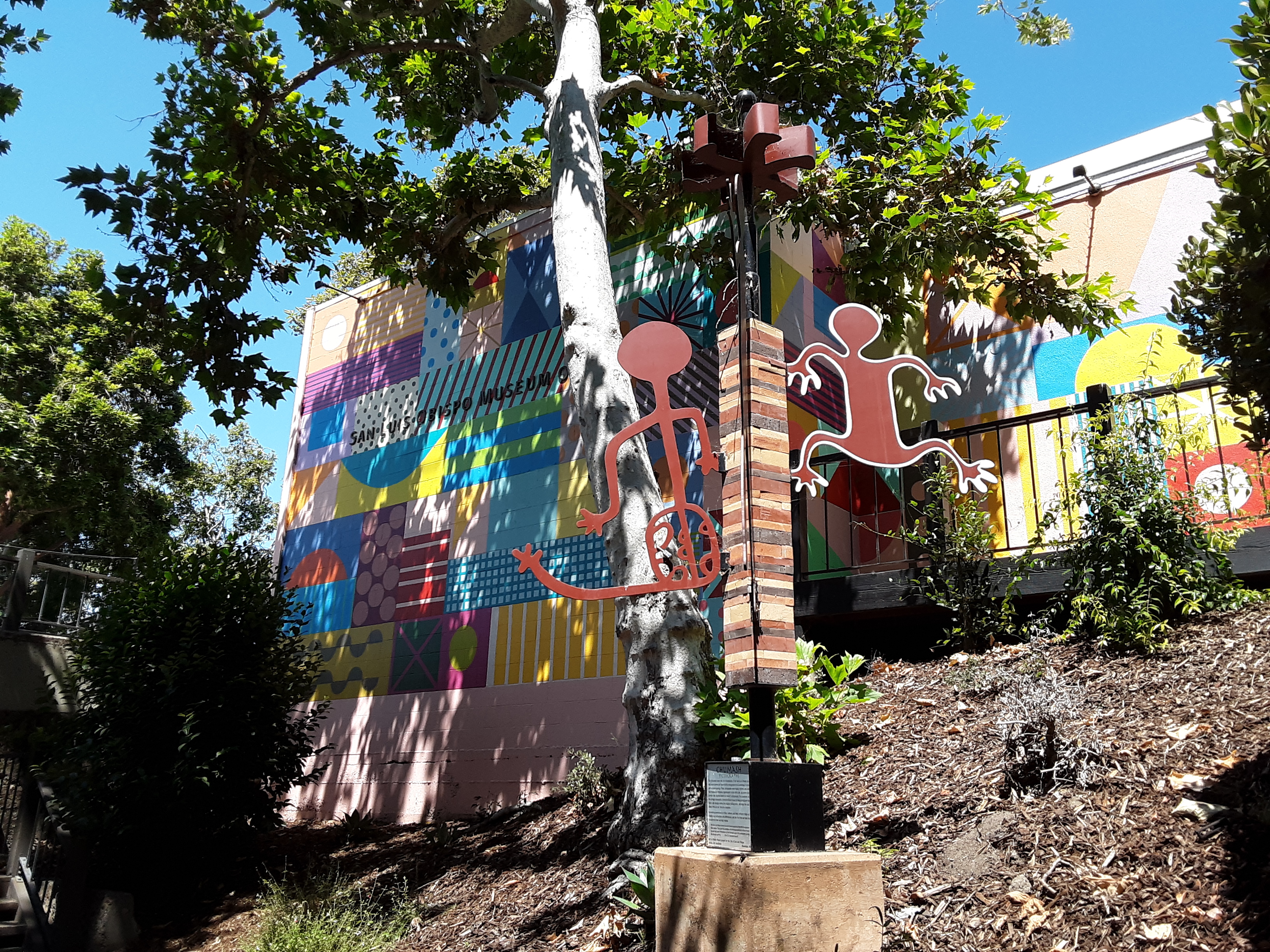
We wandered along thecreek to the SLO Art museum, a very small but attractive venue with three local artists exhibiting (loved Anila Agha’s India-inspired lanterns), plus a colorful abstract mural which wrapped completely around the outside of the museum.

On our way back to the car we couldn’t pass up the old Carnegie Library, now the home of the SLO History Museum.  The exhibits and the docent who talked about them were unexpectedly fascinating – I had to go out for extra time on our (very expensive) parking meter. The docent was a Viet Nam vet who knew a lot about the Dust Bowl and the Japanese internment, and is doing research on WR Hearst.  He explained and enhanced a lot about the old photos which were displayed, and recommended The Habit for a light hamburger lunch just a block away.

The Habit is a fast food place a cut or several above McDonalds – I had a fancy burger with mushrooms and garlic aioli and tempura string beans instead of fries for about $12 including tax.  The most unusual aspect is the ordering, all done at touch-screen kiosks at the front of the store, with a buzz to your cell phone when your order is ready.

When we left the mission in the morning, we had seen people setting up already for the free Friday concert in the Plaza in the evening. (People were already reserving their spaces at 11AM). We thought about attending, but decided instead to reserve a riverside table at Novo just down San Luis Obispo Creek from the mission and the Plaza.

 Our dinner at Novo was a triumph – all participants raised a toast to D for having suggested and reserved the place.  We were outside next to the creek, but far enough down the creek and across so that the noise of “The Molly Ringwald Experience” rock band going in in the Plaza was just incidental background noise.  

We feasted on four appetizer plates:  calamari with 2 kinds of sauce, roasted Brussels sprouts, warm Chèvre (goat cheese) with olives and sourdough toast, and minced chicken in lettuce cups.  We finished off with a shared chocolate decadence fudge thing, all deliciously accompanied by a generous pour of the house Merlot. 

Post Navigation