Allyson Johnson

Pieces of my Mind

Archive for the category “TOWN CRIER”

A Piece of My Mind: The Last Ride
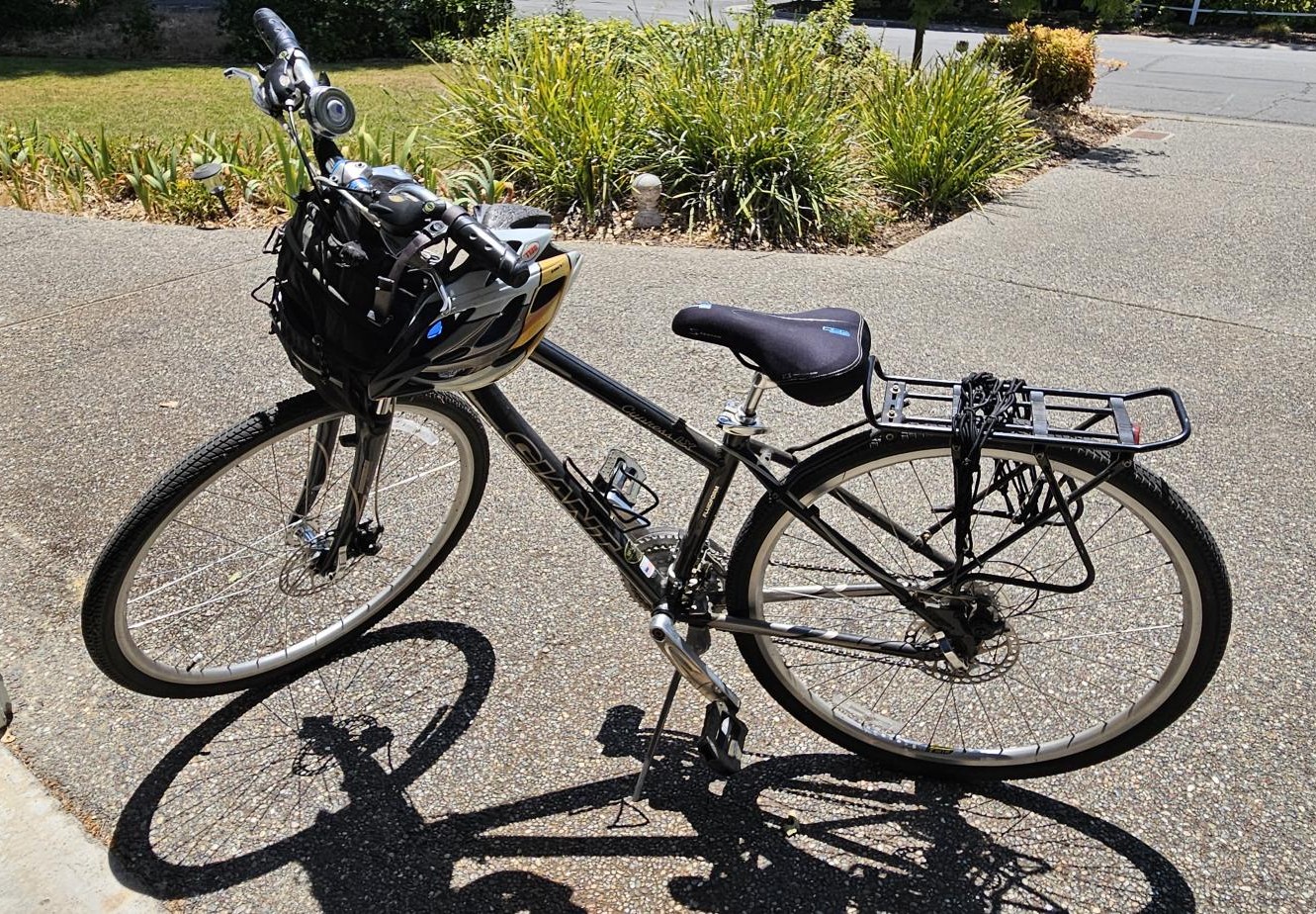
I loved the freedom of riding a bicycle ever since I first learned to balance my balloon-tired Schwinn on the tar roads I grew up with.  As a child I could ride as far as the neighborhoods that had pavement and sidewalks and could admire the columned porches and vast green lawns behind the fences. When I was 12, I won a three-speed lightweight bike in a contest.  I was over the moon. That bike took me through college, getting me to class on time as I swooped past plodding pedestrians, until in my senior year I left it unlocked for just a few minutes and it was gone. 

After I was married my husband and I treated each other to Raleigh three-speeds, as we had only one car.  I would pedal across town to the home of a co-worker and we would carpool together;  I drove the carpool on alternate weeks, while my husband would either bike or bus to his job.  

Our children started them out with bike seats on the back of our bikes, then encouraged them to learn to ride themselves.  Once they had mastered their bikes, we took them and the bikes to Yosemite, to San Francisco, to Monterey, and on every bike trail within thirty miles.   

Years later.  My husband had a fall a few years ago and his knees are going out,  but I continued to ride my bicycle, against his advice, on local errands: to the library, to my hairdresser, to the blood bank. “What if you have a crash?” he would ask me.  “People are going to read about it in the paper and say “What the heck is a woman that age doing on a bicycle anyway?” 

“I’m careful, “ I said.  “I’m not going to crash.”  And I didn’t, exactly.

I hopped on my bike on a Saturday morning to pick up some bagels from the House of Bagels, about a fifteen-minute ride from my house. A lovely morning – just enough high clouds to keep cool, no traffic.  I sailed along the main street on the way to the bagel shop, taking a few detours on loop streets to admire the jacaranda trees in bloom, check out the progress of the construction projects, see if there were any windfall fruits to be picked up.  I zoomed into the parking lot by the bagel shop… and my brain froze.

I couldn’t remember how to dismount from the bike.

I had had a little trouble dismounting the last couple of times I had ridden;  the most recent time I managed somehow to give my shin a good whack and had raised a faint blue bruise.  But I had gotten off this bicycle hundreds of times. The act should have been deep in my muscle memory, something I did without thinking.  Now I had to think. To dismount, I only had to do in reverse what I had so easily done getting on: lean on the left pedal, swing my leg up and over the seat and rear wheel, apply the brakes.  I circled around the parking lot and tried again. No way. Nothing but icy fear of losing my balance, of falling.

There was a high curb with a railing not far from the bagel shop.  I pulled up to that, stopped, and then managed to step up onto the curb, hold onto the railing and haul my leg over the cross bar.  Shaken, I walked the bike across the lot to my usual lockup spot next to the bagel shop. “That was weird,” I thought.  “That was really weird.” 

I bought two bagels, swung onto my bike with no problem, rode home, rode up my driveway… and my brain froze again. I couldn’t do it. I could not swing myself off.  My muscle memory had gone dead.

I braked and with some difficulty managed to get my leg over the crossbar without falling over.  I trundled my bike into the garage and parked it next to my husband’s bike. which was covered in cobwebs. His tires were so flat the wheel rims touched the ground. I stood looking at it for a few moments.
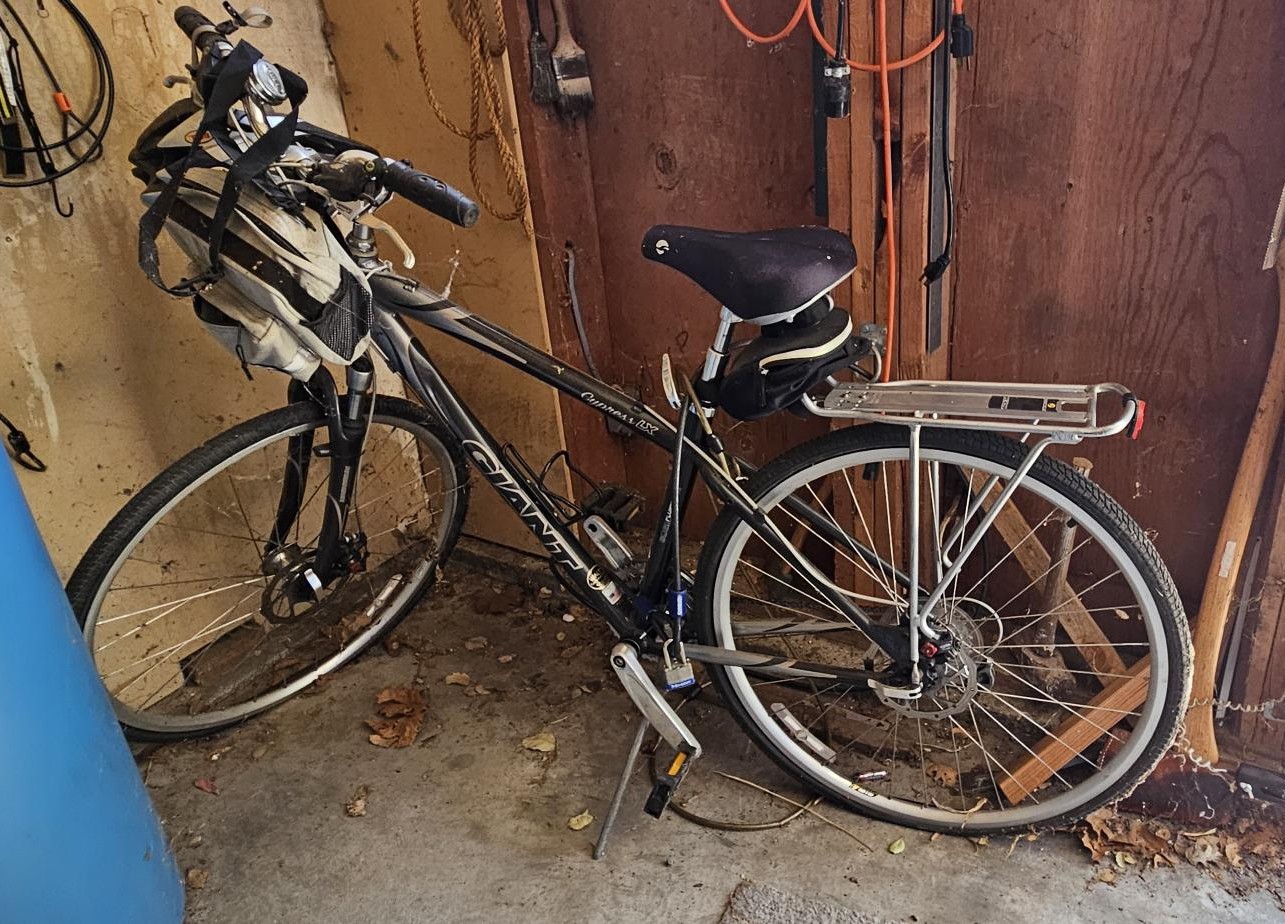
Then I locked my bike up as usual, went into the house, and emailed the local Bicycle Exchange.  I have two bikes to donate.  Within two days the bicycles and all associated accessories were gone.

 I know this was a good decision.  I have several friends who have been injured severely when their bikes slipped out from under them.  But I miss the freedom of riding my bike.  I miss being able to stop and inspect changes in my neighbor’s gardens, to take short cuts through suburban bikeways, to not worry about parking. I’m envious of the people who are trying out the newly painted bike lanes on El Camino and El Monte.  It’s no fun driving to my hairdresser.  On Saturday morning my husband goes for the bagels now.

There’s an empty space in our garage.  I expect it will gradually fill up with the things that go into garages. I hope the empty spaces in my mind will fill up too.

A Piece of My Mind: Whose Library Is It Anyway?

Whose Library Is It Anyway?

Our local branch of the county library system is the second oldest and second smallest of seven branches, but second busiest in the number of visitors. The Library Commission has announced intentions to “modernize the library, enhance accessibility, and improve functionality”.  But what is meant by “Modernize”, “Accessibility”, and “Functionality”?   Forty users responded to a survey about needs, but our library has more than 600 visitors daily.

 Modernize – Does this mean new carpets?  New furniture to replace the institutionally uncomfortable naugahyde and vinyl chairs? Does it mean replacing the heating/air conditioning system with efficient heat pump technologies?  Does it mean providing modern DVD and video-streaming equipment so that researchers can take advantage of the library’s collections without having to take the materials from the library? 

Accessibility – does this mean widening doors and the space between book shelves?  Does it mean adding multi-lingual signage?  Does it mean adding services and features to attract a more diverse cross-section of the community?  Or do these get in the way of the library’s research and study purposes? Does the Passport Office really belong in the library?  

Functionality – On a recent visit to the library, a friend and I passed through the lobby where a group of young women and children in strollers were sharing lunch and gossiping. “What do they think this is, a free day care center?” he fumed. “It’s a library. It’s supposed to be quiet.”  Is the success of the library’s story hours and the availability of snacks in the lobby a detriment to other functions? Or is this addressing the needs of an underserved section of our community?

And how about the users of the library who bring their laptops, sit around a table, and conduct a business meeting at normal volumes?  Is providing meeting space a library function?  Do we need sound-proof study carrels where a small group can work on a project or hold a meeting together?

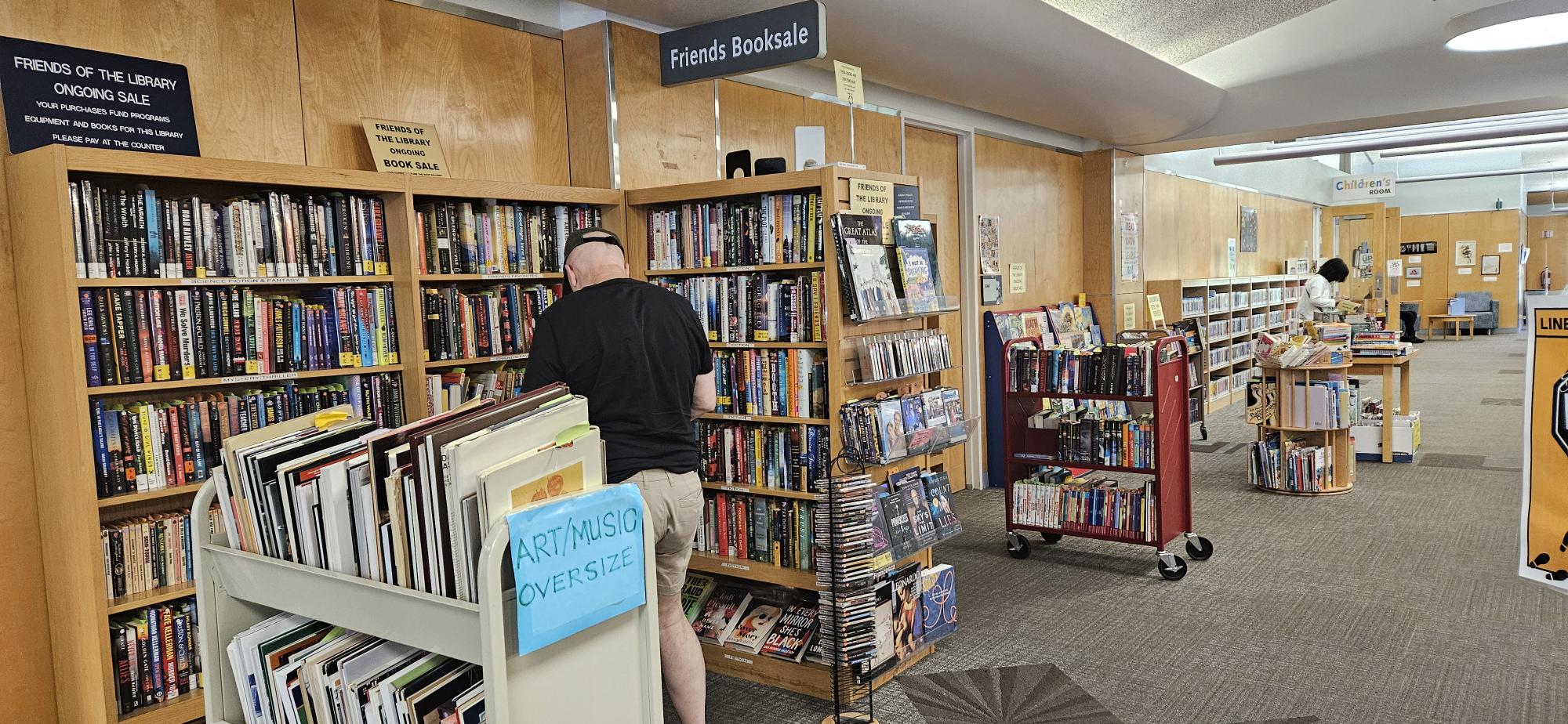
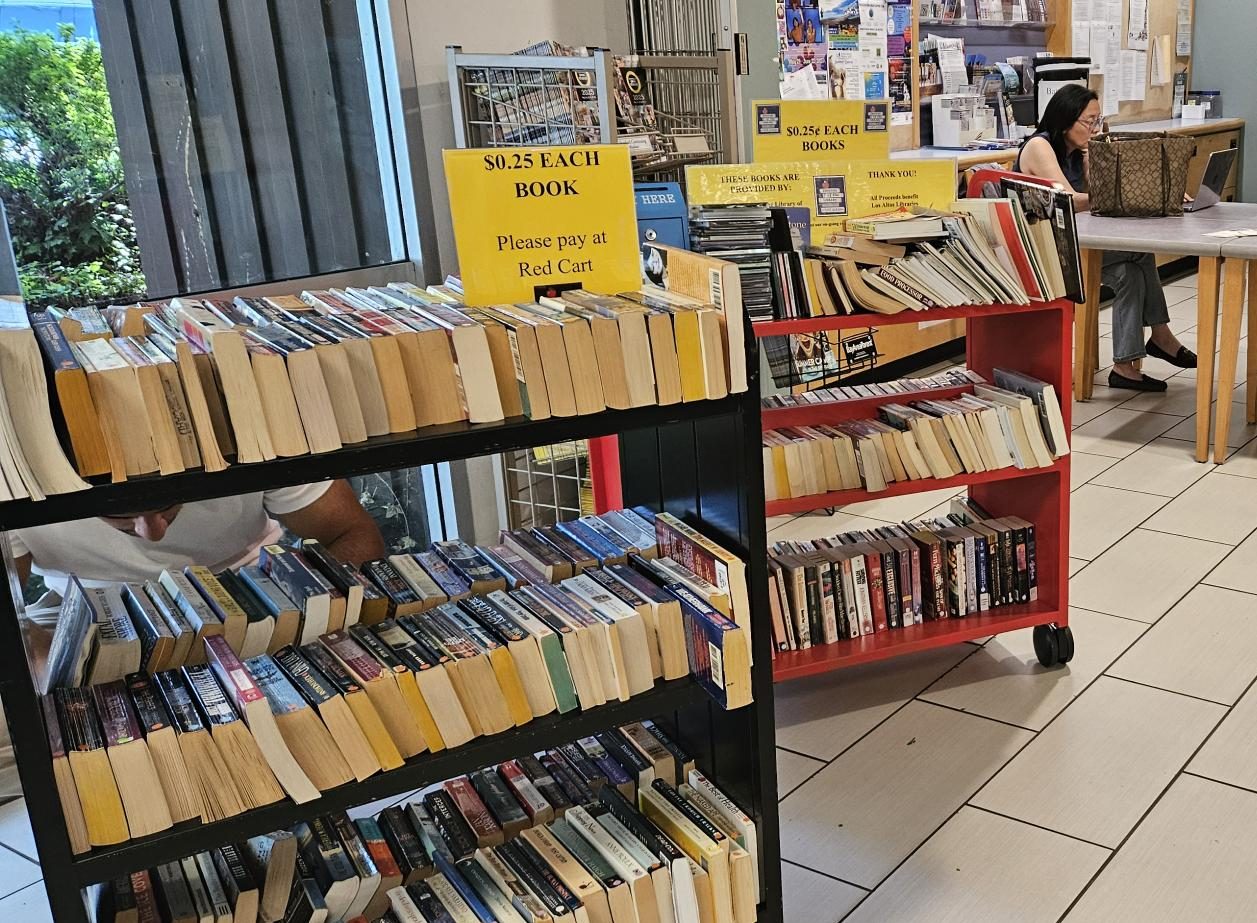
What space do we reserve for our chief fund-raisers, the Friends of the Library (FOL)?  I’m personally addicted to checking out their 25-cent book cart, but I was surprised when a second book cart appeared recently, impeding access to the community bulletin board, the battery recycling container, and the free magazines.  The FoL Sale bookshelves are expanding also, with a third book cart dedicated to teen lit, a table laden with puzzles, and additional tables for seasonal offerings or out-dated magazines.  Is this a library benefit, or is it FOL mission creep?

The Orchard Room is the only large meeting space in the library, and it is booked months in advance.  Do we need more large meeting spaces?  Will the proposed patio enhancement funded by the Los Altos Library Endowment help satisfy the need for more meeting space?  Or should we consign large meetings to the adjacent Los Altos Community Center and reserve our precious square footage for study and research?

The old-fashioned library lampooned in “The Music Man” where “the civilized world accepts as unforgivable sin/ any talking out LOUD to any librarian”  is gone with the traveling salesman. But we need more than a survey of less than 1% of the library’s users to determine what the library should be today.

A Piece of My Mind: One Strike and You’re Out

A young friend of mine, after serving as a poorly paid intern/underling for several years, was finally offered his dream job, with a nice title and a decent salary and even some side benefits. He told his partner and they began to dream about upgrading their housing, maybe doing a bit of traveling, paying off some debts.

And then he failed the drug test. If you contract with or receive grants from the state of California, California’s Drug-free Workplace Act of 1990 requires you to certify that you provide a drug-free workplace. The Dream Job was partially funded by the state.

Studies from the American Psychiatric Association suggest that 5% to 10% of all drug tests may result in false positives and 10% to 15% may yield false negatives. The APA recommends that before submitting to a drug test you should confirm with the lab you visit that a second, confirmatory test will be performed on any positive drug test that may occur. “When initial screening drugs tests (called immunoassays) result in positive results, a second confirmatory (Gas Chromatography Mass Spectrometry or GC-MS) test should always be done.”

My young friend, confident that he had no problem, did not do this.

And  the organization for which the tests were being given had not contracted for retakes, so none were allowed.

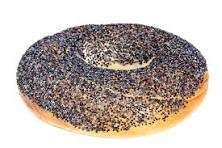
Why he failed – he is not and never has been a drug user, but he grabbed one of his partner’s favorite poppy-seed bagels for breakfast as he was heading out the door that morning. 

I fancy I can hear my readers groaning “Yeah, right!” in disbelief.  But multiple reputable websites (including the National Institute of Health) note the possibility of a false positive result on a drug test because of the trace opiates in poppy seeds.  I believe my young friend, not least because of his partner’s tearful regret for her ill-fated preference.

If you were planning on crossing Death Valley in the summer, and your car had a 5-10% chance of dying on the way, would you make the trip? Would you trust its maintenance to a mechanic whose work had a 10-15% chance of failing?

If you had optional surgery scheduled, and you had a 5-10% chance of being paralyzed afterward, would you go ahead? What if there was a 10-15% chance you didn’t really need the surgery?

My young friend had no choice but to take the test, despite the odds. The drug test is required, though a 5-10% chance of a false positive result plus a 10-15% chance of  a false negative result means the test is only accurate 75-85% of the time.

What can my young friend do?  Jobs in his specialty are few;  the chances of a similar opportunity arising are probably less than the chance of a false positive which cost him this one.  The Dream Job is being advertised again, and candidates are being interviewed.

“I’ll have to find some kind of job to pay the bills,” he says.  “But I may never have another chance as good, no matter how many poppyseed bagels I don’t eat.”

A Piece of My Mind: Life Without Wheels (Los Altos Town Crier (May 29, 2024)

I recently spent a few days with friends who do not own a car, in a city where this is possible.

My friends live in a condo which is three blocks from a bus stop, and five long blocks from a subway station.  Within a ten-minute walk are a small grocery store, a bakery, and the equivalent of what we used to call a five-and-ten-cent store where one can purchase hard goods ranging from light bulbs and screwdrivers to hair pins and underwear.  On the way back from the subway they pass a neighborhood bistro where they can pause for a cup of coffee and a roll if it is morning, or a glass of wine and a plate of olives and cheese if it is evening.

My friends wanted to show me the things they love about their car-free lifestyle, and during my stay we took the bus and rode on the subway.  We took a ferry to cross the river which divides the town from its suburbs.  And we walked. Each day of my stay we walked more than eight miles, and went up and down the equivalent of more than 30 flights of stairs.  (One friend has a pedometer.)

It felt good to walk.  I enjoyed being able to stop and take a closer look at things on the side of the path, or to notice details of architecture and landscaping which would have flashed past a car window. We stopped at a pop-up street market and bought a few pre-used items.  We took alternate paths through the park. When we sat down to eat I had burned enough calories to allow myself to splurge on desserts.

I wondered  – could this carefree carless life style work in Los Altos? Greentown Los Altos (www.greentownlosaltos.org) assures me that it could.  Our town is flat – perfect for walking and bicycling.  We have bus lines that go up and down El Camino Real, and we have satellite lines that run along San Antonio Road and from the Mountain View train station up to Foothill College. And we have an evolving and expanding system of dedicated bike lanes and pedestrian walkways. I imagined going to downtown Los Altos on my bicycle with pannier baskets and hitching up to one of the many colorful bike stands around town, rather than circling the parking lots for a parking space.  No worries about gas prices or car-jacking or keeping my packages out of sight.  Why aren’t more people doing this?

Reality check:  The streets of my friends’ city are lined with parked cars, despite the many public transit alternatives. The cost for using public transport is time. If you have a schedule to meet, a twenty-minute wait for the bus can be a killer. My friends are retired, and time matters less.

In my friends’ city, to take the Metro line from their home to the nearest airport takes an hour and a half.  In a car, the trip takes fifteen minutes.  When my friends took me to the airport, they called for an Uber.

I came home with good intentions to use my bicycle and my feet more, and my car less. The first morning after my return I thought about biking to my exercise class in Mountain View less than two miles away.  But it’s tricky to cross El Camino;  some cars make a quick right turn at Shoreline without looking for pedestrians or bicyclists.  And I don’t actually have pannier baskets yet, and I needed to carry my gym equipment.  And I barely had time for a second cup of coffee.  And so I hopped into the car.

But I’m looking into pannier baskets.

New Year for China: Feedback and Blowback

When my previous post “New Year for China” was published in the LATC, I hoped to get a letter or two of appreciation for my positive write-up of the the local celebration of the Chinese Lunar New Year and for my regrets about the deterioration of relations between China and the US over the past 20 years.

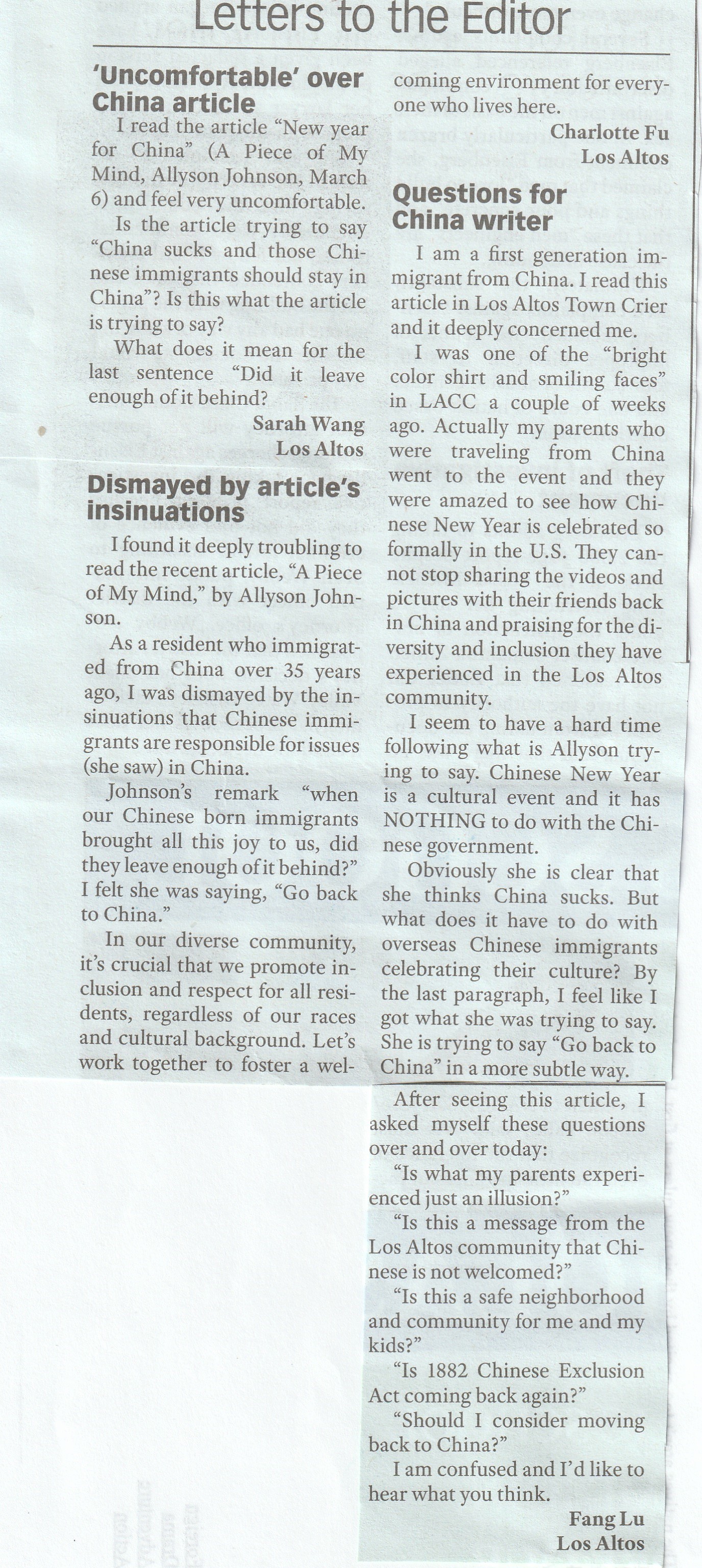
Here are the letters that came in.

And here was my published response :

Was my original writing really that muddled? Perhaps some readers had earlier bad experiences of Sinophobia, which made them sensitive to possible slights, implications, and innuendoes.

My granddaughter, as a toddler, was knocked over by an unleashed dog, and has been afraid of dogs ever since. Not unreasonable. But, I hope, overcomeable. No one should have to live on the alert for danger.

A Piece of My Mind: New Year for China (Los Altos Town Crier March 6, 2024

Last weekend I happened by the local community center and saw a queue of parents and children waiting outside, many wearing bright red shirts, ribbons, or hats.  Other families were walking away, many with children waving brightly colored pinwheels or carrying red and gold balloon creations and bright red swag bags.  Of course, it was the community celebration of the Chinese Lunar New Year, the Year of the Dragon.

I was reminded of my trip to Hong Kong at the turn of the 21st century. Hong Kong celebrated the Year of the Golden Dragon with fireworks, lanterns, and no apparent fear of the impending handover of the colony from British to Chinese jurisdiction.  

In those years I visited China several times for business and for pleasure. Deng Xiao Ping had opened the Bamboo Curtain in 1979, and twenty years later the Chinese tourist industry was booming, with Americans and other foreigners eager to walk on the Great Wall, stand face to face with the Terra Cotta Warriors in Xian, and shop on Shanghai’s Bund.  

Foreign investors  also lined up to enter the untapped market of Chinese consumers.  Jiang Zemin, General Secretary of the Communist Party as well as President of China during these years, promised that “the Chinese people will firmly and unswervingly follow the path of reform and opening up.” Lia Mingkang, a prominent financier of the time, foretold that “as economic freedoms expand, we are inevitably securing more social freedom and the ability to exchange the information and ideas we need to grow.”

Twenty years later, I have to wonder what went wrong. 

Tourism in China was completely shut down during the Covid-19 pandemic. Only in January of 2023, after nearly three years of closed borders, did China cancel all COVID-19 quarantine requirements and reopen the country for international travel. But visitors complain of the high degree of surveillance which prevails not only for tourists, but for ordinary citizens. 

The U.S. Department of State currently warns travelers to “reconsider travel” to mainland China “due to the arbitrary enforcement of local laws, including in relation to exit bans, and the risk of wrongful detentions.” The State Department classifies Hong Kong under a lesser warning, telling Americans to “avoid demonstrations”, “exercise caution in the vicinity of large gatherings or protests”, and “keep a low profile.”

Foreign direct investment into China shrank for the first time in over a decade in 2023, as Western governments discouraged reliance on Chinese-based supply chains. President Xi Jinping’s increasing focus on national security has also left many foreign companies uncertain about where they might step over the line of the law. Chinese entrepreneurs who have become too successful, particularly in social media, have had their businesses shuttered, their property confiscated, and even been jailed on suspicion of subversion. Foreign companies complain that their trade secrets have been copied by Chinese competitors.

Add to this reports of Chinese industrial pollution, oppression of cultural minorities, economic deflation, collapse of the housing market, population implosion, and the on-going threat to Taiwan. and  that golden time at the turn of the century seems like a fantasy.  Then I think of the bright colors and smiling faces at the LACC last weekend and I wonder – when our Chinese-born immigrants brought all this joy to us, did they leave enough behind?

A Piece of My Mind: When Los Altos was Wet and Wild (Los Altos Town Crier, Feb. 7,2024)

When I was a girl in East Texas, I took swim lessons in the public pool from a Red Cross instructor.  I was a good floater and treader of water, due to my persistent baby fat, but flailed desperately to swim across the pool just once in order to earn my Beginner badge. There were plenty of other flailers in the pool, though. Swimming was just something you did to cool off in the summer.

Then we moved to Los Altos, which at that time was a fairly new middle-class suburb.  The lots were no larger than what I had known in East Texas, the houses no more spacious, but there was one key difference.  Of our six closest neighbors, four had swimming pools.  

On my first day at school, I marveled at the tanned students with hair tinged green from chlorine.  New friends casually mentioned how they dove into their pool each morning before breakfast and did a few laps just to wake up.  The school had a swimming pool.  And swimming was a regular part of gym class.

In Texas, football had been the sport which determined who was Campus King.  In Los Altos, it was swimming.  I had not known that swimming could be a competitive event.  I had never heard of water polo.  But here was LIFE magazine coming to campus to do a feature about our student body President, Steve Clark, who for a brief time was known as “the world’s fastest swimmer” due to his record-breaking 100-meter freestyle times.  The president of the LAHS California Scholarship Federation was also the goalie on the US Olympic water polo team. The LAHS swim team under coach Nort Thornton broke 13 national records out of 20.  Thornton went on to coach Cal to two National Championships and is in the International Swimming Hall of Fame.

This all came back to me as I read of the abrupt closure in January of the George Haines International Swim Center in Santa Clara.  The ISC opened during the golden age of Bay Area swimming. Though Los Altos High School ceased its prominence in the swim world when Thornton left for Foothill College and then Cal, the school continued to produce Olympians who swam at the ISC. Steve Clark trained there under George Haines for the 1964 Oympics, and won a gold medal.  I was most recently at the ISC for a benefit for the US Olympic synchronized swimming team, which won a bronze medal in Greece in 2004,captained by LAHS alumna Lauren McFall.  

There are still plenty of swimming pools in my neighborhood, but not as many children.  I see plenty of students walking or biking to and from the campus with unusually colored hair, but none with that tell-tale chlorine green.  A quick scan of Town Crier articles about high school sports turns up dozens of articles on football, soccer, basketball, and volleyball, but nothing about swimming or water polo. Does the demise of the ISC in Santa Clara reflect a general sag in swimming as a path to glory?  Or are there are still students at LAHS who dive into a backyard pool every morning to wake up? I hope that tradition lives on, even if the ISC does not. 

A Piece of my Mind: “Barbenheimer” Bites

Two blockbuster movies provided conversation and impromptu personality tests this past summer. “Barbie” presented a world full of parties and pastels, with non-stop smiles, smashing costumes, almost all women slim and successful, and men relegated to the status of accessories.  “Oppenheimer” presented a wartime world of dark suits and uniforms,  almost all men brilliant and competent, and women relegated to the status of loyal housewives or untrustworthy temptresses.  Reactions to the two movies contrasted as strongly as the movies themselves.  

At a block party, I sat between two women and asked the innocent question: “Have you seen the ‘Barbie’ movie?” 

The older woman with curly ash blonde hair on my right smiled broadly.  “I saw it with some friends.  We did the whole pink thing.  I laughed all the way through it.” 

The face of the younger Asian woman on my left twisted into a grimace. “Did you really?  Some of it was funny, but that part about how hard it is to be a professional woman – I’ve been through all that.  I’ve heard it all: ‘We need someone with more gravitas’ (Euphemism for ‘You look too young’).  “You’re too aggressive/not aggressive enough (‘We don’t see  a woman in this position.’). ‘We don’t feel you’d be a good fit.’ (‘You’re too Asian’).  ‘We want someone who can grow with the company.’ (You’re too old.’) When the movie got to that section, I was crying. “  

“Oppenheimer” also elicited very different reactions:  “Oppenheimer wasn’t the greatest scientist, but he was an organizational genius.”  “Oppenheimer was a martyr,  a scientific genius sacrificed to the red-baiting right after some harmless flirtation with communism in the 30’s.” “Oppenheimer  was so focused on solving the puzzle of how to construct an atomic bomb that he didn’t consider the human consequences. He left all of us in later generations to live under the constant threat of nuclear devastation.  He had blinders on.”  

When the men of “Barbie” stage a brief revolt, the women become arm candy and servants, but by the end of the movie the matriarchy is restored, together with the pastels, the sunshine, and the smiles.  This world has all the substance and nutriment of Necco wafers and spun sugar. 

The women of “Oppenheimer are seen only as frazzled housewives and overburdened secretaries, while the men wrestle with problems of domestic politics, national security, and the ongoing world war.   Those of us who remember the “Duck and cover” drills of the Cold War decades have to wonder – would they have gotten better results with a bit less testosterone? 

Can we strike a balance? Not a matriarchal world with the colors and substance of cotton candy, and not a patriarchal world of dark suits and uniforms and the threat of annihilation, but some blend of the strengths of each?  


Los Altos Aging? Not a Problem

The Mercury ran a feature story a short time ago about the aging of the Bay Area.  The article noted all sorts of issues associated with an aging population, including lack of economic growth, strain on medical resources, declining school population, shortage of labor, and declining property tax revenues as seniors age in place.

I take issue with the article’s negative spin. What about the advantages of a mature population? These include:

Lower crime rate

 The prime age cohort for crime is historically 18-29. With an older population, the crime rate plummets.  Los Altos is one of the safer communities around, judging by the brevityof the weekly reports of criminal activity in the Town Crier.

Community stability

With a population that ages in place, traditions can be built and maintained.   Long-time residents are accustomed to a Pet Parade in spring, a Homecoming Parade in the fall, and a Festival of Lights Parade on Thanksgiving weekend.  On a smaller scale, our block has held a Labor Day block party every year for decades, missing only a couple of years during the pandemic.  It’s the long-time residents who keep it going.

Local wisdom shared.

Want to know how to keep raccoons from ravaging your lawn? How to deal with gophers gorging on your vegetable sprouts? How to protect your fruit trees from foraging squirres? Ask your long-time resident neighbor.

Curious about why Los Altos High has a Tom Burt football field, a Leo Long track, and a Dude Angius gymnasium?  The oldest person on your block can tell you who these people were and why they are honored.

Active volunteer groups.

Here are just a few of the many volunteer groups largely made up of seniors which enhance our community:

*The Garden Club of Los Altos maintains the beautiful gardens around History House, while other senior volunteers serve as docents at the Museum.  

*The League of Women Voters holds voter education panels for every election.

*Greentown Los Altos educates and advocates for the environment, as well as planting trees and preserving local history through their popular senior-led Bike tours.

*The Los Altos Community Coalition disseminates information about local issues through Zoom meetings and panels.

*The Los Altos Stage Company has kept local drama alive and vibrant.

*The Friends of the Library supply extra copies of best-sellers, raises funds through their Book Sales, and supplement paid staff with many volunteer hours of book shelving.

Imagine what it would cost to replace these services on the open market.

Rather than bemoaning the potential costs of an aging population, let us instead appreciate the many benefits our older citizens provide.

A Piece of My Mind: Collateral Damage (Los Altos Town Crier May 31, 2023)

The San Jose Mercury-News had a featured op-ed on the opinion page about “the unprecedented economic costs of COVID-19.”  The article cited an estimate from “our team of economists, public policy researchers, and other experts” of over $14 trillion lost due primarily to workplace absences and lost sales.  But authors Jakub Hlavka and Adam Rose noted that “we didn’t estimate a vast array of indirect costs, such as … mental health effects on the population  and the learning loss experienced by students.”  

Already, graphs and charts show economies bouncing back, workers returning to unused offices, or the offices being repurposed.  What can’t be measured, as Hlavka and Rose admitted, is the collateral damage to families and communities, and what can’t be predicted is the length of time required to truly heal. 

I know a young woman who was a junior in college when COVID hit.  Lockdown forced her into an unrelenting intimacy with her roommates which ended in hard feelings and frayed friendships. No internships or jobs materialized in the long locked-down summer.  To save money in her senior year, since all classes were being held remotely, she lived with her father and stepmother.  Again, the stress of too much proximity led to an argument, an explosion, things said that were hard to forgive, and now the daughter has been estranged from that part of her family for over two years.   

I know a young man who was a high school senior taking advanced classes.  Lockdown in the spring quarter of his senior year meant none of the traditional rites of passage happened: no Senior Sneak Day, no Senior Prom, no Yearbook signing, no Grad Night.  He decided to take a gap year rather than spend his freshman year (and tuition) on Zoom classes.  He did not make good use of the gap year, and when he started at an excellent private college he was out of the habit of attending to class schedules, dorm rules, and course requirements.  He has narrowly avoided expulsion, and after turning over and spoiling a number of new leafs, hopes to start again this fall in a local public university. 

Younger children, also, have been affected in hard-to-measure ways.  A pre-kindergartener I know was outgoing and self-confident about meeting new people, but during lockdown she saw almost no-one except her parents.  An extended trip before starting kindergarten didn’t provide much more opportunity for interaction with strangers without her parents beside her.  Now in kindergarten, she is doing well in classes, but any disruption to her normal after-school  and bedtime rituals may bring on a meltdown.  She has never been put to bed by anyone but Mommy or Daddy that she can remember, and she’s not ready to start now. 

Multiply these examples by hundreds and thousands. Then try to measure the disappointment, pain and anxiety that has been caused by COVID-19’s social disruption.  How many tears add up to a dollar? 

=====

My debut novel, Fox Spirit, is published in twice – weekly episodes on ajmccready.wordpress.com. It’s not too late to catch up! – here’s the link to the first episode: February | 2023 | Chinese Puzzle Box (wordpress.com)

Post Navigation