Allyson Johnson

Pieces of my Mind

Archive for the category “Memoir”

What I’ve Been Reading: Triple Trouble/ The Hate U Give

Triple Trouble/The Hate U Give

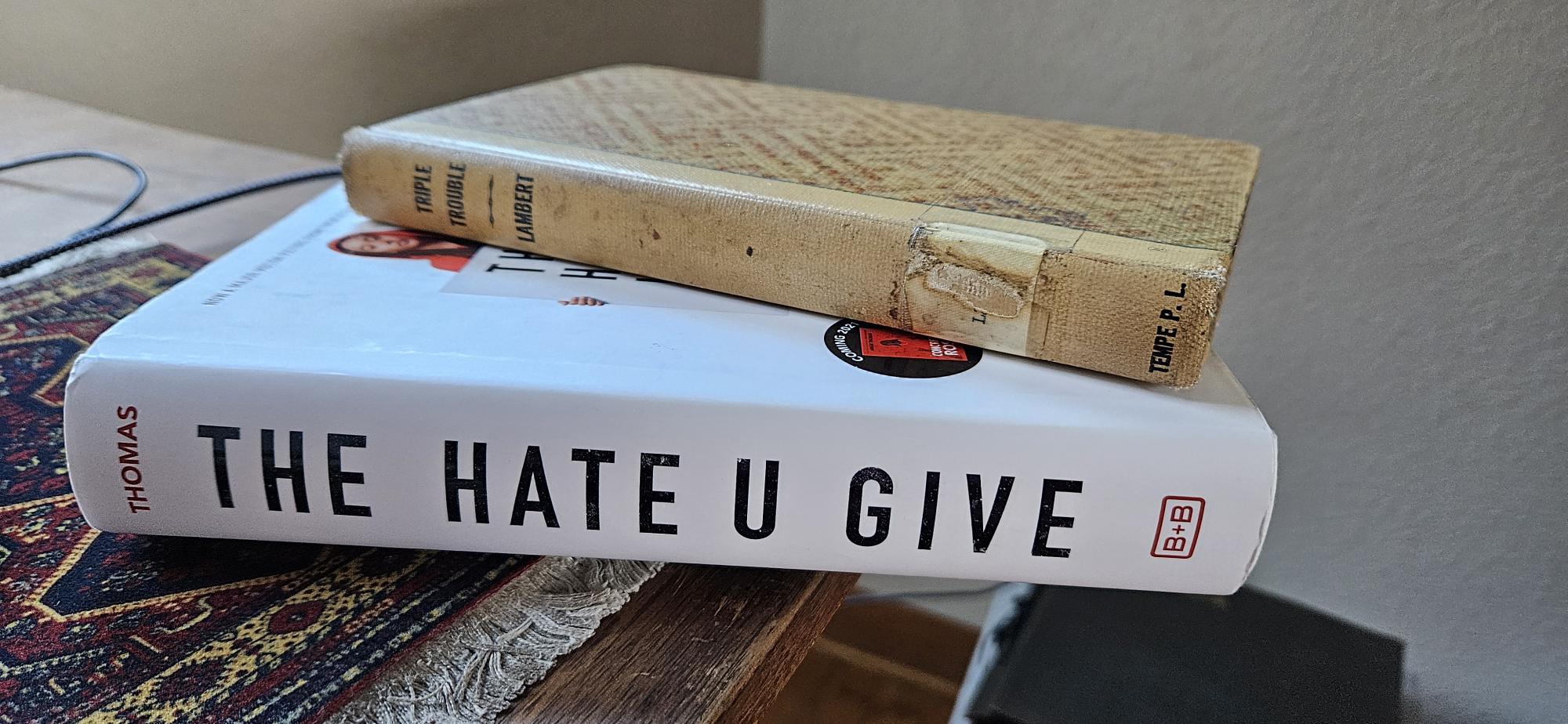
My eyes lit on a battered discarded library book in one of the neighborhood Little Free Libraries.  “Triple Trouble – Lambert” in black capitals on the spine. Could it be?  Yes it was – written by Janet Lambert, the queen of Young Adult fiction in the 50’s, and part of a series that somehow I had never read. (Ah, the publication date was 1965 – I had grown out of the Teenage section of the library by then.) I took the book home, and settled down into a time warp.

Cinda Hollister, the seventeen year old protagonist of “Triple Trouble” lives in a house with a library and a Persian rug and hardwood floors and columns on the front porch and a balcony and a broad slope of lawn and a basement with a rec room.  Her oldest brother is at Princeton, the second is into sports at a the University of Michigan and coaches Little League, and she also has a fourteen-year-old “terror” of a little brother and a quiet little sister. The house isn’t air-conditioned, but they can cool off at the club pool.  They have a cottage at the shore but rent it out for part of the summer.

So what is the Triple Trouble?  Will the oldest brother drop out of Princeton to marry his girlfriend?  Will the second brother drop out of college to accept a contract with a pro baseball team? Will Cinda be taken in by the artsy poet who fascinates her or will she stick with her white-bread suburban high school boyfriend?  At the end, Cinda says ““You know, [Mom], this has been quite a summer…. But you weathered it in fine style.  And because you stood by and kept your good sense of values, we all did.”

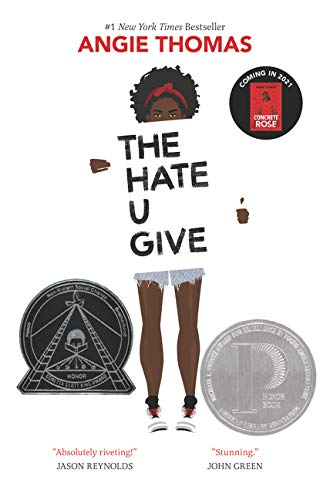
By chance, at home I had just begun to read a different Young Adult book, “The Hate U Give” by Angie Thomas, published in 2017.  Starr Carter, the 16-year-old protagonist, lives in a black neighborhood of Los Angeles with her father, an ex-con who runs a grocery store, her mother, a nurse,  and off-and-on her half-brother, who stays with his father when the man his mother lives with gets violent. The language is graphic, and the action is violent.

Starr has already seen her childhood friend Natasha killed in a drive-by shooting, and early on in “The Hate U Give” she is the passenger in a car which is pulled over by a white policeman who with little provocation shoots the driver, Starr’s close friend) in the back. The rest of the book deals with Starr’s wrestling with her nightmares, the media, the legal system, and the different demands of her friends and family.

Lambert writes of a world that could pass as a MAGA fantasy, while Thomas writes of a reality nearly as dystopian as “the Hunger Games.” Oddly, though, they both end in the same place – the importance of family, community, and values. 

I grew up in a suburban bubble not very different from the one in “Triple Trouble” and felt very much at home in Janet Lambert’s world. I’m sorry that today’s Young Adult readers face a much grittier reality than I had to, but glad that the fundamentals underlying what they are reading about seem to endure.

A Piece of my Mind: Wasted Day?

My fingertip went to sleep.

“That’s odd,” I thought. “I must have leaned on that hand while I was doing my morning crossword.” But it was my writing hand; I had been using it to fill in the crossword, not leaning on it.

I got up from my chair and went to the kitchen table which serves as my desk.  I massaged my fingertip while I checked my email.  The fingertip was still numb and tingling. When I looked at my finger, the first joint was swollen and blue above my wedding ring.  But the ring was not tight; I could bend the finger;  there was no pain.

Then a wave of strangeness came over me.  I felt as though I didn’t quite fit in my body, not confident that it would do what I asked.  I got up and groped my way to the living room, holding onto chairs and walls.  My husband was there.  “I feel strange,” I said, sitting down carefully in my armchair. My hands began to tremble.

He saw my shaking hands and maybe heard a tremor in my voice. “I’m calling 911.”

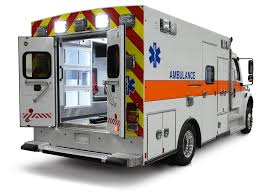
I didn’t move as we waited.  I breathed deeply, trying to clear the strangeness.  The ambulance arrived within five minutes, beating out the firemen from the local station. The two EMTs were crewcut, calm, and patient.  “Are you in pain?”

“No.”

“Feel dizzy?  Nauseated? Light-headed?

“That’s the word I was looking for.  Light-headed.” 

They loaded me onto a gurney and cranked me into the ambulance.  No siren, no flashing lights to alarm the neighbors. 

Brian was the EMT who stayed with me in the ambulance, while Braden drove.  Brian asked me my age.  I told him.  He asked what year it is. I told him.  Then he placed a half-dozen sticky pads on various parts of my torso and revved up the EKG machine.  After a few minutes it spat out a long white tape. “You have a beautiful heart,” Brian said. “You have the heart of a 20-year-old.”

No fever. Pulse normal.  But blood pressure was sky-high – over 180.  “You have high blood pressure usually?”

“Not usually – it was about 130 last spring.  But when I donated blood a week ago it was high – 180.  They barely let me donate.  I put it down to the four weeks of plumbing repairs we just finished going through.”

“That could do it.  Or right now it could be nervousness from riding in an ambulance. Let’s put an IV in you, just in case they need it at the hospital.” Brian jabbed me with a needle, attached an IV stent.  and went on talking calmly until we arrived at the hospital’s emergency entrance.  Down came the gurney, and I was rolled into PIT 4.  Patient in Transit?  I was to wait there for a doctor.

A nurse plugged me into a magic box which would monitor my temperature, pulse, and blood pressure every five minutes.  Brian’s stent failed to deliver enough blood for the testing Nurse Nina wanted, so she repositioned the needle. “You’re going to have some bruising. Now what started this?”

I told her about my tingling finger, the blue finger joint, and the wave of strangeness. By this time, of course, the tingling had stopped, the finger joint was a normal color, and the light-headed feeling had passed.  But the machine was still flashing yellow every five minutes to warn of the high blood pressure.

“Let’s take off that ring.  You don’t want to have that finger get swollen and have to cut the ring off.”  I tried, but the ring had been on my finger for decades; it was not about to come off easily.

“I’ll go get some lubricant.” And that was the last I saw of Nurse Nina.

My husband arrived and was allowed into PIT 4.  He was armed with a sheaf of crossword puzzles in case there was a delay in processing me through the ER.  It was about 11AM, and a busy day in the Emergency Ward.  I had to wait my turn behind the folks who were bleeding, in obvious pain, having seizures, or in other ways much more seriously troubled than I was. Lunchtime came and went.

“You should go get something to eat,” I told my husband. “I’ll be right here.”

“No, as soon as I do that you’ll be seen and transferred somewhere.  I’ll wait.”

I was allowed my phone.  I cleaned out my inbox.  I discovered a couple of Solitaire games and played many rounds.  My husband finished half of the crossword puzzles.

At about 2PM a young woman in a white coat with a badge certifying her MD status arrived.  I went through my history again.

“Can’t explain the strange feeling.  But I want to be careful about that finger. You should take off that ring.  I’ll schedule you for an X-ray.” And that was the last I saw of the doctor.

We waited again.  I found another game on my phone involving coloring in complex mandala patterns.  I completed two mandalas. My blood pressure monitor was no longer flashing yellow.

My husband was about out of crossword puzzles.  He went to the nurse’s station: “What about that X-ray?  Have you forgotten my wife?”

“Sorry.  We’re really backed up.  She should be up soon.”

At 4:30 I was wheeled into the X-ray area.  My finger was taped down to the surface and the machine whirred.

“That’s it, you’re done,” the orderly said as he escorted me into another room.

“Can I go?”

“As soon as the discharge paperwork is done.  And the doctor wrote a prescription for an antibiotic and some baby aspirin.”

My husband went down to the pharmacy to pick up the prescription.  I started work on another mandala.  My phone was down to 16% charge.

At 6:30 the discharge paperwork was completed, I had my pills and instructions in hand, and we headed for home. “So much for that day,” I grumbled/ “Eight hours in ER and nothing but baby aspirin to show for it.”

Was it a wasted day?  I now have confidence that, in case of a more severe emergency,  my local care would be prompt and thorough. I know that all my systems are working as they should.  The blood tests came back normal.  Normal feels good.  And going forward, I have the heart of a 20-year-old.    

Maybe not completely wasted.

What I’ve Been Reading: The Piano Shop on the Left Bank

The Piano Shop on the Left Bank: Discovering a Forgotten Passion in a Paris Atelier by Thad Carhart

My rating: 5 of 5 stars


The Piano Shop on the Left Bank
If a book cover has the words “Bookshop” or “Paris” or anything evoking those memes, I’m liable to pick it up. If it has “Piano”, that’s almost as magnetic. This memoir of living in Paris and finding access to the neighborhood hidden behind the courtyard doors is charming, full of information about French life and culture, and about the history, development, mechanisms, and lore surrounding the pianoforte.

A perfect bedside book, as it alternates between personal experience and historical reflection in alternating chapters.


View all my reviews

A Piece of My Mind: The Last Ride

I loved the freedom of riding a bicycle ever since I first learned to balance my balloon-tired Schwinn on the tar roads I grew up with.  As a child I could ride as far as the neighborhoods that had pavement and sidewalks and could admire the columned porches and vast green lawns behind the fences. When I was 12, I won a three-speed lightweight bike in a contest.  I was over the moon. That bike took me through college, getting me to class on time as I swooped past plodding pedestrians, until in my senior year I left it unlocked for just a few minutes and it was gone. 

After I was married my husband and I treated each other to Raleigh three-speeds, as we had only one car.  I would pedal across town to the home of a co-worker and we would carpool together;  I drove the carpool on alternate weeks, while my husband would either bike or bus to his job.  

Our children started them out with bike seats on the back of our bikes, then encouraged them to learn to ride themselves.  Once they had mastered their bikes, we took them and the bikes to Yosemite, to San Francisco, to Monterey, and on every bike trail within thirty miles.   

Years later.  My husband had a fall a few years ago and his knees are going out,  but I continued to ride my bicycle, against his advice, on local errands: to the library, to my hairdresser, to the blood bank. “What if you have a crash?” he would ask me.  “People are going to read about it in the paper and say “What the heck is a woman that age doing on a bicycle anyway?” 

“I’m careful, “ I said.  “I’m not going to crash.”  And I didn’t, exactly.

I hopped on my bike on a Saturday morning to pick up some bagels from the House of Bagels, about a fifteen-minute ride from my house. A lovely morning – just enough high clouds to keep cool, no traffic.  I sailed along the main street on the way to the bagel shop, taking a few detours on loop streets to admire the jacaranda trees in bloom, check out the progress of the construction projects, see if there were any windfall fruits to be picked up.  I zoomed into the parking lot by the bagel shop… and my brain froze.

I couldn’t remember how to dismount from the bike.

I had had a little trouble dismounting the last couple of times I had ridden;  the most recent time I managed somehow to give my shin a good whack and had raised a faint blue bruise.  But I had gotten off this bicycle hundreds of times. The act should have been deep in my muscle memory, something I did without thinking.  Now I had to think. To dismount, I only had to do in reverse what I had so easily done getting on: lean on the left pedal, swing my leg up and over the seat and rear wheel, apply the brakes.  I circled around the parking lot and tried again. No way. Nothing but icy fear of losing my balance, of falling.

There was a high curb with a railing not far from the bagel shop.  I pulled up to that, stopped, and then managed to step up onto the curb, hold onto the railing and haul my leg over the cross bar.  Shaken, I walked the bike across the lot to my usual lockup spot next to the bagel shop. “That was weird,” I thought.  “That was really weird.” 

I bought two bagels, swung onto my bike with no problem, rode home, rode up my driveway… and my brain froze again. I couldn’t do it. I could not swing myself off.  My muscle memory had gone dead.

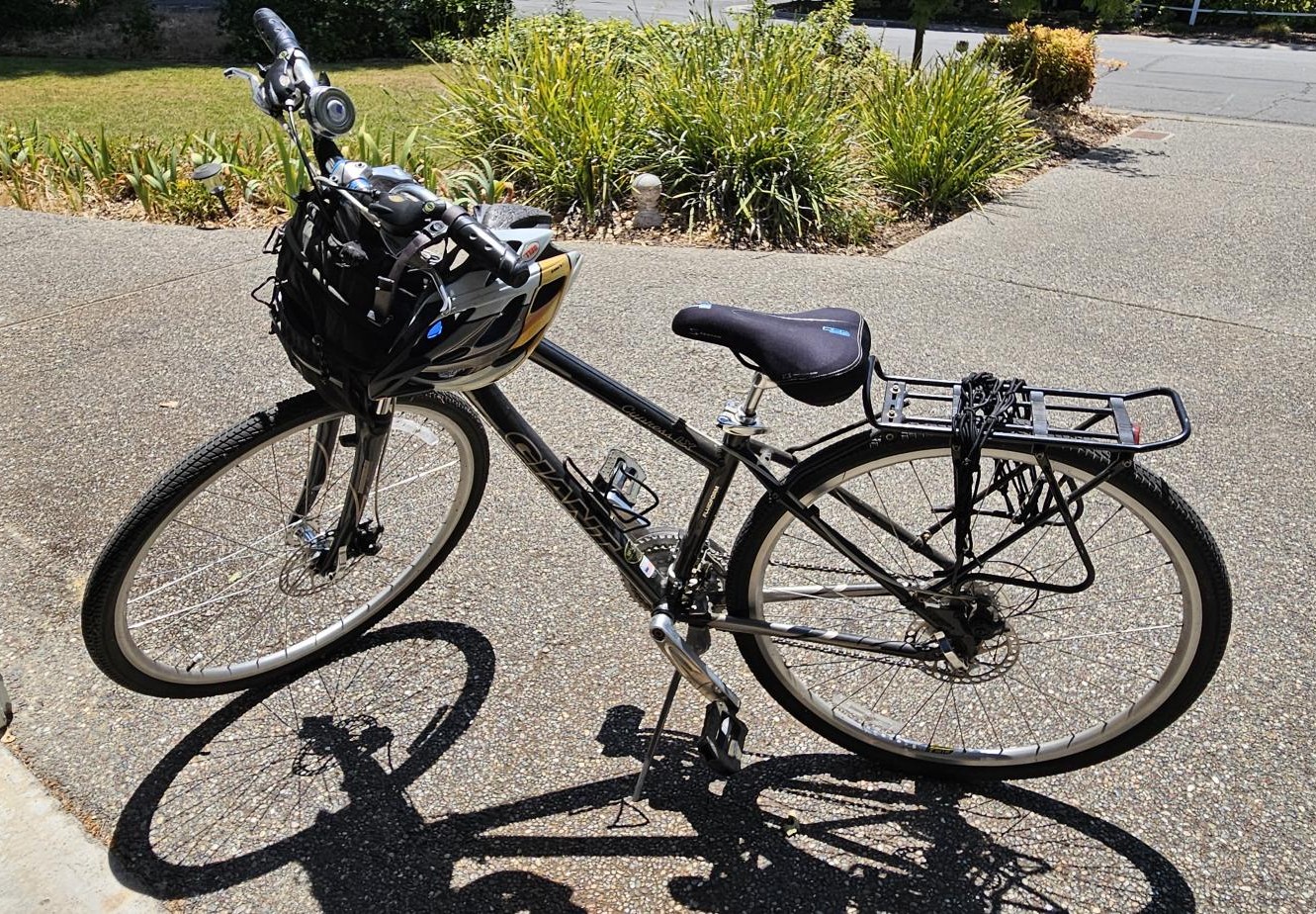
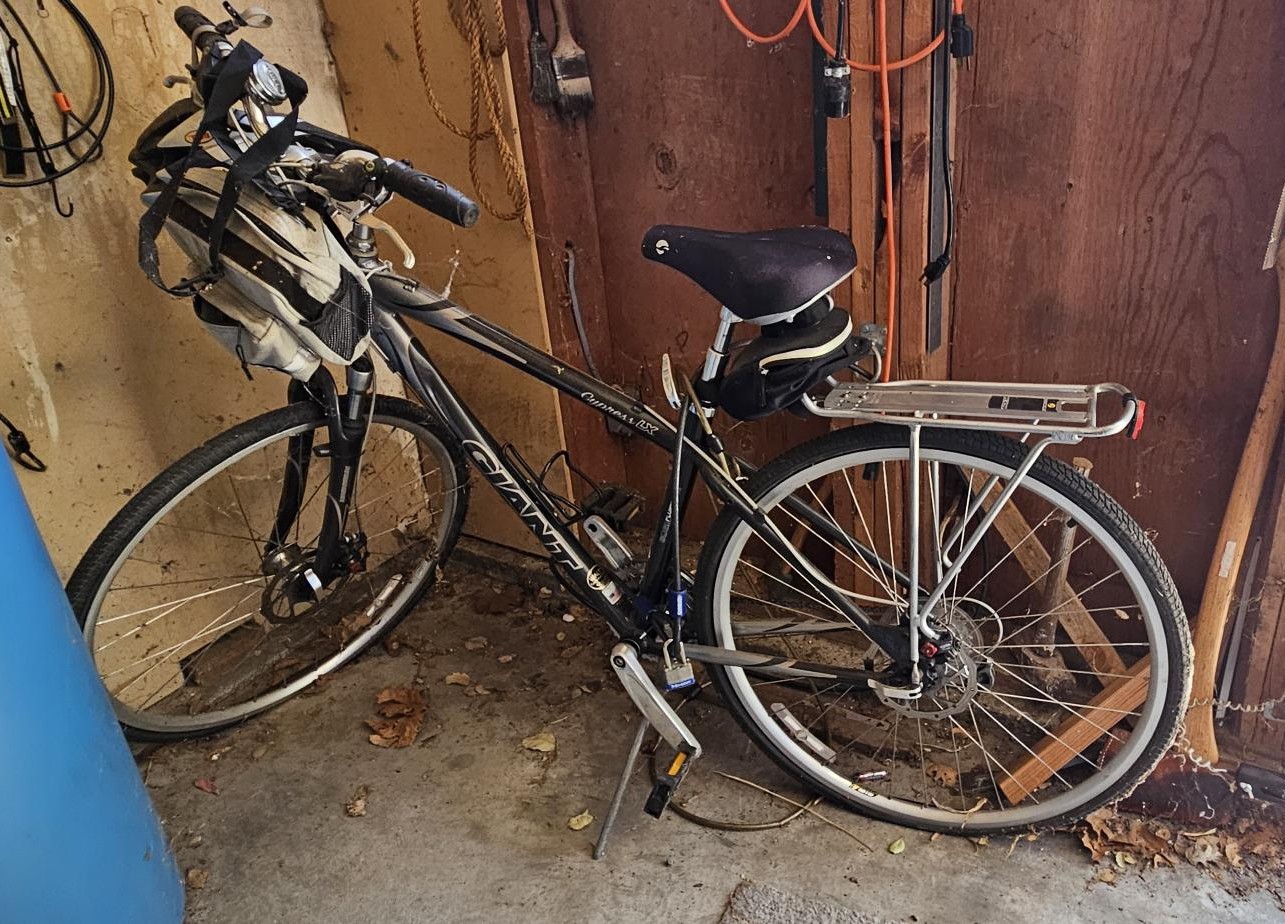
I braked and with some difficulty managed to get my leg over the crossbar without falling over.  I trundled my bike into the garage and parked it next to my husband’s bike. which was covered in cobwebs. His tires were so flat the wheel rims touched the ground. I stood looking at it for a few moments.

Then I locked my bike up as usual, went into the house, and emailed the local Bicycle Exchange.  I have two bikes to donate.  Within two days the bicycles and all associated accessories were gone.

 I know this was a good decision.  I have several friends who have been injured severely when their bikes slipped out from under them.  But I miss the freedom of riding my bike.  I miss being able to stop and inspect changes in my neighbor’s gardens, to take short cuts through suburban bikeways, to not worry about parking. I’m envious of the people who are trying out the newly painted bike lanes on El Camino and El Monte.  It’s no fun driving to my hairdresser.  On Saturday morning my husband goes for the bagels now.

There’s an empty space in our garage.  I expect it will gradually fill up with the things that go into garages. I hope the empty spaces in my mind will fill up too.

Freeway Free in Columbia SC: Outdoors in SC

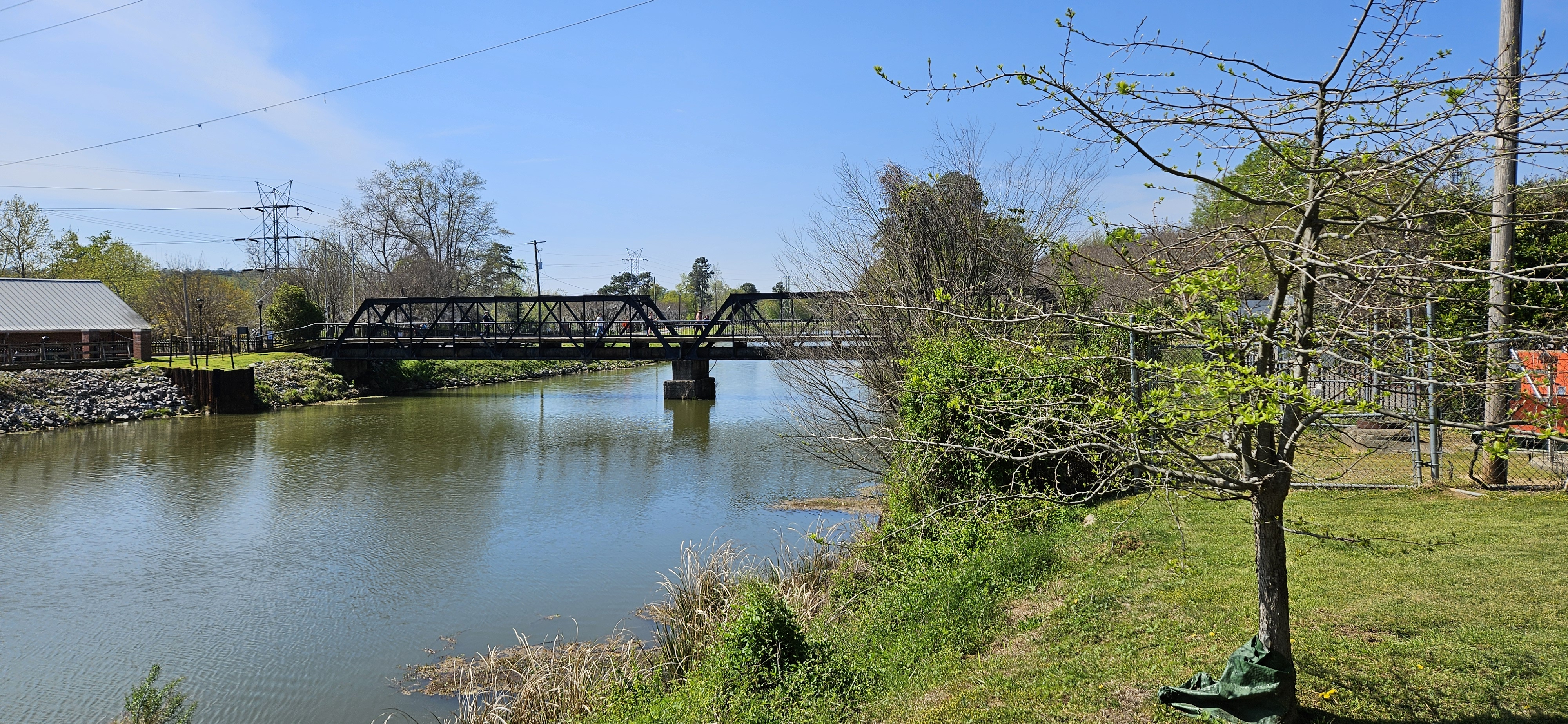
Outdoors in South Carolina is a lot different from outdoors in Northern California, where I spend most of my time. SC is green, the air is moist, there is water, and there is history. Columbia’s Riverbank Walkway is a wonderful illustration of the difference, with its effortlessly un-irrigated green spaces, its leisurely meanderings along the Columbia Canal, and its unexpected evocation of the workers who built the canal.

We parked at the Laurel Street entrance, just late enough to avoid a major fun run which had been organized for the morning – volunteers were folding tables and taking down canopies, but they cheerfully directed us down the pathway to the canal.

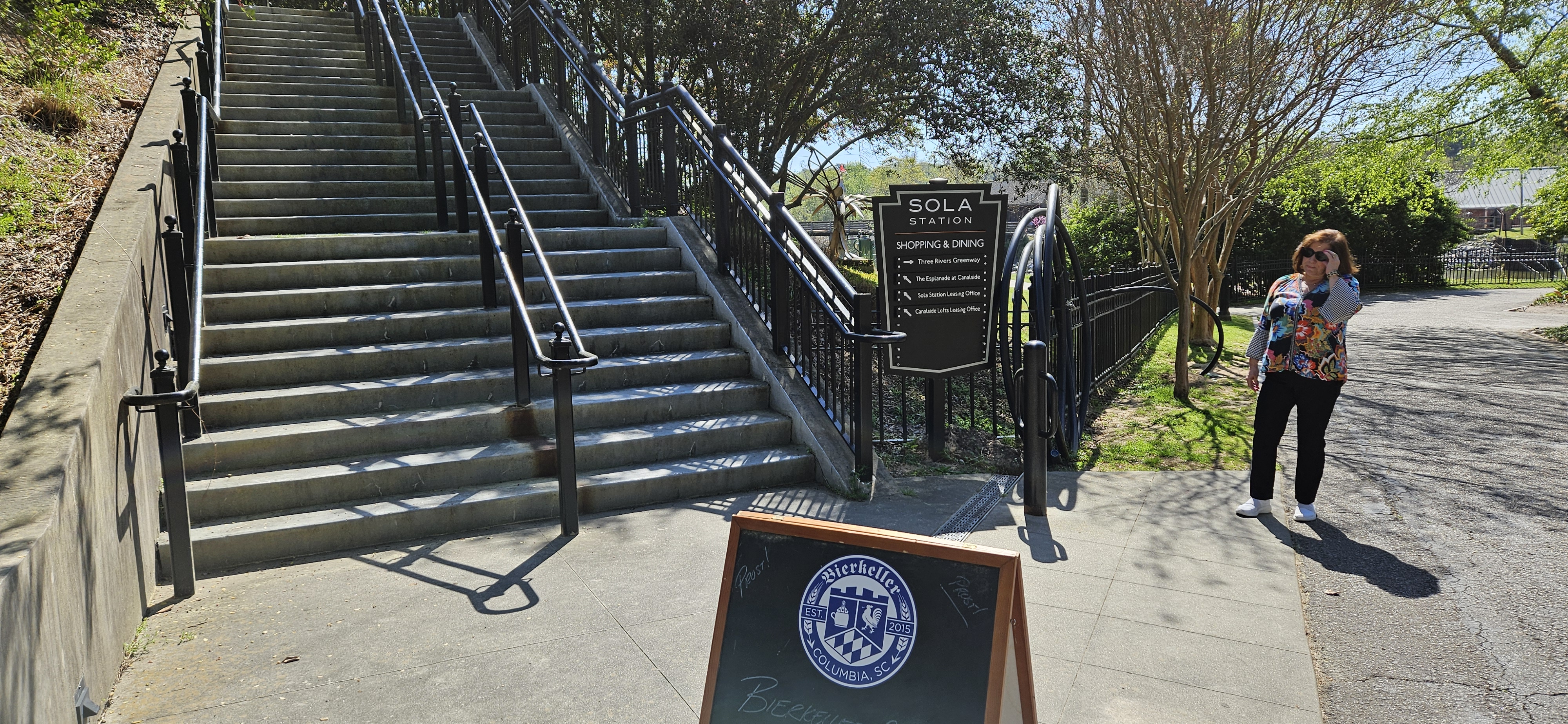
On the way we pass a steep stairway leading upward. Signs let us know that there is a restaurant above, probably with a fine view of the canal and the river beyond. We resist the temptation.

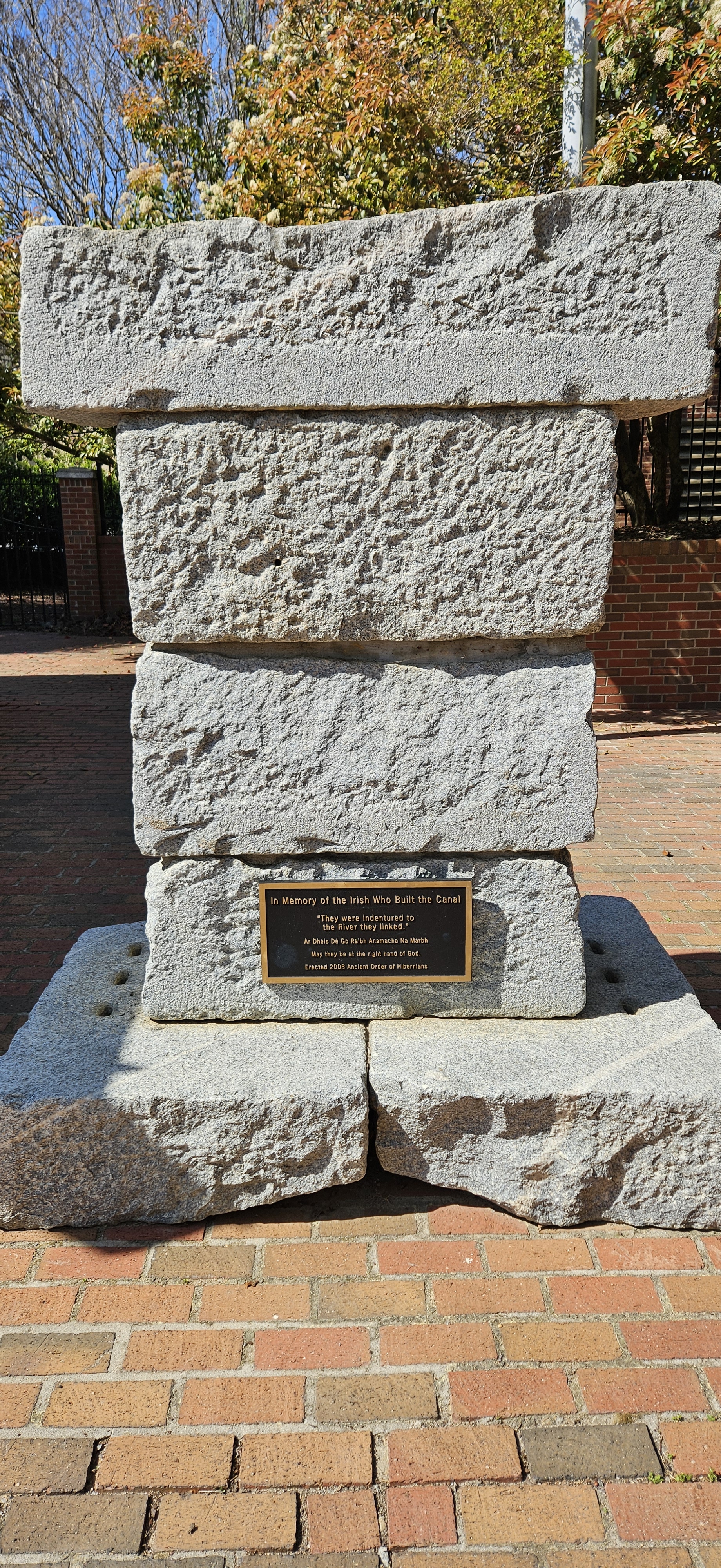
Further down we spot a building off to the side, which turns out to be the former operating station for the canal. Facing the building is a monument to the Irish worker who helped build the canal. I remember that at the time of the canal’s building there were probably signs in downtown Columbia reading “Help Wanted: No Irish Need Apply”, and felt pleased that this maligned immigrant group was receiving recognition.

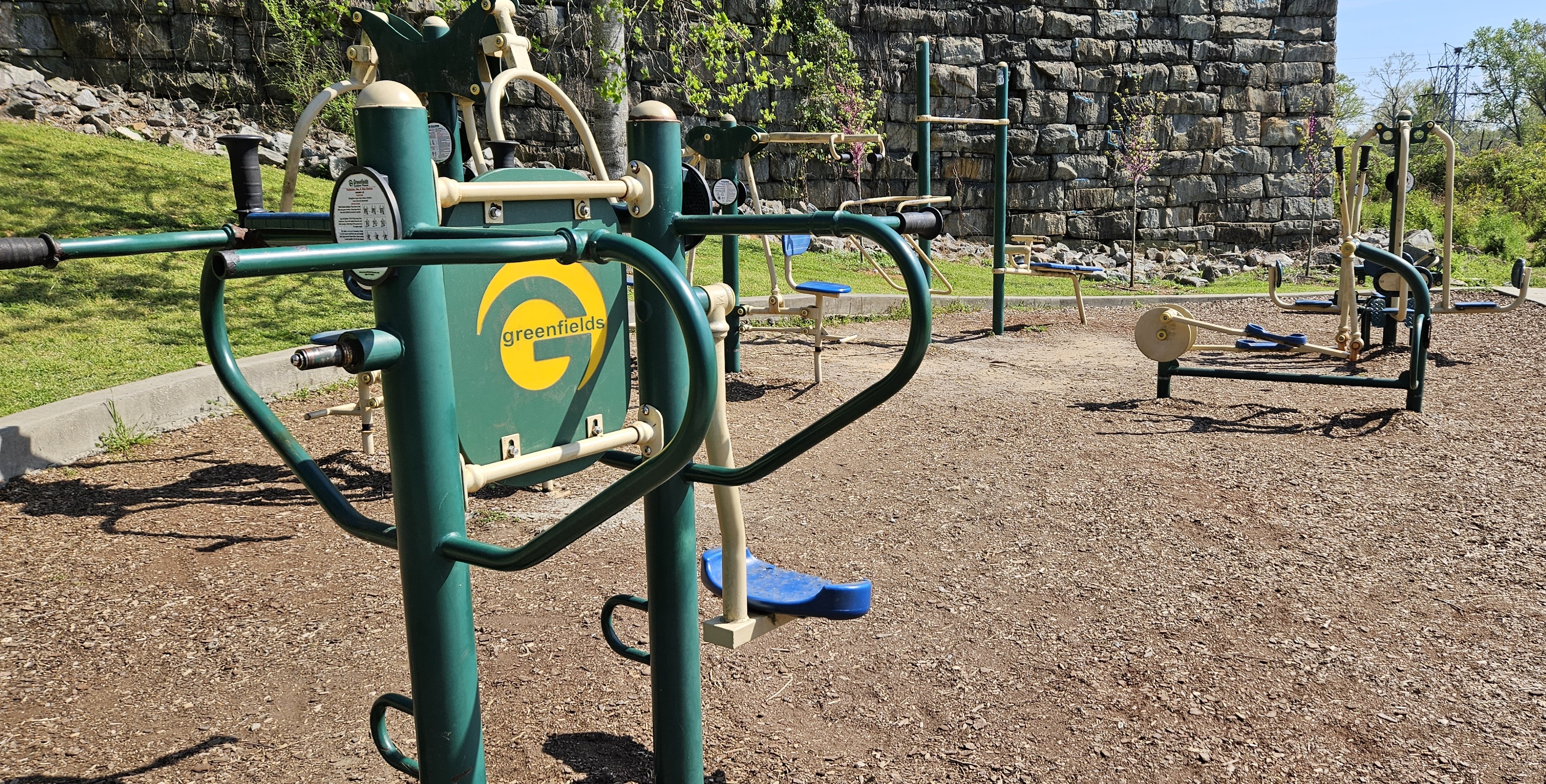
At the bottom of the trail is a playground for children who have not worked off enough steam on the walk down. No, wait; it’s not for children, it’s a workout center for adults who have not worked off enough steam after jogging the four-mile river trail. Whichever – it’s a beautiful location.

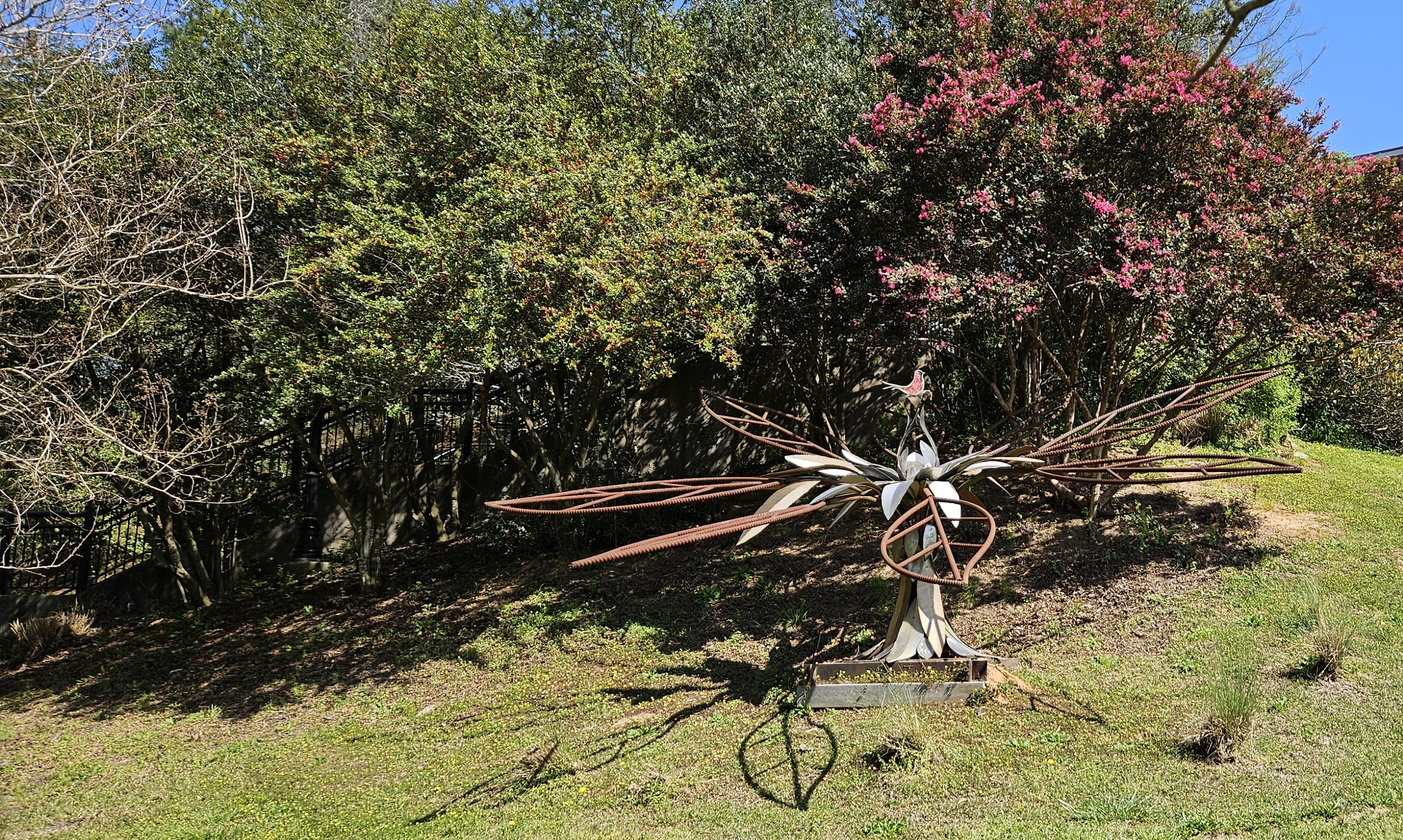
As we turned to go back up the slope to the parking lot (not feeling up to a four-mile jog on this particular day) we spotted this whimsical artwork just up from the workout center/playground. It’s a testament to a light-hearted spirit that we felt throughout our visit to Columbia.

Exploring Columbia SC – Eating Around

There’s a lot more to Columbia than the stretch from the Capitol down Main Street to the museum and library. For one thing, it is the home of the University of South Carolina, whose lovely campus is located on the other side of the Capitol from those attractions. The presence of a university almost guarantees a range of good cheap restaurants for feeding starving students escaping dorm food. We tried a couple:

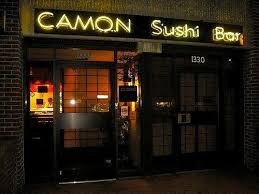
Camon Japanese Restaurant and Sushi Bar on Assembly Street near the campus has Japanese sliding screens, woodcut prints, and unexpectedly excellent sushi. It was empty when we entered at 6PM, and when we ordered an Asahi beer and were told there was no liquor license, we thought we knew why. But by the time we left, well satisfied with our edamame, unagi roll and pork tonkatsu, the place was nearly full of local adults as well as students who were probably underage anyway.

Another night we went further down Main to the Green Olive, its inauspiciously plain exterior surrounded by cracked parking lots and state office buildings. But the interior was much more promising, with a number of comfortable booths and tables testifying to a significant number of expected customers. The server looked exotic enough to be Turkish, but when I asked she giggled and said “No, I’m half Chinese and half Peruvian.”

The presentation of the food made no attempt at artistic plating or frou-frou snips of parsely or fennel. The flavor though was delicious and the amount generous. Again, as we ate the booths began to fill with a diverse population of older adults as well as flannel-shirted twenty-somethings.

Our most successful lunch was at a deli near our hotel downtown. I didn’t expect much from the East Bay Deli, one of five locations in Columbia for a chain that originated up in Charlotte. We went there because it was close to our hotel, we were hungry, and we were with my in-laws and needed a place with a diverse enough menu to satisfy each of our tastes. And it was good. Just plain good. Good bread. Good meat. Real lettuce, not ribby romaine. Crispy fries. Enough food that my in-laws split a sandwich between them.

You won’t starve for lack of good food in Columbia

A Piece of My Mind: One Strike and You’re Out

A young friend of mine, after serving as a poorly paid intern/underling for several years, was finally offered his dream job, with a nice title and a decent salary and even some side benefits. He told his partner and they began to dream about upgrading their housing, maybe doing a bit of traveling, paying off some debts.

And then he failed the drug test. If you contract with or receive grants from the state of California, California’s Drug-free Workplace Act of 1990 requires you to certify that you provide a drug-free workplace. The Dream Job was partially funded by the state.

Studies from the American Psychiatric Association suggest that 5% to 10% of all drug tests may result in false positives and 10% to 15% may yield false negatives. The APA recommends that before submitting to a drug test you should confirm with the lab you visit that a second, confirmatory test will be performed on any positive drug test that may occur. “When initial screening drugs tests (called immunoassays) result in positive results, a second confirmatory (Gas Chromatography Mass Spectrometry or GC-MS) test should always be done.”

My young friend, confident that he had no problem, did not do this.

And  the organization for which the tests were being given had not contracted for retakes, so none were allowed.

Why he failed – he is not and never has been a drug user, but he grabbed one of his partner’s favorite poppy-seed bagels for breakfast as he was heading out the door that morning. 

I fancy I can hear my readers groaning “Yeah, right!” in disbelief.  But multiple reputable websites (including the National Institute of Health) note the possibility of a false positive result on a drug test because of the trace opiates in poppy seeds.  I believe my young friend, not least because of his partner’s tearful regret for her ill-fated preference.

If you were planning on crossing Death Valley in the summer, and your car had a 5-10% chance of dying on the way, would you make the trip? Would you trust its maintenance to a mechanic whose work had a 10-15% chance of failing?

If you had optional surgery scheduled, and you had a 5-10% chance of being paralyzed afterward, would you go ahead? What if there was a 10-15% chance you didn’t really need the surgery?

My young friend had no choice but to take the test, despite the odds. The drug test is required, though a 5-10% chance of a false positive result plus a 10-15% chance of  a false negative result means the test is only accurate 75-85% of the time.

What can my young friend do?  Jobs in his specialty are few;  the chances of a similar opportunity arising are probably less than the chance of a false positive which cost him this one.  The Dream Job is being advertised again, and candidates are being interviewed.

“I’ll have to find some kind of job to pay the bills,” he says.  “But I may never have another chance as good, no matter how many poppyseed bagels I don’t eat.”

Proof of the absolute Disneyfication of the world

I was asking my 8-year-old granddaughter if she ever skipped rope at recess with two other girls holding the rope.

“Nope. How would you do that?”

“The two girls twirl the rope, and you have to run in and start jumping, and you say a skip-rope rhyme and see how many jumps you can get.”

“Like, what’s a skip-rope rhyme?”

” Well, for example : ‘Cinderella, dressed in yella, came downstairs to meet her fella. How many kisses did he get? One, two, three… as many skips as you can”

“Oh, Grandma, that’s too silly. That can’t be right. Cinderella NEVER dresses in yellow! Cinderella’s dress is always blue!”

Word Gets Around

I was attending a Women’s Camp on the west side of the Rockies in Colorado. My sister-in-law was at the camp also, along with one of her besties. One evening one of the other campers (DH) drove me and my friend DB to dinner and a theatre in Grand Lake, while my SIL and her friend spent the day touring nearby Rocky Mountain National Park.

Dinner was lively, with sixteen campers chattering away, and afterward we hurried to get to the theatre as it was beginning to rain. I pulled out my phone to check the location of the theatre, and when we parked I hurried around to help DB extricate herself from the seat belt. Only after we were in the theatre and I reached to put my phone on silent mode did I realize that it was not in my purse where it belonged.

Had it fallen out in the car? Or in the parking lot where we had stopped? I rushed from the theatre – the car was locked, and there was no sign of my phone anywhere along the walkway to the theatre. I figured that best case, when the show was over I could ask DH to call my number; if the phone was in the car we would hear it, and if someone had picked it up maybe they might answer a call.

After the show I relayed my plan to DH, and she pulled out her phone. First thing she saw was an urgent message from my SIL: “Allyson’s lost phone was picked up by an Australian man named Barney. He and his friends are at the One Love Rum Kitchen and Bar for trivia night. If Allyson doesn’t get the message he will leave the phone with the bartender.”

Great! DH and I left DB to guard the car and hustled along to the One Love Rum Kitchen. We walked into the lively, well-lit pub and immediately a gentleman was waving my phone in our direction. ( Barney could not have looked more Australian if he had been sent from Central Casting.) Lots of excitement, thanks, hugs, and my phone was restored to me in perfect order (Nancy and Barney at left above). But how had the message reached DH’s phone?

Chain of circumstances:

  1. I had not gotten around to putting a password to secure access to the phone. (Shame on me, but…)
  2. When Barney and his friend Nancy opened the phone, they were able to see that I had recently called HOME.
  3. But when Nancy called HOME, she caught my husband drowsing over a book. He did not understand what Nancy was saying and, thinking it was a prank call, hung up on her.
  4. Undaunted, they went to the next call on the recent list, my younger brother C, who was trailer camping in Wyoming, but happily with decent Internet coverage.
  5. C got the message, and fortunately remembered that our mutual SIL was in Colorado at the camp with me. But he didn’t have her phone number.
  6. So C called my older brother D in Texas, who relayed the message to his wife, whose roommate happened to have the cell phone number for DH, who relayed it to me.

Happy Ending! thanks to the miracle of modern communication, and as always, thanks to the kindness of strangers.

Freeway Free in France: Following the Unsteady Footprints of van Gogh

Arles, of course, was one of the stops Vincent van Gogh made while searching for sanity and artistic fulfillment in Provence. After the dark murk of the Netherlands, the bright colors and warm weather seemed to galvanize his artistic expression, but unfortunately did little to stabilize his mercurial mood swings.

Arles was van Gogh’s home for eighteen months, and some of his best-known paintings were executed during that period. Modern Arles has seized on van Gogh’s posthumous popularity by providing posters marking the sites as above.

In Arles, van Gogh lived for a time with Paul Gauguin in the Yellow House which appears in several paintings. This house no longer exists. However, the hospital to which he was committed after he cut off his ear in an alcohol-enhanced rage still exists, its courtyard now filled with post cards, posters, t-shirts, and other memorabilia of the artist’s stay.

Just a block or so away is the cafe where van Gogh and Gauguin hung out. At the time, the cafe was painted a modest beige with brown trim, but that’s not the way van Gogh saw it or painted it. Surprise! the restaurant is now bright yellow with blue trim and yellow awnings, just as van Gogh saw it.

Outside the center of town is Alyscamp, a park centered on an avenue of trees leading to a Romanesque chapel. The trees cannot be painted to match van Gogh’s vision, but it is interesting to compare that vision with reality. in a mental hospital. The park is green and peaceful, with romantic ruins and vistas. The interior of the chapel includes a pool filling the lower lever -not clear whether this is intentional or an accident of age.

As van Gogh’s mental instability grew, Gauguin moved out, and van Gogh’s brother Theo enabled him to relocate to a mental hospital in St. Remy, which still exists.  Reading the lists of treatments to which mental patients were subjected at this time is like reading of the Spanish Inquisition. The patients were confined in ice cold baths, bound, beaten, and burned, all with the idea of driving out the devils which had taken over their thoughts and actions.

Part of the hospital is still used as an asylum, but one can still see van Gogh’s bedroom and the tubs used for the ice cold baths to reduce his choleric humors.

But outside, one can still see the orchard which inspired his painting, and iris are still blooming in the garden.

Later van Gogh was released from the hospital at St. Remy, and went to stay at Auvers, where he pained perhaps his best-known work “The Starry Night.” He died two days after suffering a gunshot wound. There is controversy about whether the wound was self-inflicted or whether it was the result of an accidental shooting by a group of teenagers who alternately patronized and teased van Gogh.

The leader of the group was the son of the local pharmacist, who owned the only gun in town. The son was prone to dress up in cowboy garb after seeing the Buffalo Bill Wild West show in Paris, and left town abruptly the evening that van Gogh appeared with his gunshot wound. Of course, this theory is not as attractive as the image of the tormented artist driven to suicide by a lack of appreciation, as Don McClain’s “Starry Starry Night” would have it.

Post Navigation