Allyson Johnson

Pieces of my Mind

Archive for the category “hidden treasures”

Freeway Free in Texas: Georgetown Underground

What do you do on a cold damp day in Georgetown, Texas? Go to a warm damp cave.

Inner Space Cavern is an attraction just outside of Georgetown, discovered back in 1963 when the road smiths were drilling for the supports of the I-35 highway overpass. I tried to imagine the reaction of the road crew when, after drilling through forty feet of limestone, the drill suddenly dropped another thirty feet unimpeded. I also tried to imagine the courage of the drill operator who rode the drill bit down a two-foot-wide shaft into the darkness below, not knowing what might greet him.

What greeted him was a pile of fossilized bat guano, and a spacious room sparkling with salt-encrusted stalagtites and stalagmites. The highway crews decided that thirty feet of granite was deep enough to anchor the pillars supporting the overpass, and the building of Interstate 35 proceeded according to precedent.

There was no obvious entrance to the cavern. The bats had gotten in through a sinkhole that had since filled itself in. But word of the underground palace got out, and within three years an access was created and the cavern was open to the public.

Inner Space Cavern now attracts thousands of visitors annually, and if your youngsters chafe at waiting for your alloted tour time (backlog can be over two hours on a busy weekend), outdoor activities include a small playground, picnic tables, some exotic animals to watch and a zip line.

On last Saturday of spring Break, a whole bunch of other people had the same idea as we did. We bought tickets for the 4:20 tour at 2pm, watched our token teenager shivering on the Sabre tooth zip line (Brrrr! it was a cold March day!), went back to the house for snacks and an hour of March Madness, and then returned to the cavern for a one mile, one and a half hour tour. “There are thirty feet of solid rock above us” assured the guide. Bats had returned to the cavern as soon as it became accessible, and they are treated as an added attraction, with postcards available in the gift shop of and a video extolling the virtues of bats running non-stop in the waiting lobby.

“Don’t worry,” said the guide. “The bats are asleep and probably won’t poop on you.”

======

If you show up in the morning and are faced with a two hour delay before your tour is called, you could do worse than go for brunch or lunch at BiG (Brookwood in Georgetown) a restaurant/gift shop staffed by “adults with special needs” who cook deliciously and craft lovely items for sale in the adjacent gift shop. The website does not show the brunch menu, but I can vouch for the avocado toast with fruit cup, and my friend’s spinach/mushroom quiche also looked seductive.

Freeway Free in California: Tiny Town, Gourmet Mecca

Princeton-by-the-Sea (sometimes, especially locally, called Princeton) is an unincorporated community on the coast of San Mateo County, California. As of 2000, the population of the community is 297. So how does this tiny community manage to support at least three very classy restaurants with a total seating capacity of at least 400?

Old-time California coasters know Princeton mostly for its excellent boat harbor, and for the annual surfing competition Mavericks, which actually takes place in Princeton, although it is usually attributed to neighboring Half Moon Bay. But the same turnoff which leads to the Mavericks overlook also leads to a cluster of destination restaurants, each with its own atmosphere and specialty.

Oldest of the group is Barbara’s Fish Trap, which began in 1971 as a little shack by the side of the road serving fish and chips to the folks moored in the harbor. Over the years the Fish Trap has expanded, added a neon fish sign over the take-out window, picnic tables, an awning and sheltered outdoor seating, and some inside seating, but the fish and chips are still the same and still attracting a line of people waiting for their orders which is visible just about any time you pass by.

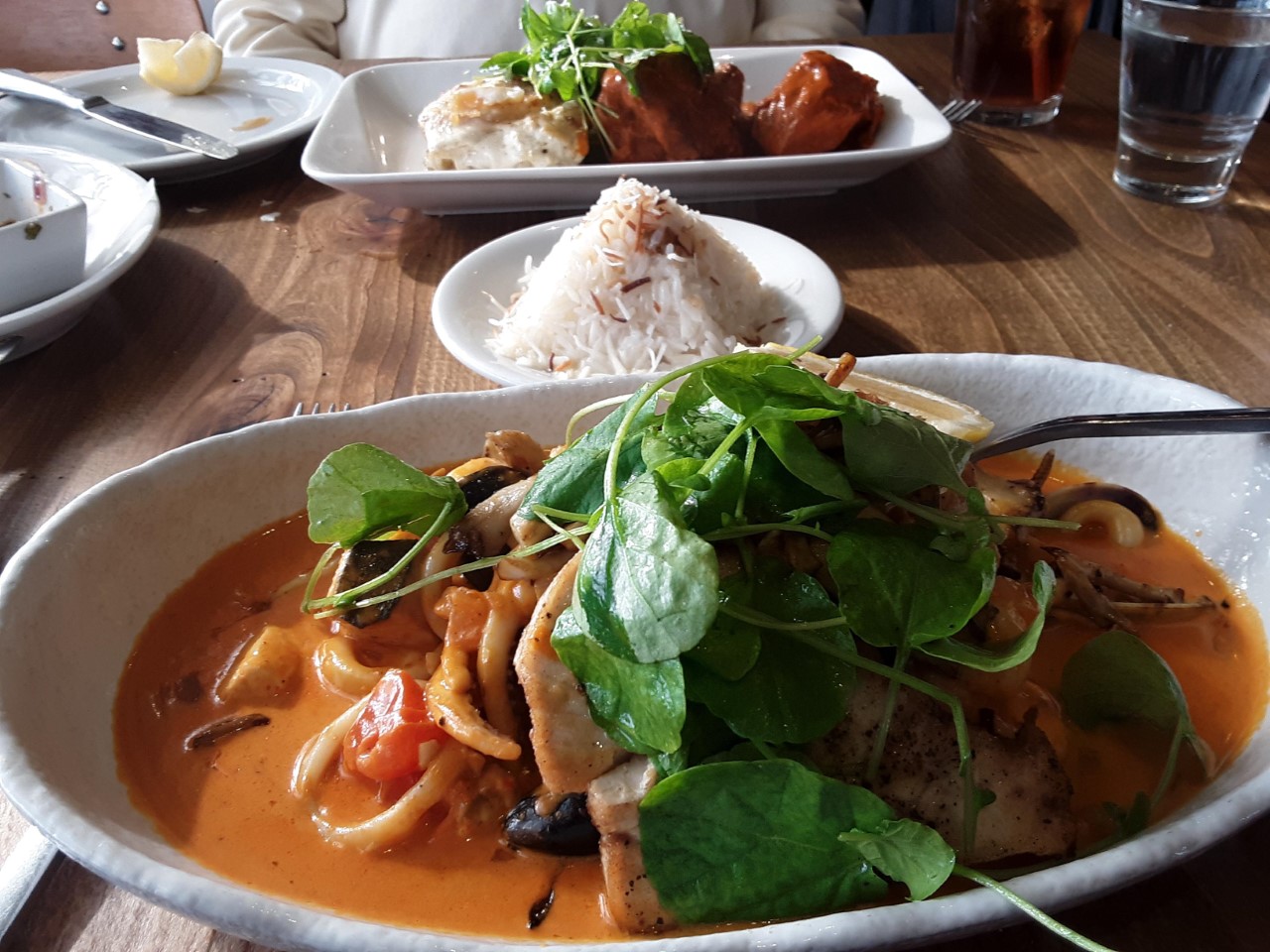
Mezza Luna, at the far end of the harbor, was opened in 1993 per their website but looks older. It has the feel of an Italian family restaurant that has been at the harbor for generations, and their house-made fettucini is to die for, especially served with the fresh clams or shrimp and cream sauce that is a standard. This is a white-tablecloth restaurant with an extensive wine list (and generous pours). The service is attentive but not oppressive, and if you want your entree with a side of fettuccine, they are happy to oblige.
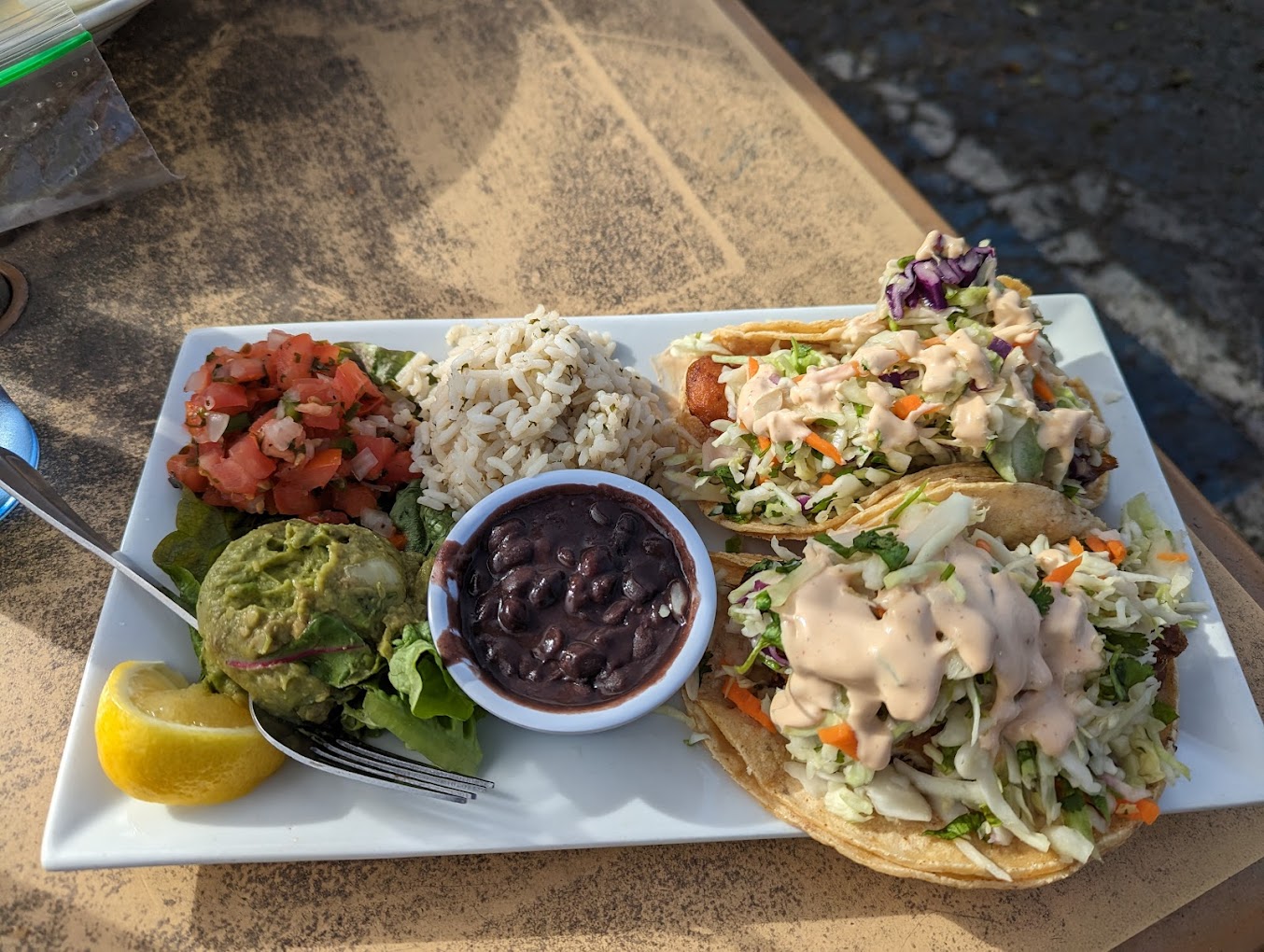
Just across the road from Barbara’s Fish Trap is the Half Moon Bay Brewing Company, a more casual restaurant as you might expect, with dog-friendly outdoor seating as well as comfortable indoor tables, both with views of the harbor. Their list of craft beers is extensive, but what keeps me coming back is their fish tacos, served baja-style with shredded cabbage, and sides of black beans, salsa, and delicious guacamole. The standard plate has three tacos, but the smaller serving of two is ample for any but the largest appetite.

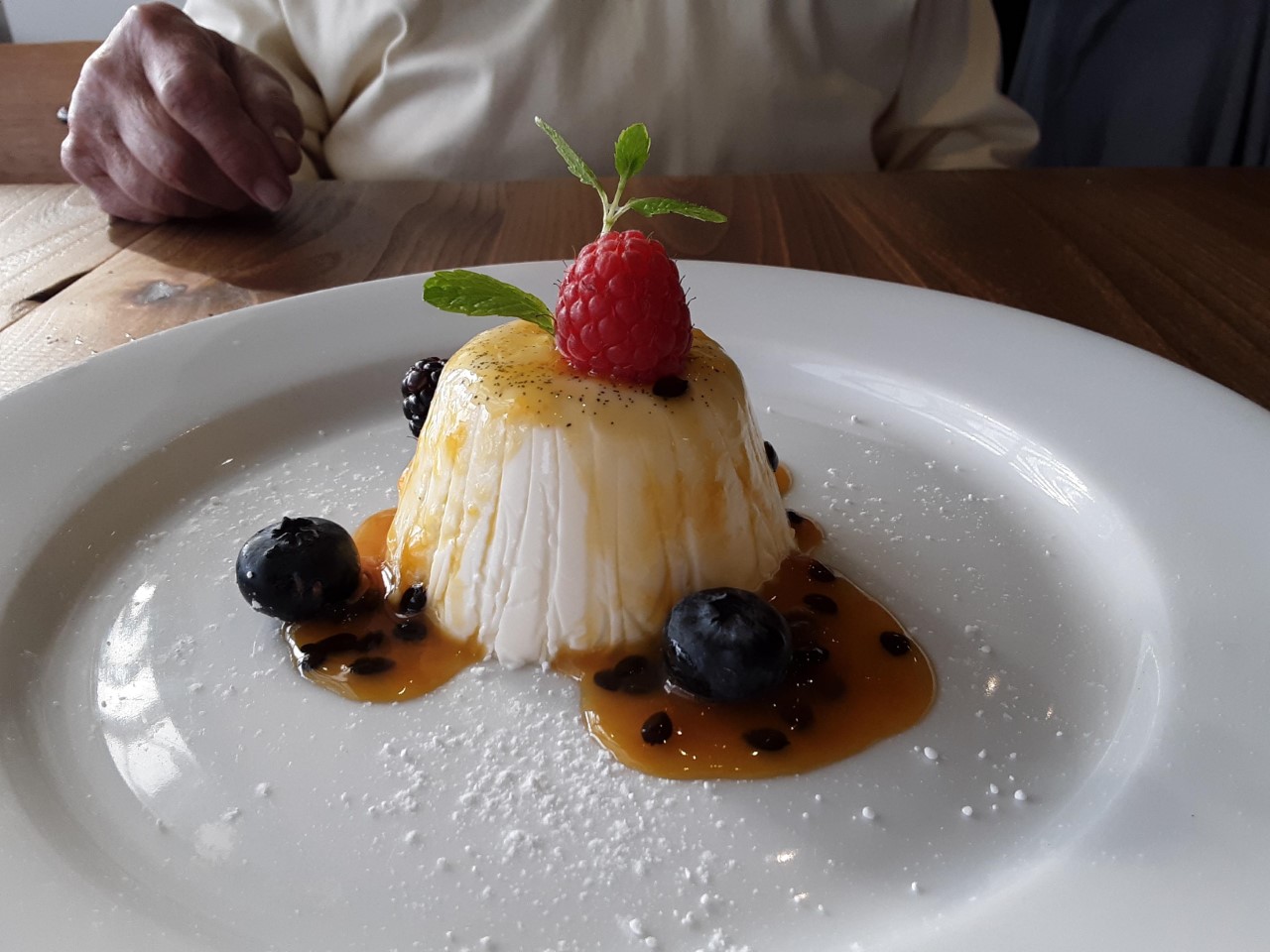
As you make the turn to Pillar Point Harbor, it’s hard not to notice the large newish buildings on the right. This development includes a hotel, and a small shopping center, but the anchor tenant is La Costanera, a large and lovely Peruvian restaurant boasting a celebrity chef, a Michelin star, two stories of beautifully appointed seating areas, and food which is flat out wonderful. It’s the priciest of the choices, but oh my, what a marvelous setting and with food and service to match. We asked our waiter about the desserts, and he steered us away from our first choice, the Suspira a la Limena “unless you have a really sweet tooth.” The Vanilla Bean Panicotta which we shared instead was the perfect end to a superlative meal.

There are a couple of small restaurants on the same short road which we haven’t tried yet. My question, though, is: these restaurants have a combined seating capacity of at least 300, not including outdoor seating. How do they stay alive? The answer, of course, is that they are very very good. So do your part to keep them going – you won’t be sorry you turned off Highway 1 onto Capistrano Road, no matter which one you choose.

Freeway Free in California: Ocean to Forest to Vineyards – What’s not to like?

We wake from untroubled sleep to fog outside and a healthy breakfast of fruit and granola as a sendoff. We dress lightly in spite of the fog, as we know summer heat is just on the other edge of the fog bank. Bits of sun are already breaking through as we pass Arcata and Ferndale without stopping for the Victorian delights available there.

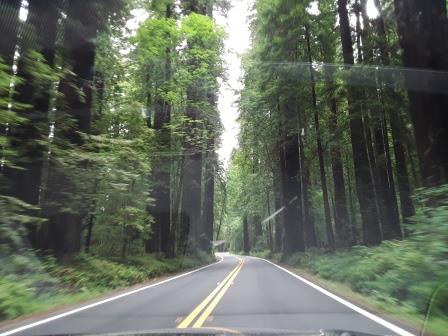
But now we are truly in Redwood Country, and we can’t resist the Avenue of the Giants, so we take the side road off the freeway through the green canyons of Humboldt Redwoods State Park. We do stop to switch drivers and use a restroom at the Eternal Tree House. (Yes, it’s a cheesy roadside attraction, but the setting is beautiful, the cafe is hospitable, and the restrooms are clean.)

No signs anymore commemorating the great flood of 1964, and there is no trace of the town of Weott anymore, though Google says remnants still exist high above the flood plain.

And then we emerge into sunlight and suddenly the outside temperature is in the 90’s.  Our Redwood RV Resort is right next to Hwy 20, a fairly busy e/w corridor from Willits to Ft. Bragg, but it has shady valley oaks and redwoods, a pool, a splash park, a trail through adjacent vineyards, and lots of Hispanic families and American flags.  We back successfully into our gravel pad (four tries to get close enough but not too close to the picnic table), change to airy cotton frocks, lay out late lunch/early appetizers of hummus and veggies and Ritz crackers on a little table at the splash park, and watch the children playing int the water. It’s 90 degrees in the sun, but we are not in the sun, and we are feeling very relaxed.

Freeway-Free down the Left Coast

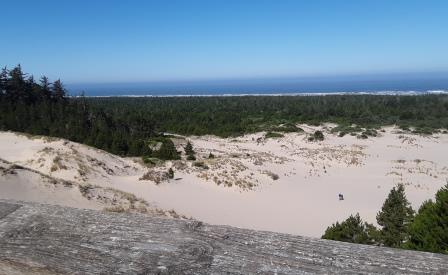
For the next two days we amble our way down the Left Coast, hugging the coastline, stopping once in a while to admire the sweeping surfline, the white sand dunes, the rock stacks, the redwoods. We spend a night near Florence at Honeyman State Park, one of the largest campgrounds in Oregon, we are told, but still offering fairly secluded hookups for our trailer and, I suppose, a hundred others.

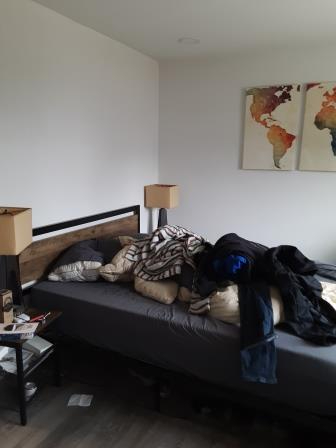
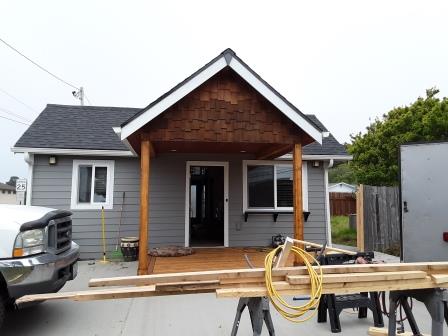
We stop at Bandon to visit our nephew J, who is living a bachelor life in a fixer -upper in the charming seaside town of Bandon. When he has finished the re-hab, he will rent the cottage out as an AirB&B. On the day we visit it is still missing a fence, kitchen counters and appliances, but he assures us that his first renter will find it habitable when he arrives the following week. We can see what a nice seaside pied a terre it isgoing to be – but not quite yet.

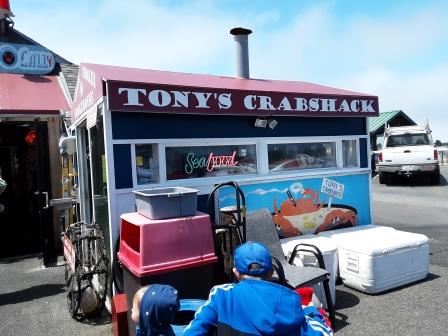
J breaks for lunch and takes us for seafood sandwiches at Tony’s Crab Shack, and gives us a brief tour of Bandon’s interesting spots. That orange globe in front of the house facing the ocean? It’s a tsunami escape pod.

We continue down the coast, crossing into California, where the highway swings inland to introduce us to the towering trees of the Redwood Empire. More on this next week!

Freeway-Free in Oregon: Beach Town

Our next day was spent in Astoria and Ft. Stephens, and I have written about Astoria and its wonderful Maritime Museum in an earlier blog. The following day M and I set off early, determined to cruise the Oregon coast quickly, pay a call on our nephew in Bandon halfway down, and make it to our campsite in the redwoods across the California border in good time.

But we were derailed en route by a sign for Mo’s Seafood and Chowder, and M’s memories of her student days in Corvallis when a bowl of Mo’s chowder was the high point of a weekend. There was a branch of Mo’s in Seaside. So we stopped.

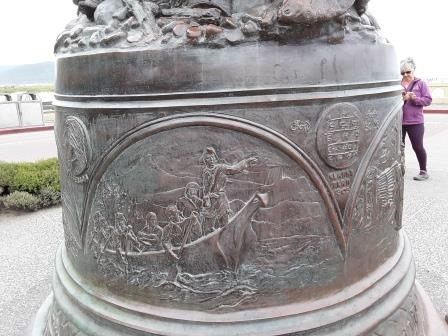
Seaside is also a claimant to being a final stop on the Lewis and Clark trail. Certainly their statue to the adventurous explorers is the most elaborate we had seen, with bas-reliefs around the base and a commanding view of the Pacific at the end of Seaside’s main street.

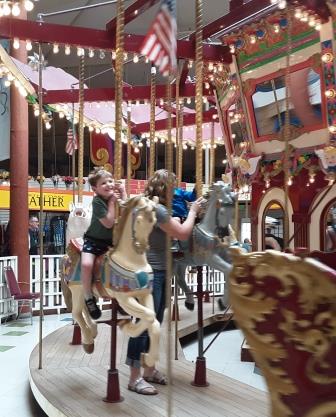
It was a gray, foggy noontide, but as we walked to and from the car we spotted some enduring signs of the beach party culture that would animate Seaside on a sunnier day, and since the bumpercars, the tilt-a-whirl, and the carousel ware all indoors as a concession to Oregon’s variable weather, why not buy a bug-eyed beach toy to invite the sun to play?

Freeway Free in Washington: Camping by the Cowlitz

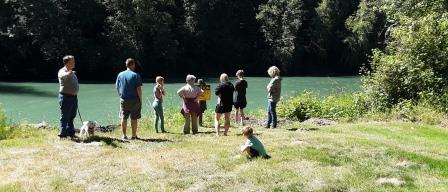
Off to Cowlitz Falls County Park.  This park is maintained on behalf of the public by the Lewis County Public Utilities District. There are actually no falls here, as the river has been dammed for hydroelectric power, and the only access to the river, the boat ramp, was destroyed in a flood and is being repaired. Aside from the misleading name, this is a lovely quiet place with lot of shade, lots of woodsy trails between sites and restrooms, a sunny meadow with a volleyball net, a horseshoe pit (equipment for both available from the ranger) and a playground.

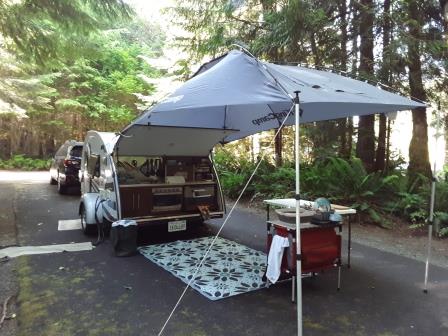
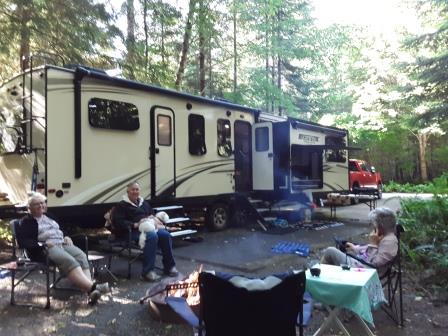
We set up in adjoining camp spaces, our tiny teardrop next to C&C’s Trailer Mahal. Instant conversation starters with folks strolling through the camp.

Then, just to make sure we meet everyone, we walk the dog, an adorable little white mop of a thing. Nothing like a cute dog to make instant friends along the trail.

The next morning we are just finishing a tremendous breakfast of eggs, bacon, toast (Thanks to C&C’s full kitchen) when our nephew P arrives with his wife T and five lively children. 

Fortunately Cowlitz [no]Falls has lots of distractions to offer. A walk to the river.  Fallen trees to climb. Back at the camp, Grandma C has provided plenty of hot dogs, sodas, chips, and watermelon, while Auntie M has a box of trailer games. Five-year-old G is surprisingly deft at removing blocks from the Zenga tower!

I’d forgotten how exhausting family gatherings can be for us empty nesters. M and I tumble into our trailer while C&C are still admiring the moon over a last glass of wine.

Hidden Gems: Ruth Bancroft’s Cactus Garden

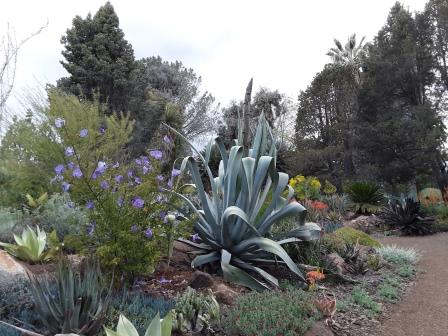
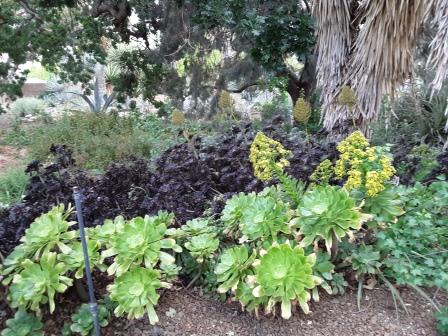
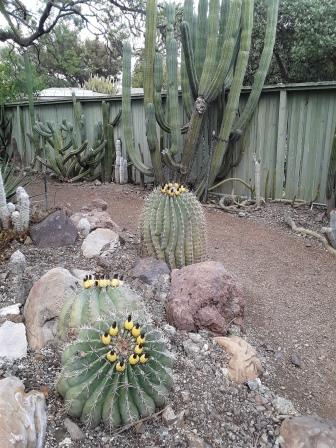
Ruth Bancroft’s legacy garden in Walnut Creek, California is a small plot of land full of wonders. Ruth Bancroft’s family had a farm in Walnut Creek; she was attracted to a rosette-shaped succulent, and this grew into a fascination with succulents, cacti, and numerous other drought – tolerant plants. The result is a fantasy garden of growing greenery, some of which looks as though it originated on another planet.

Despite years in the general area, and having heard about the Ruth Bancroft Garden, it took a family wedding to draw me there. Now I’m eager to go again with visiting friends.

It’s spring, folks! You’re going to see some gardens!

Freeway Free in California: Iris Chang Park, San Jose

I spent Earth Day with friends, making a rather neglected park more beautiful by pulling weeds and trimming invasive plants. I hadn’t planned on doing anything to mark the day, but my friend Tao invited me to join her and her partner in a work project sponsored by the Chinese Historical and Cultural Project of San Jose.

The location was Iris Chang Park, shoehorned between a huge apartment block and culverted Coyote Creek. It was established to honor Iris Chang, the brilliant young author of “The Rape of Nanjing” and other histories of the Chinese experience, which opened to much community fanfare in November of 2020. But during the lockdown months care and maintenance fell behind, and the nettles and dandelions had grown almost as tall and profuse as the native grasses originally designed for the landscape.

The park offers a simple strolling path past a cenotaph telling about Iris Chang, a large circular sculpture evoking traditional Chinese artifacts, and several markers and low walls with quotes from Chang’s work. In April, irises planted by Chang’s parents were in bloom in several beds.

So we set to work. A couple of hours later, with a dozen people busy, we had accumulated quite a collection of refuse bags, and the park is ready for its closeup – a May 1 event to mark the anniversary of Chang’s death. Stop by if you are in the neighborhood!

Freeway Free in Texas: Another Houston Civic Garden

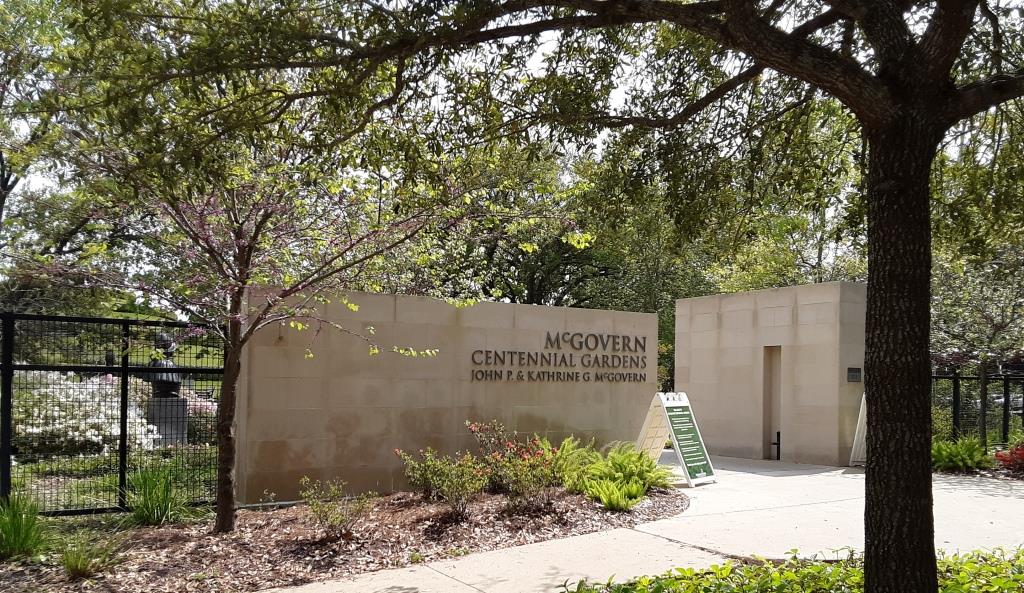
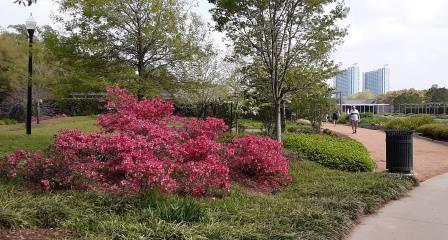
The time to visit the McGovern Centennial Gardens in Houston is definitely in April, when the magnificent azaleas are in bloom.

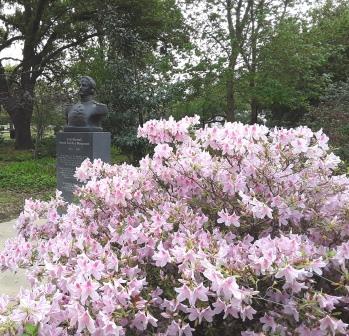
The entrance to the garden opens to a walkway lined on either side with bronze busts of notables, framed by (on my visit) luxuriant azaleas. It’s a bit difficult to figure out how the notables were picked. Texas historical figures such as explorer Cabeza de Vaca or Sam Houston are expected, but why the president of Chile? and why Robert Burns?

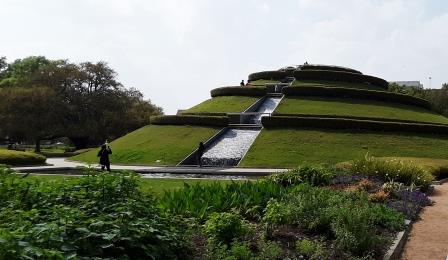
The centerpiece of the garden is a tumulus with a pathway spiraling upward to give you a view of the whole garden as well as the Houston skyline rising beyond. There is no marker to tell you who might be buried beneath this ceremonial mound, but it is precisely reminiscent of burial mounds in China, along the Mississippi, and in Britain.

The pathway is lined with shrubbery and ivy-covered walls. It seems to be a desirable habitat for lizards: I spotted six skittering away from me on my way up, in different shades of yellow, gold, and red. (California lizards are so dull and dirt-colored.) A fountain at the top of the tumulus sends water down a pebble -lined incline to a pond at the bottom; the pathway skips across the stream several times on narrow bridges. The effect is cooling, which is good, as there is no source of shade other than the ivy walls.

At the top of the tumulus are three benches inscribed somewhat cryptically: “In terms of one year, plant a seed. In terms of ten years, plant a tree. In terms of one hundred years, teach the people.” And, one could add, “In terms of one hour, have a seat!”

The rest of the Centennial Garden is still a work in progress. The beginning of a traditional rose garden is visible, but the bushes on my visit were neither labeled nor blooming. Eventually there will be benches shaded by blooming arbors, but not yet.

There is also a family garden, colorful during my visit with lush kale in many shaded of green, magenta, and yellow, and showcasing flowers, vegetables, and fruits which can be grown successfully in the Houston area.

I was charmed to find a Little Free Library conveniently positioned next to a picnic area in the Family Garden, offering books for children, but with a garden theme.

The Centennial Gardens are located within Hermann Park, also home of the Houston Zoo, a lake with paddle boats, and other family attractions. But the Gardens feel quite removed from the more commercial recreations also available in Hermann Park, and provice a lovely place for a quiet walk alone, or a walk-and-talk with friends.

Freeway Free in Texas: Houston’s Botanical Garden

I needed to stretch my legs after a full flight in coach to Houston, so my friend W obligingly scheduled a trip to the Houston Botanic Garden, sorta kinda on the way from Hobby Airport to central Houston. It was a drizzly afternoon, bracing after four hours in a mask, and we had windbreakers and an umbrella, so we strolled the deserted grounds of the garden quite comfortably. After all, in Houston the rain is warm.

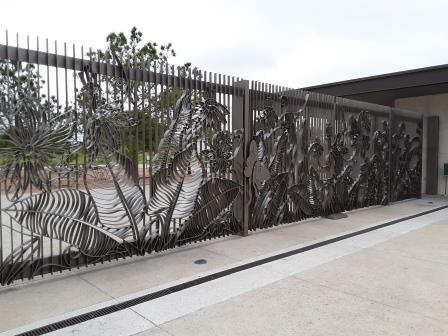
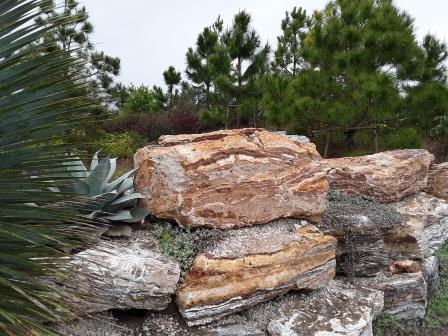
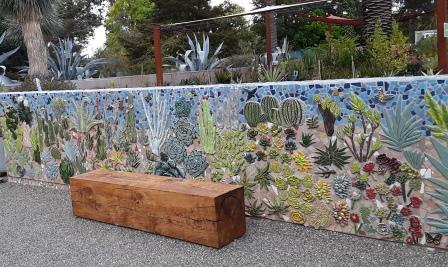
The entrance to the garden is austerely modern, but the fence by the gate gives a better idea of the kinds of richness behind the entry. The garden recreates a diversity of ecological settings, punctuated with fountains, raised beds, and a variety of eccentric artwork.

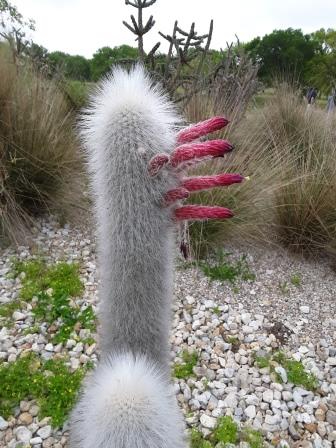
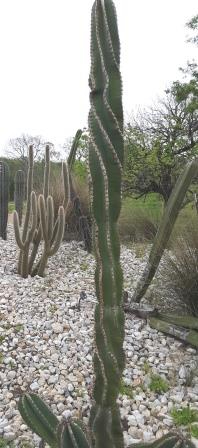
My favorite were the cacti, with all the eccentric shapes and shades they can show.

The major fountain would have been more striking in sunlight with water jets sparkling, I think. Under gray skies it had an effect recalling a set of tiled locker room showers. What do you think?

The raised beds in the culinary garden were beautiful, with richly colored kale and cabbage.

Definitely worth a detour when you are next in Houston! But don’t forget the umbrella!

Post Navigation