Arturo Perez-Reverte has constructed a marvelous mystery which spans centuries. One mystery involves the restoration of a 15th century Flemish painting which depicts a chess game in progress. In the course of the restoration the cryptic inscription “Who killed/took the knight?” is revealed. Does the painting hold the clue to solving a 15th-century murder?
The second mystery develops as Julia, the young art restorer, tries to decipher the painting’s mystery and becomes involved in a series of murders which seem to be related to the painted chess game.
If you are interested in art history, or the miracle of modern art restoration, and have even a passing interest in the game of chess, you will be charmed by this novel. The setting, in Madrid, with some of the key incidents occurring in El Prado, enhances the action perfectly. The solution – without giving the story away, I will say that it is both outrageous and satisfying.
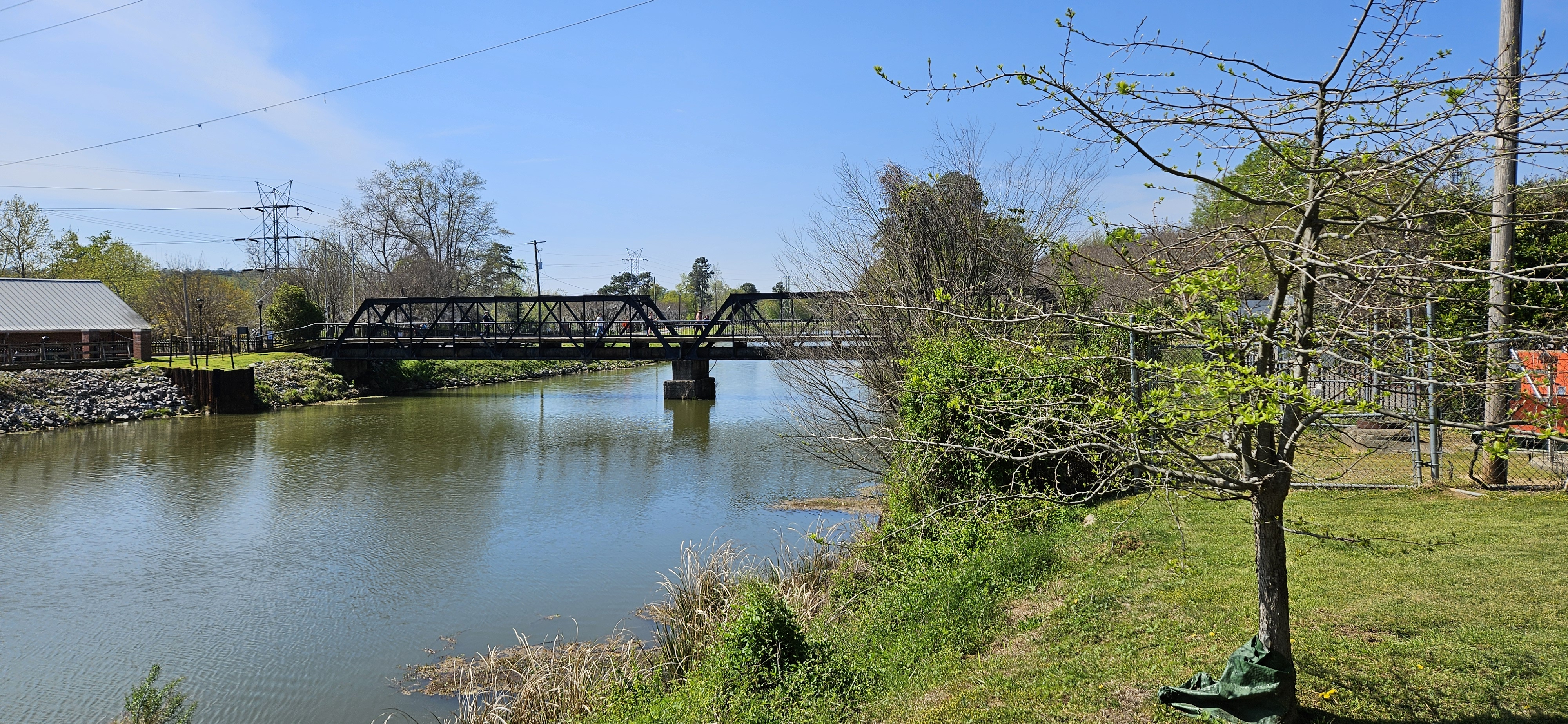
Outdoors in South Carolina is a lot different from outdoors in Northern California, where I spend most of my time. SC is green, the air is moist, there is water, and there is history. Columbia’s Riverbank Walkway is a wonderful illustration of the difference, with its effortlessly un-irrigated green spaces, its leisurely meanderings along the Columbia Canal, and its unexpected evocation of the workers who built the canal.
We parked at the Laurel Street entrance, just late enough to avoid a major fun run which had been organized for the morning – volunteers were folding tables and taking down canopies, but they cheerfully directed us down the pathway to the canal.
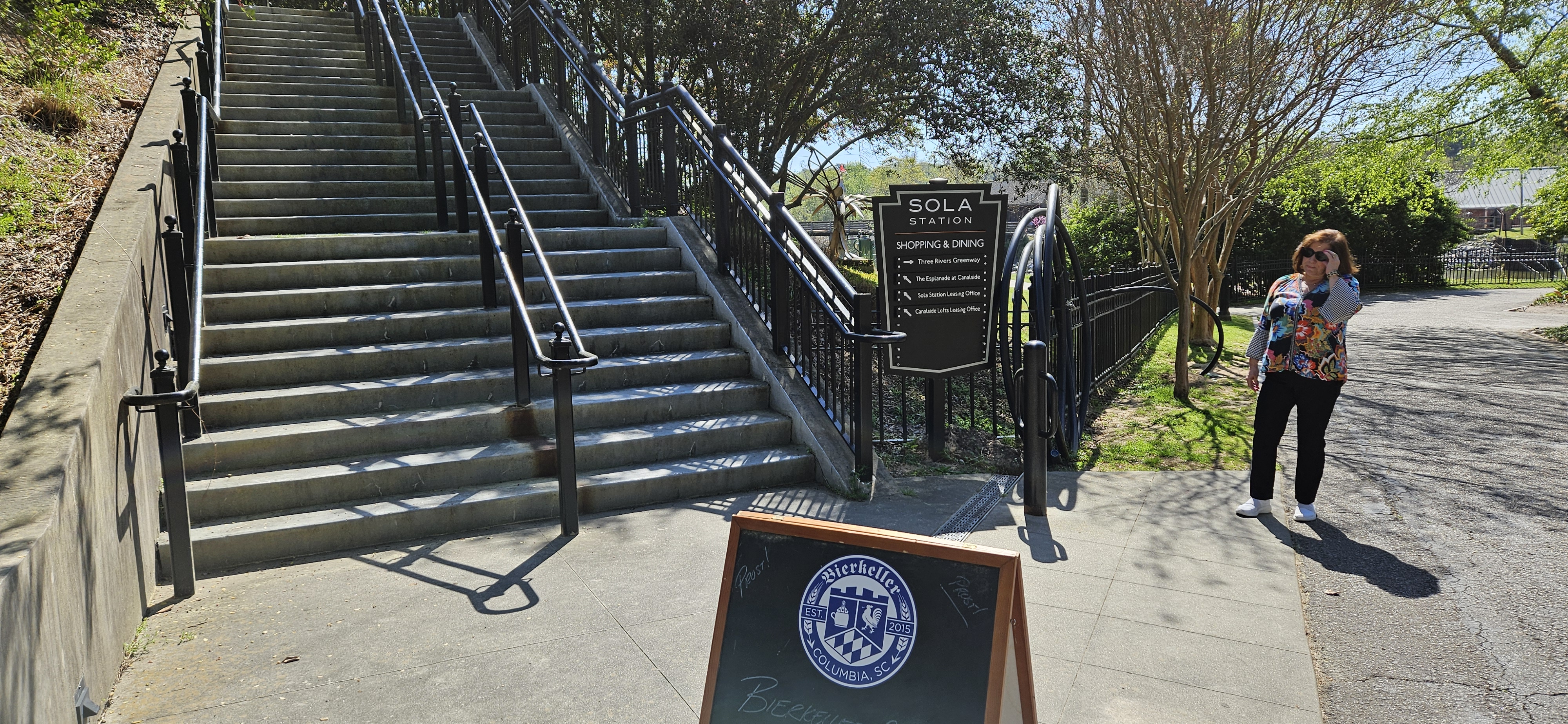
On the way we pass a steep stairway leading upward. Signs let us know that there is a restaurant above, probably with a fine view of the canal and the river beyond. We resist the temptation.
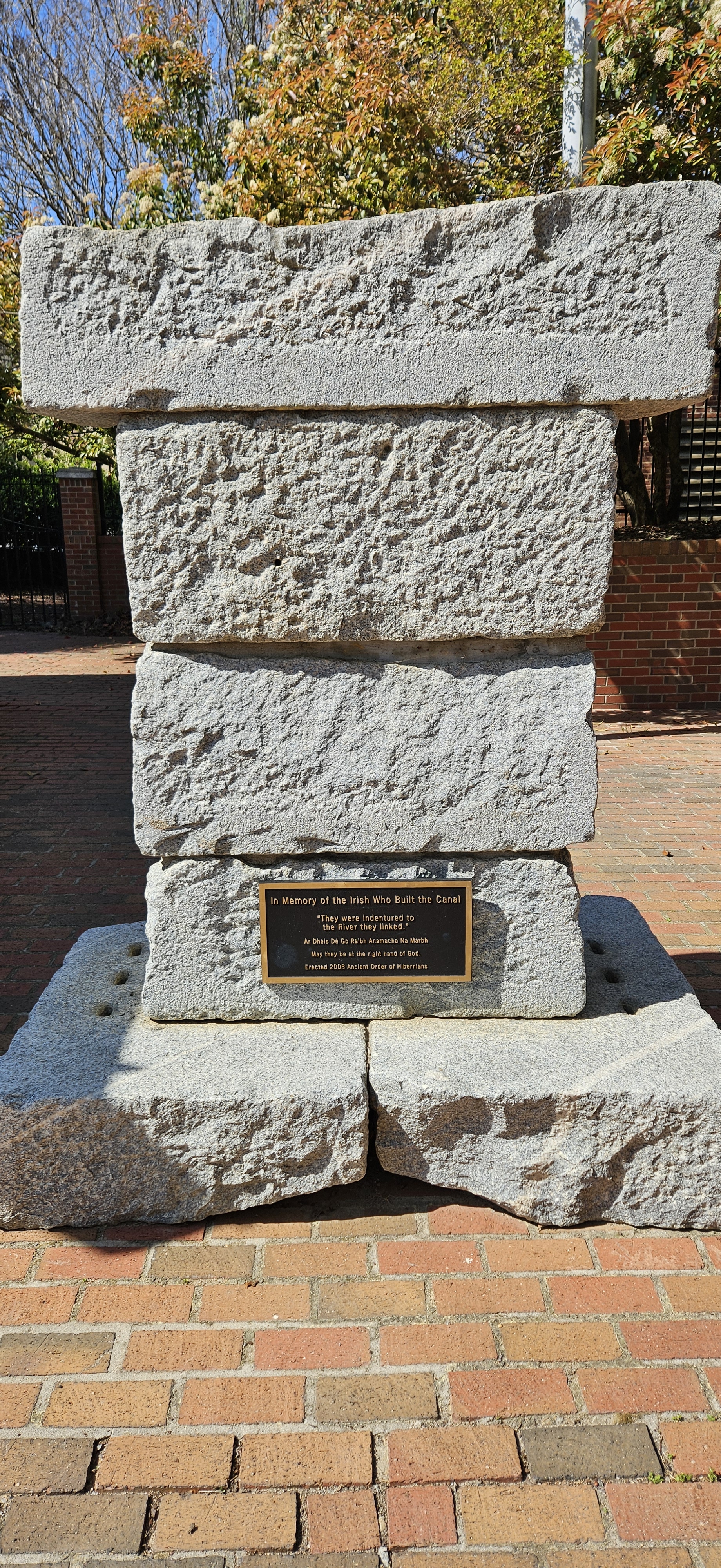
Further down we spot a building off to the side, which turns out to be the former operating station for the canal. Facing the building is a monument to the Irish worker who helped build the canal. I remember that at the time of the canal’s building there were probably signs in downtown Columbia reading “Help Wanted: No Irish Need Apply”, and felt pleased that this maligned immigrant group was receiving recognition.
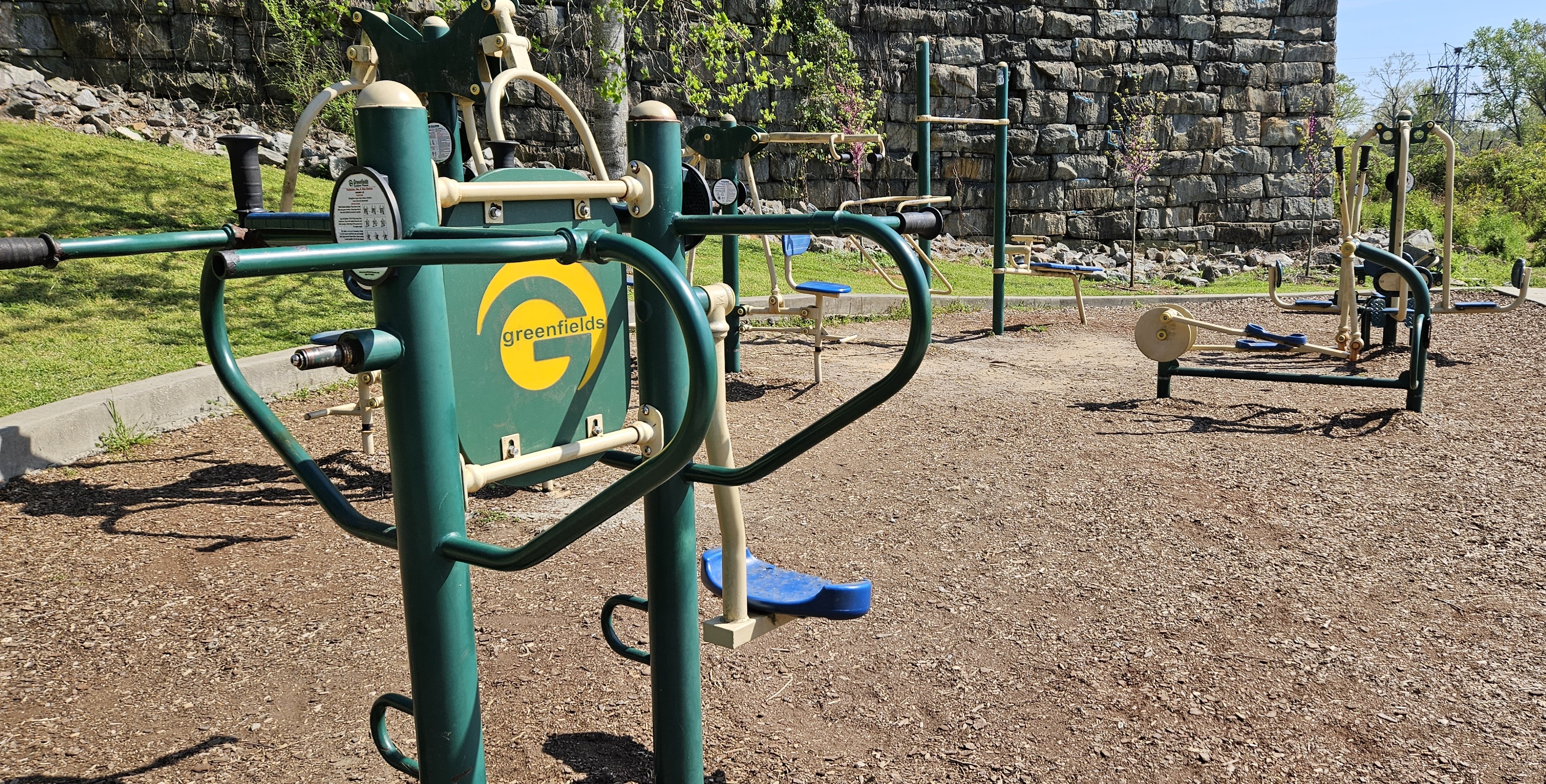
At the bottom of the trail is a playground for children who have not worked off enough steam on the walk down. No, wait; it’s not for children, it’s a workout center for adults who have not worked off enough steam after jogging the four-mile river trail. Whichever – it’s a beautiful location.
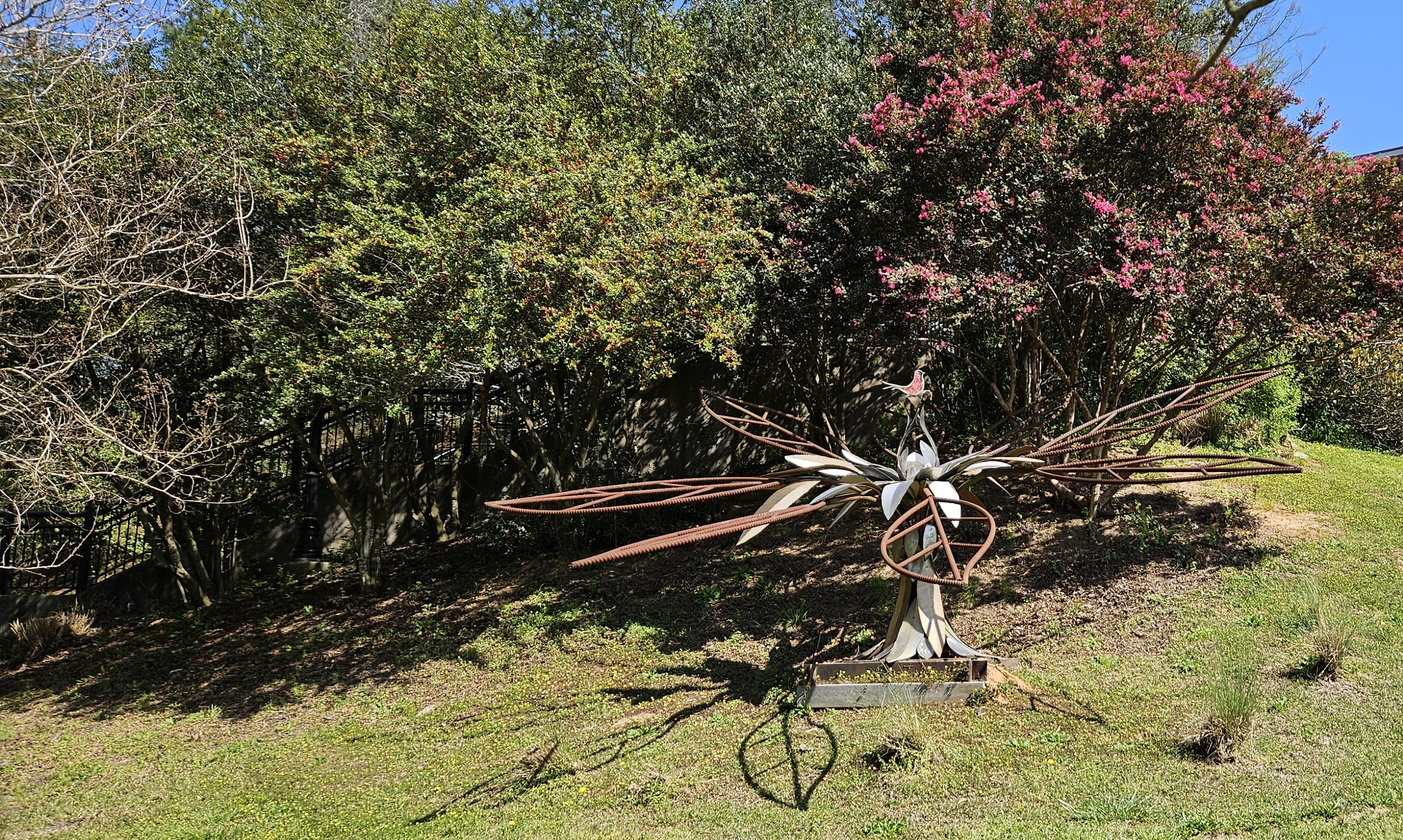
As we turned to go back up the slope to the parking lot (not feeling up to a four-mile jog on this particular day) we spotted this whimsical artwork just up from the workout center/playground. It’s a testament to a light-hearted spirit that we felt throughout our visit to Columbia.
There’s a lot more to Columbia than the stretch from the Capitol down Main Street to the museum and library. For one thing, it is the home of the University of South Carolina, whose lovely campus is located on the other side of the Capitol from those attractions. The presence of a university almost guarantees a range of good cheap restaurants for feeding starving students escaping dorm food. We tried a couple:
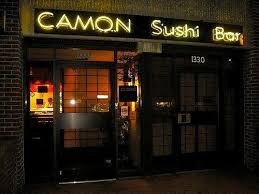
Camon Japanese Restaurant and Sushi Bar on Assembly Street near the campus has Japanese sliding screens, woodcut prints, and unexpectedly excellent sushi. It was empty when we entered at 6PM, and when we ordered an Asahi beer and were told there was no liquor license, we thought we knew why. But by the time we left, well satisfied with our edamame, unagi roll and pork tonkatsu, the place was nearly full of local adults as well as students who were probably underage anyway.
Another night we went further down Main to the Green Olive, its inauspiciously plain exterior surrounded by cracked parking lots and state office buildings. But the interior was much more promising, with a number of comfortable booths and tables testifying to a significant number of expected customers. The server looked exotic enough to be Turkish, but when I asked she giggled and said “No, I’m half Chinese and half Peruvian.”
The presentation of the food made no attempt at artistic plating or frou-frou snips of parsely or fennel. The flavor though was delicious and the amount generous. Again, as we ate the booths began to fill with a diverse population of older adults as well as flannel-shirted twenty-somethings.
Our most successful lunch was at a deli near our hotel downtown. I didn’t expect much from the East Bay Deli, one of five locations in Columbia for a chain that originated up in Charlotte. We went there because it was close to our hotel, we were hungry, and we were with my in-laws and needed a place with a diverse enough menu to satisfy each of our tastes. And it was good. Just plain good. Good bread. Good meat. Real lettuce, not ribby romaine. Crispy fries. Enough food that my in-laws split a sandwich between them.
You won’t starve for lack of good food in Columbia
One afternoon W needs to rest, so I take a walk down our hotel’s street. Bodega Avenue is sidewalk free and pot holed, lined with little bungalows with bright-colored but peeling paint and cheerful geraniums in containers. At the end of the road are three redwood posts blocking access to what is beyond. I step through – into another world.
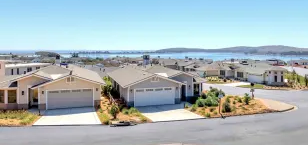
Sidewalks. Gutters. New pavement. A green space to my left with a fountain burbling. And houses, all painted in placid neutral shades with gleaming white trim. At least half of the houses have the driveway blocked with big red fenders – to keep squatters out? Some of the houses are large, two stories with a deck looking out to the harbor. Some, to my surprise, are small attached cottages no bigger than our suite at the Harbor Bay Inn. A few seem inhabited; in one, a BBQ party is happening on the deck. It seems I’ve been transported to Suburbia, but no, it is the Harbor View development at Bodega Bay.
I go out the flag-bedecked front entrance to the development and make my perilous way along the sidewalk free, shoulder-free Highway 1.
W is still resting, and the fog has lifted completely, so I take the car down to Duran County Park, the long finger that curls across the south end of Bodaga Bay. There’s an entrance fee of $7, which takes my last folding money. I drive past a Bird Walk, a Day Use area, several Reservations Only campgrounds filled with tents and trailers, a Visitors Center, and a Coast Guard station, all the way to the tip of the finger, site of a Day Use parking lot and a fine view of the headlands we had been on in the morning.
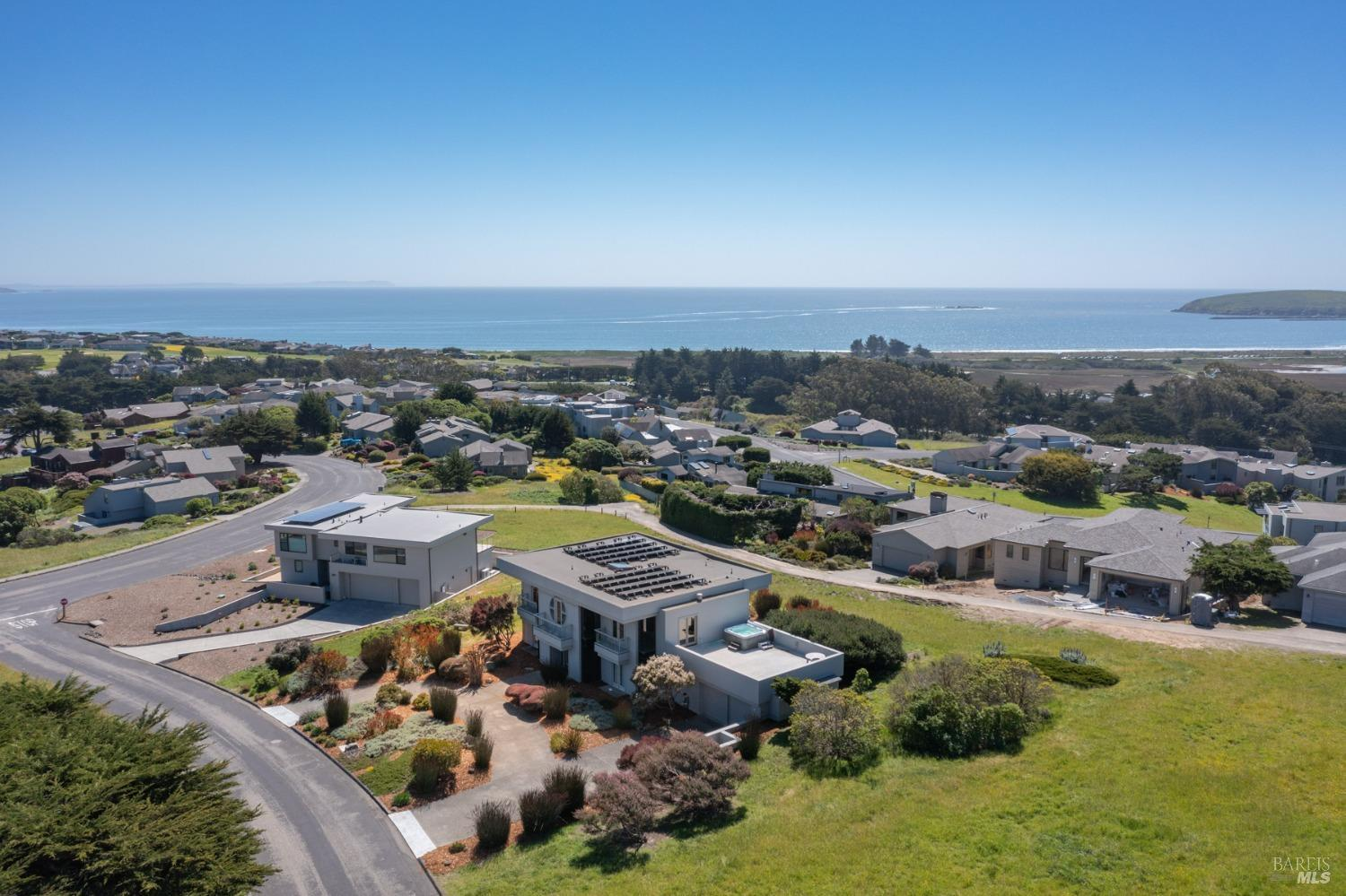
The Visitor’s Center is closed, but there is an information sign posted nearby explaining what you can see from this point: Jetty, the coast guard station, Mt.Tamalpais in the distance on a clear day, Point Reyes in the near distance, and then to the east “South Harbor Bay” and “North Harbor Bay”. These are clearly seen and they are developments, which from this distance look very much like Harbor View. They encrust the hillsides south of Bodega Bay like barnacles. Who lives in these developments. Are they all second homes? How long will it be before their residents demand a Safeway instead of Diekmann’s Bay Store or the Pelican Point Grocery? How much longer than that before a Costco sets up in Valley Ford?
Better visit Bodega Bay quickly. Blink and it’s gone.
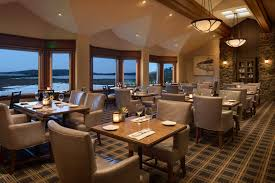
Our Personal Travel Agent has made a reservation for us at Drake’s, the most elegant restaurant in the area. I am a bit intimidated since the fine print on our reservation says “Smart Casual” is the dress standard, and I left my smart pants at home. Not to worry – the guy in jeans, suspenders, and a fishing hat has a window seat, so they are not being too picky on a Monday night.
We splurge on a drink apiece beforehand. The Artisan Bread Basket comes from the delightful Della Fattoria Bakery in Petaluma, and includes delectable olive bread. We each have a bowl of onion soup, a delicious variation on the French theme – light broth full of barely caramelized onions, and just a small circle of toasted baguette with cheese melted on top floating in the broth. Plenty of room left for us to split a dish of mussels and pasta. Be warned – the most elegant restaurant in Bodega Bay has pricing to match. But it was worth it.
The next morning the fog is in, and we dilly-dally about the suite until the fog has lifted enough for us to see the headlands across the bay.
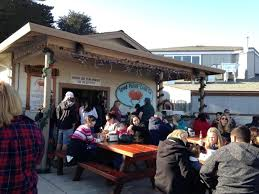
Bay Flat Road curves around to the west side of Bodega Bay, which shelters the bay against the Pacific. The bay side of the road is lined with boat ramps and marinas, the hill side features crab shacks where you can again find “the best clam chowder in Bodega Bay“, along with crab cakes, crab cocktail, crab sandwiches, crab tacos…. Too bad I’m allergic to crab. But there are plenty of people sitting outside at picnic tables who apparently are not worried about allergies. My #2 son assured me that for crab lovers these shacks are the epitome of gourmet delight. I’ll bet their clam chowder is pretty good too.
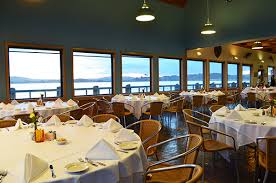
For our second night we have dinner at the Tides, a large family-friendly restaurant with ample parking right next to the harbor. There is not so much elegance here as at Drake’s, the food is ample but just so-so, and service on a Tuesday night is slow though friendly. On the other hand, the dining room boasts a terrific view of the harbor, and the cost of a glass of red wine or a shot of good Scotch is about half the charge at Drake’s. If I had it to do over, I’d come to the Tides first, and move up to Drake’s as a finale.
Past Petaluma and on through rolling hills and farmland, we roll through a few scattered small villages (Two Rocks, Valley Ford, Bodega) and then up a narrow two lane version of highway 1 to Bodega Bay. On the left the road bristles with boat masts, fishing shops, a fish market, and small restaurants all boasting “the best Clam Chowder in Bodega Bay”. On the right, small bungalows perch on the hillside, with pink naked ladies (more politely known as amaryllis lilies) thrusting up out of the bare ground, and brilliant geraniums overflowing from containers. A hairpin turn past The Birds restaurant (bodega bay was a filming site for Hitchcock’s classic) and the Candy and Kites store, a sharp right on Bodega Road, and we are at the Bodega Harbor Inn, our refuge for the next few days.
The Bodega Harbor Inn exceeds my expectations. For about $270 a night we have an attached cottage, including a spacious living room with a 180 degree view of the harbor, a tiny kitchenette with a mini fridge and freezer (real ice cubes!), a microwave, a coffee maker, an electric tea kettle, and plenty of mugs and plastic utensils. The two bedrooms offer a queen or king size bed. The smaller bed shares the space with an ample wardrobe and has the harbor view again, the larger one has no closet but is completely sheltered from road noise and street light. Outside, a pair of Adirondack chairs invites laid-back appreciation of the scenery and the passing parade of cars and families on the way to the Candy and Kites store.
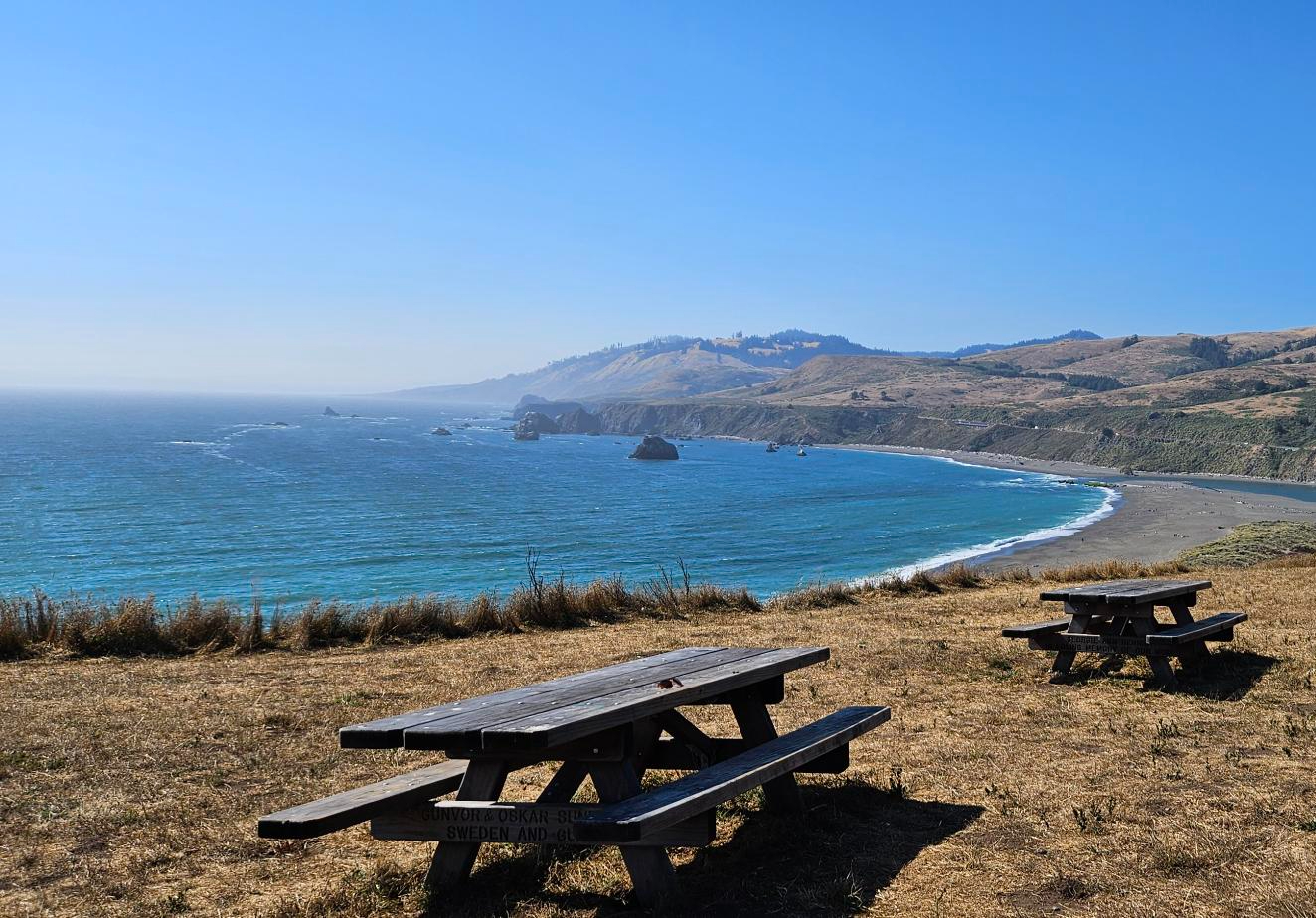
The afternoon is warm and sunny, and we spend it driving north along the Sonoma Coast Beaches: Salmon Creek, Shell, Carnet, Schoolhouse, and a half-dozen others all tempting a turnout. We have our sights on Goat Rock at the end of the string of beaches. There we find a wonderful view of sea and surf up and down the coast, with Arch Rock perfectly positioned for photos to the south, Goat Rock looming due west, and a sandy beach with easy access to the north. We take the photos, descend to the beach, get our feet sandy and our toes wet, and head south again. Southward we are on the scenic side of the road, and we enjoy the panorama of rocky coast and soaring spray all the way back to our refuge.
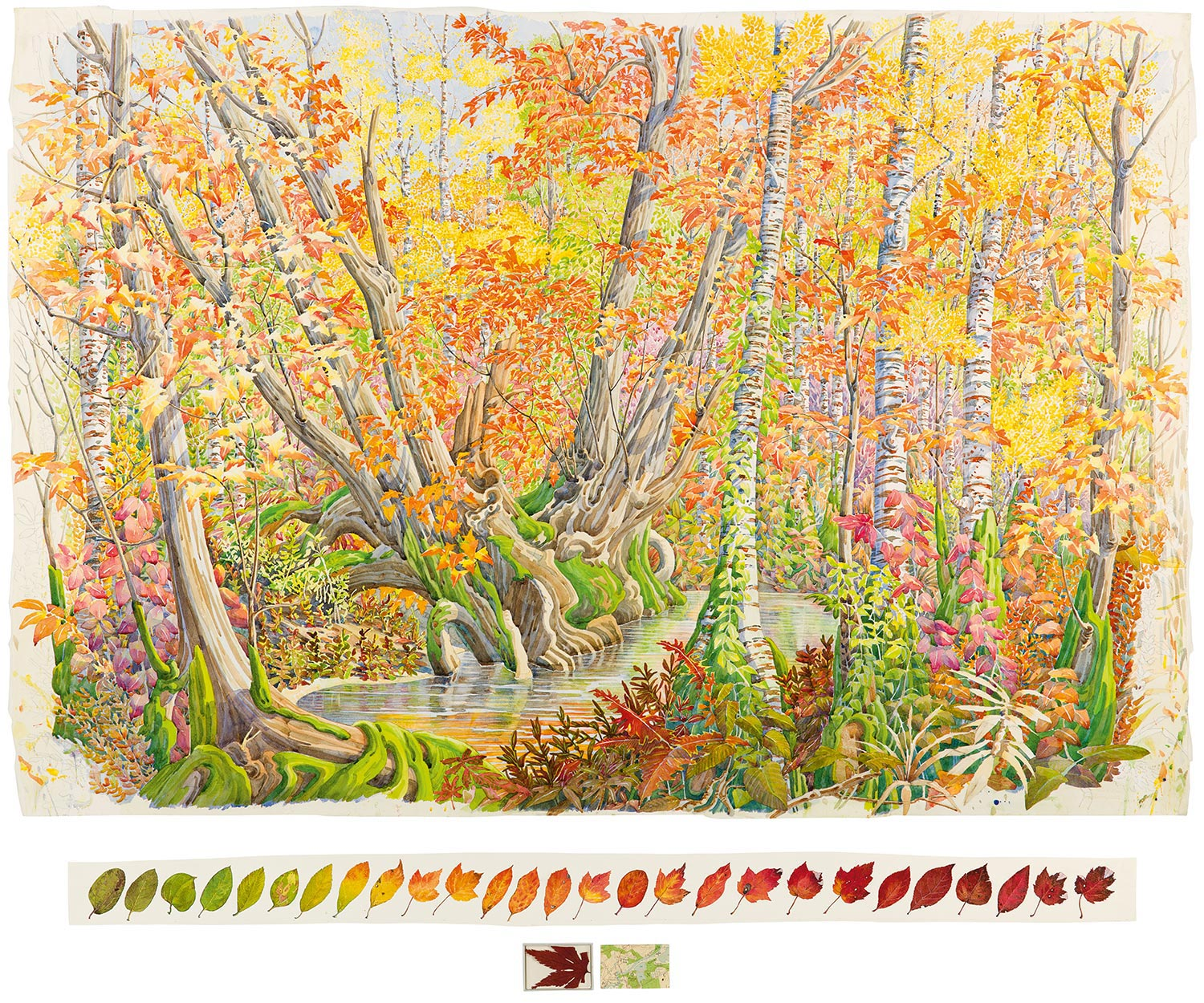
Tucked away in an industrial corner of Palo Alto, around the corner from an electronics recycling center and across the street from a geochemical testing laboratory, is the Foster Museum, a tiny jewel dedicated to showing the work of watercolorist Tony Foster.
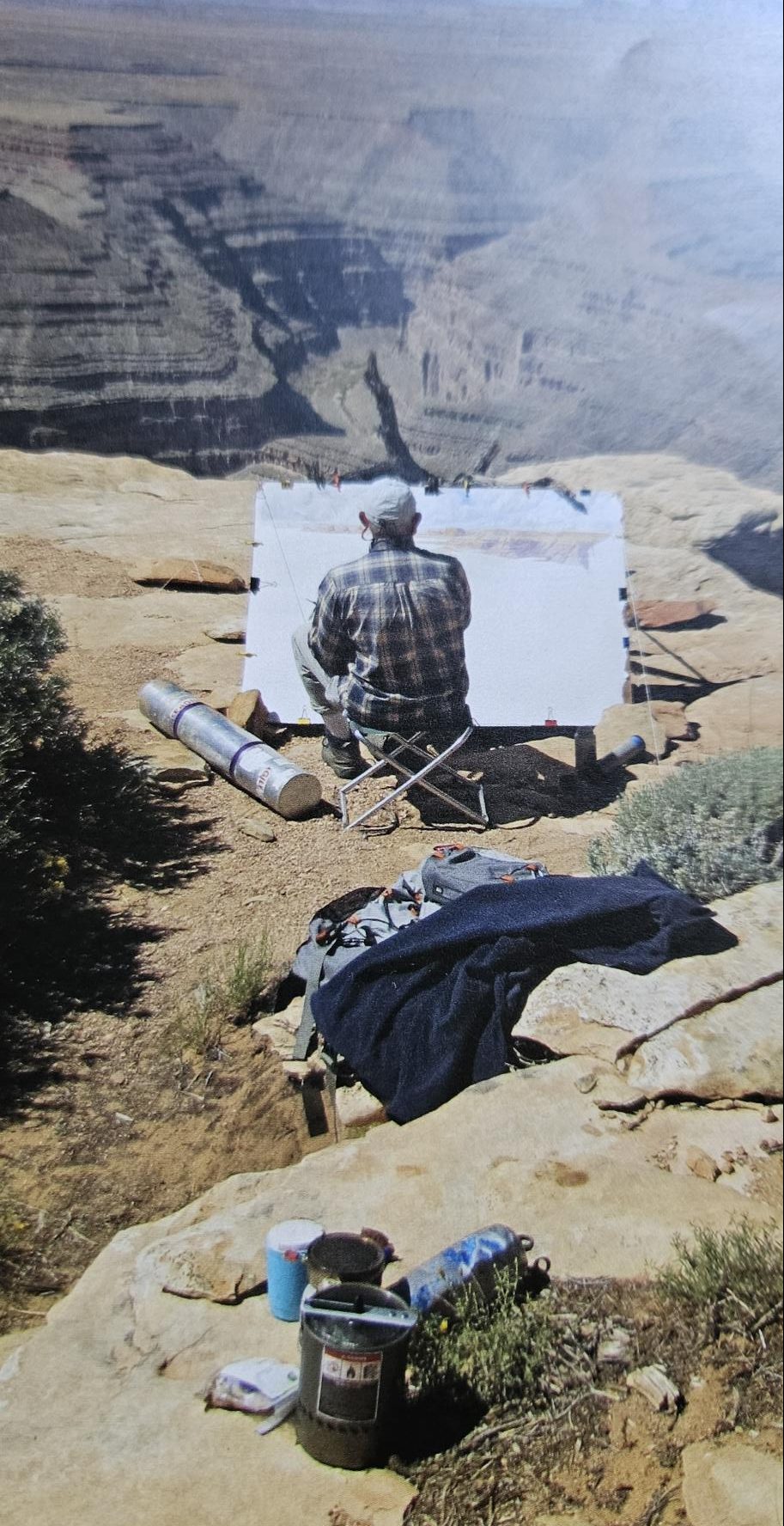
The museum is normally open by appointment only, but I happened to visit with a friend on a “Welcome to Walk In” day. Inside this ivy-covered block is a wonderland of watercolor murals, covering wall after wall with scenes of grandeur: the Grand Canyon, the Rockies, the volcanoes of Iceland, the rain forests of Borneo, the Himalayas, the High Sierras, the coral reefs of the Caymans. Amazingly, the paintings were done plein air rather than from photographs.
The paintings are specially framed with inclusion of leaves, pebbles, and other artifacts from the scene, and many of the paintings include handwritten notes by the artist in the margins of the painting. These artifacts and notes give an authenticity to the art which is terrifically engaging.
Foster writes of his struggles holding onto his palette and easel against howling winds in the Rockies, keeping his materials intact in desert dust storms and tropic rain, and even drawing with wax crayons underwater while wearing scuba gear near a coral reef.
The net effect is absorbing – I spent almost two hours perusing the amazing artistry and detail of Foster’s work, and only stopped because the museum was closing. If you are a fan of water color painting, or of outdoor adventure, this museum will satisfy in many ways.
On our first evening in Arles we rendez-vous with our friends at the Cafe Factory Republique, a modest bistro with comfortable outside seating, where it seemed all the customers were English-speaking expats. EJ’s Duolingo French being limited, he exploits the change to get insider tips from the expats, which we will benefit from for the rest of the trip.
The next day, EJ and I stop for lunch at one of the places recommended by his new Canadian friends, Le Criquet. For my enthusiastic thoughts about this spot, check my previous post. Only later did I discover that Rick Steves is also a fan of this spot, and we were lucky to get a last-minute table.
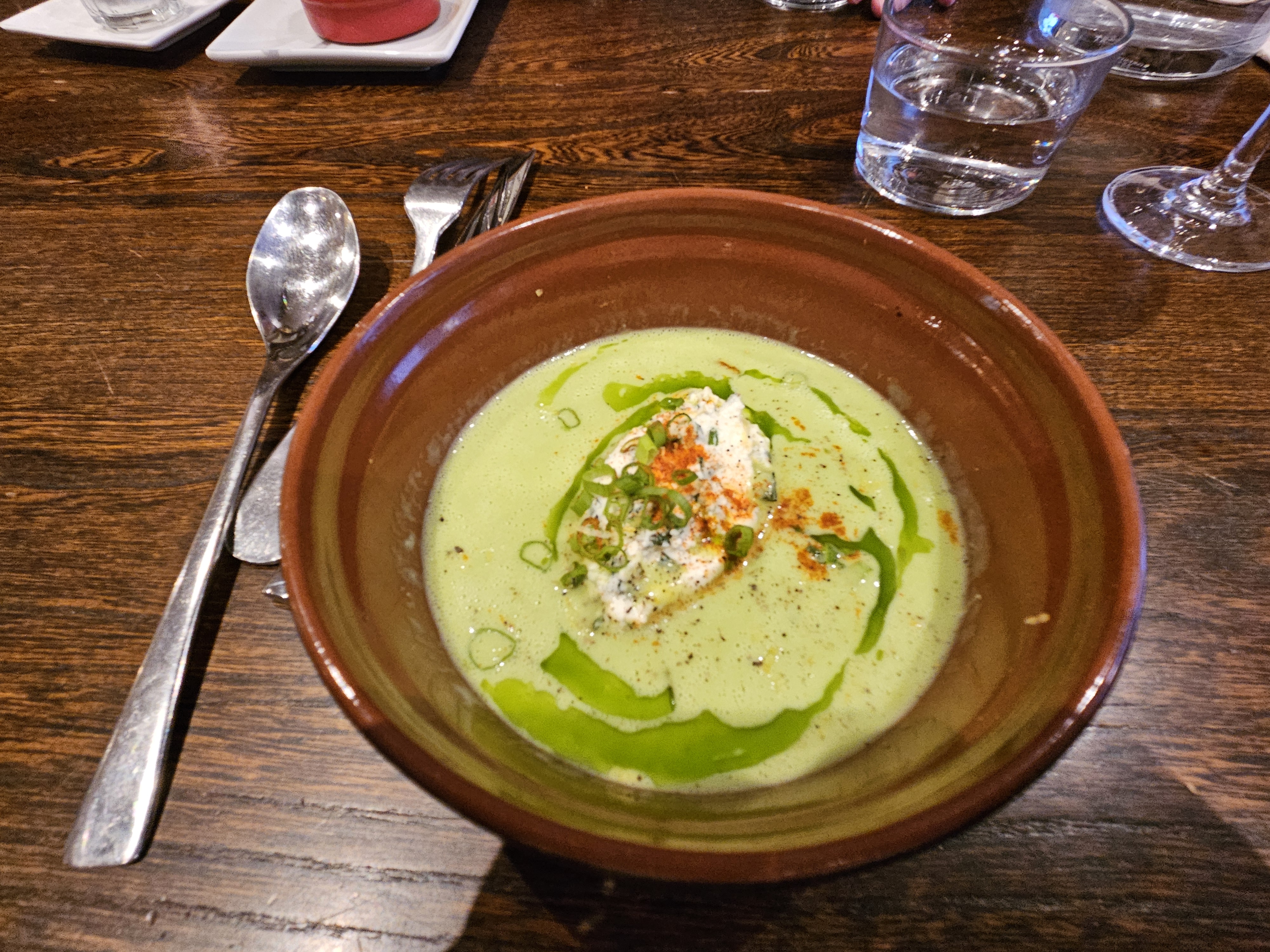
EJ went birding and missed a dinner at Michelin-recommended Le Gibolin. This is a small bistro with a remarkable wine list. The dish we all focused on was an appetizer, the spring pea soup, a brilliant green concoction with all the springy sweetness of a vegetable straight off the vine, somehow preserved in a bowl.
The next night EJ, BB and I ate deliciously at l’Entrevue, a Moroccan restaurant by the river recommended by my French friend CRH. This restaurant is affiliated with an excellent bookstore, Actes Sud, a cinema specializing in films related to the Arles area and history, and a Turkish-style hammam, offering various spa-type services in addition to the steam bath. The menu offers a number of vegetarian options, in addition to some really wonderful lamb stews, all at a very affordable price in an outdoor setting bordering the Rhone. This was so good that we came back two nights later bringing our other two friends PS and MV along so they would not miss out.
In the intervening night we had a luxe meal at l’Arlatan, a lovely restaurant located in the atrium of the hotel of the same name. This is a beautifully updated hotel, with trendy bright colors in the lobby and restrooms so artfully designed that they are almost impossible to locate in the panelled hallway. We ate under wisteria trained high above, excellent “brousse” cheese with spicy tomato sauce, (five of us share) excellent monkfish with spinach and tiny asparagus (four of us order, Ps has a compressed block of chicken with excellent sauce) then three of us order decaf coffee while PS and MV wait and wait and wait for a chestnut tart. I finally leave to meet EJ just as the waiter comes runnng with the dessert. So – five stars for the food and the locale, but only two for the service. (Were they changing shifts? Who knows?)
I meet EJ at the Wauxhall on George Clemenceau Blvd just opposite the Tourist Bureau. This busy indoor/outdoor place boasts of having been a fixture in Arles since 1771. EJ had not dined, and filled his empty spaces with a bread/cheese/salami platter. I ordered what I thought would be a cup of chocolate flavored coffee, but evidently cafe mocha in Arles means something quite different:. Fortunately EJ was able to help me out with this mountain of ice cream, chocolate mousse, caramel sauce, whipped cream, and cinnamon.
On our last night in Arles I made reservations on the website of another Rick Steves-recommended restaurant, and had no trouble reserving a table for five, though the (out-dated) RS guide told me it would be closed. It was pouring rain when I got to the place, and RS was right. The also-recommended bistro next door was already reserved for a special banquet. Thanks be, the third restaurant on the street was open and empty, so I was able to stand out under the awning in the downpour and re-direct my friends to Le Plaza La Paillotte, a very happy outcome. I found later that this is rated # 8 of 230 restaurants in Arles by Trip Advisor, which only goes to support my feeling that it is almost impossible to blunder into a bad meal in Arles.
Caddo Lake State Park is another gem made possible by the labors of the Civilian Conservation Corp back in the 1920’s. The entrance to the park is the first sign of their labors – two piled cairns which look like they have already outlasted many visitors, and will outlast many more. Some of the cabins and the eating hall built by the CCC enrollees are still in use, plus a nature-viewing pavilion on the Forest Trail which we set our sights on visiting.
The overnight temperature had plunged from 70 degrees on Monday to 45 degrees on Tuesday (spring weather in Texas can be chancy), so it took us a while to thaw out over multiple cups of hot tea before heading out on our Forest Trail adventure at about 11AM.
It was only a 1.5 mile loop trail, but we made lots of stops for catching breath, reading trail signs, trying out benches, and using W’s iPhone app to determine what trees and flowers we were looking at, it was near 2PM when we finished. [2 on the map below shows the location of the pavilion – and the elevation change!]
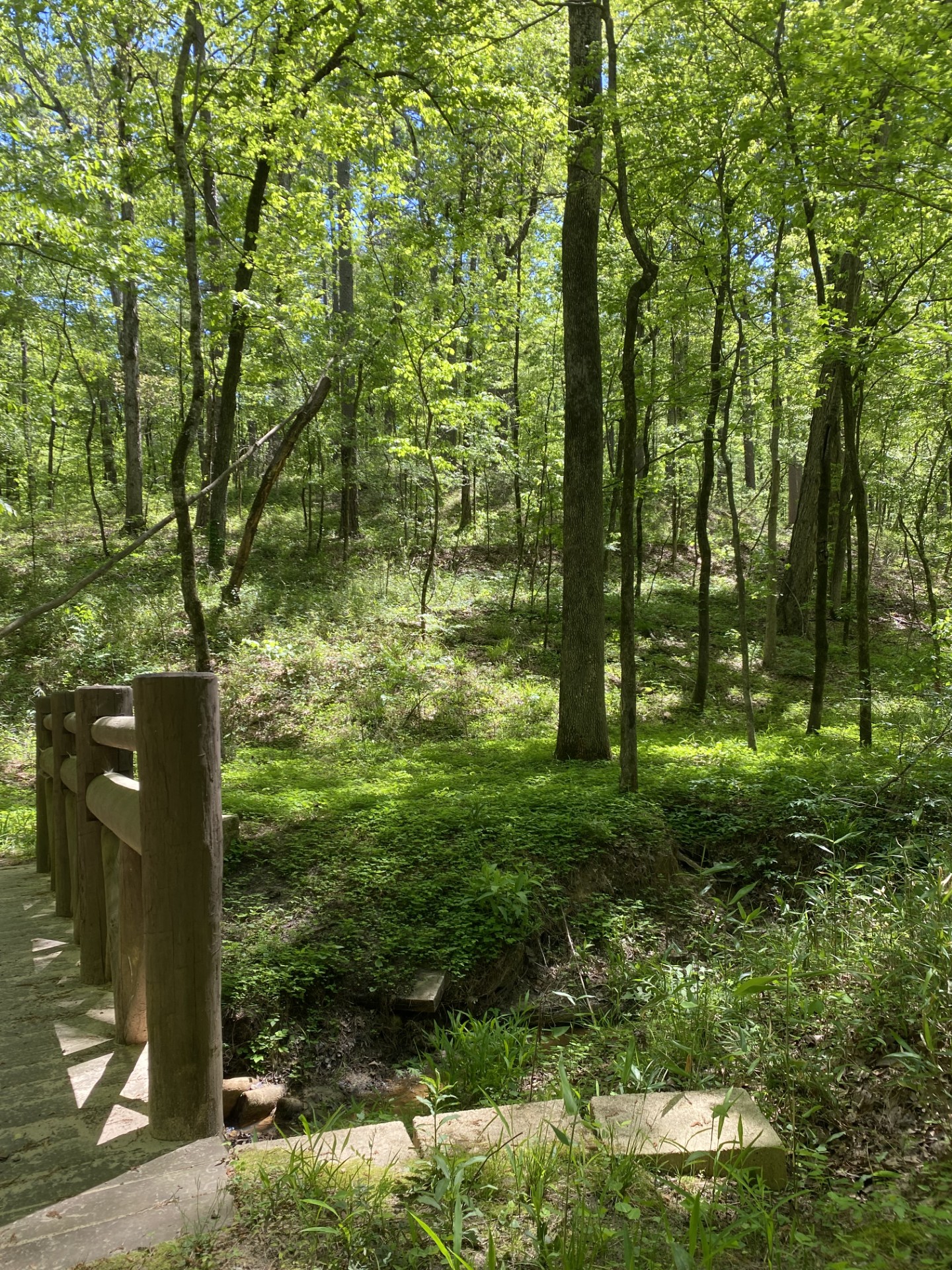
Climbing up to the Pavilion through the deciduous forest was a marvel to my West-Coast eyes. At the lower elevation were tree varieties I had read about, like hickory and elm, that don’t seem to occur west of the Rockies. Along the ridge just above the pavilion were long-leaf pines. I still have a little basket I made from pine needles in fourth grade when we were studying the tribes which used to inhabit this area, and for which Caddo Lake is named.
The pavilion itself did not disappoint, perched on an outcrop with the sun breaking through the trees to form patterns on the flat stones paving the terrace, looking out over an ocean of greenery waving and rustling in the breeze. I thought about the CCC enrollees who put this building together. Some among them had the souls of artists, and the skills of craftsmen, to leave us such a legacy.
We had packed a picnic in advance of our canoeing adventure, and headed for the Park Store/Museum/HQ, where we inquired for the best place to take a picnic and look at the big Caddo Lake (the State Park only includes Saw Mill Pond, a quiet side area suitable for calm canoeing and fishing but not for broad vistas) The rangerette directed us to the Caddo Lake National Wildlife Refuge and Starr Ranch, a peninsula only 15 minutes way, as a place with a lake view and a picnic table.
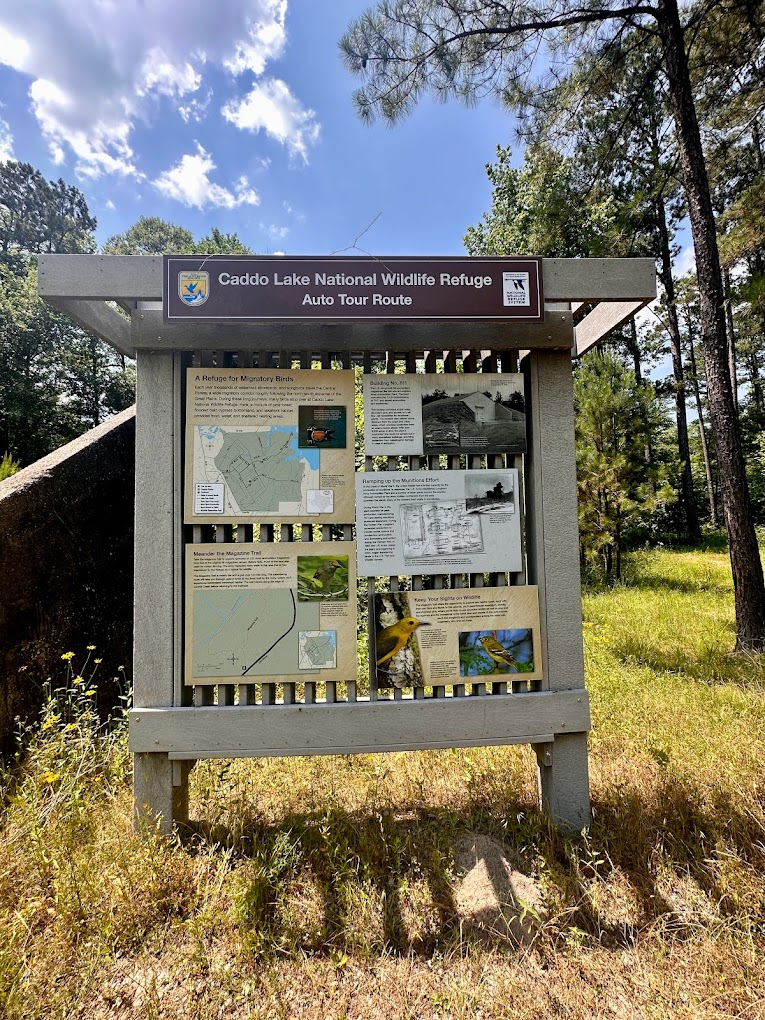
The CLNWR is located on land which formerly housed the Livingston Ammunition plant, which was subsequently designated an EPA superfund site, and which is probably responsible for the bass and trout caught in Caddo Lake harboring unsafe levels of mercury and other toxic chemicals. At this time, however, the main toxicity seems to have been cleared, the former Guardhouse is now a nature center for RAMSAR Wetlands, and the expanse of flat roads, by-roads, dirt roads, and grassy lanes invites the birder, biker, and hiker.
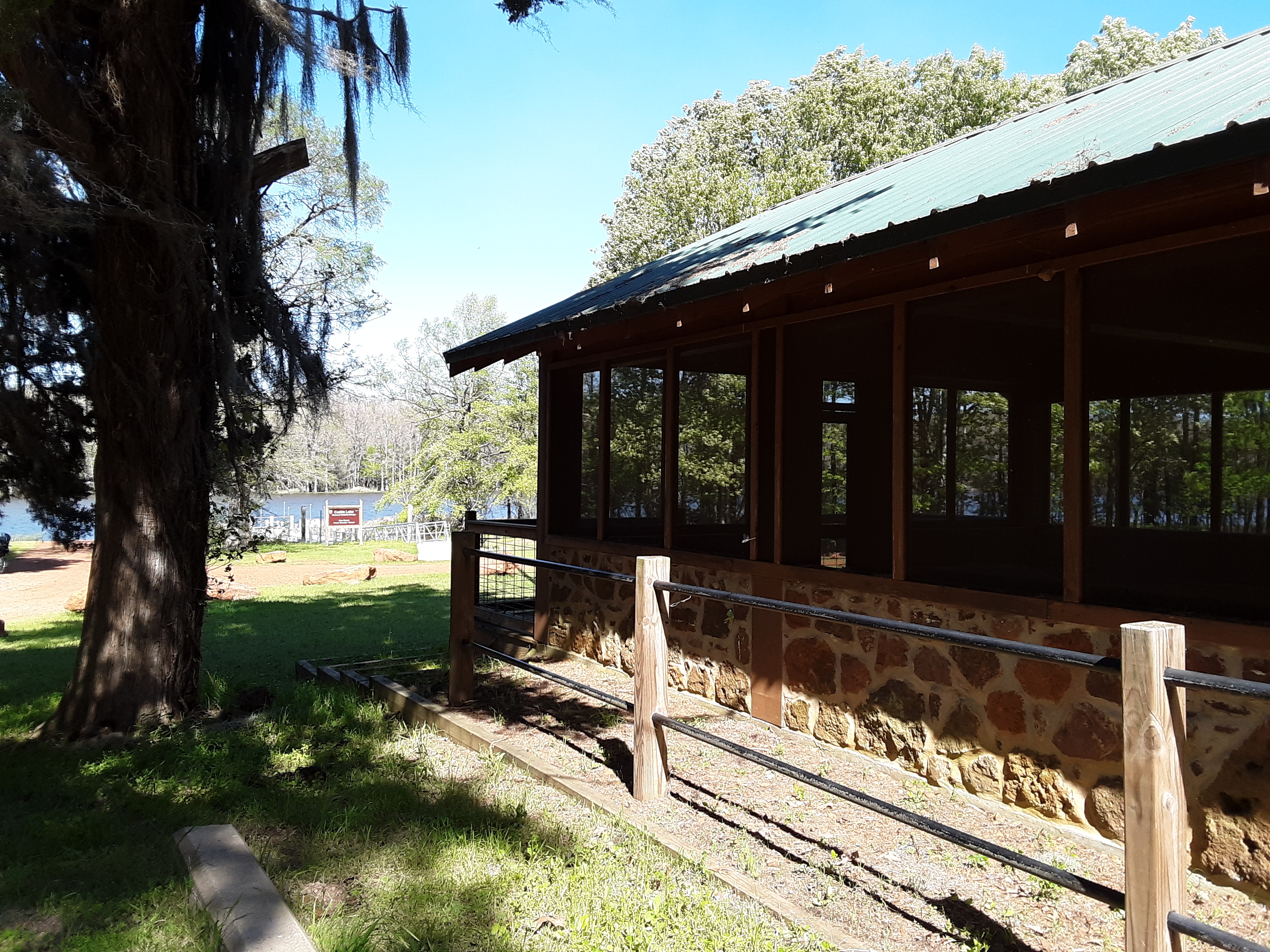
Starr Ranch turned out to be a peninsula with a wildlife viewing dock (looking brand new), one metal picnic table in full sun, a chemical toilet (looking pristine), and a pavilion (beamed ceiling, built-in pews on the side, picnic tables) looking quite new also except for a torn screen on the door, which hung open in the wind in a welcoming way.
No fees, no permits, no people except a couple of Harley riders who were consulting each other and their phones seriously but gave me a big smile – could have been drug dealers rendez-vous-ing but probably not), so we had our mackerel fillets, Boursin cheese, Wasa crackers and red Anjou pear looking out on the wind-white-capped lake. I almost felt guilty putting our mackerel/olive oil/pear core trash in that pristine trash bin in the privy.
After our lunch we stopped at the Visitor’s Center, housed in a couple of prefabs with an adjacent barbecue pavilion. It was completely deserted next to a parking lot designed for a host of tour buses – or maybe it was the former parade ground. We signed the guest book, browsed around, and saw not a soul either of staff or visitor. We could have made off with the stuffed bobcat and possum, but a sign warned that the site was “under surveillance”, and what would I do with a stuffed bobcat anyway?

















 Allyson Johnson