Allyson Johnson

Pieces of my Mind

Archive for the month “August, 2024”

Freeway Free in California: Getaway to Bodega Bay

Past Petaluma and on through rolling hills and farmland, we roll through a few scattered small villages (Two Rocks, Valley Ford, Bodega) and then up a narrow two lane version of highway 1 to Bodega Bay. On the left the road bristles with boat masts, fishing shops, a fish market, and small restaurants all boasting “the best Clam Chowder in Bodega Bay”. On the right, small bungalows perch on the hillside, with pink naked ladies (more politely known as amaryllis lilies) thrusting up out of the bare ground, and brilliant geraniums overflowing from containers. A hairpin turn past The Birds restaurant (bodega bay was a filming site for Hitchcock’s classic) and the Candy and Kites store, a sharp right on Bodega Road, and we are at the Bodega Harbor Inn, our refuge for the next few days.

The Bodega Harbor Inn exceeds my expectations. For about $270 a night we have an attached cottage, including a spacious living room with a 180 degree view of the harbor, a tiny kitchenette with a mini fridge and freezer (real ice cubes!), a microwave, a coffee maker, an electric tea kettle, and plenty of mugs and plastic utensils. The two bedrooms offer a queen or king size bed. The smaller bed shares the space with an ample wardrobe and has the harbor view again, the larger one has no closet but is completely sheltered from road noise and street light. Outside, a pair of Adirondack chairs invites laid-back appreciation of the scenery and the passing parade of cars and families on the way to the Candy and Kites store.

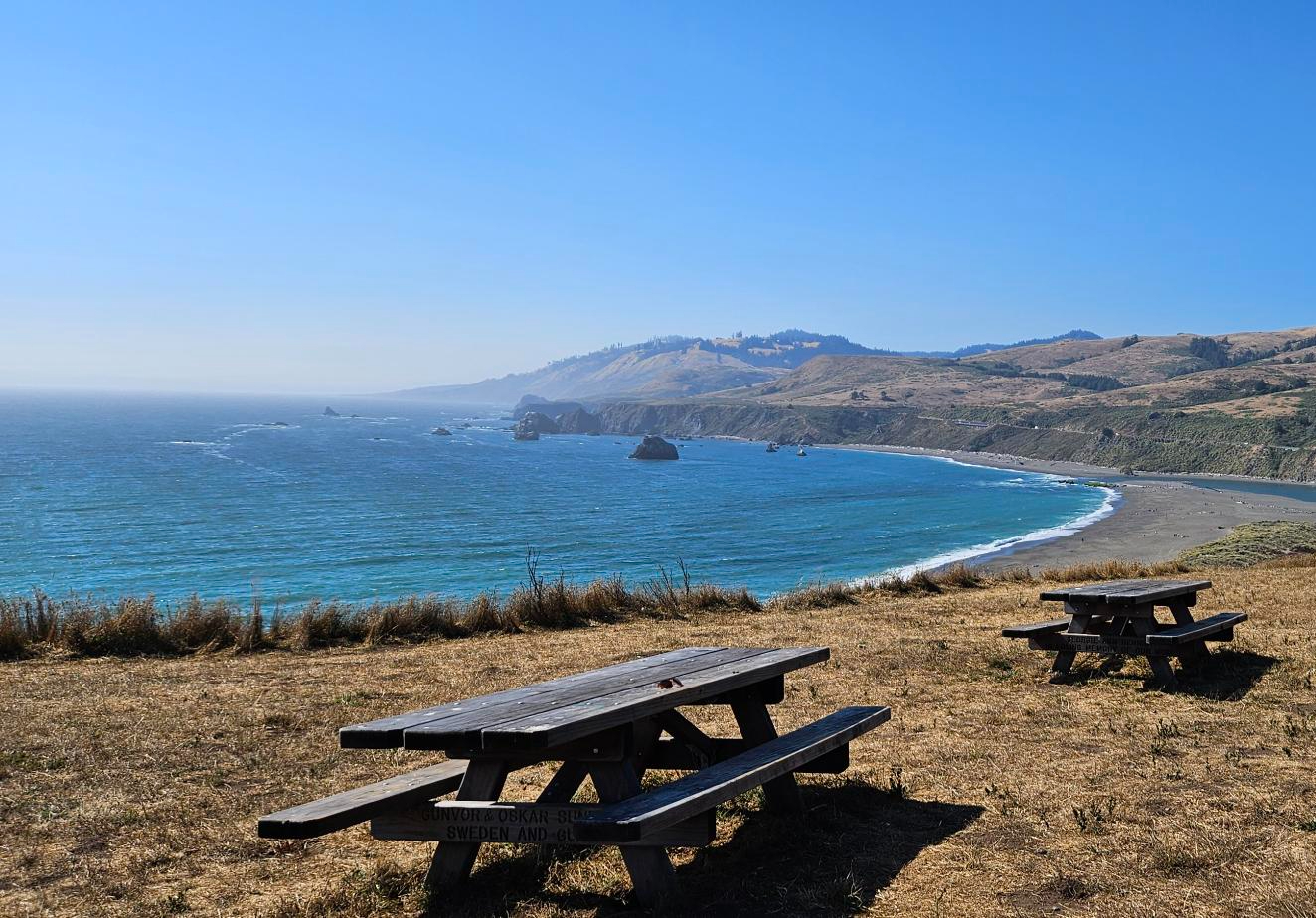
The afternoon is warm and sunny, and we spend it driving north along the Sonoma Coast Beaches: Salmon Creek, Shell, Carnet, Schoolhouse, and a half-dozen others all tempting a turnout. We have our sights on Goat Rock at the end of the string of beaches. There we find a wonderful view of sea and surf up and down the coast, with Arch Rock perfectly positioned for photos to the south, Goat Rock looming due west, and a sandy beach with easy access to the north. We take the photos, descend to the beach, get our feet sandy and our toes wet, and head south again. Southward we are on the scenic side of the road, and we enjoy the panorama of rocky coast and soaring spray all the way back to our refuge.

Freeway Free in California: Petaluma Rates more than a Pit Stop

On the way to a Getaway Weekend in Bodega Bay, we plan to stop in Petaluma for lunch, with fingers crossed as far as what we might find. Our apprehensions at first seem justified, as our first lunch choice has an empty parking space right in front (always a bad sign) and a sign on the door saying, “CLOSED FOR VACATION – see you soon!” So, we walk up the street to Della Fattoria’s Downtown Cafe -Bakery and Breakfast, where the waiting line on a Sunday morning is 30-40 minutes long.  But there is a chair for W, other options are few, and I set out to stroll the block while W waits and checks her email.

Petaluma’s “historic downtown” boasts impressive bank buildings and movie theaters from the 20’s which have been converted to event venues and antique malls, and storefronts of boutique shops – a bridal salon, exotic housewares, a pie shop, Tibetan handcrafts, and children’s clothing and toys. I’m tempted by the sale rack in front of the Bliss Bridal Salon – it almost would be worth getting married again if I could score a satin wedding gown for only $20! A closer look revealed the size 6 tags – a dream I could not fit into even in my youngest and curviest days.

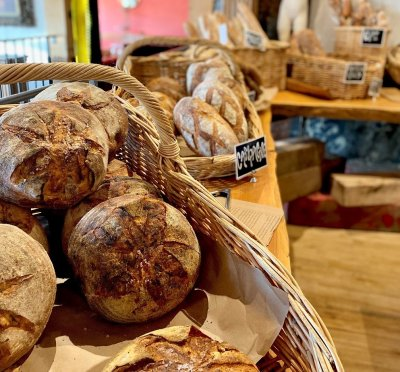
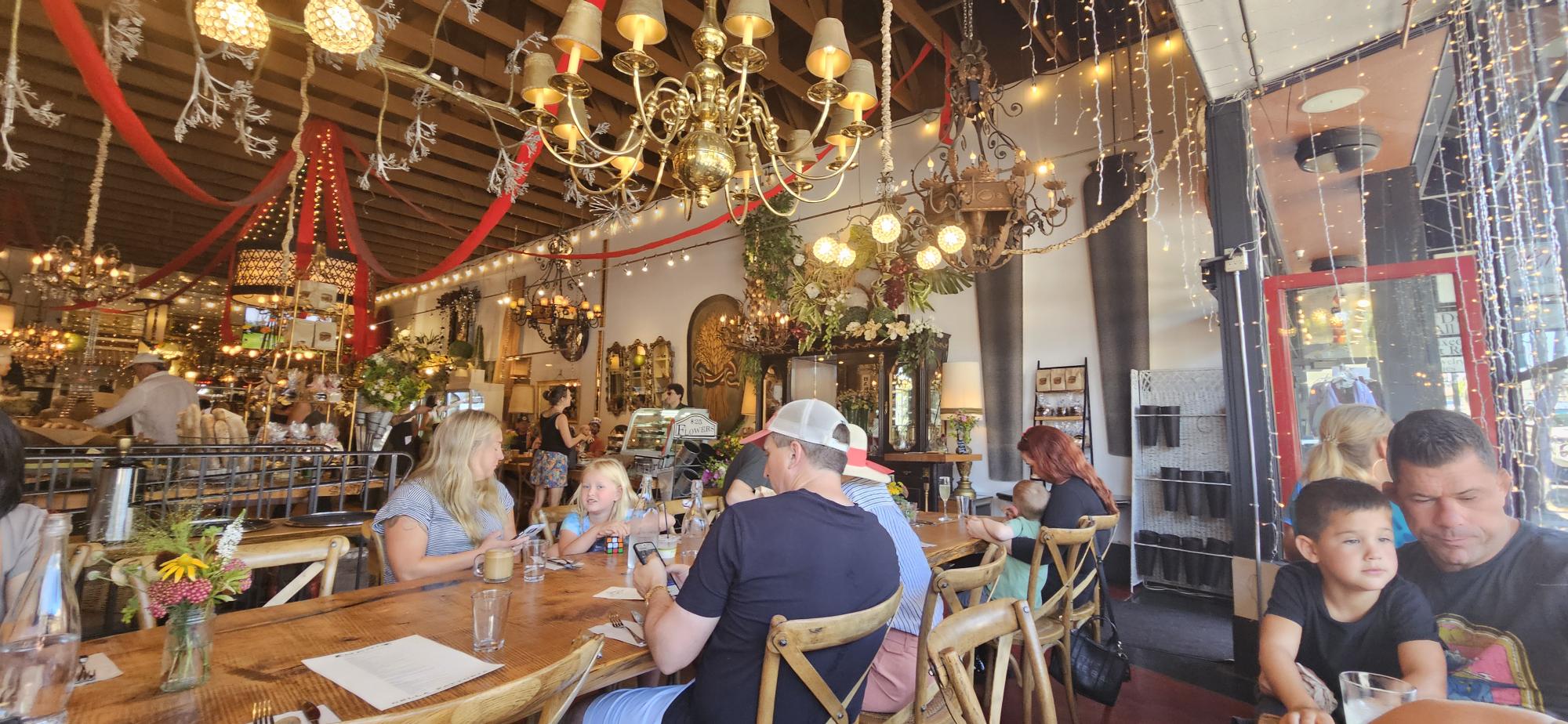
Back at Della Fattoria our number comes up, and we are glad we waited. The decor is eclectic (“No two chandeliers match!” remarks W) the service is a bit slow but friendly (servers seem to be the gating factor for the 30- minute wait – or maybe the kitchen – as there is plenty of seating at long tables, a breakfast bar, and lots of smaller tables.) The menu offered lots of interesting choices for breakfast/brunch/lunch.  I opted for my favorite Avocado Toast – an extra $2.50 for a poached egg on top- and W had Stacy’s Special Breakfast Salad, involving lettuce, arugula, two poached eggs, lots of bacon crumbles, and a heritage tomato.  The side basket of Artisan Bread includes delectable olive bread as well as excellent sourdough slices. (We learn later that Della Fattoria’s bread is famous throughout the North Bay.)

Replete with bread and avocado and eggs, we make our way out of Petaluma and onto the next adventure, but I have a secret resolution to return and check out some more of those interesting little shops, fortified by more of that wonderful bread.

Hidden Treasure: Palo Alto’s Foster Museum

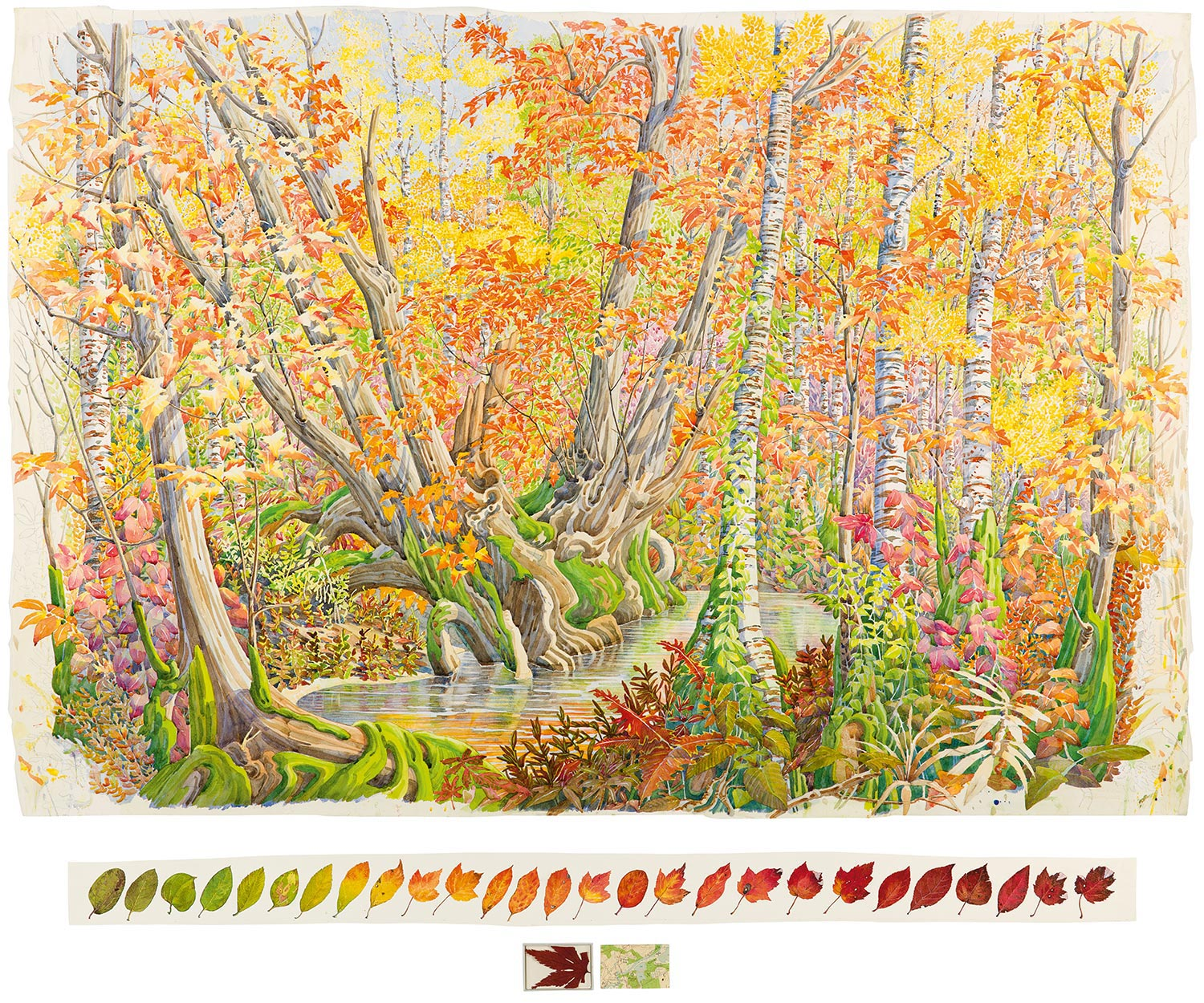
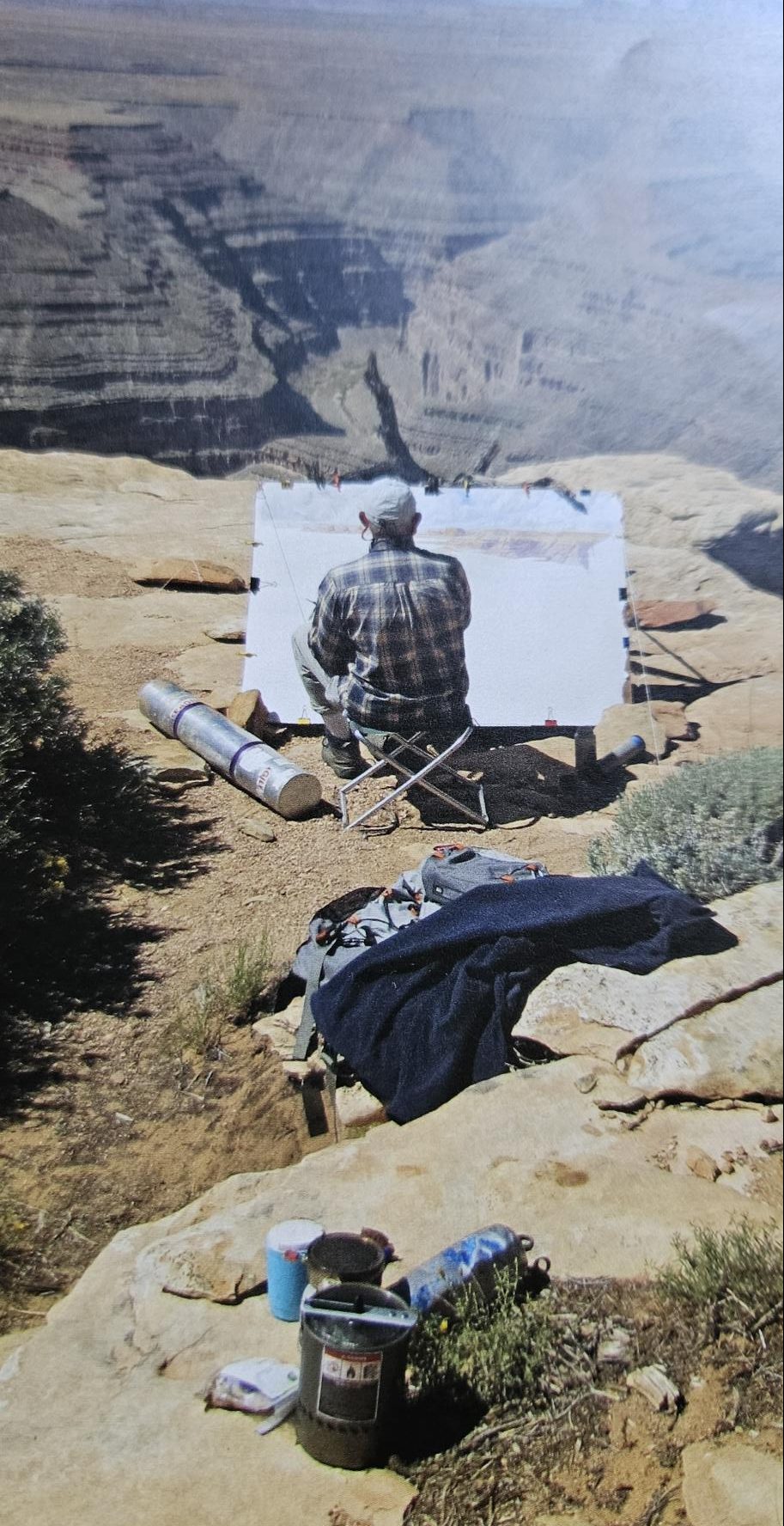
Tucked away in an industrial corner of Palo Alto, around the corner from an electronics recycling center and across the street from a geochemical testing laboratory, is the Foster Museum, a tiny jewel dedicated to showing the work of watercolorist Tony Foster.

The museum is normally open by appointment only, but I happened to visit with a friend on a “Welcome to Walk In” day. Inside this ivy-covered block is a wonderland of watercolor murals, covering wall after wall with scenes of grandeur: the Grand Canyon, the Rockies, the volcanoes of Iceland, the rain forests of Borneo, the Himalayas, the High Sierras, the coral reefs of the Caymans. Amazingly, the paintings were done plein air rather than from photographs.

The paintings are specially framed with inclusion of leaves, pebbles, and other artifacts from the scene, and many of the paintings include handwritten notes by the artist in the margins of the painting. These artifacts and notes give an authenticity to the art which is terrifically engaging.

Foster writes of his struggles holding onto his palette and easel against howling winds in the Rockies, keeping his materials intact in desert dust storms and tropic rain, and even drawing with wax crayons underwater while wearing scuba gear near a coral reef.

The net effect is absorbing – I spent almost two hours perusing the amazing artistry and detail of Foster’s work, and only stopped because the museum was closing. If you are a fan of water color painting, or of outdoor adventure, this museum will satisfy in many ways.

Freeway Free in France: Following the Unsteady Footprints of van Gogh

Arles, of course, was one of the stops Vincent van Gogh made while searching for sanity and artistic fulfillment in Provence. After the dark murk of the Netherlands, the bright colors and warm weather seemed to galvanize his artistic expression, but unfortunately did little to stabilize his mercurial mood swings.

Arles was van Gogh’s home for eighteen months, and some of his best-known paintings were executed during that period. Modern Arles has seized on van Gogh’s posthumous popularity by providing posters marking the sites as above.

In Arles, van Gogh lived for a time with Paul Gauguin in the Yellow House which appears in several paintings. This house no longer exists. However, the hospital to which he was committed after he cut off his ear in an alcohol-enhanced rage still exists, its courtyard now filled with post cards, posters, t-shirts, and other memorabilia of the artist’s stay.

Just a block or so away is the cafe where van Gogh and Gauguin hung out. At the time, the cafe was painted a modest beige with brown trim, but that’s not the way van Gogh saw it or painted it. Surprise! the restaurant is now bright yellow with blue trim and yellow awnings, just as van Gogh saw it.

Outside the center of town is Alyscamp, a park centered on an avenue of trees leading to a Romanesque chapel. The trees cannot be painted to match van Gogh’s vision, but it is interesting to compare that vision with reality. in a mental hospital. The park is green and peaceful, with romantic ruins and vistas. The interior of the chapel includes a pool filling the lower lever -not clear whether this is intentional or an accident of age.

As van Gogh’s mental instability grew, Gauguin moved out, and van Gogh’s brother Theo enabled him to relocate to a mental hospital in St. Remy, which still exists.  Reading the lists of treatments to which mental patients were subjected at this time is like reading of the Spanish Inquisition. The patients were confined in ice cold baths, bound, beaten, and burned, all with the idea of driving out the devils which had taken over their thoughts and actions.

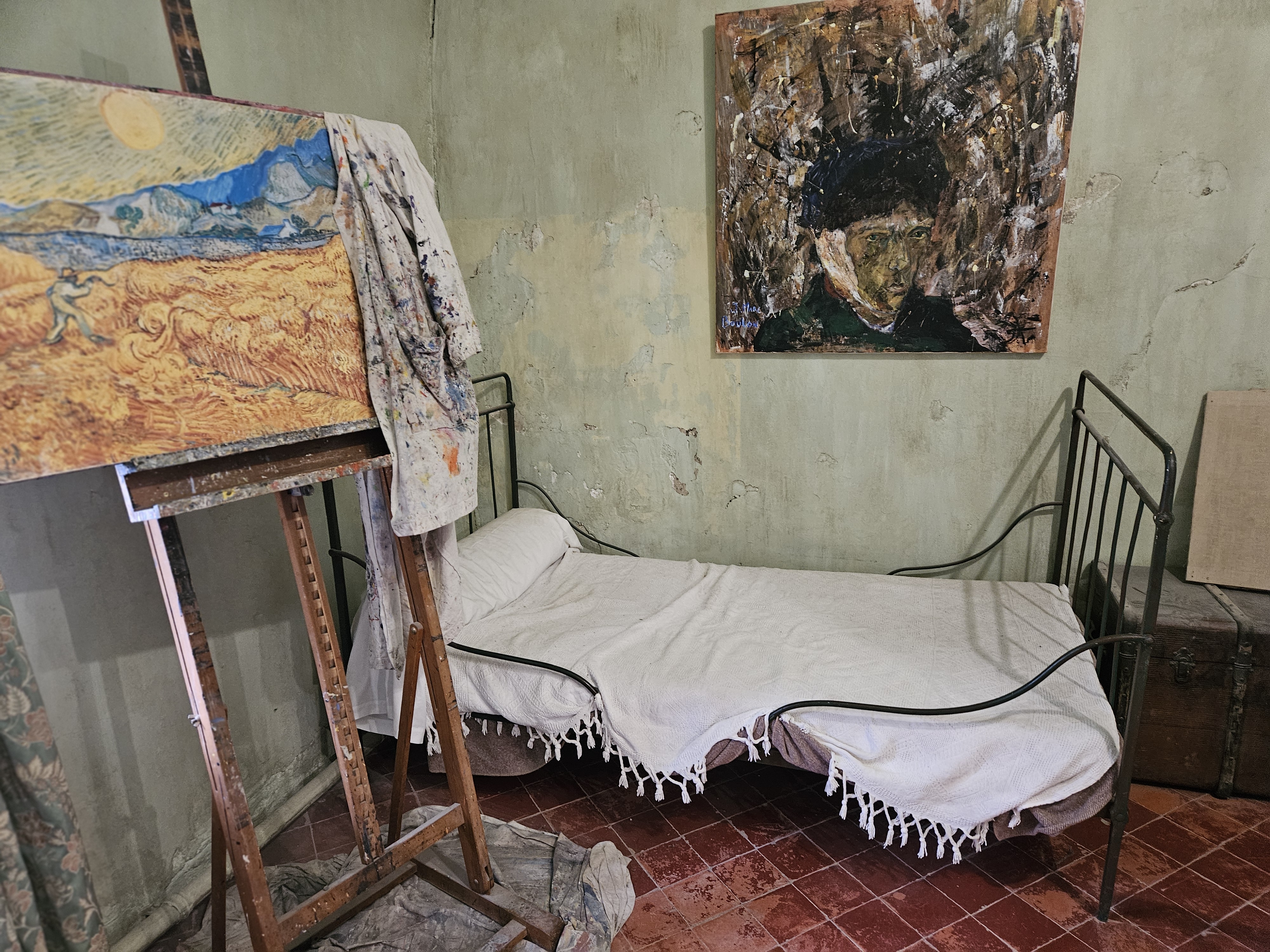
Part of the hospital is still used as an asylum, but one can still see van Gogh’s bedroom and the tubs used for the ice cold baths to reduce his choleric humors.

But outside, one can still see the orchard which inspired his painting, and iris are still blooming in the garden.

Later van Gogh was released from the hospital at St. Remy, and went to stay at Auvers, where he pained perhaps his best-known work “The Starry Night.” He died two days after suffering a gunshot wound. There is controversy about whether the wound was self-inflicted or whether it was the result of an accidental shooting by a group of teenagers who alternately patronized and teased van Gogh.

The leader of the group was the son of the local pharmacist, who owned the only gun in town. The son was prone to dress up in cowboy garb after seeing the Buffalo Bill Wild West show in Paris, and left town abruptly the evening that van Gogh appeared with his gunshot wound. Of course, this theory is not as attractive as the image of the tormented artist driven to suicide by a lack of appreciation, as Don McClain’s “Starry Starry Night” would have it.

Post Navigation