Allyson Johnson

Pieces of my Mind

Archive for the month “October, 2023”

Freeway Free on the Snake River: Locked In, Locked Out
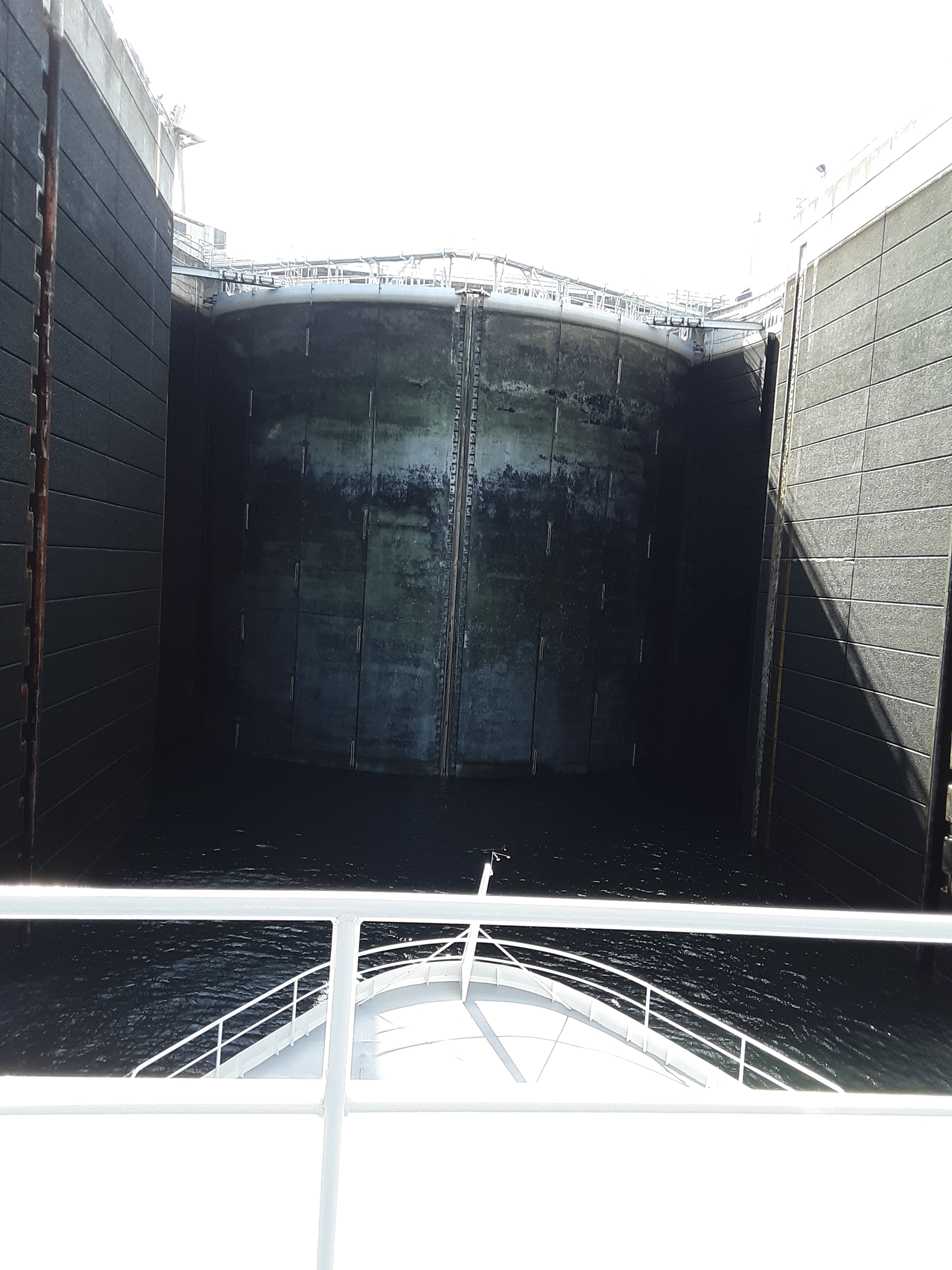
Our boat goes through our first lock – 80 feet or more down from one level of the Snake to the next. We move into the lock; a bridge is before us, an open space behind.  Then a wall seems to rise from beneath the river behind us as the water level in the lock is let out and we begin to descend.  The walls rise, only two feet from the boat on either side.  The bridge before us is now far above, with a large and getting ever higher curving wall ahead. We descend and descend.  The black wall behind us is holding back the river, though it appears there are leaks. The black wall ahead is now 80 feet high.  On the side are dripping black concrete blocks a yard high piled up and up.  Finally we stop descending.  We wait.  There is a loud shudder, and a crack appears in the wall ahead.  Sunlight, and color, a view of hills and sparkling water. The crack opens wider – the feeling is like the scene in “The Wizard of Oz” where Dorothy steps out of the sepia-toned world of Kansas into a technicolor Oz. The engines throb and we move forward into the light and space. 

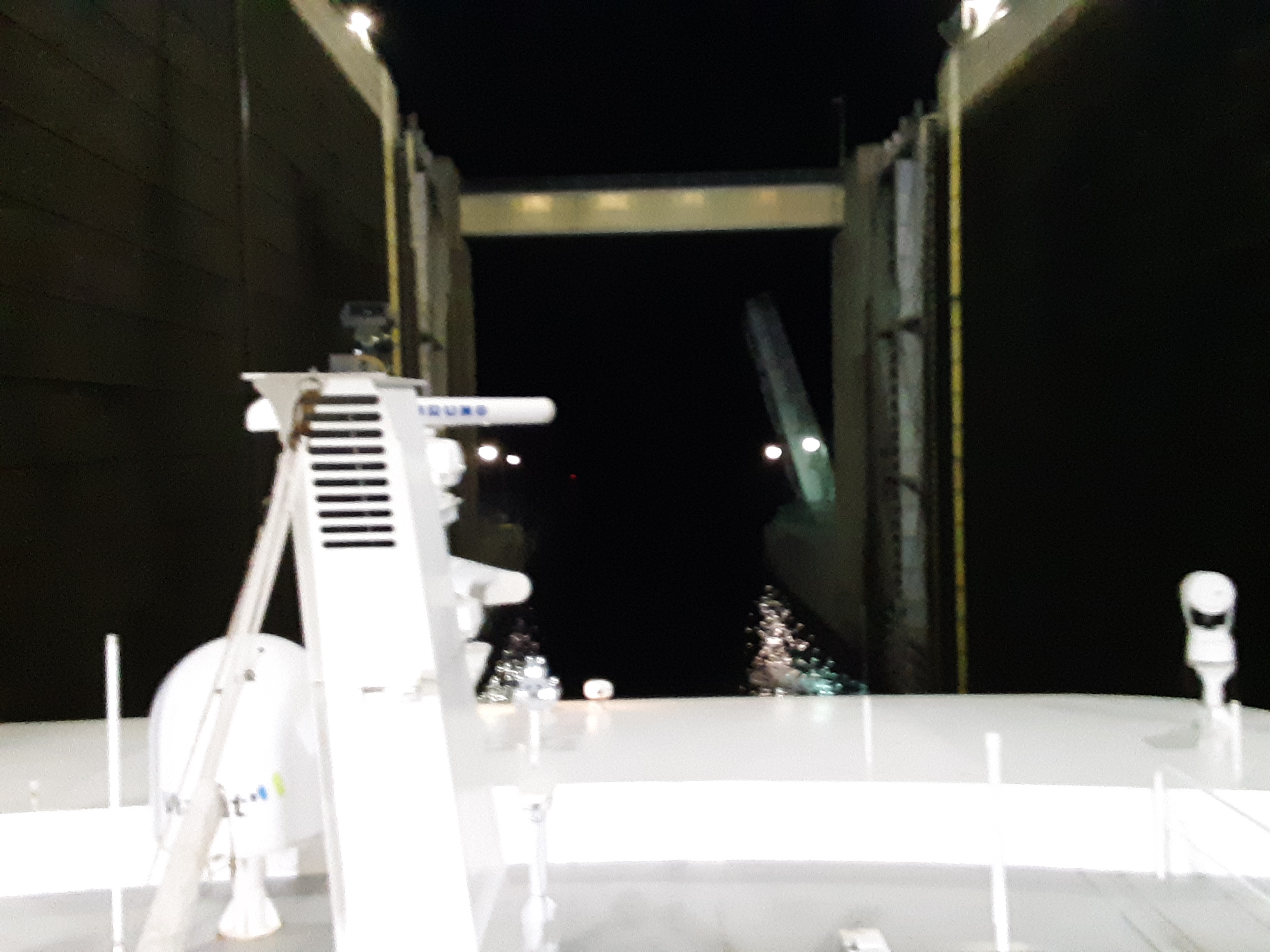
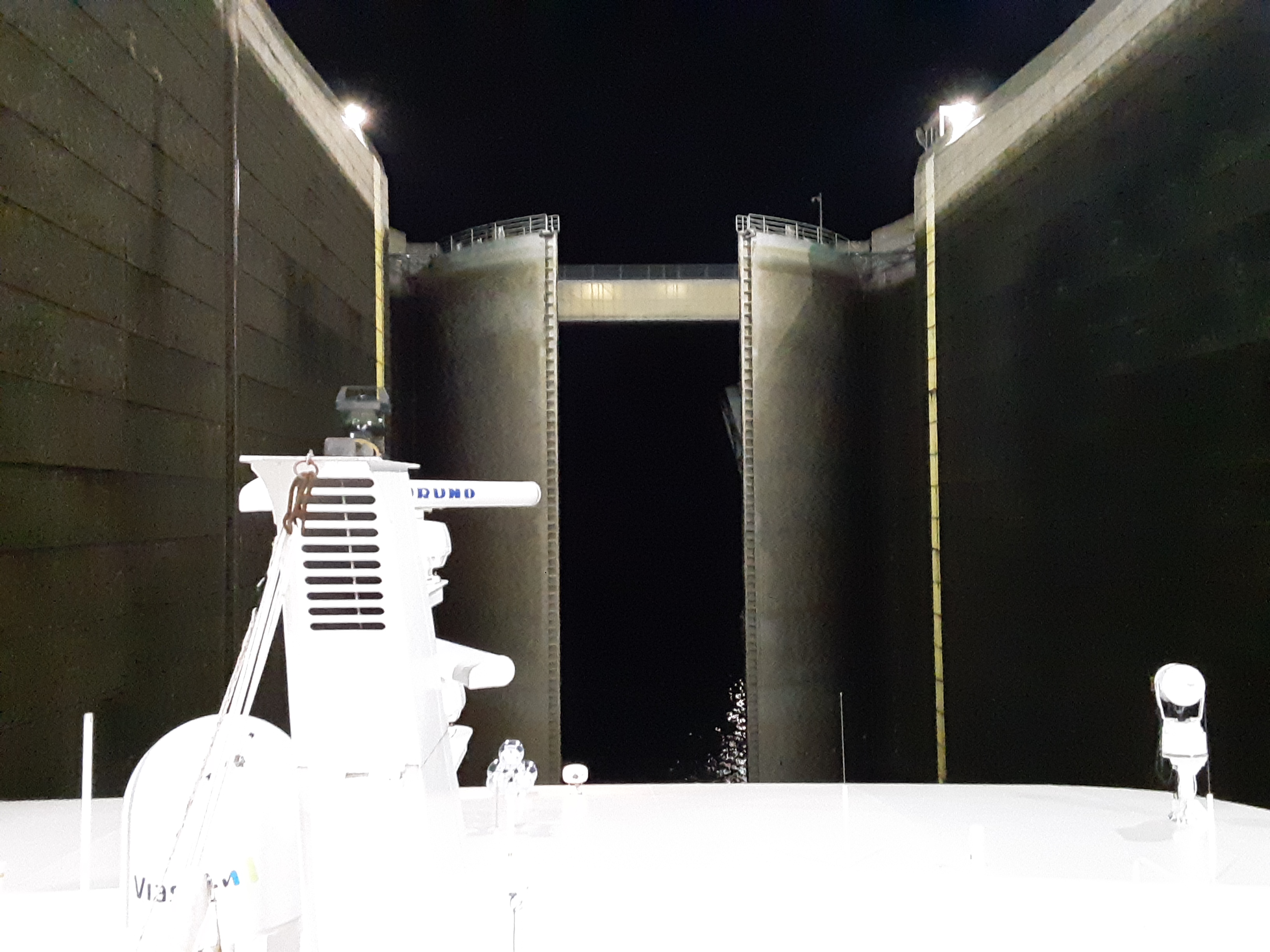
We go through a second lock at night – it is still magical. There is only black and white, the white boat, the black night, the gleaming gate, the sparkling water.

Later we explored off the boat at the Bonneville Dam, whose Visitor Center is a self-congratulatory celebration of the transformation of the wild rolling Columbia river into “a damn fine machine” for generating hydropower, in the words of an industry lobbyist.*

We saw another aspect of the locks and dams at the fish hatchery, where tiny salmon fry are nurtured until they are large enough to release downstream from the dams and make their way to the sea, and at the fish ladder, where returning salmon are given a chance to circumvent the dam in a series of cascades. These makeshift replacements of natural features are an attempt to appease the fishermen and native peoples whose lives depend on the salmon run. In another section of the hatchery, a bit off the self-guided tour, the sight of frustrated salmon leaping in vain against a current backed by a three-foot fence made me sad. In the hatchery these fish are artificially milked for their semen or eggs before dying, so the salmon fry can be created. The salmon would die anyway after spawning, but as they frantically jumped over and over against the impassable barrier, theyseemed to know they are supposed to get further to their spawning grounds than a hatchery.

===

*Quoted from Blaine Harden’s A River Lost; the Life and Death of the Columbia

Freeway Free in Washington: Eating Wild in Spokane

D and I were at the Hilton Garden Inn in Spokane, about to embark the next day on a cruise down the Snake and Columbia Rivers. The Garden Inn is a functional airport hotel, made charming by exceptionally pleasant, smiling staff. But dinner at the hotel looked like a bleak proposition; a bunch of folks were playing cards in the lounge, and the dining area was over-brightly lit and uninviting.

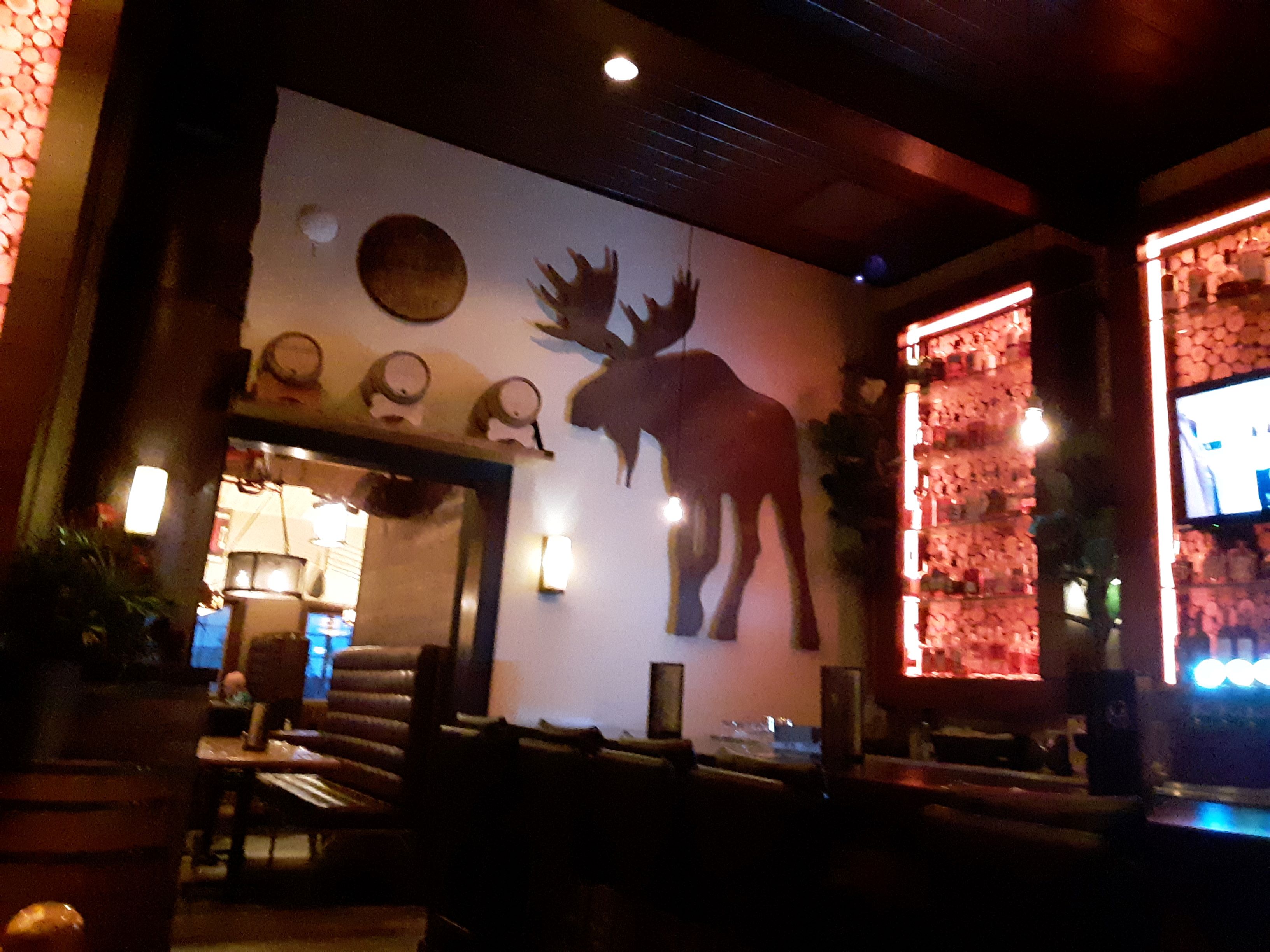
So we walked across the parking lot to the Rusty Moose, which, turned out to be very welcoming, despite being decorated with a lot of staring animal heads and other effigies. Though wild game burgers were the featured attractions, Destiny (our smiling server) served us a delicious dinner of seared halibut (D) and Idaho trout (me) with a yummy rice pilaf and baby asparagus on the side. We splurged on a bottle of the house Sauvignon Blanc from WA state, and a berry cobbler shared for desert (served with ice cream AND whipped cream on top – Washingtonians don’t stint!)

Maybe not a destination restaurant, but certainly a worthy haven en route to wherever!

Freeway Free in Washington: Surprising Stevenson

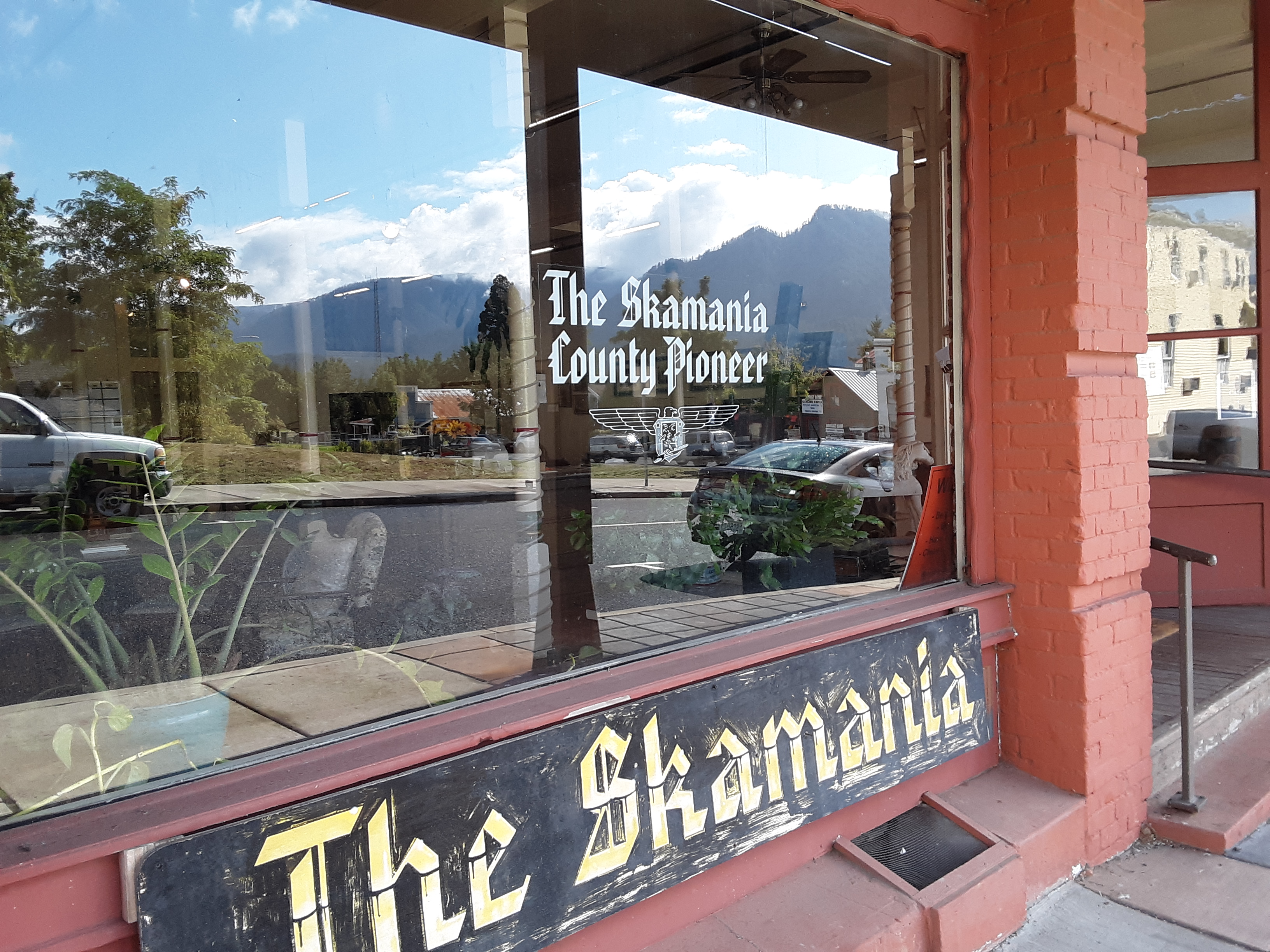
Stevenson Washington is a town of no more than 2000 people, with one main street that stretches from the Port of Skamania boat dock and park along the north bank of the Columbia River up three blocks to the brutally modern Skamania County Courthouse, with two cross streets, one of which is Washington State Route 14. But those three blocks are oddly charming, with shops that would be perfectly at home in an elegant Palo Alto shopping center. How do they survive?

Probably they survive because the boat dock is host several times a week during the summer months to American Cruise Line riverboats, which have picked Stevenson for a stopping point due to its convenient access to the Bonneville Dam, the Columbia Gorge Interpretive Center, and Multnomah Falls. In between excursions, the passengers are tempted to stroll off the boat, through the green and inviting park, and up the gentle hill to browse in North Bank Books, one of the prettiest and best curated bookstores I have ever seen, or examine goods in Out and About, a purveyor of beautifully tailored outdoor clothing, look for buried treasures at the Gorge Thrift Store, or taste a local craft beer at the Big River Grill, admire local art and crafts at Riverhouse III Gallery, or… but you should stop in Stevenson and see for yourself.

Freeway Free in Washington: The REACH Museum celebrates unspoiled nature and toxic science

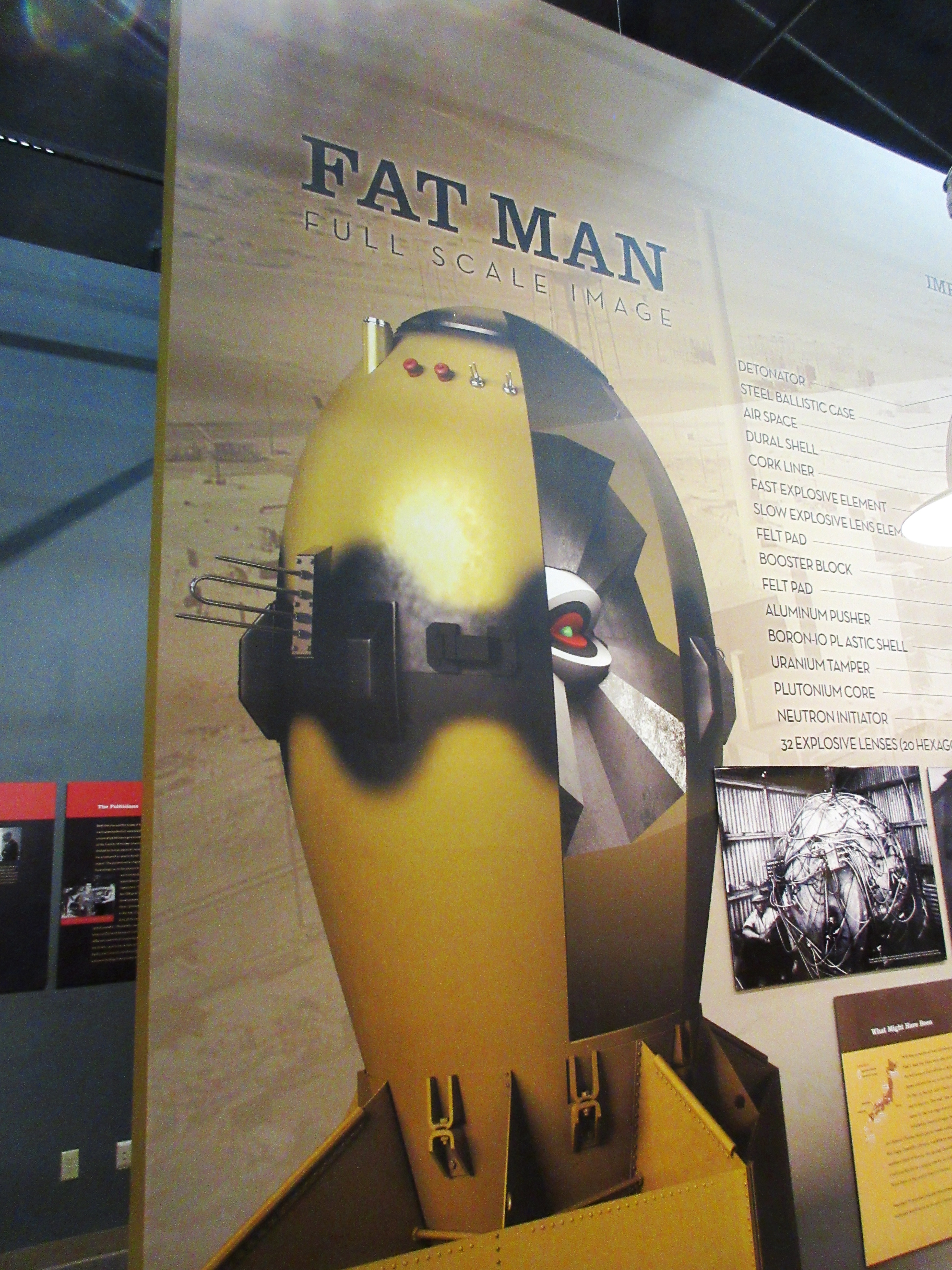
With all the discussion about “Oppenheimer” and his role in the development of the atomic bomb, one would have thought there were be more discussion of the other two locations which were key to his success. One was Oak Ridge in Tennessee, where uranium was refined for the first bomb, the other was Hanford, Washington, where plutonium for the second bomb was manufactured.

Like Los Alamos, Hanford was built in the most remote location possible, shrouded in secrecy, and filled with scientists who believed their labors would end World War II. At one point the town of Hanford was the fourth largest city in the state, with the largest General Post Office in the world (since addresses would have been Top Secret.) And as at Los Alamos, the scientists involved in the project worked with little apparent thought of the long-range effects of their labors.

The REACH museum outside of Hanford overlooks the longest undammed free-flowing reach of the Columbia River – hence its name. The country surrounding the museum is a sage and scrub desert, but it teems with wildlife including elk, antelope, an occasional bear, and all sorts of minor rodents, insects, and birds. Ironically, the reason for this virgin territory lies buried underground in unmarked sites and in leaking canisters – the radioactive waste left over from the plutonium project. No-one wants to drink water that may have overlain these poorly-conceived and poorly protected waste dumps.

The museum itself is a hybrid – half of it is devoted to the geology and wildlife associated with the Columbia River, the other half tells the story of Hanford, the plutonium project, and the community’s pride in its contribution to ending the war. Only one exhibit addresses the threat of radioactive contamination left behind, and that exhibit invites you to compare the amount of radioactivity in a vintage Fiestaware coffee cup to that in a sample of dirt from Hanford. (Surprise! the coffee cup’s red glaze has more!)

The US government has belatedly spent millions of dollars to remove or contain contamination around Hanford, and will need to spend millions more before it is safe to drink the ground water. But the town is still proud of its contribution to V-J day, still cherishes the government houses (Models A through F) thrown up almost overnight to accomodate the families, and wishes that “Barbenheimer” was”Barbanford”

Post Navigation